Whether a Havanese Can Be Parti Colored
A Havanese with white patches and another coat color is commonly described as parti colored. Those markings can make a puppy look different from its littermates, and it is understandable to wonder whether the pattern is normal or a sign of mixed ancestry. This guide explains what parti coloring means, how it can change with age, and what matters beyond appearance.
What parti colored means in a Havanese
How to recognize a parti coat
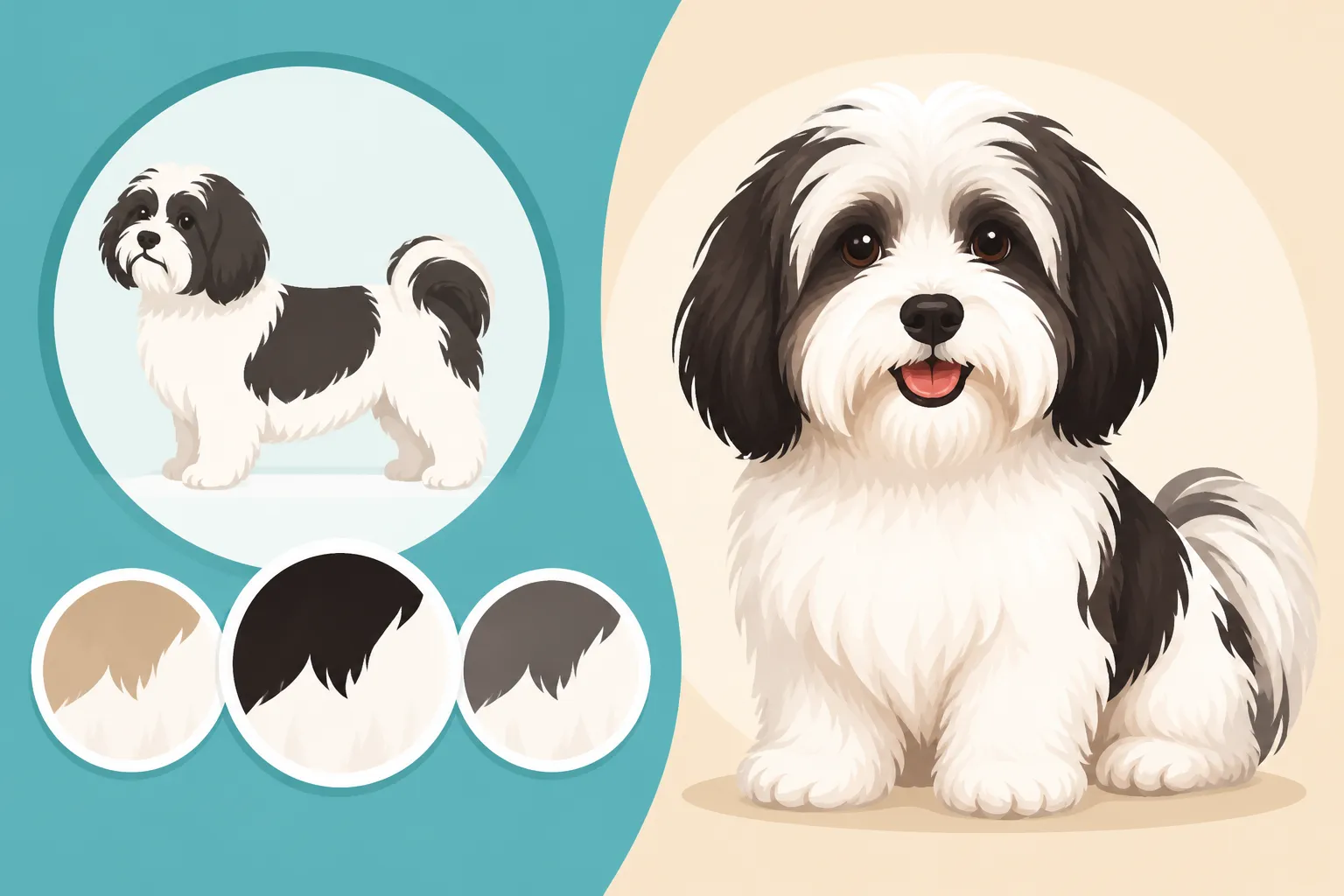
“Parti colored” is a descriptive term for a coat with substantial white areas alongside patches of another color. A Havanese might have a white body with black, chocolate, gold, or another colored patch, or a more mixed pattern with white appearing on the chest, legs, face, or body. The patches can vary in size and placement—even two puppies from the same litter may look quite different.
The term describes appearance, not a separate Havanese breed or a guarantee about the dog’s ancestry. It is also not a precise genetic diagnosis: people may use “parti” broadly when describing a dog with white and colored areas. If you are looking at a puppy, ask the breeder how they describe the pattern and check that the puppy’s pedigree and health information are available. Coat color alone cannot establish that a dog is purebred.
The Havanese comes in a wide range of colors and markings. White patches are not, by themselves, evidence that something is wrong with the dog. For a broader look at the range of acceptable shades and patterns, see Every Color a Havanese Is Allowed to Be and Whether Any Color Is Wrong on a Havanese.
Parti coloring and Irish pied are not always interchangeable labels
You may also see “Irish pied” used to describe a Havanese with white areas and colored markings. The terms can overlap in casual conversation, but they do not always describe exactly the same distribution of white. “Parti” is often used as a general coat description, while “Irish pied” usually refers to a more specific pattern of white markings. People do not always use these labels consistently, so it is sensible to look at the actual coat rather than rely on the name alone.
A dog’s markings may include white on the chest, feet, muzzle, or tail tip, or larger white areas across the body. There is no single patch arrangement that every parti Havanese must have. If you are comparing a puppy’s markings with a breed description, What an Irish Pied Havanese Looks Like gives more detail on that particular pattern.
| Coat description | What it generally means | What it does not tell you |
|---|---|---|
| Parti colored | White areas appear with patches of another color | That the dog is a different breed |
| Irish pied | A particular arrangement of white and colored markings | That every person uses the label identically |
| Solid colored | The coat appears predominantly one color | That the coat will stay exactly the same shade |
| Sable or shaded | Coat hairs may show more than one tone or darker shading | That the dog’s markings are a health problem |
Whether parti coloring is accepted
The Havanese breed standard allows a broad range of colors and patterns; color and markings are not the defining measure of a good Havanese. A parti pattern does not automatically make a dog ineligible for a conformation show. Judges consider the dog as a whole, including structure, movement, coat, and temperament, rather than treating an unusual patch as a defect.
That distinction can be reassuring if you have heard that a white-and-colored dog is somehow “not a real Havanese.” A coat pattern by itself does not prove or disprove breed identity. If registration, pedigree, or show eligibility matters to you, check the relevant registry’s requirements and ask for the dog’s documentation rather than relying on online color labels.
How a parti Havanese coat can change
Puppy markings may not stay the same
Havanese coats can change as puppies mature. A puppy’s dark areas may lighten, shift in tone, or become less sharply defined, and the contrast between white and colored portions can look different as the adult coat grows in. Some dogs retain a strong contrast; others develop a softer, more blended appearance.
This change can surprise an owner who chose a puppy based on a crisp black-and-white pattern. The puppy may still be recognizable as parti colored later, but the exact shade and visual balance are not something a buyer can reliably predict from a single early photo. Whether a Havanese Changes Color as It Grows and Whether a Havanese Puppy's Color Predicts the Adult explain why puppy coat color is not always a dependable forecast.
When looking at a puppy, ask the breeder what they have observed in related dogs, but treat that as background rather than a promise. Photos of parents and older relatives can offer clues, yet coat changes vary from dog to dog. A breeder who is honest about that uncertainty is giving you a more useful answer than one who guarantees a particular adult shade.
What grooming can and cannot do
Grooming does not change a dog’s underlying color pattern, but it can affect how clearly you see it. A long coat may partly cover small patches, while a shorter trim can make the boundary between white and colored areas more visible. Sun exposure, dirt, tear staining, and the way the coat lies can also influence how colors look in everyday light.
For a parti Havanese, routine coat care is still about preventing tangles, keeping the skin comfortable, and maintaining clean areas around the eyes, feet, and sanitary region. The color pattern does not call for a special grooming method. If you are choosing brushes or basic coat-care supplies, Chewy is one place to compare options, but match the tool to your dog’s coat texture and ask a groomer for help if you are unsure.
It can be useful to take occasional photos in similar lighting as the coat develops. That gives you a clearer record than memory alone, especially when a puppy’s shade changes gradually over several months. If you keep those photos with veterinary and grooming notes, you will have a practical history of your dog’s appearance without treating every color shift as a health concern.
How to describe the coat accurately
For everyday conversation, “white and black parti” or “white with chocolate patches” may be clearer than using a label that different people interpret differently. When filling out paperwork, follow the options provided by the registry, veterinarian, or breeder. If no category fits neatly, ask which description they prefer rather than guessing.
Clear descriptions can help with identification, especially when a litter contains puppies with similar markings. A photo of the dog’s face and body is more useful than a color label alone. If you buy grooming supplies or a collar online, including a current photo in your own records can also help you keep track of which items fit as your puppy grows; Chewy product listings, for example, can be easier to compare when you know your dog’s size and coat-care needs.
What parti coloring does and does not mean for health
Color is not a health diagnosis
A parti coat is an appearance trait, not a diagnosis. White patches on a Havanese do not automatically mean the dog is unhealthy, deaf, or otherwise affected by a condition. At the same time, coat color cannot confirm that a puppy has had appropriate health screening. Those are separate questions, and it is worth keeping them separate when choosing a dog.
When discussing a puppy with a breeder, ask about the health history of the parents and what screening has been done. Request records and make sure you understand what each test covers. The relevant questions concern the dog’s health and family history—not whether the pattern looks fashionable or rare. For a wider view of how color and health relate, see Whether Color Affects a Havanese's Health.
How to assess a puppy beyond its markings
It is easy to focus on a distinctive face or an especially striking patch pattern, particularly when scrolling through puppy photos. But a responsible choice should include more than appearance. Ask how the puppies are raised, what the breeder can tell you about each puppy’s temperament, what veterinary care has been provided, and whether you can review relevant health documentation.
Notice how the puppy behaves, too. A confident, curious puppy may still be tired or shy at a particular moment, so consider behavior in context rather than expecting every puppy to be outgoing on demand. Ask the breeder how they match puppies to homes. If a seller emphasizes rare colors while avoiding reasonable questions about health, records, or the puppy’s living conditions, slow down and investigate further.
That approach matters whether you are choosing a parti Havanese or a solid-colored one. The Havanese Against the Bichon and the Maltese can help you compare breed characteristics, while Whether a Havanese Suits a First Time Owner may help you think through the practical fit of the breed for your household.
When a change deserves a closer look
A gradual change in coat shade as a puppy matures is different from a sudden change in the skin or hair that comes with itching, bald spots, redness, sores, or discomfort. Those signs are worth discussing with a veterinarian, whatever color the dog is. The concern is the skin or coat problem itself, not the parti pattern.
If you are unsure whether what you see is ordinary coat development or a skin issue, take clear photos and note when the change began. Avoid trying multiple shampoos or supplements simply to alter the coat’s appearance. A veterinarian can assess symptoms and recommend care based on the dog’s condition. For routine grooming supplies, Chewy may help you compare basic items, but a retailer’s product descriptions should not replace veterinary guidance when the skin looks irritated or the dog seems uncomfortable.
Choosing and caring for a parti Havanese
Prioritize temperament and responsible breeding
A parti Havanese can be a lovely companion, but the pattern does not make a puppy more suitable for one household than another. Think about the dog’s personality, your schedule, grooming expectations, and the time you can give to training and companionship. A beautiful coat will not make daily brushing, house training, or settling into a new home disappear.
Look for a breeder who welcomes questions and can discuss health, temperament, and the needs of the breed without making color the main selling point. Ask what support they provide after a puppy goes home and what happens if the placement does not work out. Their answers tell you more about the care behind the litter than a claim that a particular pattern is exceptionally rare.
Keep coat care practical
Parti markings do not require separate products for white and colored hair. Use grooming products intended for dogs, follow the advice of your groomer or veterinarian, and avoid harsh treatments intended to brighten or recolor the coat. If the white areas become dirty after a walk or meal, gentle routine cleaning is more useful than trying to keep a puppy looking picture-perfect all day.
For a coat that is kept long, regular combing helps you find tangles before they tighten into mats. Pay attention to the ears, armpits, collar area, and places where a harness rubs. If you are comparing combs, brushes, or dog-safe shampoo, Chewy can be a convenient place to review general options; choose based on coat length and your dog’s tolerance, not on the idea that parti coloring needs special treatment.
Enjoy the pattern without treating it as a guarantee
The appeal of a parti Havanese is often the individuality: no two dogs have exactly the same arrangement of patches, and the coat may evolve as the puppy grows. Take photos, learn the markings that make your dog recognizable, and enjoy the changes without assuming every shift means something is wrong.
At the same time, keep expectations realistic. A puppy’s coat may lighten or become less sharply contrasted, and no breeder can promise precisely how every patch will look years later. The most meaningful questions are whether the dog is healthy, well cared for, and a good match for your home. Parti coloring can be part of what you love about your Havanese, but it is only one small part of the dog you will share your life with.
Disclaimer
This article is for general informational purposes only and does not constitute professional advice. Laws, prices and regulations vary by location and change over time. Consult a qualified professional for guidance on your specific situation.