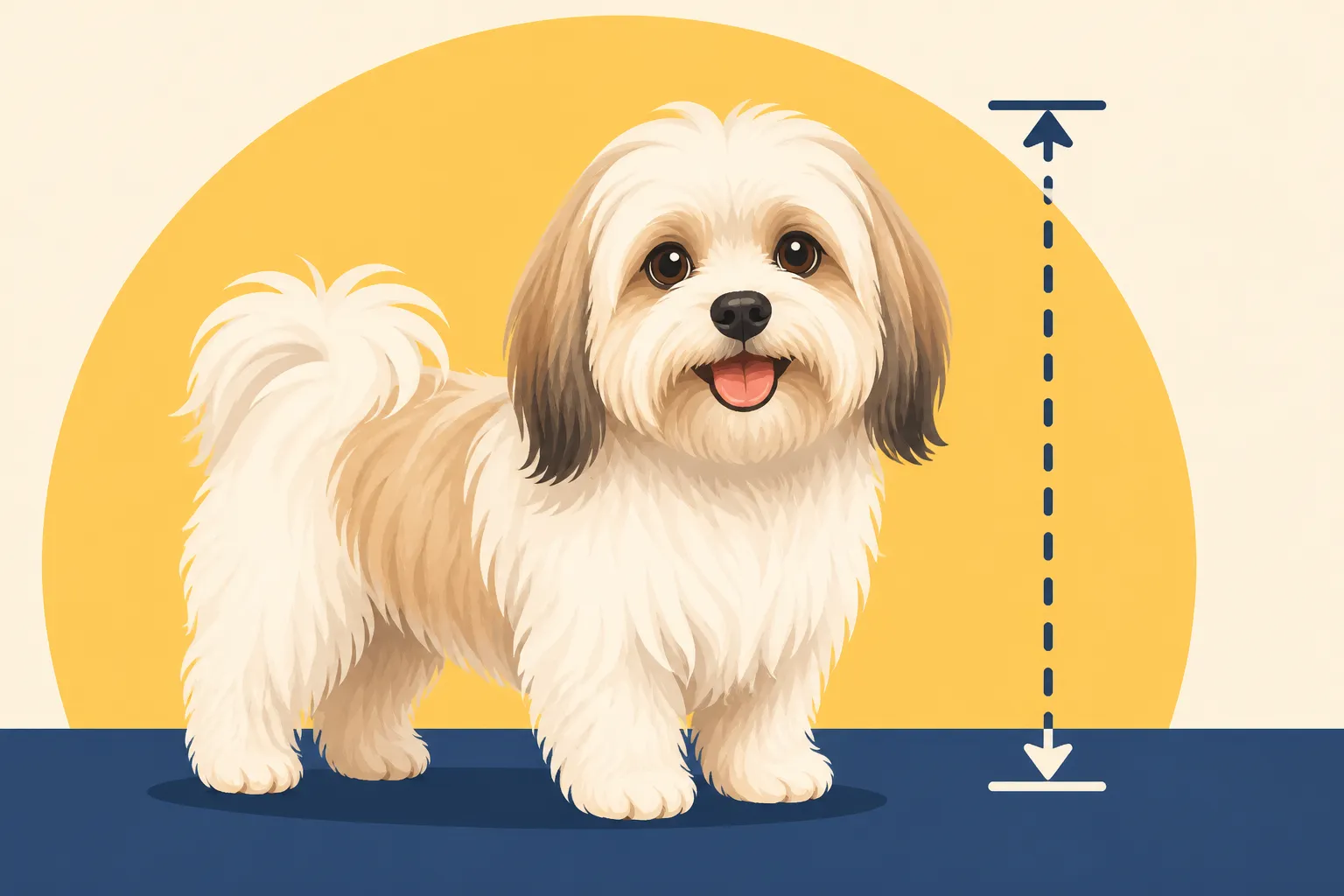
How Tall a Havanese Stands
One of the most common questions new Havanese owners, or those simply admiring the breed, often have is about their size. You see these adorable, fluffy dogs and think, "How big do they actually get?" It's a perfectly natural curiosity, but sometimes the fluffy coat can be deceiving, and relying on anecdotal stories from friends or online photos can leave you feeling confused about what's typical or even healthy. This guide aims to clear up all the mystery surrounding a Havanese's height, explaining what the breed standard truly means, what factors influence their size, and how to measure your furry friend correctly.
Understanding the Havanese Standard for Height
When you’re looking at any purebred dog, the breed standard is like a blueprint. It describes the ideal characteristics of the breed, from temperament to coat texture, and, of course, size. For the Havanese, this standard is incredibly important for maintaining the health, structure, and overall integrity of the breed that has charmed so many of us.
What the Breed Standard Says About Size
The official breed standard for the Havanese typically specifies a height range rather than a single fixed number. Generally, for an adult Havanese, the standard calls for dogs to stand between 8.5 and 11.5 inches tall at the withers. The "withers" refers to the highest point of the shoulder blades, and it’s the universally accepted point for measuring a dog’s height. This range isn't just an arbitrary number; it's carefully chosen to represent the sturdy yet diminutive stature that defines the Havanese. It ensures that the dog isn't so tiny that it's overly fragile, nor so large that it loses its distinct toy breed characteristics. A Havanese that falls within this height range usually possesses the correct bone structure and proportions to move gracefully and withstand the rigors of everyday play without undue strain on their joints. It’s all about maintaining that charming, balanced appearance.
Why There's a Range, Not a Single Number
You might wonder why there isn't just one exact height. The truth is, dogs are living, breathing creatures, not manufactured goods from a factory assembly line. Just like people, there’s natural variation within a breed. A range allows for this biological diversity while still ensuring that individual dogs adhere to the overall breed type. A Havanese that stands 8.5 inches tall can be just as perfectly conformed and healthy as one that stands 11.5 inches. What matters is that they are well-proportioned for their height. This flexibility in the standard prevents breeders from trying to breed for an impossibly precise measurement, which could inadvertently lead to a reduction in genetic diversity or the prioritization of size over more critical health aspects. It's a recognition that healthy, beautiful dogs come in slightly different packages, all within an acceptable spectrum.
How Height Relates to Overall Proportions
When we talk about a Havanese's height, it's crucial to remember that it’s not an isolated feature. It’s part of a larger picture of the dog's overall body proportions. The Havanese breed standard emphasizes that the dog should be slightly longer than tall. This means that if you measure from the point of the shoulder to the point of the buttocks, that length should be greater than the height from the ground to the withers. This "longer than tall" characteristic gives the Havanese its distinctive rectangular profile, rather than a square one. It contributes to their unique gait and the way their beautiful coat flows when they move. If a Havanese is too short in body for its height, it might appear "cobby" or unbalanced. Conversely, if it's too long, it could appear "weaselly." Both extremes can affect their movement and overall appearance, sometimes even leading to structural issues. This is why a good breeder pays attention to the whole picture, not just the number on the measuring tape.
Factors Influencing a Havanese's Height
While the breed standard gives us an ideal, several factors contribute to where an individual Havanese lands within that height range, or even if they fall outside it. It’s a mix of nature and nurture, with genetics playing the primary role, but environmental factors having a say too.
Genetics and Lineage
Unsurprisingly, genetics are the biggest determinant of your Havanese's eventual height. A puppy inherits its genes from both parents, and their size is a strong indicator of what you can expect from their offspring. If both parents are on the smaller side of the standard, chances are their puppies will also be smaller. Similarly, if both parents are taller, the puppies will likely follow suit. Reputable breeders meticulously track the lineage of their dogs, not just for health clearances but also for maintaining desired traits like size and conformation.
It’s not just the immediate parents, either. The genetic pool of the breed itself plays a role. The Havanese, as a breed, has a fascinating history, with many modern Havanese descending from a relatively small founder population. This means that the genetic blueprint for size has been somewhat consolidated. When considering a puppy, it's always wise to ask about the height of not just the parents, but also grandparents, if possible. This gives a much clearer picture of the genetic tendencies in that particular line. You might also want to look into Whether a Havanese From a Small Gene Pool Is Riskier for broader health implications, which can sometimes correlate with extreme sizes.
Nutrition and Early Development
While genetics lay the groundwork, proper nutrition during a Havanese's crucial growth phases is absolutely vital. A puppy that doesn't receive adequate, balanced nutrition can have stunted growth, even if it has the genetic potential to be a standard-sized dog. Conversely, overfeeding a puppy, especially with a diet too rich in certain nutrients or calories, can lead to rapid growth that puts undue stress on developing bones and joints. This can sometimes result in growth abnormalities or other orthopedic issues, which is certainly not what any of us want for our precious pups.
Think of it like building a house: genetics provide the architectural plans, but nutrition provides the quality materials. If the materials are poor, or if the construction is rushed, the house won't be as sturdy or as well-built as it should be. High-quality puppy food, appropriate for small breeds, is essential. Brands like Chewy often offer a wide selection of foods specifically formulated for small breed puppies, designed to support healthy, steady growth without promoting unhealthy weight gain. Always follow feeding guidelines and consult your veterinarian if you have concerns about your puppy’s growth rate or diet.
Gender Differences in Havanese Height
In many dog breeds, there's a noticeable size difference between males and females, with males generally being larger and heavier. In Havanese, this difference is usually present but often quite subtle. A male Havanese might typically be at the higher end of the standard's height range (closer to 11.5 inches), while a female might be closer to the lower end (around 8.5 to 10 inches). However, this is not a hard and fast rule. You can certainly find large females and smaller males, all perfectly within the breed standard.
These gender differences are largely due to hormonal influences on bone growth. Males tend to have a slightly longer growth period or reach a slightly larger frame due to their hormones. However, for a toy breed like the Havanese, the visual difference might be less pronounced than in a large breed, where a male could easily be 20-30 pounds heavier and several inches taller than a female. It's more about a slight tendency than a stark contrast.
| Factor | Influence on Havanese Height |
|---|---|
| Genetics | Primary determinant; inherited from parents and ancestral lines. Strongest predictor. |
| Nutrition | Critical for healthy development; under/overfeeding can stunt or negatively impact growth. |
| Gender | Males often subtly taller, but overlap with females is common; not a strict rule. |
| Overall Health | Chronic illness or parasites during growth can hinder reaching full genetic potential. |
| Early Injury | Damage to growth plates from injury in puppyhood can affect bone development and final height. |
Measuring Your Havanese's Height Correctly
Knowing the breed standard is one thing, but actually measuring your Havanese to see where they stand (pun intended!) can be a bit tricky, especially with all that gorgeous hair. Accuracy is key if you want a true picture of their size.
The Withers Measurement Explained
As mentioned earlier, the "withers" is the part of your dog located between the shoulder blades at the base of the neck. It's the highest fixed point on their body, making it the most consistent and reliable place to measure height. Why not the head? Because dogs can raise or lower their heads, leading to inconsistent measurements. Why not the back? Because the spine can have slight curves or dips. The withers provide a stable point from which to take a precise measurement from the ground.
To measure your Havanese at home, you'll need a flat, level surface, a measuring tape, and ideally, a helper to keep your dog still.
- Position your Havanese: Have your dog stand squarely and naturally, with all four paws on the ground, neither stretched out nor hunched. Their head should be in a normal, relaxed position, not craning up or down.
- Find the withers: Gently feel for the bony ridge between their shoulder blades where the neck meets the back. This is their highest point.
- Use a level or straight edge: Place a ruler, yardstick, or carpenter’s level across your dog's shoulders, ensuring it’s perfectly horizontal and resting on the highest point of the withers.
- Measure: With the straight edge in place, use your measuring tape to measure from the ground straight up to the underside of the straight edge. Make sure the tape is perpendicular to the ground.
- Record: Note down the measurement in inches. It might take a few tries to get an accurate reading, especially if your Havanese is wiggly!
When Your Havanese Reaches Full Height
Havanese puppies, like all puppies, grow rapidly in their first few months. However, they don't just keep growing indefinitely. Most Havanese puppies will reach their adult height relatively early compared to larger breeds. Generally, you can expect your Havanese to reach their full height somewhere between 8 to 12 months of age.
While their vertical growth might slow or stop around this time, they often continue to "fill out" or mature in terms of muscle and chest development for a few more months. So, a Havanese puppy might hit its maximum height by its first birthday, but it might still gain a little more weight and overall substance in the body over the next six months or so. This filling out process contributes to their sturdy, well-balanced appearance as an adult. If you're curious about this, you can learn more in The Age a Havanese Reaches Full Size and Whether a Havanese Fills Out After a Year. Don't be surprised if your little one looks a bit gangly at 6 months and then suddenly seems to blossom into their adult proportions.
Why Consistency in Measurement Matters
Accuracy in measurement is crucial, especially if you're tracking your dog's growth or comparing them to the breed standard. Inconsistent measurements can be misleading and cause unnecessary worry or confusion. For example, if you measure your Havanese standing on a soft rug one day and a hard floor the next, you might get slightly different readings. Similarly, if your dog is slouching or stretching, the measurement won't be accurate.
Always try to measure in the same place, using the same tools, and ensuring your Havanese is standing in a natural, square position. If you're a breeder, or considering showing your Havanese, precision becomes even more important. A small fraction of an inch could make a difference in how they are perceived against the standard. This attention to detail helps ensure that the data collected, whether by a veterinarian or for show purposes, is reliable.
Common Misconceptions and Variations
Despite the clear breed standard, there's a lot of misinformation and misunderstanding out there about Havanese size, often driven by marketing trends or simply a lack of knowledge. Let's demystify some of these common points.
The "Teacup" Havanese Myth
Ah, the "teacup" trend. It's something that crops up with many toy breeds, and it's particularly troubling. While the Havanese is a small dog, there is no official or recognized "teacup Havanese" variety. When you see breeders marketing puppies as "teacup" or "micro" Havanese, it's generally a red flag. These dogs are often simply undersized Havanese, sometimes the runts of a litter, or bred from two unusually small parents without regard for their overall health or conformation.
The problem with intentionally breeding for abnormally small sizes is that it can lead to a host of health issues. These tiny dogs might be more prone to hypoglycemia (low blood sugar), fragile bones, organ problems, and other genetic predispositions that wouldn't typically affect a standard-sized Havanese. They often require much more intensive care, especially as puppies. If you encounter a breeder advertising "teacup" Havanese, it's a strong indicator to proceed with extreme caution, as it often suggests a focus on novelty rather than health and ethical breeding practices. It's definitely a situation where Whether a Teacup Havanese Claim Is a Warning is worth considering. Remember, a healthy Havanese is a standard-sized Havanese.
Deviations from the Standard and Their Significance
What if your Havanese falls outside the 8.5 to 11.5-inch height range? For pet owners, a slight deviation usually isn't a major cause for concern. A Havanese that is 12 inches tall or 8 inches tall can still be a perfectly healthy, happy, and beloved family member. However, significant deviations, especially being notably undersized, can sometimes indicate health issues or a less-than-ideal genetic background. If your Havanese is much smaller than the standard, it might have similar vulnerabilities to those marketed as "teacups." If your Havanese is significantly larger, say 13-14 inches tall, they might simply be a larger-boned example of the breed, though this is less common.
For those interested in showing their Havanese in conformation events, any deviation from the standard, particularly a disqualifying height, would mean they couldn't compete successfully. The breed standard exists to preserve the unique characteristics of the Havanese, and height is one of them. For pet owners, the main thing is to ensure your dog is healthy and well-proportioned for its size, whatever that size may be. Sometimes, dogs that are a bit outside the typical range are still wonderfully structured and have long, healthy lives. It's also worth investigating Whether a Havanese Has Short Legs on Purpose as part of understanding their overall structure.
How a Long Coat Can Affect Perceived Size
One of the most charming and defining features of the Havanese is their long, flowing double coat. This magnificent hair can reach the floor if left untrimmed, creating an illusion that can dramatically affect how we perceive their size. A Havanese in a full, show-length coat can often look larger and more substantial than they actually are. The voluminous hair adds inches of visual depth and can make a smaller Havanese appear more robust.
Conversely, a Havanese sporting a popular "puppy cut" or a very short trim might appear smaller or more delicate than their bone structure would suggest. This is why when judges evaluate Havanese in the show ring, they often use their hands to feel the dog’s underlying bone structure and body, rather than relying solely on visual cues from the coat. For pet owners, this just means that your Havanese's haircut can totally transform their look! Whether you prefer The Silky Double Coat a Havanese Grows to the Floor or a shorter, more practical clip, remember that the fluff doesn't always reflect the true frame underneath. It’s all part of the fun and unique presentation of this wonderful breed.
Disclaimer
This article is for general informational purposes only and does not constitute professional advice. Laws, prices and regulations vary by location and change over time. Consult a qualified professional for guidance on your specific situation.