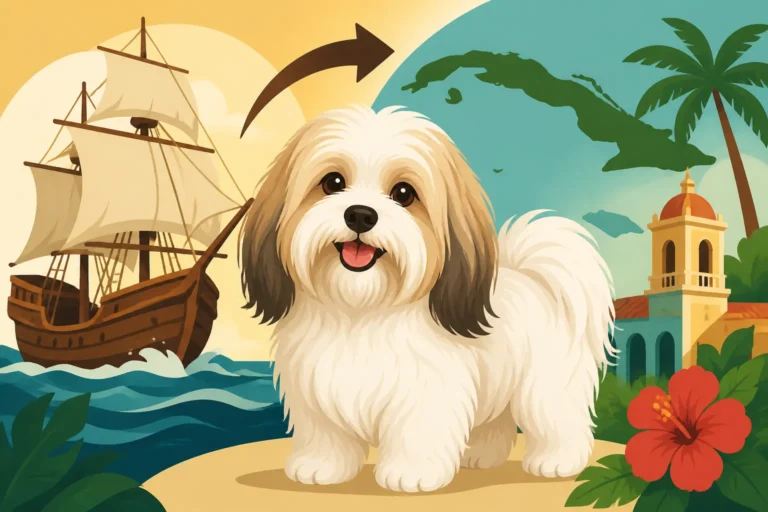
Whether Show Havanese Look Like Cuban Ones Did
It’s a question many Havanese lovers ponder: how much do today’s perfectly coiffed show Havanese resemble the dogs that once roamed the villas and streets of Cuba? The image of a show dog, with its flowing, meticulously groomed coat, often feels a world away from the tales of their practical, beloved ancestors. This guide aims to unravel the journey of the Havanese, exploring the historical accounts of their Cuban origins and comparing them with the characteristics that define the breed in today's competitive show rings.
The Historical Havanese: A Glimpse into the Past
When we talk about the original Havanese, we’re delving into a history that’s both rich and, at times, a little bit hazy, thanks to the mists of time and the upheavals of history. These aren't just pretty dogs; they carry the echoes of a vibrant Cuban past. Understanding what they might have looked like requires a journey back to the Caribbean, long before breed standards were ever penned.
The Elusive Blanquito de la Habana
Before the Havanese as we know them, there was the "Blanquito de la Habana," or the "little white dog of Havana." These were the beloved companions of the Cuban aristocracy and wealthier families, a true symbol of status and affection. Imagine a small, charming dog, much like today’s Havanese in size and spirit, but perhaps with a less standardized look. They weren't bred to a strict written standard, but rather for their companionship and delightful personalities. Their coats, while undoubtedly silky and soft, likely varied in length and texture, without the intense focus on floor-length grandeur that we see in many show dogs today. They were practical, often kept in climates that didn't demand constant, intricate grooming to avoid mats and tangles, though regular care would have been part of their pampered lives.
These dogs were true family members, often seen accompanying their mistresses on strolls or relaxing in cool courtyards. They weren’t working dogs in the traditional sense, but their "work" was bringing joy and comfort, a role they excelled at. The name "Blanquito" suggests a predominant white color, though it's likely other light colors and markings existed. The Blanquito de la Habana the Havanese Came From offers a fascinating dive into their origins. It’s easy to picture these dogs as lively, intelligent, and deeply attached to their people, just as our Havanese are today. Their charm wasn’t about winning ribbons but about winning hearts, and in that, they were undeniably champions.
Influences and Evolution in Cuba
The Blanquito didn't exist in a vacuum; Cuba was a melting pot of cultures and commerce, and dogs from various European countries undoubtedly influenced the evolving Havanese type. Spanish traders, in particular, brought small Bichon-type dogs from the Canary Islands and other Mediterranean ports, which served as the foundation stock. Over generations, these dogs adapted to the Cuban climate and culture, developing into what we now recognize as the Havanese’s direct ancestors. There’s strong evidence suggesting that other breeds, especially small Poodles, were introduced into the gene pool at various points. How Poodles Changed the Blanquito explores this interesting aspect of their lineage.
This cross-breeding wasn't necessarily about creating a "new" breed, but rather a natural evolution of the companion dogs favored by the Cuban elite. The Poodle influence might have contributed to the Havanese's famed intelligence and trainability, as well as refining some coat characteristics. These historical Havanese were likely robust little dogs, capable of handling the tropical climate, yet still possessing that endearing softness and elegance. They were part of a social fabric, not just pets, and their physical form reflected a balance between natural beauty and practical living alongside their human families. Their coats, while certainly attractive, weren't subject to the same strict aesthetic demands as those prepared for today's show rings.
The Near Extinction and American Revival
The story of the Havanese isn't just about their charming looks; it's also a dramatic tale of survival against incredible odds. Like many treasures of Cuba, the breed faced an uncertain future during a pivotal moment in history, requiring extraordinary dedication to bring them back from the brink.
The Cuban Revolution's Impact
The 1959 Cuban Revolution brought sweeping changes, not just to the country's political landscape but also to its cultural fabric, including the fate of its national dog. As many affluent Cubans fled the island, they were often forced to leave behind their beloved possessions, and sadly, sometimes even their pets. The Havanese, once symbols of luxury and companionship, became casualties of circumstance. Their numbers dwindled dramatically on the island, and the very existence of the breed hung by a thread. How the Havanese Nearly Died Out After 1959 paints a vivid picture of this perilous time for the breed.
It's heartbreaking to imagine these once-cherished dogs navigating a changed world, many likely struggling to survive without their human families. The selective breeding and careful lineage tracking that might have existed for some lines certainly ceased. The dogs that did make it off the island with refugees were few and far between, often smuggled out at great personal risk. These brave "refugee dogs" would become the foundation for nearly all modern Havanese outside of Cuba. Their survival wasn't a given; it was a testament to the enduring love their owners had for them and a stroke of luck that allowed a handful to escape the turmoil.
Dorothy Goodale's Vision for the Breed
In the United States, a true hero emerged for the Havanese: Dorothy Goodale. She and her husband, Bert, were passionate about these charming little dogs and recognized the immense danger the breed faced. It was the 1970s, and the Havanese were practically unknown in North America. Dorothy embarked on a monumental task: locating surviving Havanese brought over by Cuban refugees and meticulously working to preserve and rebuild the breed. Her dedication was nothing short of legendary. She understood that without careful planning, the unique genetic heritage of these dogs would be lost forever.
Dorothy's efforts involved extensive research, travel, and networking to find and acquire Havanese from various families across the US. Dorothy Goodale and the Rebuilding of the Havanese details her incredible work. She started with a small group of just 11 dogs, meticulously breeding them to ensure genetic diversity and to stabilize the breed's characteristics. This wasn't just about breeding dogs; it was about honoring a legacy and safeguarding a future. The goal was to establish a healthy, consistent type that would be recognized and cherished. Today, nearly every Havanese outside of Cuba can trace its lineage back to these original few, often referred to as The Refugee Dogs Every American Havanese Descends From. Dorothy Goodale laid the groundwork for the modern Havanese, ensuring that future generations could enjoy these wonderful companions.
Modern Show Havanese: Adherence to the Standard
Fast forward to today, and the Havanese breed has not only recovered but flourished, largely thanks to the meticulous efforts of dedicated breeders and enthusiasts. The modern show Havanese is a testament to careful breeding, adherence to a detailed breed standard, and often, an incredible amount of grooming expertise.
The Role of the Breed Standard
The breed standard is essentially the blueprint for what an ideal Havanese should look like and act like. It's a comprehensive document that describes everything from acceptable size and weight to coat texture, gait, and temperament. For instance, the Havanese standard calls for a sturdy, small dog with a lively, springy gait. It’s not just about looks; it's about preserving the essence of the breed. When a Havanese steps into the show ring, it's being judged against this ideal. Judges are looking for how closely the dog conforms to every aspect of the standard, celebrating those who embody the breed's historical charm and physical characteristics.
This standardization is crucial for maintaining consistency within the breed across generations and ensuring that the Havanese remains distinct from other Bichon-type dogs. While the standard aims to honor the breed's origins, it also naturally leads to a certain level of refinement and uniformity that might not have been present in the more varied population of historical Cuban Havanese. It means breeders are striving for a specific aesthetic and structural ideal, which can sometimes create a look that feels more "polished" than perhaps their street-smart ancestors.
Key Characteristics of Today's Show Havanese
Today's show Havanese are recognized for several defining characteristics. First and foremost is their luxurious, long, double coat. It’s meant to be soft and silky, often reaching the floor, requiring diligent care to keep it in pristine condition for the show ring. This coat protects them from the sun and offers insulation, much like it did for their ancestors in a warm climate. Then there's their distinctive gait, often described as light, springy, and resilient. The Springy Gait a Havanese Is Judged On highlights how important this movement is in the show ring. They're expected to be compact yet sturdy, agile, and graceful, with a cheerful and outgoing personality.
Temperament is equally important; a show Havanese must be friendly, intelligent, and eager to please, reflecting their long history as companion dogs. While white was a prominent color in the Blanquitos, modern Havanese come in Every Color a Havanese Is Allowed to Be, from solid black to various shades of sable, parti-color, and brindle, all accepted under the breed standard. The emphasis on health and proper structure is also paramount, with breeders striving to produce dogs free from hereditary conditions. Maintaining that flowing coat often means stocking up on high-quality grooming supplies, readily available from online retailers like Chewy, to ensure they look their best.
Bridging the Gap: Are They Really the Same?
This is where the rubber meets the road: comparing the historical Havanese of Cuba with the Havanese you see winning ribbons today. While there are undeniable connections, some subtle — and not so subtle — differences have emerged over time.
Similarities and Divergences
In many fundamental ways, the spirit of the Havanese remains unchanged. The breed's defining characteristics of intelligence, charm, and an intensely devoted, companionable nature are constants across generations. They were, and still are, bred to be family dogs, eager to please and happiest when by their human's side. In terms of size and general structure, a healthy, well-bred Havanese today likely falls within the range of what their Cuban ancestors might have been, a small yet sturdy toy breed. Their captivating personalities and ability to learn tricks, harking back to their "circus dog brain," are also enduring traits.
However, certain aspects have diverged. The most obvious is the emphasis on coat. While Cuban Havanese certainly had beautiful, flowing coats, the modern show Havanese often presents a coat that is painstakingly groomed to perfection, often floor-length and impeccably maintained. This level of coat presentation likely wasn't common, or even practical, for their ancestors navigating everyday life in Havana. The refinement of specific conformational traits—like the exact angulation of joints, the precise set of the tail, or the detailed shape of the head—has become much more pronounced under the scrutiny of a written breed standard. This means modern show dogs, while still deeply recognizable, possess a level of uniformity and aesthetic polish that would have been rare in the more diverse "street" population of yesteryear. The availability of specialized grooming tools, shampoos, and conditioners from stores like Chewy has also made it possible to achieve and maintain this level of coat perfection more easily than ever before.
The "Havana Silk Dog" Debate
It's impossible to discuss the evolution of the Havanese without touching on the "Havana Silk Dog" debate. For a period, there was a group of enthusiasts who felt that the modern Havanese, as developed by the AKC and other registries, had strayed too far from the original Cuban type. They believed the breed had become too large, too heavy-boned, and that the coat had become too dense or cottony, losing the true "silky" texture of the original. This led to a movement to establish a separate breed, the Havana Silk Dog, aiming to preserve what they perceived as the more authentic, lighter-boned, truly silky-coated Cuban type. The Havana Silk Dog Argument That Split the Havanese delves into this fascinating controversy.
Those who advocated for the Havana Silk Dog argued that Whether the Silk Dog Breeders Were Right About Type was a critical question, and that the original dogs were more delicate and refined than the emerging show Havanese. While the Havana Silk Dog movement remains a separate entity, the discussion itself spurred important reflection within the Havanese community about honoring the breed's heritage. Ultimately, the modern Havanese breed standard as recognized by major kennel clubs aims to strike a balance: preserving the core characteristics and temperament of the breed while allowing for the healthy genetic diversity and responsible breeding practices that ensure the Havanese thrives for generations to come. So, while today's show Havanese might wear a more formal "suit" than their Cuban ancestors, their heart, intelligence, and playful spirit are undoubtedly the same.
| Feature | Historical Cuban Havanese (Pre-1959) | Modern Show Havanese (Today) |
|---|---|---|
| Coat Length | Variable, likely practical and medium to long | Often floor-length for show, meticulously groomed |
| Coat Texture | Silky, perhaps slightly coarser in some lines | Silky, soft double coat, emphasis on flowing texture |
| Grooming | Regular brushing, less extreme presentation | Intensive, daily brushing, professional grooming for show |
| Color Focus | Predominantly white (Blanquito), other light colors | All colors and markings accepted by standard, very diverse |
| Conformation | Natural variation, less strict aesthetic | Standardized to specific proportions, angles, head shape |
| Temperament | Companion, lively, intelligent, affectionate | Companion, lively, intelligent, affectionate, outgoing for show |
| Genetic Pool | Potentially broader with local influences | Descended from a narrow foundation population, carefully managed |
| Purpose | Beloved family companion, status symbol | Beloved family companion, also highly valued in conformation shows |
Disclaimer
This article is for general informational purposes only and does not constitute professional advice. Laws, prices and regulations vary by location and change over time. Consult a qualified professional for guidance on your specific situation.