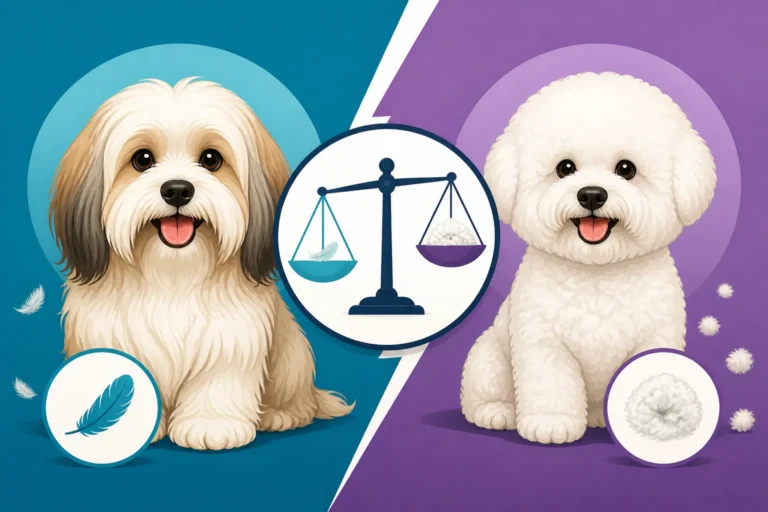
Whether a Havanese Can Be Gold
A Havanese can absolutely be gold. The shade may look pale and creamy, warm honey-colored, or deeper and almost red, and it can appear alone or alongside other coat colors. If you are trying to identify a puppy’s color or wondering whether it will stay gold as the coat matures, this guide explains what to look for and what can change.
What a gold Havanese looks like
Gold is a coat description, not one exact shade
Gold is a warm-looking coat color that can range from light, buttery tones to deeper honey or reddish shades. Two Havanese described as gold may not look exactly alike: one might appear pale in indoor light, while another has a richer color that stands out in the sun. Coat length, texture, lighting, and grooming can all affect how the color appears.
There is not always a crisp line between gold and nearby color descriptions such as cream, tan, or red. Breeders and owners may use those words somewhat differently, especially when a coat falls between familiar shades. A dog’s color may also look different in photographs than it does in person, since warm indoor bulbs and phone cameras can alter how gold tones appear.
Havanese coats can also combine colors. A gold dog may have white areas, darker markings, or hairs with darker tips. So “gold” does not necessarily mean every hair is the same shade from root to tip or that the whole dog is a uniform color. For a broader overview of accepted coat variety, see Every Color a Havanese Is Allowed to Be.
Gold can appear with markings or darker shading
A Havanese may have gold across much of the body and white markings on the chest, feet, or face. Some coats also have darker shading mixed into an otherwise light or warm base color. That contrast can make a puppy look like it has several colors, even when gold is the main impression.
One useful distinction is between a coat that is simply gold and a sable coat. Sable coloring typically includes darker-tipped hairs over a lighter base, creating a shaded or banded appearance. The contrast may be obvious in one dog and subtle in another. If a puppy has dark shading around the ears or along the back, that alone does not tell you exactly how its adult coat will look. What a Sable Havanese Looks Like explains the difference in more detail.
Gold is also not the only possible solid-looking color. Havanese can have a range of light and dark coats, and a pale dog is not automatically white. Comparing the overall warmth of the coat, the color at the roots, and any markings can help—but a photograph or casual label may not settle the question. See Whether a Havanese Can Be Solid White and Whether a Havanese Can Be Solid Black for context on other coat colors.
Why a gold Havanese may change color
Puppy coats do not always predict adult coats
A gold Havanese puppy may keep a broadly golden appearance, but the exact shade can shift as the coat develops. Some puppies lighten, some deepen, and others develop more noticeable contrast or markings. The transition can be gradual, so a dog may look different from one grooming appointment to the next without undergoing a dramatic, overnight change.
The puppy coat itself is part of the reason. As a Havanese matures, the texture and length of the coat change, and the emerging adult coat may reflect light differently. A fluffy puppy coat can make the dog look paler or more blended; longer adult hair may reveal darker tips, lighter roots, or areas of color that were hard to see before.
That is why a breeder’s description of a young puppy is best treated as a snapshot rather than a promise of its final appearance. Photos of parents and relatives may offer clues, but they cannot guarantee the exact shade an individual puppy will have later. For a closer look at how coat development can affect color, read Whether a Havanese Puppy's Color Predicts the Adult and Whether a Havanese Changes Color as It Grows.
Sunlight, grooming, and lighting affect what you see
Coat color is not always easy to judge by eye. A gold coat may look lighter outdoors than in a dim room, while warm indoor lighting can make cream or tan hair seem more golden. A freshly brushed coat may also appear brighter because the hairs are separated and reflect light more evenly.
Sun exposure and ordinary wear can influence how the coat looks, too. The ends of long hair may appear lighter or less vivid than hair closer to the skin. That does not necessarily mean the dog’s underlying color has changed in a uniform way; it may be a visual effect of coat length, exposure, and the contrast between newer and older hair.
If you are comparing puppy photos, try to use pictures taken in similar natural light and from similar angles. Look at several areas—the ears, back, legs, and roots—rather than relying on one patch of fur. This is especially helpful when a dog has white markings or darker shading that can make its overall color harder to describe.
| What you notice | What it may mean | What it cannot confirm |
|---|---|---|
| Warm cream or honey tones | The coat may reasonably be described as gold | The dog’s future adult shade |
| Darker hair at the ears or along the back | Shading or darker-tipped hairs may be present | That the coat will remain strongly shaded |
| A lighter appearance after grooming | Coat length, separation, or lighting may affect the look | A permanent change in pigment |
| More white on the chest or feet | The dog has markings alongside its main color | That gold is not its main coat color |
| A puppy looks different in later photos | Its coat may be maturing or photographs may differ | A specific inherited color pattern |
Choosing and caring for a gold Havanese
Do not choose a puppy on color alone
It is understandable to have a favorite color. Maybe you have pictured a golden little companion for years, or a particular puppy’s warm coat catches your eye in a litter photo. But color is only one part of the decision, and it is less predictable than many people expect—especially in a young dog.
Ask the breeder how they describe the puppy’s color, whether the parents’ coats changed as they matured, and what health and temperament information they can share. A responsible conversation should cover more than appearance. You want to understand the puppy’s background, care, and individual personality, not just whether the coat is labeled gold.
It is also worth being cautious about claims that a rare shade automatically makes a puppy healthier, calmer, or more valuable as a companion. Coat color does not, by itself, tell you whether a dog will be a good fit for your household. If you are comparing descriptions and photos, Whether Color Affects a Havanese's Health offers useful perspective on separating appearance from health considerations.
Gold fur does not need special color treatment
A gold Havanese does not require a special diet, supplement, or shampoo simply because the coat is gold. Regular grooming and sensible coat care matter much more than trying to make the color brighter. Brushing helps prevent tangles, while bathing and thorough drying keep the coat clean and comfortable. The right routine depends on the dog’s coat length, texture, and how quickly it mats.
Be wary of products or home remedies that promise to dramatically change coat color. Harsh treatments can irritate skin or damage hair, and a product intended to alter appearance is not a substitute for veterinary advice if the coat or skin changes unexpectedly. If you are shopping for basic grooming supplies, Chewy is one place to compare available options, but check that any product is intended for dogs and suits your individual dog’s skin and coat.
If the coat seems to change suddenly, look at the whole picture rather than assuming it is a normal color shift. New bald patches, itching, redness, a strong odor, or a change in skin appearance deserve attention. A gradual difference in shade as the coat grows out is not the same as a sudden change accompanied by discomfort.
For everyday care, a comb and brush suited to the coat, a gentle dog shampoo, and a manageable grooming schedule are more useful than color-focused products. Chewy can be a convenient place to browse grooming basics, but a groomer or veterinarian can help if you are unsure what suits your dog. The coat’s shade is part of its appearance; comfort and skin health come first.
Ask clear questions when speaking with a breeder
If you are considering a gold Havanese puppy, ask the breeder to explain what they mean by “gold.” Does the puppy have a mostly uniform warm coat, gold with white markings, or a lighter base with darker-tipped hairs? The answer can clarify whether you and the breeder are using the same color description.
Request photos taken in natural light and, if possible, pictures of the parents as adults. Those images can help you understand the range of color in the family, although they still cannot guarantee the puppy’s mature coat. It is reasonable to ask whether the breeder has seen previous puppies from the same lines change shade over time.
Keep the conversation balanced: ask about temperament, socialization, health screening, and the breeder’s support as well as color. A good match is about the dog you will live with for years, not only the coat you see in a picture. If you need routine grooming supplies after bringing your puppy home, Chewy may be one option for comparing products, but a breeder’s practical coat-care guidance and your veterinarian’s advice should take priority when individual needs arise.
Common questions about gold Havanese
Is gold an acceptable Havanese color?
Yes. Havanese coats come in many colors and combinations, including gold-toned coats. Gold is not a sign that a dog is a different breed or that something is wrong. The shade may be described differently by different people, particularly when it is close to cream, tan, or red.
Will a gold puppy stay gold?
It may remain recognizably gold, but the exact shade can change as the puppy coat matures. Some dogs lighten or develop more contrast, while others keep a similar overall appearance. Parent coats can offer clues, not certainty.
Is a gold Havanese rare?
A color label by itself is not a dependable way to judge how unusual a puppy is or what its future coat will look like. “Gold” covers a range of appearances, and markings or shading add further variation. Focus on the individual dog’s health, temperament, and background rather than choosing based on claims of rarity.
Does gold fur need different grooming?
No special routine is needed just because the dog is gold. Coat length, texture, matting, and skin condition determine grooming needs. Regular brushing, appropriate bathing, and careful drying are more important than trying to preserve or intensify a particular shade.
Disclaimer
This article is for general informational purposes only and does not constitute professional advice. Laws, prices and regulations vary by location and change over time. Consult a qualified professional for guidance on your specific situation.