Whether a Havanese Sheds Less Than a Bichon
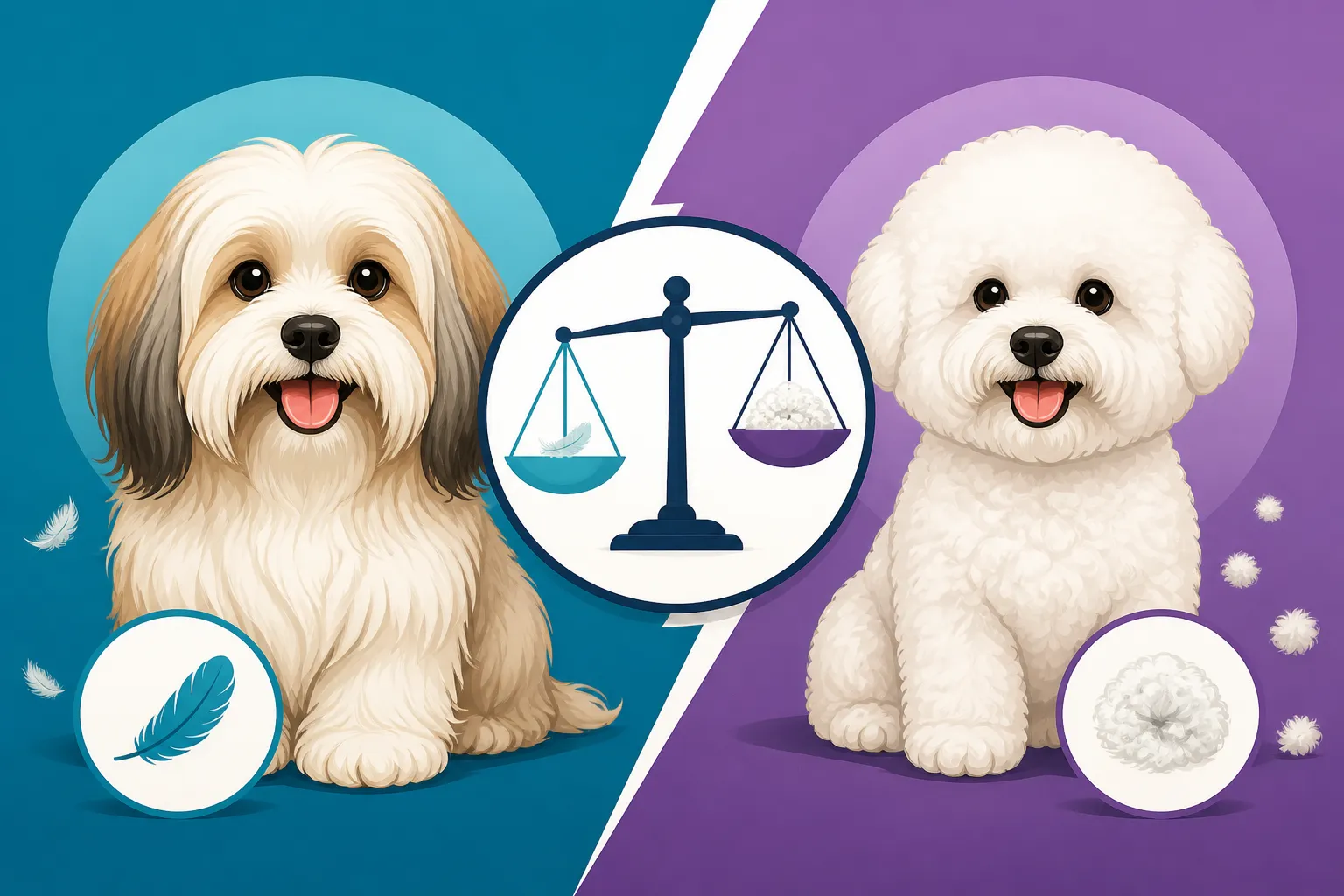
A Havanese may leave less loose hair around the house than a Bichon Frise, but the difference is not guaranteed—and neither breed is truly shed-free. Both have coats that can catch shed hairs instead of dropping them onto furniture. This guide explains what that means in daily life, how coat care affects visible shedding, and what to consider if allergies are part of your decision.
Do Havanese shed less than Bichons
Why the Havanese may seem to shed less
Havanese are often described as low-shedding dogs. Their long, soft coat can hold onto loose hairs, so you may notice fewer of them on the sofa or your clothes than you would with a dog whose loose coat falls freely. That can create the impression that a Havanese does not shed much at all.
But the hairs have not necessarily disappeared. Some remain caught in the coat until brushing or bathing removes them. If brushing gets skipped, those loose hairs can tangle with the coat and contribute to mats. You might see a small amount of hair in the brush one day, then find the coat harder to comb a few days later.
The breed’s coat varies, too. One Havanese may have a fine, silky coat that is fairly easy to work through, while another’s coat may be thicker, wavier, or more prone to tangling. For a closer look at that variation, see Whether a Havanese Coat Is Silky or Wiry.
Bichons shed too, even when little hair is on the floor
Bichon Frises are also commonly considered low-shedding. Like a Havanese, a Bichon can retain shed hairs within its coat, which means the loose hair may show up during brushing rather than scattered around the house.
That does not make the two coats identical. Bichons generally have a dense, curly coat that needs regular upkeep to prevent tangles and mats. A Havanese’s coat is usually longer and may be wavy or silky, which brings its own brushing challenges. Either dog can leave hair on a brush, bedding, or clothing—especially when the coat is overdue for grooming.
So, if the question is which breed leaves less hair on the floor, some Havanese owners may find their dog does. But there is no reliable rule that every Havanese sheds less than every Bichon. Coat type, the individual dog, grooming habits, and changes in health can all affect what you see.
A practical comparison
| Coat-care question | Havanese | Bichon Frise |
|---|---|---|
| Visible shedding around the home | Often low, but loose hairs can be caught in the coat | Often low, but loose hairs can be caught in the coat |
| Coat texture | Commonly long, soft, silky, or wavy | Commonly dense, curly, and fluffy |
| Main grooming concern | Tangles and mats, especially in friction areas | Tangles and mats in the dense coat |
| Does low shedding mean no maintenance | No; regular brushing and grooming are still needed | No; regular brushing and grooming are still needed |
| Can an individual dog shed more than expected | Yes | Yes |
For a broader comparison of the breeds beyond their coats, The Havanese Against a Bichon Frise looks at how they differ as household companions.
What makes shedding more noticeable at home
Loose hair can be trapped rather than absent
A low-shedding coat can be misleading. You might not find much hair on the floor after a few days, then remove a surprising amount from your dog’s coat with a comb. That is one reason routine brushing matters: it helps release loose hair before it becomes tangled with the coat.
Pay attention to spots where fur rubs or gathers. Behind the ears, under the collar, in the armpits, around the legs, and where a harness rests are common trouble areas for a long-coated dog. If you mainly brush the top of the coat, the surface may look tidy while tangles build underneath.
A thorough method is to part the coat into small sections and work from the skin outward, checking with a comb as you go. If the comb catches, stop and gently work through the area rather than pulling hard. For more on where trouble tends to start, read Where a Havanese Mats First.
Coat changes can make shedding seem different
A Havanese puppy’s coat does not always behave like the adult coat. As the puppy coat changes, loose hair and tangles may become more noticeable, and brushing may suddenly take longer. Owners sometimes assume they have done something wrong when a coat that was easy to manage begins matting. In many cases, it is simply a change in coat texture and density that calls for a closer grooming routine.
Bichons also change as they mature, and individual coat development varies. If you are comparing a young Havanese with an adult Bichon—or the other way around—you may not be comparing their mature coats fairly. See When a Havanese Puppy Coat Changes for more on that transition.
Season, indoor heating, changes in routine, and the dog’s general health can also affect what you notice. A sudden increase in hair loss, bald patches, irritated skin, or a coat that changes dramatically deserves attention from a veterinarian. Normal loose hairs caught in a brush are different from unusual or patchy hair loss.
Brushing frequency affects what you find
A dog may seem to shed more simply because you have gone longer between brushing sessions. The loose hair accumulates in the coat and then comes out in a larger clump when you finally brush. Regular sessions usually make the amount easier to manage and help you spot tangles before they tighten.
The right schedule depends on the dog’s coat length, texture, activity, and tolerance for grooming. A long Havanese coat may need frequent, careful brushing; keeping it shorter can reduce the time spent working through tangles, though it does not eliminate grooming. A Bichon’s dense coat also needs consistent attention.
Use a brush and comb suited to the coat rather than choosing a tool based only on breed name. Pet retailers such as Chewy may carry grooming tools, but check that a product is appropriate for your dog’s coat and use it gently. A brush that scratches the skin or a comb used with force can make grooming unpleasant and leave your dog less willing to cooperate next time.
Does low shedding make either breed better for allergies
Low-shedding is not the same as hypoallergenic
People often look at Havanese and Bichons because they are commonly described as low-shedding breeds. That may reduce the amount of loose hair you see, but it does not guarantee a reaction-free home. Allergic reactions are commonly associated with proteins found in a dog’s dander, saliva, and urine—not just the hair itself.
A dog’s coat can carry dander and saliva around the home, and grooming can stir up loose material. Someone who reacts to one dog may tolerate another dog of the same breed differently, while another person may react to both. Breed labels cannot predict an individual person’s response with certainty.
If allergies are a concern, spend time around adult dogs when possible and notice how you feel during and after the visit. A short meeting may not reflect what living with a dog is like, since exposure at home is more frequent. For more context, see Whether a Havanese Suits an Allergy Household.
Plan around cleaning and coat care, not just floor hair
Whether you choose a Havanese or a Bichon, routine cleaning can help manage what collects in the home. Wash dog bedding regularly, clean the areas where your dog rests, and keep grooming supplies and loose hair from building up in shared spaces. Brushing in an easy-to-clean area can also make cleanup simpler.
A shorter, maintained coat may be easier to keep tidy, but it does not remove allergens or make a dog allergy-proof. If you keep a long coat, plan for the time needed to brush it and arrange professional grooming when needed. If you are trying to work out whether hair is landing on your furniture, Whether a Havanese Leaves Hair on Furniture covers the difference between visible shedding and hair retained in the coat.
If you are assembling basic care supplies, Chewy is one place to browse for pet brushes, combs, and coat-care products. Match the tool to your dog’s coat and ask a groomer or veterinarian if you are unsure what is appropriate, especially if your dog has sensitive skin.
Choosing between the coats and managing shedding
Pick for the whole grooming routine
It is tempting to make the decision based on the amount of hair on the floor, but that is only one small part of living with either breed. Consider how much time you can realistically spend brushing, whether you are willing to book regular professional grooming, and what coat length fits your household.
A Havanese with a longer coat can look striking, but it needs regular attention to stay free of tangles. A shorter clip may make home care easier, yet still calls for brushing, bathing, nail care, and coat checks. A Bichon’s dense coat can be demanding too, especially if you want to maintain its characteristic rounded appearance.
Think about ordinary routines: a dog who wears a harness for daily walks may develop friction tangles; a dog who plays outside may bring debris into its coat; and a dog who dislikes being brushed will need patient, positive introductions to grooming. The coat you can maintain comfortably is usually a better fit than the coat that sounds easiest in theory. How Often a Havanese Must Be Brushed offers more detail on the upkeep a Havanese coat can require.
Make grooming a calm, predictable habit
Start with short sessions and reward cooperation. Rather than waiting until the coat is tangled and trying to finish a long grooming session at once, brush a small area, offer a break, and return to it later. Over time, your dog can learn that handling its ears, legs, paws, and tail is part of an ordinary routine.
Check the skin as you groom. If you find a tight mat close to the skin, do not yank it out or cut it with scissors near the body; dog skin can be pulled up into a mat, making an accidental cut easier than it looks. A professional groomer can advise whether a mat can be safely worked through or whether clipping is kinder.
You can find shampoos and conditioners through pet retailers such as Chewy, but more product is not always better. Choose products intended for dogs, follow label directions, and rinse thoroughly. If the skin looks red, smells unusual, or seems itchy, ask your veterinarian before trying a series of new products.
How to make a fair comparison
If you are deciding between a Havanese and a Bichon, compare adult dogs with coats kept at a similar length and ask their owners what they actually see during brushing and house cleaning. Ask how often they brush, whether they use a groomer, and where mats tend to form. Those practical details will tell you more than a simple “low-shedding” label.
If allergies are part of the decision, spend time with the specific dogs you may bring home and discuss your concerns with a healthcare professional. If your main concern is housekeeping, remember that low visible shedding can still mean hair and dander are retained in the coat and released during grooming.
In short, a Havanese may appear to shed less than a Bichon in some homes, but both breeds are generally low-shedding rather than shed-free. The individual dog and the care routine matter more than a blanket breed ranking. Chewy and other pet retailers can help you find basic grooming supplies, but the most important tools are a suitable brush, a comb, patience, and a routine your dog can comfortably tolerate.
Disclaimer
This article is for general informational purposes only and does not constitute professional advice. Laws, prices and regulations vary by location and change over time. Consult a qualified professional for guidance on your specific situation.