Whether a Black Havanese Turns Silver
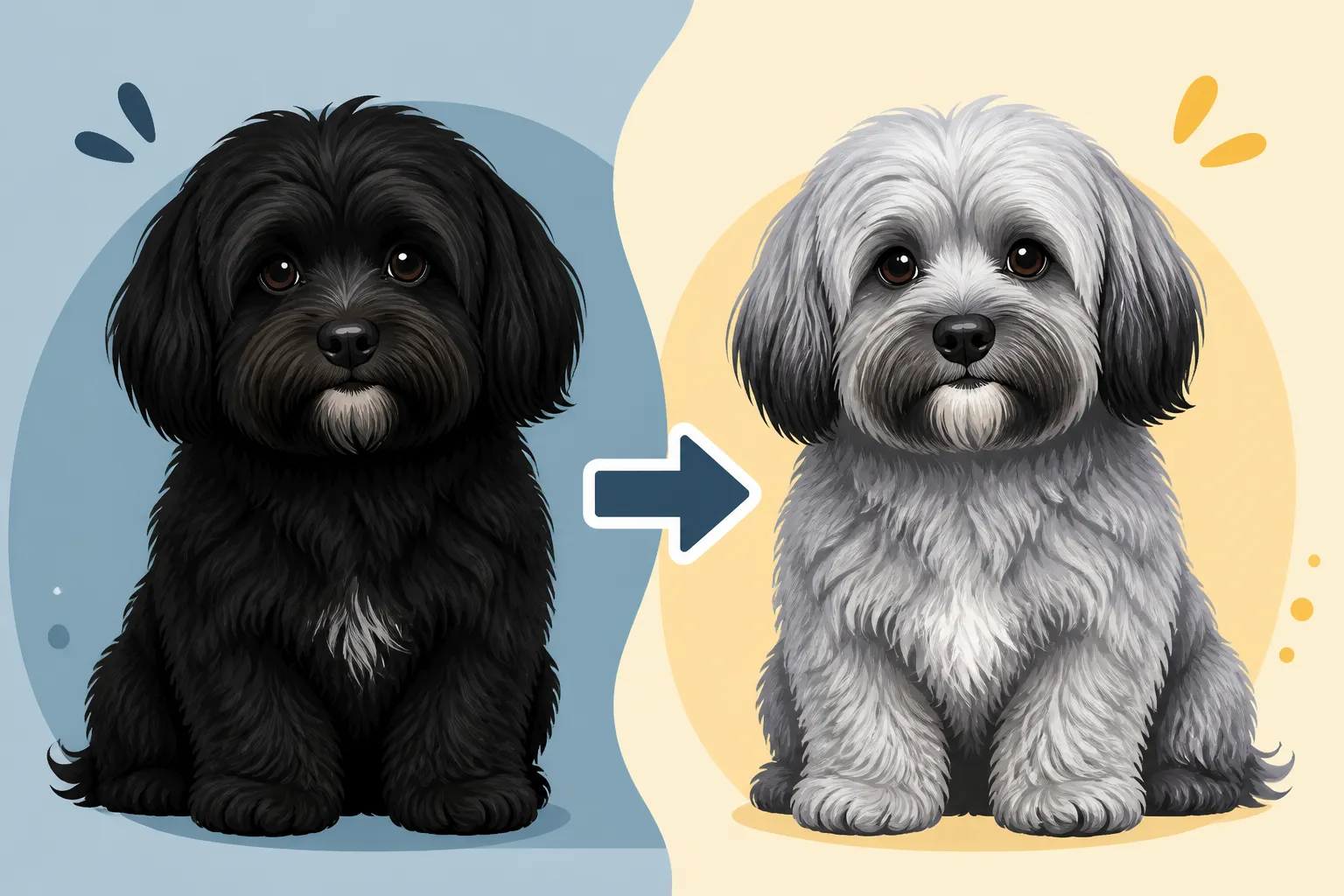
A black Havanese puppy can gradually develop silver, charcoal, or lighter gray hairs as its coat matures, but a color change is not guaranteed. The shift may be subtle or dramatic, and it can happen unevenly across the body. Here’s how to tell normal coat-color development from age-related graying, what genetics may contribute, and how to care for a changing coat.
Can a black Havanese turn silver
Why a puppy’s coat color can change
Havanese coats can change noticeably as puppies grow. A puppy that looks nearly black may develop lighter hairs or patches as the adult coat comes in, sometimes over the first few years of life. The color may settle into charcoal, silver, or a mix of dark and pale hairs rather than becoming evenly silver from head to tail.
This change is often related to inherited coat-color traits. Some dogs carry genes that cause dark pigment to lighten over time, a process commonly called progressive graying or silvering. The details can vary from dog to dog: two black puppies from the same litter may mature into quite different-looking adults.
The transition is not always a clear before-and-after change. You might first notice that the hair around the muzzle, ears, or legs looks less black in bright daylight. Later, pale strands may show through the body coat, or the coat may look softer and lighter overall. A dog can also retain black areas while developing silver elsewhere.
For a broader look at how puppy color can shift with maturity, see Whether a Havanese Puppy's Color Predicts the Adult. And although a silvering gene can help explain some changes, it does not mean every black Havanese will turn silver.
Silvering is possible, not inevitable
A black Havanese can remain very dark throughout adulthood. Another may lighten substantially, while a third may keep a black base with scattered gray hairs. Coat color inheritance is complex, so a puppy’s appearance alone cannot reliably predict its final shade.
Even the parents’ coats offer clues rather than a guarantee. If one or both parents lightened as they matured, their puppy may have inherited traits associated with a similar change. But coat color is influenced by inherited combinations, and littermates can differ. A breeder may be able to share how related dogs changed, but no prediction should be treated as certain.
It also helps to distinguish silvering from the coat simply looking different under changing conditions. Wet hair, indoor lighting, sunlight, and the direction the coat is brushed can all affect how dark or pale it appears. Before assuming that a black coat is changing, compare it when dry and in consistent natural light.
For related color details, Whether a Havanese Has a Silvering Gene explores the topic further, while Whether a Havanese Can Be Solid Black looks at the breed’s dark coats. The key point is that both a lasting black coat and a black coat that lightens can be normal variations.
| What you notice | What it may mean | What to check |
|---|---|---|
| Pale hairs appear gradually as a puppy matures | Normal coat-color development, including possible silvering | Whether the change is even, gradual, and limited to coat color |
| Black hair looks lighter when wet or under bright light | A lighting or coat-condition effect | Compare the dry coat in similar natural light |
| Gray hairs appear mainly around an older dog’s muzzle | Age-related graying may be developing | Watch for other changes in health or behavior |
| A patch changes color suddenly or the skin looks irritated | Not typical gradual silvering | Ask a veterinarian to examine the skin and coat |
| Coat becomes thin, brittle, or unusually sparse | A coat or health concern may be involved | Note when it began and discuss it with a veterinarian |
How to tell coat silvering from age-related graying
Look at the timing and pattern
A coat that lightens while a dog is still growing may reflect normal development or inherited silvering. The change usually happens gradually and may appear in multiple areas, although not necessarily at the same rate. The dog’s skin should generally look normal, and the coat should not be accompanied by itching, sores, or sudden hair loss.
Age-related graying is different in timing and often more localized at first. Like people, dogs may develop gray hairs as they get older, commonly around the muzzle and face. That change does not necessarily mean the coat’s inherited color pattern is shifting across the whole body.
Keep in mind that timing can overlap. An adult Havanese may show both inherited coat-color changes and ordinary graying. If you are unsure, take a few clear photographs in consistent light every month or two. This creates a more useful record than relying on memory, especially when the change is slow.
If the coat is changing along with itching, redness, scabs, a strong odor, or bald patches, do not assume it is just a color variation. Those signs deserve veterinary attention. A coat becoming lighter by itself is not the same as a skin problem, but new symptoms are a reason to look more closely.
Watch for changes beyond color
Normal silvering changes the appearance of the hair, not the dog’s comfort or behavior. Your Havanese should still be moving, eating, and acting as usual. If the coat change is accompanied by low energy, discomfort, or a broader change in condition, it is worth discussing the full picture with a veterinarian instead of focusing only on color.
Check whether the hairs themselves are changing shade or whether the coat is losing density. A dark coat with silver hairs can still be full and healthy. By contrast, thinning, breakage, or a sudden rough texture may have several possible causes and cannot be diagnosed by color alone.
A quick home check can help you describe what you see:
- Part the coat gently and look at the skin beneath it.
- Compare the affected area with photographs from earlier months.
- Note whether the change is gradual or appeared quickly.
- Record any itching, redness, hair loss, or behavior changes.
- Share those observations with your veterinarian if anything seems unusual.
Color is only one feature of the breed’s appearance. Every Color a Havanese Is Allowed to Be gives wider context about coat-color variety, and Whether Color Affects a Havanese's Health addresses whether appearance alone tells you anything about health.
Caring for a black or silvering Havanese coat
Keep grooming steady as the coat changes
A change in color does not require a special grooming routine. The practical goal is to keep the coat clean, comfortable, and free of tangles. Havanese hair can mat, particularly where friction and movement catch it: behind the ears, under the collar or harness, in the armpits, and around the legs.
Brush in small sections rather than skimming only the top layer. Part the coat so you can reach closer to the skin, and use a comb afterward to check for knots the brush may have missed. If a tangle is tight or close to the skin, avoid yanking at it; painful pulling can make grooming stressful and irritate the skin.
If you are putting together a basic grooming kit, Chewy is one place owners may compare combs, brushes, and coat-care supplies. Choose tools that feel manageable for your dog and use them gently. The right routine matters more than buying a large collection of products.
A detangling spray can help some coats, but it should be suitable for dogs and used according to its label. Chewy can also be a convenient place to browse dog-formulated grooming products if you are comparing options. If your Havanese dislikes brushing, has recurring mats, or is difficult to groom safely, ask a professional groomer to show you a comfortable technique.
Don’t try to change the shade
Shaving, clipping, or bathing will not turn a genetically black coat silver or reverse natural silvering. Clipping can change how the coat looks temporarily because the new length and texture may reflect light differently, but it does not rewrite the color a dog inherited. Avoid dyes, bleaching products, or human hair treatments; they can irritate skin and are not a safe way to manage coat color.
The best haircut is the one that suits your household and your dog’s tolerance for coat maintenance. A shorter pet trim can make brushing more manageable, while a longer coat needs regular attention to prevent knots. Neither choice will reliably determine whether the coat lightens over time.
If you use a harness, check the hair beneath the straps regularly. Friction can contribute to tangles, especially when the coat is long or damp. After a rainy walk or bath, dry the coat thoroughly and gently work through it once it is comfortable to handle. Chewy may be useful for comparing everyday grooming accessories, but no brush or shampoo can prevent inherited color changes.
What to expect as your Havanese grows
Keep a simple coat-color record
It is easy to forget what a puppy looked like several months earlier, especially when changes happen slowly. Take occasional photographs in similar lighting, with the coat dry and reasonably clean. Include a full-body view and closer views of places where you see the biggest difference, such as the face, shoulders, or legs.
You can also jot down the date and what you noticed: “more pale hairs around the ears,” for example, is more helpful later than “looks different.” If you contact a breeder about family coat patterns, those pictures can make the conversation more concrete. A breeder’s observations may provide useful context, but they cannot promise the final color.
Do not feel that a silvering coat makes your dog less recognizably Havanese. Adult coats can look quite different from puppy coats, and variation in shade is part of what owners may see as their dogs mature. Whether a Havanese Can Be Silver offers another perspective on silver-colored coats.
Ask for help when the change seems unusual
If the hair is gradually becoming lighter while the skin remains healthy and your dog feels well, the change may simply be normal coat development. If the color shift is sudden, limited to a strange patch, or paired with skin irritation or hair loss, arrange a veterinary check. A veterinarian can assess the skin and overall health rather than guessing from photographs alone.
For routine color questions, a groomer can help you understand whether the coat looks different because of length, texture, lighting, or tangling. For health concerns, a veterinarian is the right person to assess symptoms. Keeping those roles clear can save you from worrying over harmless shade changes while also making sure genuine skin problems are not dismissed as “just silvering.”
Most importantly, do not choose a puppy based on a promise that its black coat will stay black or become silver. The adult shade is difficult to predict with certainty. Choose a dog whose temperament, health background, and needs fit your home, and enjoy the coat as it changes.
Disclaimer
This article is for general informational purposes only and does not constitute professional advice. Laws, prices and regulations vary by location and change over time. Consult a qualified professional for guidance on your specific situation.