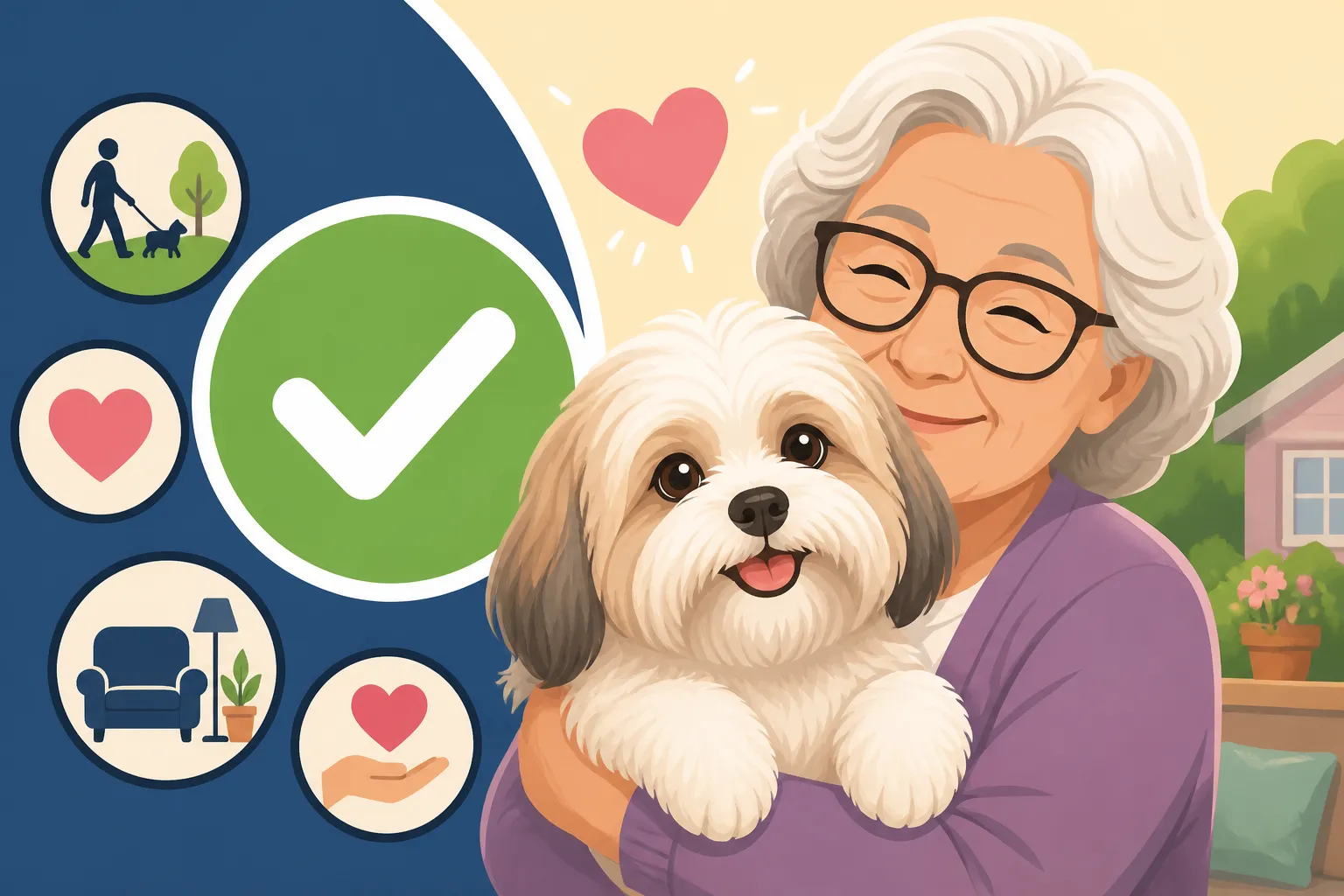
Whether a Havanese Suits a Retired Owner
A Havanese can be a wonderful companion in retirement, but the fit depends less on age than on your daily routine, energy, mobility, and plans. These affectionate little dogs want company and regular care, and their coat needs consistent attention. This guide explains what retired owners should realistically expect, what may be challenging, and how to decide whether a Havanese suits your life.
Why a Havanese Can Suit Retirement
A companion who likes being close
Havanese are people-oriented dogs. Many like to follow their owners from room to room, settle nearby while someone reads or watches television, and join in ordinary household routines. If you want a companion who is involved in daily life rather than content to be left alone for long stretches, that closeness can be a real pleasure.
The same quality can become demanding if you expect a dog to entertain itself for much of the day. A Havanese may need help learning to relax alone, even if you are home most of the time. Retirement often makes it easier to provide company, but it is still useful to build short, comfortable periods of separation into the routine. A dog should be able to nap in another room or stay calmly at home while you attend an appointment.
That people-focus also makes the breed appealing to owners who enjoy gentle interaction. A Havanese may be happy to learn a small trick, play a short game, or simply sit with you while you do chores. For a broader look at the breed’s social nature, read The Household a Havanese Was Bred For and Whether a Havanese Tolerates Being Alone.
Exercise that can fit a steady routine
A Havanese needs daily activity, but many owners can meet that need with manageable walks, indoor play, and brief training sessions rather than strenuous exercise. A relaxed walk around the neighborhood, a little sniffing time, and a game at home may be more satisfying than pushing for distance or speed. The right amount depends on the individual dog’s age, health, and stamina.
This can suit a retired owner who enjoys getting outside but does not want a dog that requires hours of vigorous exercise. It can also work for someone who prefers a more flexible routine: a walk when the weather is pleasant, a short indoor game when it is not, and a few minutes of training spread through the day. The goal is regular, enjoyable movement, not exhausting the dog.
Consider the environment as well as your own fitness. In a busy area, short leash walks may be more practical than off-leash outings. In a quieter neighborhood, a Havanese may enjoy exploring at a gentle pace. If you are unsure how activity needs change by age and condition, How Much Exercise a Havanese Needs offers a useful companion topic.
A small dog for many kinds of homes
A Havanese is small enough to live comfortably in an apartment or a modest home, and a large yard is not a requirement. That can be a helpful match for retirees downsizing, moving to a condominium, or living in a community with shared outdoor space. What matters is providing safe opportunities for toileting, walking, play, and companionship.
Small does not mean care-free, however. A Havanese still needs supervision around larger dogs, careful handling on stairs or furniture, and regular grooming. If you have grandchildren or frequent visitors, the dog needs a calm place to retreat and people need to handle it gently. It is worth considering the physical realities of your home, too: slippery floors, steps at the entrance, and long walks to an elevator can shape daily care.
For a quick comparison of common retirement considerations, use this table as a starting point rather than a guarantee. Individual dogs differ, and a breeder, rescue, or veterinarian can help you assess a particular dog.
| Retirement consideration | What may work well with a Havanese | What to plan for |
|---|---|---|
| Daily companionship | Often enjoys staying close to people | Gradual practice being alone |
| Exercise | Walks and play can be broken into manageable sessions | Consistent daily activity |
| Home size | Can adapt to many home types | Safe toileting and movement access |
| Grooming | Coat style can be chosen to suit your preferences | Regular brushing or professional grooming |
| Travel and appointments | Small size may make some outings easier | Care arrangements when the dog cannot come along |
| Long-term care | Can be a close companion for many years | Planning for the dog’s needs as both of you age |
The Responsibilities to Weigh Before Choosing
Coat care is a regular commitment
The Havanese coat is one of the most important practical considerations. A long coat can tangle and mat, especially behind the ears, under the legs, and where a harness rubs. Keeping it long generally means frequent, thorough brushing and regular bathing and drying. A shorter pet clip can make home care easier, but it still needs maintenance and professional grooming may remain part of the budget.
Think about your hands, eyesight, patience, and tolerance for appointments. Brushing a wiggly dog on a day when your hands ache may feel very different from admiring a beautifully kept coat in a photo. A shorter, practical clip may be a better choice if daily coat work sounds burdensome. You can explore the options in The Puppy Cut Most Havanese Owners End Up Choosing.
Before bringing a dog home, ask who will handle grooming if you become ill, travel, or find brushing difficult. A trusted groomer and a simple home-care routine can prevent coat maintenance from becoming a source of stress. If supplies are part of the practical planning, some owners use retailers such as Chewy for routine grooming items; the important thing is choosing tools and products suitable for the dog and learning how to use them safely.
Grooming, veterinary care, and everyday costs
Retirement income may be predictable, but dog expenses are not always predictable. Alongside food, routine veterinary visits, grooming, and supplies, an older dog may need dental work, tests, or treatment for a new health problem. A small breed is not automatically inexpensive to care for, and a long-lived companion can require years of ongoing attention.
Before deciding, map out the recurring costs and think about how you would handle an unexpected veterinary bill. Ask local groomers what services they provide and whether they are comfortable handling small companion breeds. Compare veterinary clinics by location, accessibility, and the way they communicate—not only by convenience. If routine food and household supplies are easier to manage with delivery, Chewy may be one option to consider alongside local shops, while checking the retailer’s current service details for your area.
A practical plan can include a monthly pet budget, a savings reserve, and a backup person who can help with transport or care. This is particularly useful if you do not drive or if a health issue could temporarily limit your mobility. Planning before adoption is less stressful than trying to arrange everything during an emergency.
Your health and mobility may change over time
It is sensible to think beyond how you feel today. A Havanese may live for many years, and your own mobility, housing, or support network could change during that time. Could you still take the dog outside if walking became difficult? Could a friend, family member, dog walker, or neighbor step in? Would your building permit assistance with pet care if you needed it?
A small dog can be easier to manage than a large one, but it still needs to be lifted sometimes, transported safely, and taken out regularly. If bending, gripping a leash, or walking on uneven ground is already difficult, try the routine before committing. Consider how the dog would get to a veterinarian and who could help if you were temporarily hospitalized.
If mobility is a concern, the relevant question is not simply whether the breed is small. It is whether the care routine can be made safe and sustainable. Whether a Havanese Suits Someone With Limited Mobility can help you think through that specific issue.
Making Daily Life Work
Set up a routine that supports both of you
Havanese often do well with predictable patterns. A retired owner may have flexibility, but an unstructured day can make walks, feeding, grooming, and rest easy to postpone. A simple rhythm helps: a morning toilet break and walk, meals at dependable times, a short play or training session, and a regular brushing check.
Keep activity at a comfortable pace. If a long walk is not right for you, divide movement into shorter outings and use indoor games that do not involve risky jumping. A food puzzle or a few minutes practicing a cue can provide mental engagement without turning the day into a workout. For a dog who enjoys company, quiet time near you can count as meaningful companionship, too.
Consistency also makes it easier to notice changes. If a dog who usually trots to the door starts hesitating, or suddenly avoids stairs, you can spot the shift sooner when you know its normal habits. A routine should be flexible enough to change with weather, health, and energy, but steady enough that the dog knows what to expect.
Build a support network before you need one
Even a home-centered owner has appointments, errands, family commitments, and occasional travel. Identify a backup caregiver before bringing a dog home. That person should know the dog’s feeding routine, medication needs if any, veterinarian contact information, and how the dog behaves around unfamiliar people or animals.
If you travel often, consider whether the dog can accompany you and what arrangements are realistic when it cannot. A small dog may be easier to transport, but every trip still requires planning for safe restraint, breaks, and the rules of your destination. For longer trips, introduce a sitter or boarding arrangement gradually rather than waiting until the first urgent need.
Retailers such as Chewy can be convenient for replenishing familiar food or supplies, but delivery does not replace local backup care. Keep an extra supply of essentials at home and make sure another person can find them. A dependable support plan protects both you and the dog if your routine changes unexpectedly.
Decide whether a puppy or adult dog fits better
A puppy can be delightful, but it is also a demanding choice. Puppies need frequent toilet breaks, supervision, socialization, and patient training. They may wake you at night, chew belongings, and require careful management around stairs and furniture. If you have the energy and support for that phase, it can be rewarding; if not, an adult dog may be a better match.
An adult Havanese may already have a known temperament, grooming tolerance, and household routine. That can make it easier to judge whether the dog’s energy level and needs fit your life. Ask about its history, comfort with being alone, handling, and any medical or behavioral concerns. A rescue or breeder may not know every detail, so allow time for adjustment and avoid expecting an unfamiliar dog to settle immediately.
Whether you choose a puppy or adult, prioritize temperament and health information over appearance. The right individual matters more than the idea of a perfect breed match. If you are also considering a first dog, Whether a Havanese Suits a First Time Dog Owner offers additional questions to ask yourself.
A Practical Decision Checklist
Signs the match may be a good one
A Havanese may suit you if you enjoy a close companion, can provide daily walks and play, and are comfortable arranging regular coat care. It can be a good fit if your home allows reliable toilet breaks and you have a plan for appointments, illness, and travel. You do not need to be exceptionally athletic, but you do need to be available and consistent.
It may also suit you if you are willing to teach the dog to spend short periods alone. Being retired does not necessarily mean you will be home every moment, and building independence helps prevent the dog from relying on constant contact. If you have a flexible schedule, you can make that training gradual and reward calm behavior.
Ask yourself honestly whether you want the realities of dog ownership, not only the pleasant parts. A Havanese can bring affection and humor into the day, but it will also need brushing, walks in inconvenient weather, veterinary care, and a plan for the future. For additional perspective on lifestyle fit, see Whether a Havanese Suits a Retired Owner and Whether a Havanese Suits Someone Who Travels.
Signs to pause and reconsider
Pause if you are hoping for a dog that can be left alone for most of the day, needs almost no grooming, or will automatically adapt to a major move. Also reconsider if routine outdoor access would be difficult and no one can help, or if the cost of grooming and veterinary care would leave you feeling financially unsafe.
You do not have to rule out a Havanese because you have health concerns or a smaller home. Instead, identify the specific tasks that may become difficult and decide how you would handle them. A nearby family member, accessible grooming salon, dog walker, or dependable neighbor might solve a practical obstacle—but only if that support is genuinely available, not merely hoped for.
When meeting a potential dog, watch how it responds to gentle handling and ordinary household activity. Ask what the dog is like after a walk, how it settles when people are busy, and what grooming it currently receives. A candid conversation can reveal whether this particular Havanese—not just the breed in general—fits the rhythm of your retirement.
Disclaimer
This article is for general informational purposes only and does not constitute professional advice. Laws, prices and regulations vary by location and change over time. Consult a qualified professional for guidance on your specific situation.