Whether a Havanese Needs a Yard
A Havanese does not need a yard to be happy, but it does need reliable chances to toilet, walk, sniff, play, and spend time with you. That can feel complicated if you live in an apartment, share outdoor space, or work around bad weather. This guide explains what a yard does and does not provide, and how to meet a Havanese’s needs without one.
Does a Havanese need a yard to be happy
A yard is convenient, but not essential
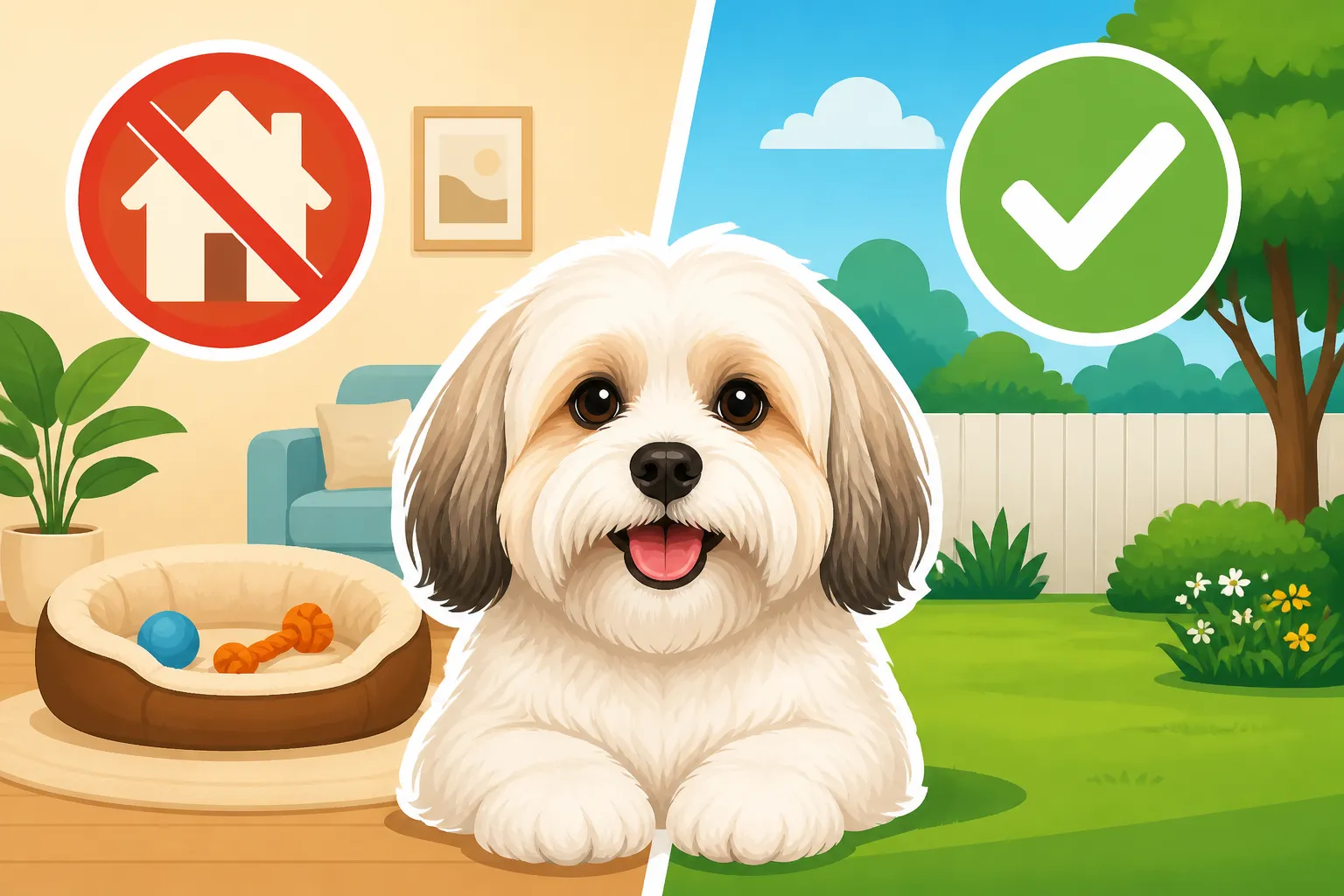
Havanese are small, adaptable companion dogs. Many live comfortably in apartments, condos, and homes without private outdoor space. A yard can make quick toilet trips and spontaneous play easier, but it is not the only way to provide exercise or enrichment. A dog with a thoughtful daily routine can do well without one; a dog with a large yard but little interaction may still be bored or unsettled.
It helps to picture an ordinary weekday. In a home with a fenced yard, you might open the door for a brief morning toilet break, then take a proper walk later. In an apartment, the same dog may go downstairs on leash, walk around the block, and enjoy a short indoor game after breakfast. The setting changes the logistics, not the basic needs.
A yard is also not automatically a safe, useful place to leave a Havanese unsupervised. Fencing can have gaps, gates can be left open, and small dogs may be vulnerable around unfamiliar animals. Some Havanese would rather stay close to their person than spend time outside alone. Regular company and supervised outdoor time matter more than the mere presence of grass.
For a broader look at the breed’s fit with smaller homes, see Whether a Havanese Suits an Apartment. The key question is not simply whether you have a yard; it is whether your routine gives your dog enough opportunities to move, explore, toilet, and connect with you.
What a yard can and cannot do
A secure yard can be genuinely useful. It gives a dog somewhere nearby to toilet, stretch its legs, and sniff at its own pace. It can help when you have limited mobility, are juggling a busy household, or need a quick toilet trip during a rainy spell. For a puppy who needs frequent outings, having a private outdoor area may make early housetraining less of a production.
But a yard does not replace walks. A short stroll exposes a Havanese to new smells, sounds, surfaces, and sights in a way that the same familiar patch of grass usually cannot. Walks also let you practice leash skills and help your dog learn that the wider world is ordinary rather than alarming. Even a roomy yard may become dull if the dog is left to entertain itself there.
Nor is outdoor access a substitute for companionship. Havanese tend to enjoy being involved in household life. If your dog spends much of the day alone in a yard, it may still bark at passersby, dig, pace, or wait by the door. Those behaviors are not proof that the dog needs a bigger yard; they may be signs it needs more interaction, enrichment, or help settling.
The practical answer is simple: think of a yard as a helpful tool, not a requirement or a full exercise plan. A Havanese without one can thrive when you can provide a reliable outdoor routine and engaging time indoors. For perspective on temperament and home life, Whether a Havanese Is Calm Indoors explains why a small dog may still need activity and attention even in a compact home.
Meeting a Havanese’s needs without a yard
Build a predictable toilet and walking routine
Without a yard, toilet trips need a little more planning. A young puppy may need to go out after waking, eating, drinking, playing, and before settling down for sleep. An adult dog may have a more predictable rhythm, but needs vary with age, health, diet, and individual habits. Try to notice your dog’s patterns instead of relying on a rigid schedule that does not fit them.
For apartment living, keep the route simple at first. Take your dog to the same suitable outdoor spot, give it time to sniff, and praise the behavior you want when it toilets. If the elevator, lobby, or busy sidewalk is distracting, build in a few extra minutes rather than rushing. In a walk-up, carrying a very young or unwell dog down stairs may sometimes be practical, but discuss mobility or health concerns with your veterinarian.
Bad weather can make the routine harder. Some Havanese hesitate in heavy rain, wind, or snow, and a quick trip to the nearest patch of pavement may not be enough if the dog is uncomfortable. A light, well-fitted coat may help some dogs tolerate cold or wet conditions, while a towel by the door makes cleanup easier. For dogs that balk at wet weather, Whether a Havanese Refuses to Go Out in Rain offers more on handling the reluctance without turning every outing into a battle.
Try to distinguish a toilet outing from a walk. A brief trip outside may meet an immediate need, while a separate walk provides time to move and investigate. If your schedule is tight, a dog walker, trusted neighbor, or midday visit can help maintain consistency. The right plan depends on your dog’s age and health; a puppy and an older dog may not be comfortable with the same gaps between outings.
Replace yard play with purposeful activity
A Havanese does not need strenuous exercise to have a satisfying day, but a little movement and mental activity make a difference. Walks can be adjusted to your dog’s pace and fitness. Letting the dog pause to sniff, changing routes occasionally, and practicing a few simple cues can make a modest walk more engaging than marching briskly around the same block every time.
Indoor play can fill in the gaps. Try a gentle game of fetch down a clear hallway, a short trick-training session, or a food puzzle appropriate for your dog. Keep play safe: avoid slick floors, high jumps from furniture, or rough games that overwhelm a small dog. If you use a long line in an open area, choose a safe location and stay attentive so it cannot tangle around people, dogs, or objects.
A few minutes of training can be surprisingly tiring in a good way. Ask for a sit before putting on the harness, practice a hand target, or teach a simple “find it” game by hiding a few pieces of kibble around one room. Break sessions into manageable chunks. The aim is not to exhaust your dog, but to provide choices and attention throughout the day.
For ideas about balancing movement with a Havanese’s size and energy, see How Much Exercise a Havanese Needs and How Far a Havanese Should Walk Daily. If you are gathering everyday supplies such as a properly fitted harness, leash, or food puzzle, Chewy is one place owners may browse; check that any item suits your dog’s measurements and chewing habits rather than choosing by appearance alone.
Choosing a home and routine that work
Compare your outdoor access honestly
A fenced yard is only useful if it is secure and accessible. Check gates, low openings, and spots where a small dog could squeeze through. Consider whether the ground is comfortable, whether there is shade and fresh water when needed, and whether the space is calm enough for your dog to toilet or play. Supervise your Havanese outdoors, especially around unfamiliar dogs or when the yard is new.
If you do not have a yard, assess the practical route from your door to an appropriate toilet area. Is it safe at night? Can you manage it during a storm? Are there stairs, a long hallway, or an elevator that adds time? These details may matter more than the size of the apartment itself. A home near a walkable outdoor area can be easier than a larger home where getting outside is awkward.
Shared courtyards and communal dog areas can be helpful, but they require good judgment. Clean up promptly, respect building rules, and do not assume every dog using the space is comfortable with a small dog approaching. If your Havanese is nervous or easily distracted, a quieter sidewalk or a less busy time may work better than a crowded communal area.
| Living setup | What it makes easier | What you still need to provide |
|---|---|---|
| Secure private yard | Quick toilet trips and brief supervised play | Walks, companionship, enrichment, and yard safety |
| Apartment with nearby outdoor access | Regular leash outings and neighborhood sniffing | A dependable toilet routine and weather planning |
| Home with shared outdoor space | Convenient access without private land | Supervision, cleanup, and consideration for other residents |
| Home with limited nearby green space | Indoor games and planned outings can fill gaps | More deliberate scheduling for walks and toilet breaks |
Match the routine to your dog’s age and household
A puppy’s needs can make life without a yard more demanding at first. Frequent trips, close supervision, and patience are part of housetraining whether you live in a house or apartment. A yard may shorten the journey outside, but it does not teach a puppy where to toilet by itself. Consistency and a quick response to the puppy’s signals still do the teaching.
Adult dogs may settle into a routine, but a long stretch alone can be difficult for a highly people-oriented companion. If everyone in the household is out for much of the day, think through who will provide a midday toilet break and company. A walker, sitter, or family member may be more useful than a yard in that situation. Whether a Havanese Suits a Full Time Worker can help you think about the time and support a dog may need.
Older Havanese may need shorter, more frequent outings or a route with fewer stairs. Joint pain, vision changes, or other health conditions can change what is comfortable, so ask your veterinarian about exercise and toileting adjustments if your dog’s mobility changes. A senior dog may appreciate a private yard for a quick trip, but should not be expected to manage outdoor space alone if balance, hearing, or eyesight has become an issue.
A second dog is not a substitute for outdoor access or human interaction, either. Dogs may enjoy each other’s company, but they still need individual toilet opportunities, training, and attention. If you are considering another dog partly because your Havanese lacks a yard, take a look at Whether a Havanese Should Be an Only Dog before assuming a companion will solve the problem.
Making a no-yard routine work day to day
Set up for convenience and safety
A practical entryway can make apartment outings smoother. Keep the leash, harness, waste bags, and a towel in one predictable place so a quick toilet break does not become a search through the house. If weather is messy, place a washable mat near the door. Chewy is one possible retailer for everyday walking or cleanup supplies, but the most important thing is choosing gear that fits your dog and is easy for you to use consistently.
For a small dog, check harness fit carefully. It should be secure without rubbing or restricting movement, and your Havanese should not be able to back out of it when startled. Recheck fit as a puppy grows or if your adult dog gains or loses weight. Keep your dog on leash near roads and in places where local rules require it, even if it seems calm and responsive.
Plan for the less convenient days before they arrive. Decide who can take the dog out if you are sick, delayed at work, or stuck in bad weather. If your building has a long route to the outside, have a realistic backup plan for emergencies, while remembering that indoor toilet options should be introduced thoughtfully so they do not confuse a dog’s usual routine. Chewy may also carry cleanup products or training supplies that owners find useful, but follow your veterinarian’s advice if toileting changes suddenly.
Watch your dog, not just the calendar
The best schedule is the one that fits your individual dog. A dog that is comfortable, toilets regularly, enjoys walks, and settles at home is likely getting a workable routine. A dog that has repeated accidents, seems distressed before outings, or cannot settle may need a change in timing or a veterinary check, especially if the behavior is new.
Notice whether your Havanese seems eager to explore or overwhelmed by the environment. Some dogs enjoy a lively neighborhood walk; others do better with quieter routes and gradual exposure. You can shorten a walk, pause for sniffing, or add indoor enrichment on a day when conditions are unpleasant. Flexibility is not failure—it is how you adapt care to the dog in front of you.
If your home has a yard, make sure it is not the only place your dog gets to move and explore. If you do not have one, do not assume you are providing less simply because outdoor access takes more planning. A secure route, dependable toilet breaks, daily walks, play, and companionship can give a Havanese a full and contented life in many kinds of homes.
Disclaimer
This article is for general informational purposes only and does not constitute professional advice. Laws, prices and regulations vary by location and change over time. Consult a qualified professional for guidance on your specific situation.