Whether a Havanese Refuses to Go Out in Rain
Oh, the trials and tribulations of owning a Havanese, especially when the weather decides to be less than ideal! Many of us have experienced that familiar stance at the door, the tail tucked just so, the unwavering stare that screams, "Absolutely not, I am not stepping foot out there." This guide is all about understanding why your fluffy companion might be giving you the cold shoulder (or the wet paw) when it rains, and more importantly, how you can gently encourage them to embrace, or at least tolerate, those damp outdoor adventures.
Why Havanese Often Balk at the Rain
It’s easy to think our Havanese are just being stubborn when they refuse to go out in the rain, but there's often more to it than simple defiance. Their unique physical characteristics and innate sensibilities can make a rainy day feel like a genuine ordeal. Understanding these factors is the first step toward empathy and finding effective solutions.
The Wet Fur Phenomenon: It's Not Just Water
Imagine stepping out into a downpour with a luxurious, floor-length coat that quickly becomes waterlogged. That’s a bit like what a Havanese experiences. Their beautiful double coat, while designed to protect them, can become heavy, clingy, and incredibly uncomfortable when soaked. This isn't just about getting wet; it's about the feeling of cold, soggy fur plastered against their skin, making them feel weighed down and chilled. The undercoat, in particular, can absorb a surprising amount of water, holding onto the dampness and making them feel colder than they otherwise would. This discomfort is real for them, and it's a perfectly valid reason for their reluctance.
Beyond the initial discomfort, the long hair around their face, ears, and paws can trap water, leading to a host of other issues. Drips from their beard can tickle or chill their chest, making them shiver. Water in their ears can contribute to ear infections, a concern many Havanese owners face, which explains why some are so adamant about keeping their head out of the wet. For a breed so devoted to comfort and cleanliness, a soaking rain can feel like a genuine assault on their senses and well-being.
Slippery Paws and Chilly Toes: A Sensory Overload
Think about walking barefoot on cold, wet, uneven surfaces. Not exactly pleasant, is it? Your Havanese experiences something similar when they step out into a rainy environment. The pavement can be surprisingly cold, especially if the ground has had time to chill. Puddles aren't just water; they can hide uneven surfaces or unexpected debris that can startle small paws. The sensation of cold water seeping between their paw pads can be quite a shock, especially for a dog accustomed to the warmth and dryness of indoor living.
Furthermore, rain can make surfaces incredibly slippery, from slick sidewalks to muddy patches in the grass. A Havanese, with their relatively short legs and low center of gravity, might feel less stable and secure. A slip or a scare on a wet surface can create a negative association with rain, making them even more hesitant next time. This sensory overload – cold, wet, unstable footing, and potentially startling sounds of raindrops – combines to create an experience many Havanese would rather avoid. You might notice your Havanese lifting their paws or walking gingerly, trying to minimize contact with the wet ground. For more on how other environmental factors affect their delicate joints, you might find Whether a Havanese Should Use Steps to the Couch an interesting read, as stability and preventing slips are always key considerations.
Historical Roots: Bred for Indoor Comfort
It's helpful to remember the Havanese's history. They were not bred to be outdoor working dogs, braving the elements. Originating in Cuba, they were companions to the aristocracy, known for their affectionate nature and their role as pampered lapdogs. Their entire existence was centered around indoor comfort, lavish homes, and human companionship. This heritage has, in many ways, hardwired them for a life of cozy indoor living rather than rugged outdoor adventures.
Unlike breeds designed for hunting or herding in various weather conditions, the Havanese doesn't have an instinctive drive to be out in a storm. Their purpose was to be a cheerful, charming presence inside the home. This historical context helps explain why they might genuinely prefer to stay warm and dry by your side, rather than venturing out into what they perceive as an unpleasant environment. Their natural inclination is towards comfort and companionship, and a rainy day simply doesn't align with that preference.
Common Signs Your Havanese Is a Rain-Dodger
Recognizing the signs that your Havanese is unhappy about going out in the rain can help you respond with understanding and patience, rather than frustration. They can’t tell you with words, but their body language and behavior speak volumes.
The Hard Stop and the Glare: Refusal at the Door
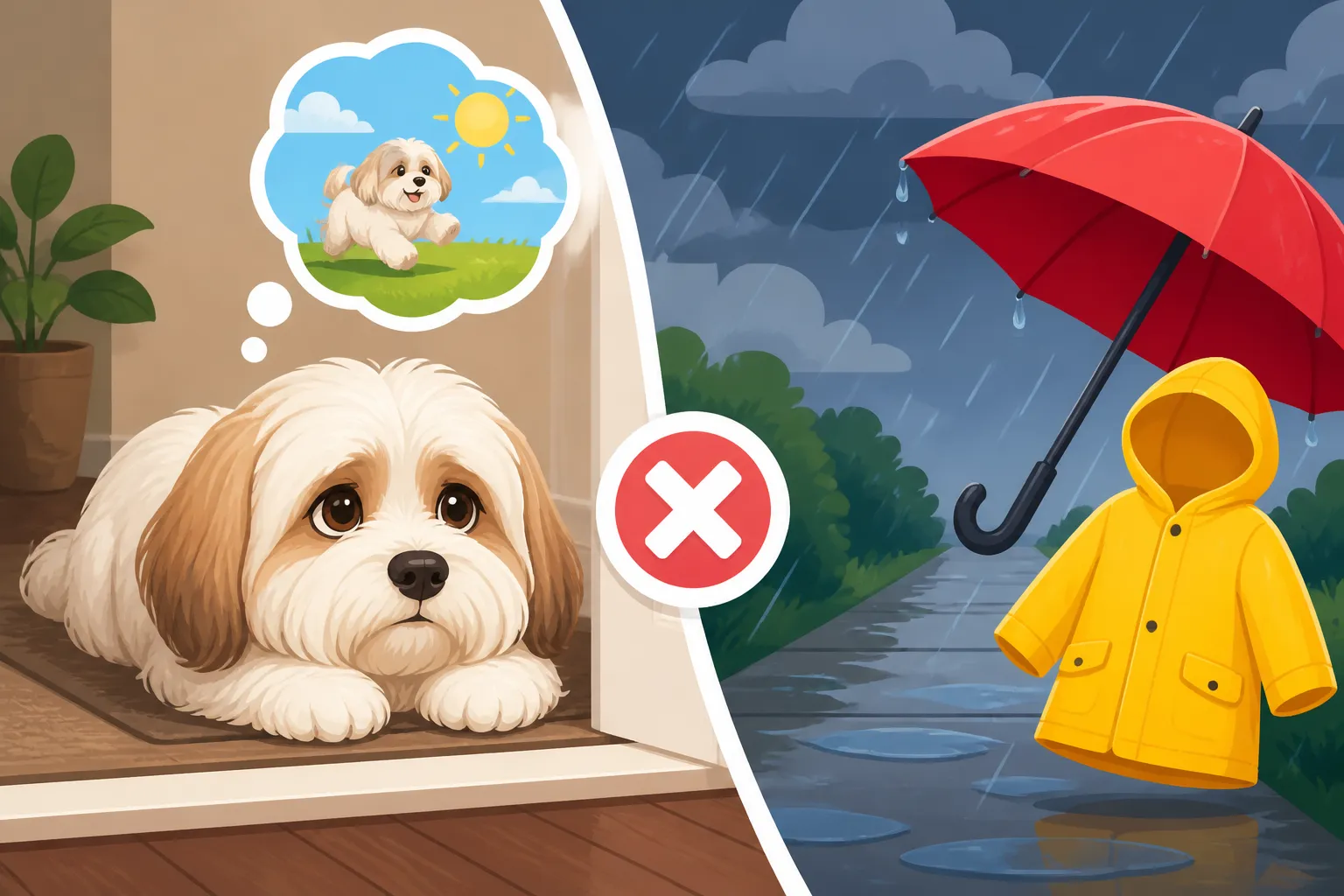
This is perhaps the most classic sign. You've got the leash ready, you open the door, and instead of the usual excited wiggle, your Havanese plants all four paws firmly on the ground, head low, maybe even backing away. Their eyes might dart between you, the open door, and the ominous wetness outside, giving you a look that clearly says, "Are you serious? You expect me to go there?" This isn't naughtiness; it's a genuine expression of discomfort and reluctance. They might even try to duck back inside or find a hiding spot.
Some Havanese might even pull on the leash, not towards the door, but away from it, trying to communicate their strong objections. This refusal can be frustrating, especially when you know they need to relieve themselves. It highlights the depth of their aversion, often rooted in the sensory discomfort mentioned earlier. They are actively choosing the lesser of two evils – holding it in for a bit longer rather than facing the rain. For more on their general training quirks, you might want to look into Whether a Havanese Is Ever Stubborn.
Sudden "Forgetfulness" of Potty Training
One of the most disheartening signs for any Havanese owner is when their perfectly house-trained dog suddenly seems to "forget" all their training when it rains. This isn't truly forgetfulness, but rather a strong preference to avoid the unpleasant outdoor conditions. Faced with the choice of getting wet or having an accident indoors, some Havanese will opt for the latter, especially if they’ve been successful in the past without immediate consequence. This might manifest as peeing in a less visible spot, or doing a quick squat inside right after you've tried (and failed) to get them outside.
This behavior can be a huge source of stress for owners, making them feel like they're starting potty training all over again. It’s important to remember that it’s not malicious. Your Havanese is simply trying to solve a problem – "I need to go potty, but I really don't want to get wet" – in the only way they know how. Addressing this requires a clear, consistent approach that either makes the outdoor experience more palatable or provides an acceptable indoor alternative. Many owners wrestle with aspects of housetraining, and Housetraining a Havanese in a Cold Climate covers similar challenges.
The Dash-and-Done Potty Break
Even if you successfully coax your Havanese outside in the rain, their behavior often indicates their displeasure. Instead of their usual sniffing and exploring, they might make a beeline for the nearest patch of grass, do their business at lightning speed, and then immediately turn to bolt back inside. There's no dawdling, no leisurely scent-checking; it's purely a mission to relieve themselves and escape the elements as quickly as possible. They might even hold it for longer than usual, waiting for a brief lull in the rain before making their hurried dash.
This "dash-and-done" approach, while efficient, shows a clear lack of enjoyment in their outdoor time. It's a functional necessity, not a pleasant activity. You might observe them shaking off water vigorously as soon as they're back inside, or rubbing their face on carpets to dry off their wet fur. This behavior reaffirms that the rain is a significant deterrent for them, and while they understand the need to go out, they have no desire to linger.
Strategies for Encouraging Rain Adventures
While you can't magically make the rain disappear, you can change your Havanese's perception of it. With a little patience, positive reinforcement, and the right gear, you can make rainy walks less of a battle and more of a manageable routine.
Positive Reinforcement and High-Value Rewards
The key to changing any behavior is to make the desired action far more rewarding than the undesirable one. For a Havanese who despises rain, this means making stepping outside in the wet a hugely positive experience. Start small. Even just opening the door and letting them peek out, then immediately rewarding them with their absolute favorite treat or toy, can begin to build a positive association. Don't force them out initially; let them take tiny steps at their own pace.
Once they're willing to step just outside, even for a second, shower them with praise and treats. Gradually increase the time they spend out there, always ending on a positive note before they become too uncomfortable. Think of tiny victories: one paw out, two paws out, a full body step, then a few steps from the door. Use high-value rewards – something they only get for brave rainy excursions. Maybe it's a piece of boiled chicken, a tiny bit of cheese, or their most cherished squeaky toy. Consistency is vital here; everyone in the household needs to be on board with this positive, rewarding approach. For tips on what motivates them, check out Whether a Havanese Works for Food or Praise.
Outfitting Your Havanese for Inclement Weather
This is where practical solutions come into play. Investing in appropriate rain gear can make a world of difference for your sensitive Havanese. A good raincoat, designed for small breeds, can protect their precious fur from getting waterlogged. Look for one that covers their back and ideally has a hood to shield their head, but make sure it doesn't restrict their movement or vision. Amazon offers a wide array of options, from lightweight ponchos to more substantial, insulated rain jackets. Some even come with reflective strips for added visibility on gloomy days.
Paw protection is equally important. Dog boots or paw protectors can keep their feet dry, warm, and provide better traction on slippery surfaces. It might take some time to get them used to wearing boots, so introduce them gradually with lots of treats and praise indoors before attempting a rainy outing. Start with just one boot, then two, slowly building up to all four. A good fit is crucial to prevent rubbing or discomfort. Even just trimming the hair between their paw pads can help reduce the amount of water and debris they track inside. Remember, the goal is to reduce the sensory discomfort that makes them hate the rain. Many owners also find a comfortable harness more practical for walks than a collar, especially when layering with a coat; you might want to read What a Harness for a Havanese Costs for more insights.
Here's a quick look at some useful rain gear options:
| Gear Item | Benefit | Introduction Tip |
|---|---|---|
| Raincoat | Keeps fur dry, prevents chilling | Introduce indoors with treats; let them wear it for short periods first |
| Dog Boots/Paw Protectors | Keeps paws dry, adds traction, protects from cold/salt | Start with one boot, reward, gradually add more; ensure comfortable fit |
| Umbrella Leash | Shields dog directly from falling rain | Some Havanese tolerate these; can be combined with a regular leash |
| Quick-Dry Towel | Essential for immediate drying upon return | Have ready at the door; make drying a pleasant, gentle experience |
| Snood/Ear Cover | Keeps ears dry, prevents water discomfort | Introduce gently, especially if your Havanese is sensitive about their ears |
Making Rain Time Playtime
If going outside is purely for business, your Havanese will likely see it as a chore. Try to infuse some fun into rainy outings! If they love to play fetch, bring a waterproof toy (like a rubber ball) outside and toss it a few times in a sheltered area, or even just a quick toss right outside the door. If they love chasing bubbles, a few rain-friendly bubbles can turn a dreary moment into a delightful one. The idea is to associate rain with positive, engaging activities, not just the necessity of a potty break.
Keep these "playtime" sessions short and sweet, especially at first. The goal isn't to spend an hour frolicking in a downpour, but to change their mindset. Even a brief moment of fun can shift their perspective, making them think, "Okay, the rain is still wet, but at least something good happens when I go out there!" This positive association can be powerful over time. For more ideas on engaging their clever minds, consider Whether a Havanese Enjoys Puzzle Toys.
Making Potty Breaks in the Rain Easier
Sometimes, even with all the positive reinforcement and gear, your Havanese still strongly protests prolonged rain exposure. In these cases, focusing on making those essential potty breaks as quick and comfortable as possible becomes the priority.
Creating a Covered Potty Area
This is a game-changer for many Havanese owners. If you have a small patio, balcony, or even a covered porch, this can become your designated "rainy day potty spot." Even a large umbrella anchored to the ground or a small pop-up canopy can create a dry patch in your yard. The idea is to provide a place where your Havanese can relieve themselves without getting drenched. This removes a significant barrier to their cooperation.
Introduce this covered area when it's not raining, with treats and praise, making it a pleasant place to be. Then, when the rain starts, guide them to this spot. They might still be hesitant about the walk to the spot, but once under cover, they'll likely feel much more comfortable and be more willing to do their business. This strategy can drastically reduce accidents indoors and minimize stress for both you and your dog.
Consistent Routine, Rain or Shine
Havanese thrive on routine. While it might be tempting to delay potty breaks in the rain, sticking to your regular schedule as much as possible is crucial. If your dog knows that 7 AM is potty time, regardless of the weather, they'll be better mentally prepared for the outing. Inconsistency can lead to confusion and increase their chances of having an accident indoors.
Even on the most miserable days, make the effort to go out at the usual times. Be calm, confident, and firm (but never harsh). Your demeanor can significantly impact your Havanese's willingness. If you approach the rainy outing with dread, they'll pick up on that energy. If you treat it as a normal, albeit slightly damp, part of the day, they are more likely to accept it. Remember, repetition and predictability build confidence. For puppies, especially, consistency is vital in their learning process, as discussed in How Long a Havanese Puppy Takes to Be Clean.
Indoor Potty Solutions as a Last Resort
For some Havanese, especially those who are older, have health issues, or who live in apartments with no easy access to a covered outdoor area, an indoor potty solution might become necessary on truly awful weather days. This could be a designated potty pad, a patch of artificial grass, or even a litter box designed for dogs. This should ideally be a last resort to prevent accidents, not a primary solution, as it can sometimes undermine outdoor potty training.
If you introduce an indoor potty area, make sure it's in a consistent location and that your Havanese understands its purpose. Use positive reinforcement when they use it correctly. The key is to manage expectations; while it offers relief from the elements, it's not a substitute for outdoor exercise and sensory exploration on non-rainy days. It's a tool to prevent stress and accidents when the weather genuinely makes outdoor potty breaks impossible or extremely difficult.
When the Rain-Dodging Becomes a Bigger Problem
While a dislike for rain is common, sometimes it escalates to a point where it impacts your Havanese's health or well-being. It's important to differentiate between a preference for dryness and a genuine problem that needs closer attention.
Medical Reasons for Aversion
Before labeling your Havanese as simply stubborn, consider if there might be an underlying medical issue making rain particularly unpleasant. Conditions that affect their joints, like luxating patellas (which Havanese can be prone to, see The Kneecaps a Havanese Slips), or early signs of arthritis, could make slippery, cold surfaces painful or unstable. Cold, dampness can exacerbate joint pain. If your dog shows signs of limping, stiffness, or general discomfort, especially after being out in the cold rain, a vet visit is in order.
Similarly, skin sensitivities or chronic ear infections could make getting wet even more irritating. If their skin becomes itchy, inflamed, or if they shake their head excessively after getting damp, it warrants a check-up. Sometimes, what looks like behavioral defiance is actually your dog trying to avoid pain or discomfort. A thorough veterinary examination can rule out or address any underlying health concerns, making it easier for your Havanese to cope with different weather conditions. You might also want to read Whether a Havanese Gets Ear Infections for related information on ear health.
Escalating Anxiety and Behavioral Issues
If your Havanese's aversion to rain turns into full-blown anxiety – panting, trembling, hiding, or extreme fear when you even suggest going out – it's more than just a preference. This level of distress indicates a deeper behavioral issue that needs to be addressed. It could stem from a negative experience in the rain, or perhaps be linked to general anxiety or noise sensitivity (thunder, heavy rain sounds). When the fear is intense, forcing them out can actually worsen the anxiety.
This heightened anxiety can impact their overall quality of life, leading to accidents indoors, stress-related behaviors, and a general reluctance to engage in outdoor activities even on sunny days if they associate going out with potential rain. It can also disrupt their sleep patterns or general demeanor. Addressing this requires a gentle, systematic approach, focusing on desensitization and counter-conditioning, potentially with professional help.
Consulting a Professional Trainer or Vet
If you've tried the strategies above and your Havanese's rain aversion remains severe, or if you suspect it's linked to anxiety or medical issues, don't hesitate to reach out to professionals. Your veterinarian can conduct a thorough check-up to rule out any physical causes of discomfort or pain. They can also offer advice on managing anxiety, and in some cases, might suggest medication to help your dog cope during severe weather events while you work on behavioral modification.
For persistent behavioral challenges, a certified professional dog trainer or a veterinary behaviorist can provide tailored strategies. They can observe your Havanese's reactions, identify triggers, and guide you through a personalized training plan. Companies like BAXTER & Bella offer online resources and coaching that can be invaluable for addressing specific behavioral challenges from the comfort of your home, providing guidance on everything from basic manners to overcoming fears. Sometimes, an objective, experienced eye is exactly what you need to navigate these tricky situations.
Beyond the Rain: General Weather Woes
While rain can be a primary concern, Havanese can be sensitive to other weather conditions too. Their small size and specific coat type make them more vulnerable to extreme temperatures. Being prepared for all types of weather ensures your Havanese remains comfortable and safe year-round.
Navigating Snow and Cold Temperatures
Much like rain, snow and cold can present unique challenges for a Havanese. Their short stature means they sink into even shallow snow, getting cold and wet quickly. Snow can also ball up in their paw fur, causing discomfort and making walking difficult. Frigid temperatures pose a risk of hypothermia, especially for a small dog with their belly close to the ground. A warm coat or sweater is often essential in winter, as is protection for their paws against ice, snow, and de-icing chemicals. You might find more detailed advice on this in Whether a Havanese Needs a Coat in Winter.
When taking your Havanese out in the snow, keep outings brief. Clear a path in your yard if possible, or carry them to a plowed area. Always check their paws upon returning indoors, removing any snow, ice, or salt. A thorough but gentle towel dry can prevent chills and matting. Just like with rain, positive reinforcement and a warm reward upon returning can make the experience more tolerable. Remember that older Havanese can be particularly sensitive to cold, so extra precautions are needed for them; consider Whether an Old Havanese Feels the Cold More.
Dealing with Hot and Humid Conditions
On the other end of the spectrum, the Havanese's long, flowing coat, while beautiful, can make them susceptible to overheating in hot and humid weather. While their coat does offer some protection from the sun, they are not built for prolonged exposure to high temperatures. They don't sweat like humans do; they primarily cool themselves through panting. If their environment is too hot or humid, their cooling mechanism becomes less effective, leading to heat exhaustion or even heatstroke.
During hot months, schedule walks for the early morning or late evening when temperatures are cooler. Always provide fresh, cool water, and consider a cooling mat or a damp towel for them to lie on indoors. Avoid strenuous exercise during peak heat. Trimming their coat into a shorter "puppy cut" can help some Havanese stay cooler, though it's important not to shave them down to the skin, as this removes their natural insulation and can lead to sunburn. Always monitor for signs of overheating: excessive panting, lethargy, drooling, or a staggering gait.
Protecting Paws in All Seasons
Beyond just wet and cold, paws need protection year-round. Hot pavement in summer can burn their delicate paw pads, just as ice and salt can in winter. Rough terrain or sharp debris can cause cuts and abrasions. Regularly inspecting and cleaning your Havanese's paws is a good habit to develop. Trim the hair between their pads to prevent matting and to reduce the amount of debris and moisture they track indoors.
Paw balms can help protect and moisturize their pads, especially in harsh conditions. If you're concerned about specific hazards, dog boots are an excellent solution that works for all seasons, offering protection from extreme temperatures, rough surfaces, and chemical irritants. Regular paw care is not just about cleanliness; it's about comfort and preventing injuries that could make any outdoor excursion, rainy or not, a painful experience for your beloved Havanese.
Disclaimer
This article is for general informational purposes only and does not constitute professional advice. Laws, prices and regulations vary by location and change over time. Consult a qualified professional for guidance on your specific situation.