Whether Stairs Damage a Havanese’s Knees
Many Havanese owners worry about the everyday activities that might impact their beloved furry friends, and a big one that often comes up is stairs. It's completely understandable to feel a pang of concern when you see your tiny Havanese bounding up or down a full flight of steps, wondering if such a common household feature could be causing silent damage to their delicate joints. This guide aims to shed light on the potential risks stairs pose to your Havanese's knees and other joints, offering practical advice and preventative measures to keep them safe and healthy for years to come.
Understanding Your Havanese's Delicate Joints
Our charming Havanese companions are known for their playful spirits and loving natures, but like all purebred dogs, they come with a predisposition to certain health concerns. Joint issues, particularly those affecting the knees, are high on that list. Understanding these vulnerabilities is the first step in protecting your dog from unnecessary strain.
The Reality of Luxating Patellas in Havanese
One of the most common orthopedic conditions in Havanese, and indeed many small breeds, is patellar luxation, often referred to as "slipping kneecaps." This isn't just a minor inconvenience; it's a condition where the kneecap (patella) dislocates or slips out of its normal groove in the thigh bone (femur). When you see your Havanese suddenly skip a step, hold a back leg up for a few seconds, or even yelp in pain, it's very often a sign that their kneecap has temporarily popped out of place.
This condition is often hereditary, meaning it's something they're born with due to the shallow groove or weak ligaments, rather than something they acquire solely from an injury. However, repeated trauma or continuous stress on already compromised joints can certainly exacerbate the issue or cause a healthy patella to degenerate over time. Vets typically grade luxating patellas from 1 to 4, with Grade 1 being a mild slip that often corrects itself, and Grade 4 being a permanent dislocation that can severely impact mobility. Knowing the grade of your Havanese's luxating patella is crucial for determining the best course of action and understanding the level of risk everyday activities, like navigating stairs, pose.
Other Joint Concerns: Hips and Elbows
While patellar luxation steals the spotlight for Havanese joint issues, it's important to remember that they can also be susceptible to other orthopedic conditions, even if less commonly than larger breeds. Hip dysplasia, for instance, involves an abnormal formation of the hip socket that, over time, can lead to painful arthritis. While toy breeds typically have a lower incidence compared to, say, a German Shepherd, it's not unheard of. It's also worth noting that dogs with poorly formed hips might compensate by putting more strain on their knees, potentially worsening existing patella issues.
Similarly, elbow dysplasia, a condition affecting the elbow joint, is usually more prevalent in medium to large breeds. However, no breed is entirely immune, and breeders should still be vigilant about screening. Although rare in Havanese, any lameness or stiffness in the front legs could indicate an issue that might also be compounded by activities that put uneven stress on their limbs, like repetitive stair climbing. These less common but still possible issues underscore the importance of comprehensive veterinary check-ups and responsible breeding practices, which include health testing parents to mitigate the risk of passing on such conditions.
The Impact of Stairs on Havanese Joints
It might seem innocuous enough, but for a small dog like a Havanese, a flight of stairs can be a veritable mountain range, and navigating it frequently can indeed put undue stress on their delicate skeletal structure.
The Mechanics of Stair Climbing and Descending
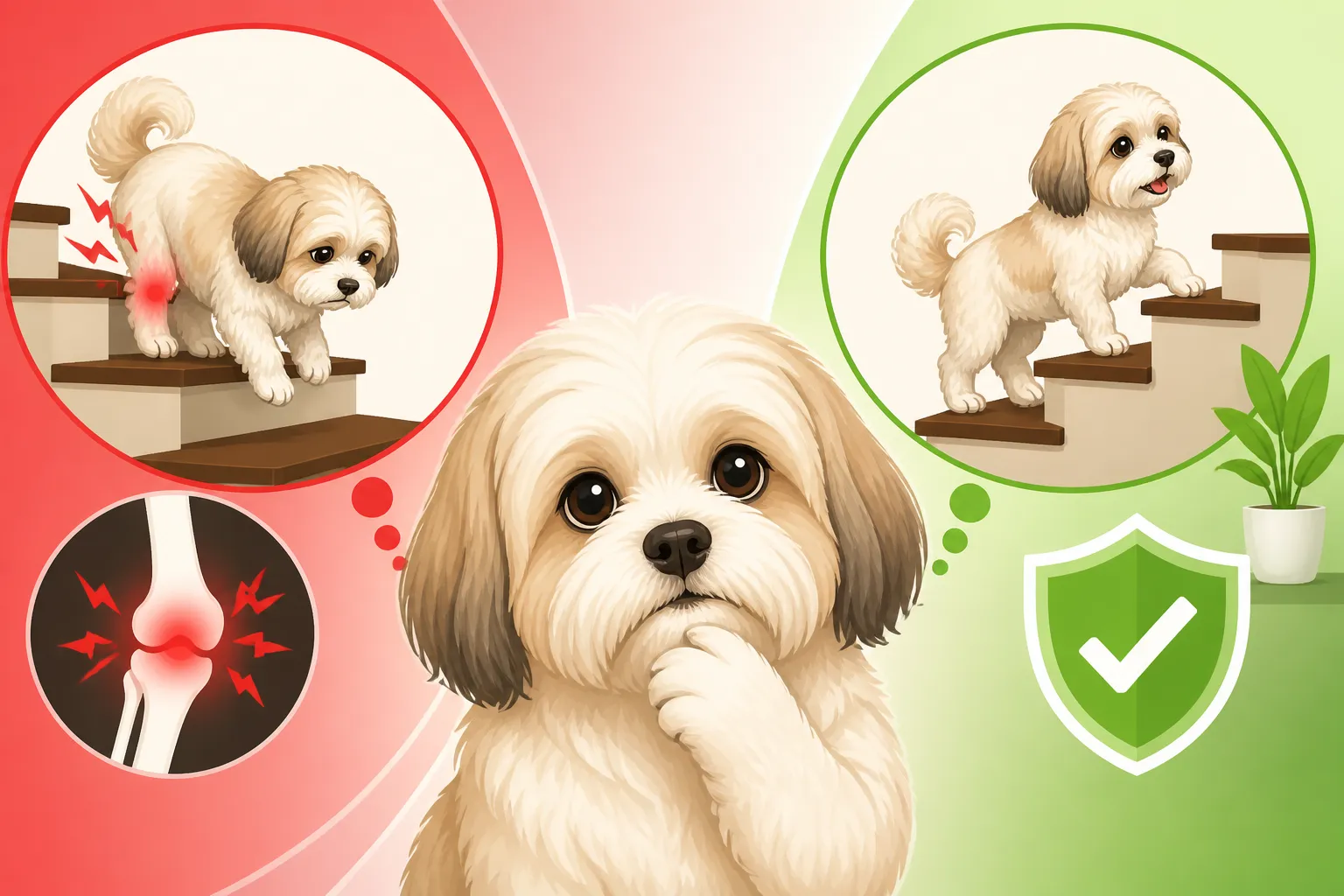
Think about how your Havanese uses their body when going up stairs. Their hind legs push off forcefully, bearing much of the weight as they propel themselves upward, often leaping from one step to the next rather than walking each one individually. This action puts significant, repetitive impact on their stifle (knee) joints, as well as their hips and lower spine. Going down stairs is often even more taxing. Dogs tend to lean forward, using their front legs to absorb the shock, which can strain their elbows and shoulders. For a Havanese, whose small stature means each step is a proportionally much larger obstacle than for a bigger dog, the impact forces are greatly magnified.
The awkward angles and the need to extend and flex their joints significantly with each step can be particularly detrimental for a Havanese already predisposed to conditions like luxating patella. Each time that kneecap slides out of its groove, even momentarily, it can cause wear and tear, micro-trauma to the surrounding ligaments, and ultimately, accelerate the development of arthritis. Over time, this constant stress can lead to inflammation, pain, and a worsening of any underlying joint instability. It’s not just about the fall risks; it’s about the cumulative, repetitive strain on their tiny bodies.
When Stairs Become a Hazard: Puppyhood to Seniority
The risks associated with stairs change throughout a Havanese's life. For puppies, their bones and joints are still developing, making them incredibly vulnerable. Their coordination isn't fully developed either, increasing the risk of missteps and falls that could lead to fractures or soft tissue injuries. A hard fall during critical growth periods could even impact how their joints form permanently. Many breeders and vets advise completely restricting puppies from stairs until they are at least six to eight months old, or even older, depending on their individual development and joint health.
As Havanese enter their adult years, especially if they have an undiagnosed or mild patellar luxation, the daily act of running up and down stairs can slowly but surely contribute to the progression of the condition. While they might seem perfectly fine and even enjoy the exercise, the constant jarring motion can degrade joint cartilage and weaken ligaments. Then, in their senior years, the risks multiply significantly. Arthritis in a Havanese at twelve or older is common, making painful joints even more susceptible to injury from stairs. Older dogs often have reduced muscle mass, poorer balance, and less flexible joints, making falls more likely and recovery from injury much harder. It’s a continuum of risk, requiring vigilance at every stage of their life.
Protecting Your Havanese from Stair-Related Injuries
Knowing the risks is one thing, but taking proactive steps to protect your Havanese is where you can make the biggest difference. There are many ways to create a safer home environment that supports their joint health.
Practical Solutions: Ramps, Steps, and Gates
The simplest and most effective way to protect your Havanese from stair-related injuries is to limit their access. For main staircases, baby gates are your best friend. A sturdy, pressure-mounted gate at the top and bottom of the stairs can completely block access, eliminating the temptation for a quick dash. It’s a small investment for peace of mind and significantly reduces the risk of falls or repetitive strain.
When it comes to accessing furniture like couches or beds, where jumping up and down can also be quite jarring, consider pet ramps or steps. These are specifically designed to provide an incline or gradual steps that are much easier on a dog's joints than a sudden jump. Brands like Pet Gear and Majestic Pet offer various options, from foam steps to carpeted ramps, that can blend into your home decor. Teaching your Havanese to use these alternatives, even if they initially prefer jumping, is a valuable skill that will protect their joints over their lifetime. Remember, even if your Havanese is small enough for you to carry them up and down, this isn't always practical, especially if you have multiple flights or are frequently in and out. Investing in good quality, stable pet steps to the couch or bed can make a huge difference in preventing long-term damage caused by keeping a Havanese off furniture it should not jump from.
Environmental Modifications for Joint Health
Beyond just stairs, your home environment can be optimized to support your Havanese's joint health. One of the biggest culprits for joint strain that often goes unnoticed is slippery floors. Hardwood, tile, or laminate floors can be like ice rinks for a small dog, forcing their legs to splay and putting unnatural stress on their hips and knees as they try to gain traction. Consider placing rugs or runners in high-traffic areas where your Havanese frequently walks or plays. This provides much-needed grip and reduces the risk of slips and falls. You can also get paw pads or nail grips that attach to their nails to give them better traction, though these require regular maintenance.
Another important modification involves their sleeping and resting areas. Ensure your Havanese has access to comfortable, orthopedic dog beds, especially as they get older. These beds provide better support for their joints and can alleviate pressure points, leading to more restful sleep and less stiffness. Think about the overall layout of your home: are there any areas where they might need to jump down from heights, even small ones? Provide accessible alternatives, like a small stool next to a favorite window perch, to minimize unnecessary stress on their joints.
The Role of Preventative Care and Veterinary Guidance
Regular veterinary check-ups are absolutely vital in monitoring your Havanese's joint health. Your vet can perform orthopedic examinations to check for patellar luxation, assess gait, and even recommend X-rays if they suspect other issues like hip dysplasia or early signs of arthritis. Catching these conditions early allows for proactive management, whether through physical therapy, medication, or lifestyle adjustments.
Nutrition and weight management also play a critical role. Keeping a Havanese slim for its joints is one of the most impactful things you can do. Excess weight puts additional strain on all joints, accelerating wear and tear and worsening existing conditions. Your vet can help you determine the ideal weight for your Havanese and recommend a suitable diet plan. Additionally, they might suggest joint supplements like glucosamine and chondroitin, or omega-3 fatty acids, which can help support cartilage health and reduce inflammation. For serious cases, discussing whether a Havanese's kneecap needs operating might be a conversation you have with your vet.
It's also a good idea to consider pet insurance, like policies offered by Healthy Paws. While you hope never to need it, knowing that major veterinary expenses for conditions like severe luxating patella requiring surgery, or ongoing arthritis management, are covered can provide immense peace of mind. Many owners find that Insuring a Havanese Against Knees and Heart is a wise decision given the breed's predispositions.
Training and Habits to Safeguard Your Havanese
Beyond physical modifications to your home, incorporating specific training and daily habits can further ensure your Havanese's safety and joint longevity. This involves consistent effort on your part, but the benefits for your dog are immeasurable.
Teaching Safe Stair Navigation (If Necessary)
Ideally, if your Havanese is prone to joint issues, especially luxating patella, the best approach is to minimize or entirely prevent stair use. However, sometimes avoiding stairs entirely isn't feasible, perhaps in a multi-level home or when visiting friends. In such cases, teaching your Havanese to navigate stairs safely becomes crucial. This means teaching them to take each step individually, slowly and deliberately, rather than bounding up or down.
Start with short, wide stairs, ideally carpeted, and use positive reinforcement with treats. Lead them on a leash, encouraging them to place all four paws on each step before moving to the next. For descending, teach them to go slowly, perhaps even pausing on each step. The goal is to encourage a controlled, smooth motion that distributes their weight more evenly and reduces impact. This training requires patience and consistency, but it's an investment in their long-term health. Remember, for a small breed, these are significant obstacles, so make it a positive experience and celebrate their small successes.
Consistency and Supervision: Your Best Tools
The effectiveness of any preventative measure hinges on consistency and vigilant supervision. It's not enough to gate the stairs once and then forget about it; you need to ensure the gates are always closed and your Havanese isn't finding creative ways around them. This means consistently carrying your puppy up and down stairs, always encouraging the use of ramps to furniture, and regularly checking for worn-out rugs or slippery spots on your floors.
Supervision is especially critical when your Havanese is excited, distracted, or in an unfamiliar environment. A sudden burst of zoomies or an unexpected sound can send them bolting up or down stairs, completely disregarding any training. When you have guests, make sure they understand the rules regarding your Havanese and stairs, as they might not realize the potential dangers. As your Havanese ages, their needs will change. An older Havanese, even one without a history of joint problems, may develop arthritis and suddenly find stairs challenging or painful. Being observant and adapting your home and routine as their physical abilities change is a key part of responsible Havanese ownership. This also includes regular vet visits to monitor Arthritis in a Havanese at Twelve and adjust their care as needed.
Ultimately, preventing stair damage to your Havanese's knees and other joints is about being a proactive and attentive pet parent. By understanding their predispositions, modifying their environment, and maintaining consistent preventative care, you can help ensure your charming Havanese enjoys a long, healthy, and happy life, free from preventable joint pain. It’s all about creating a safe haven where their little legs can thrive.
Disclaimer
This article is intended for informational purposes only and does not constitute veterinary advice. Always consult with a qualified veterinarian for any health concerns or before making any decisions about your Havanese's care, diet, or exercise regimen.