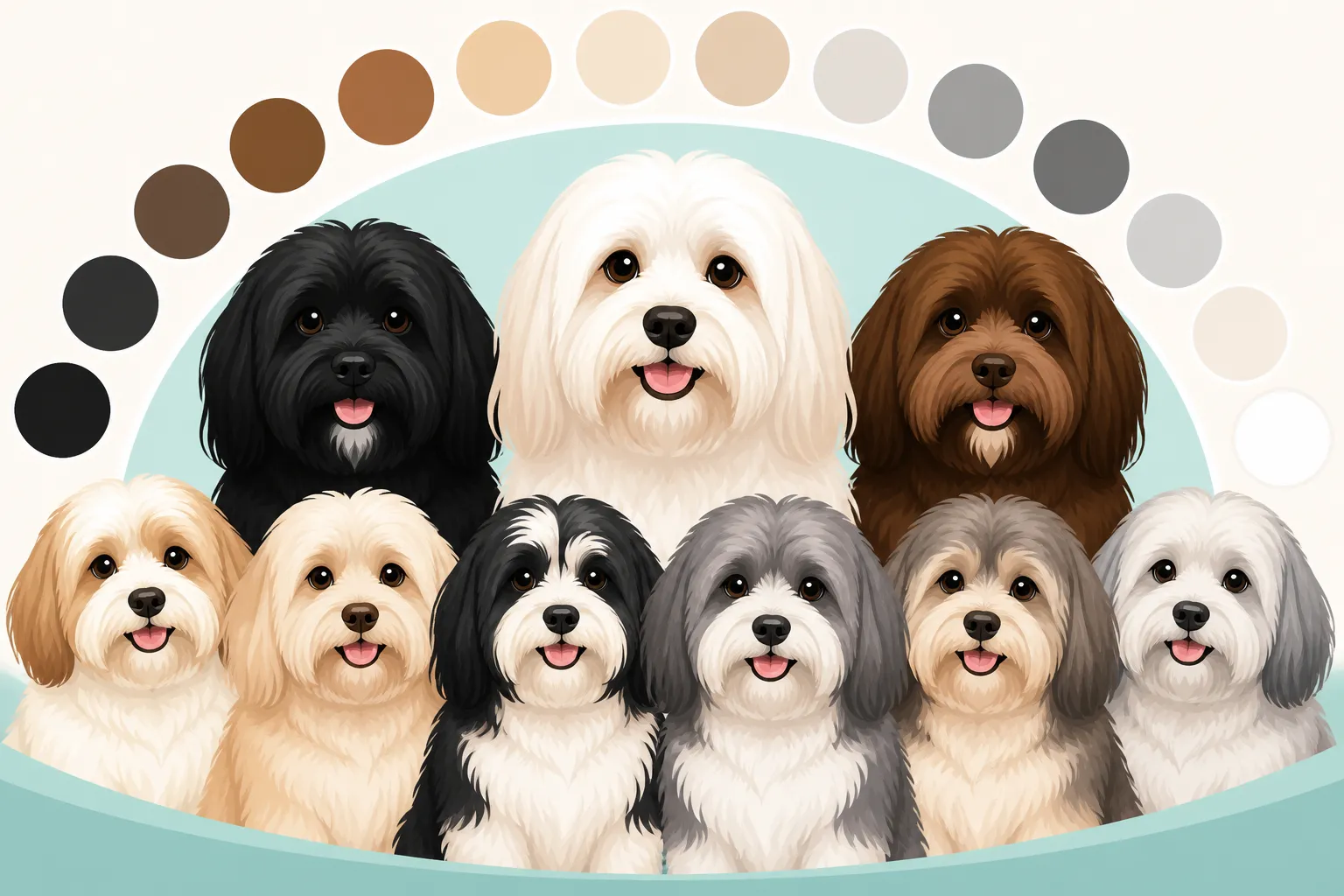
Every Color a Havanese Is Allowed to Be
Many prospective Havanese owners come to me, often with a picture of a pristine white fluffy puppy, convinced that's the only "true" Havanese color. It's a common misconception, and frankly, it sells the breed short on one of its most charming and visually captivating traits: their incredibly diverse and dynamic coat colors! This guide is here to bust that myth wide open and celebrate the full, beautiful spectrum of colors you can find in our beloved Havanese, helping you understand what makes their coats so special and how they might even change over time.
The Surprising Spectrum of Havanese Colors
When you first start looking into Havanese, it's easy to assume they mainly come in white or cream, perhaps a soft sable if you're lucky. But the truth is, the Havanese breed standard welcomes an astonishing array of colors and patterns, making each dog a truly unique work of art. This isn't just a quirk; it's deeply rooted in their history and genetics, something that makes them stand out among many other purebreds.
Why So Many Colors? A Look at Havanese Genetics
The rich tapestry of Havanese colors isn't a random occurrence; it's a testament to their diverse genetic heritage. Tracing back to their ancestors, primarily the Blanquito de la Habana and later influenced by various European Bichon types, including possibly Poodles, the Havanese developed with a robust set of color genes. Unlike some breeds where specific colors were selectively bred for uniformity, the Havanese retained a broad genetic palette. This means they carry genes for black, chocolate, red, gold, cream, and white, as well as genes for various patterns like sable, brindle, parti, and Irish pied. Each parent contributes a set of these genes, and the combination dictates the puppy's coat color, which can often be a delightful surprise. Understanding that these dogs weren't historically confined to a narrow aesthetic standard meant that their natural genetic diversity in coat color was preserved, leading to the dazzling array we see today.
Moreover, the Havanese's journey from Cuba to near extinction and then its careful re-establishment in the United States played a crucial role. The small number of founding dogs that made it out of Cuba after the revolution carried a vast genetic pool relative to their numbers. Breeders, committed to preserving the breed, prioritized this genetic diversity. This included accepting and celebrating all the colors and patterns that appeared, rather than culling for a select few. This open-minded approach to color has ensured that the Havanese remains one of the most colorful dog breeds, where a litter can produce puppies in an astonishing variety of shades and markings, all perfectly acceptable and beautiful within the breed standard. It's a living history written right into their fluffy coats!
The Importance of a Wide Gene Pool for Color Variety
Maintaining a wide and healthy gene pool is paramount for any dog breed, and for the Havanese, it's intrinsically linked to their impressive color variety. When a breed's gene pool becomes too narrow, not only do desirable traits like diverse coat colors diminish, but the risk of inherited health conditions often increases. The Havanese, having faced a significant population bottleneck after 1959, owes its survival and current vibrancy to dedicated breeders who worked tirelessly to rebuild the population from a handful of refugee dogs. These foundational dogs, though few in number, carried a remarkable diversity of genes, including those responsible for their varied coats.
If breeders had decided to limit the acceptable colors during this critical rebuilding phase, it would have undoubtedly restricted the gene pool even further. Imagine if only white Havanese were allowed, or only sables. The genetic traits for other beautiful colors would have been selectively bred out, and along with them, potentially valuable genetic material that contributes to the breed's overall health and vigor. By embracing all colors and patterns, the Havanese community inadvertently ensured a broader genetic base, which is beneficial for everything from immune system strength to structural soundness. It highlights a critical principle in responsible breeding: variety in appearance often goes hand-in-hand with variety in genetics, leading to a healthier, more robust breed in the long run. This philosophy means that when you choose a Havanese, you're not just picking a pretty color; you're supporting a legacy of genetic resilience and diversity.
Understanding Basic Havanese Color Categories
The beauty of the Havanese coat lies not just in its silky texture but in the kaleidoscope of colors and patterns it can display. While every Havanese is unique, their coats generally fall into a few primary categories that help us understand the dazzling combinations we see. It’s a wonderful journey discovering all the possibilities!
Solid Colors: More Than Just White
When people think of "solid" in dogs, they often picture a single, unblemished color from nose to tail. For Havanese, solid colors are indeed possible, but they're often more nuanced than you might expect, and true, unadulterated solid colors can actually be less common than many people assume. You can find Havanese in stunning solid shades of pure white, which can be absolutely breathtaking, giving them an almost ethereal quality. Cream is another lovely solid, ranging from a very pale ivory to a richer, buttery tone. Then there are the darker solids: a deep, inky black, which can sometimes have a remarkable sheen, or a rich chocolate, a warm brown that often pairs with lighter, liver-colored pigmentation on the nose and paw pads. Red Havanese are vibrant, ranging from a light golden red to a deep mahogany, and gold can be anything from a pale yellow-gold to a rich, warm hue. Sable, which we'll delve into more, also appears as a solid color, though it inherently carries black tipping that gives it depth and variation.
It's important to remember that even within these solid categories, there can be subtle variations. A black Havanese, for instance, might develop some silvering as it matures, especially around the muzzle or on its undercoat, which can give it a distinguished, salt-and-pepper look. Sometimes a "solid" can even have a tiny white patch on the chest or toes, still falling within the spirit of a solid color but hinting at the breed's natural tendency towards patterns. These small variations add character and ensure that even among dogs of the same primary color, each Havanese remains distinct. When you see a truly solid Havanese, it's often quite striking precisely because the eye isn't drawn to patterns, but rather to the depth and richness of that single, beautiful hue. For those who adore a classic look, a pure solid color is certainly a showstopper. You might be surprised to learn Whether a Havanese Can Be Solid White without any markings at all, or perhaps you're curious about Whether a Havanese Can Be Solid Black. If chocolate is your preference, you may also be wondering Whether a Chocolate Havanese Is Rare compared to other colors.
Parti-Colors and Irish Pied: The Blended Beauties
Beyond the beautiful solid hues, Havanese coats truly come alive with patterns, and "parti-color" is where much of that vibrant artistry shines through. A parti-color Havanese simply means they have patches of color on a white background. These patches can be any of the recognized Havanese colors—black, chocolate, red, sable, gold, cream—and they can vary wildly in size, shape, and placement. You might see a Havanese with large, bold patches covering a significant portion of their body, or one with more delicate, scattered spots, almost like confetti. No two parti-colored Havanese are exactly alike, and that's a huge part of their charm. One puppy in a litter might have a striking black patch over one eye and another on its back, while its sibling might have subtle cream patches dusted throughout its predominantly white coat.
A specific and particularly elegant variation of the parti-color pattern is known as "Irish Pied." This pattern features larger, more symmetrical patches of color on a white background, typically with the color covering the ears, top of the head, and parts of the body, leaving a broad white blaze up the face, a white chest, white legs, and a white tip on the tail. It's a classic, balanced look that is often highly sought after for its striking appearance. While the precise definition of Irish Pied can sometimes be debated among enthusiasts, the general idea is a distinct and somewhat symmetrical distribution of color, creating a beautiful contrast. Whether it's a bold parti-color with abstract patches or the more refined Irish Pied, these patterns highlight the Havanese's playful nature and add a touch of whimsy to their appearance. If you're pondering the diversity, you might find it interesting to learn Whether a Havanese Can Be Parti Colored or to dive deeper into What Irish Pied Means on a Havanese in the breed's context.
Tri-Colors: A Kaleidoscope of Hues
If you thought parti-colors were intricate, prepare for the added dimension of tri-colors! A tri-color Havanese takes the concept of multi-colored coats a step further by incorporating three distinct shades. Typically, this means a base color (usually black or chocolate), white markings, and then distinct tan or rust-colored "points." These tan points are usually found in specific areas: over the eyebrows (giving them wonderfully expressive faces!), on the cheeks, inside the ears, on the chest, down the legs, and sometimes under the tail. It’s like getting three dogs in one coat!
Imagine a Havanese with a sleek black body, crisp white patches on its chest and paws, and then those adorable russet eyebrows that make you feel like it's constantly asking a question. Or perhaps a chocolate tri-color, with warm brown patches, creamy white, and softer, lighter tan points that blend harmoniously. The placement and intensity of these tan points can vary; some might have very vibrant, clearly defined points, while others might have softer, more subtle ones that might even fade a little as they mature. The tri-color pattern is a result of a combination of genes that produce both the base color, the white markings, and the tan point expression, making it a truly complex and beautiful genetic masterpiece. It truly adds another layer of visual interest to an already captivating breed, ensuring there's a Havanese out there to match nearly any preference.
The Intricacies of Color Modifiers and Patterns
The Havanese coat is a dynamic canvas, and beyond the basic solid and parti-color categories, several fascinating modifiers and patterns can transform a puppy's initial look into something quite different as they mature. These genetic nuances are what make identifying and predicting Havanese colors so wonderfully engaging and, at times, a little surprising!
Sable: The Ever-Changing Havanese Coat
Sable is arguably one of the most intriguing and, at times, perplexing Havanese colors for new owners. When you pick up a sable Havanese puppy, it might appear to be a deep red, a rich gold, or even a dark brown. However, sable isn't a solid color in the traditional sense; it's a pattern characterized by individual hairs that are lighter at the base and have black tips. Imagine little brushstrokes of black painted over a base color, giving the coat a shaded, often iridescent quality. The amount and distribution of this black tipping can vary greatly, from a light dusting that makes a red coat look richer, to heavy tipping that makes a gold coat appear quite dark and almost dirty.
The real magic of sable, however, is its tendency to change dramatically over time. Many sable Havanese puppies will "clear" as they grow, meaning the black tipping gradually recedes and eventually disappears, revealing the lighter base color beneath. That dark red sable puppy you brought home might, by adulthood, be a lovely, clear cream or a soft gold. A darker gold sable puppy could become a much lighter golden adult. This clearing process can be slow and unpredictable, sometimes taking over a year or two to fully manifest. It's truly a game of patience and delight to watch your sable Havanese evolve, constantly revealing new shades and highlights. It’s also why many breeders will show you pictures of the parents and even grandparents when discussing a sable puppy, to give you an idea of what the adult coat might look like. If you're curious about how this beautiful color appears, you can learn more about What a Sable Havanese Looks Like, and understanding this dynamic change helps answer questions like Whether a Havanese Puppy's Color Predicts the Adult.
Brindle: Unique Stripes and Patterns
Brindle is a captivating and distinct pattern in Havanese coats, characterized by stripes or streaks of darker pigment over a lighter base color. Think of it as a tiger-like pattern, though often much more subtle and delicate in a Havanese. The base color can be any of the lighter shades like gold, red, or cream, with the stripes typically being black or sometimes chocolate. The appearance of brindle can range from bold, well-defined stripes that are immediately noticeable, to very fine, almost indistinguishable streaks that you might only spot in certain lighting or upon close inspection. Sometimes, especially in long-coated breeds like the Havanese, the brindle pattern becomes more apparent when the coat is shorter, or when the puppy is very young.
What makes brindle so unique is that no two brindle Havanese will ever have the exact same pattern. Each dog's stripes are like a fingerprint, making them truly one-of-a-kind. As with sable, the brindle pattern can also change slightly as the dog matures. The stripes might soften or become less distinct as the coat grows longer, or they might even become more pronounced in certain areas. This dynamic quality adds another layer of interest to owning a brindle Havanese; you’re not just getting a dog, you’re getting a living, breathing piece of art that subtly transforms over time. It's a testament to the breed's rich genetic diversity and its capacity for producing truly exceptional and visually stunning individuals. For a deeper dive into this unique pattern, you can explore Whether a Havanese Can Be Brindle.
Silvering and Dilution: Fading to Fabulous
The genetic mechanisms behind Havanese colors don't stop at basic shades and patterns; they also include fascinating modifiers like silvering and dilution genes that can dramatically alter a dog's appearance over time. The most commonly observed of these in Havanese is the "silvering" gene. This gene acts on black pigment, causing it to gradually fade or "silver out" as the dog matures. A Havanese puppy born deep black might, by its first birthday, start showing streaks of silver or grey, eventually transforming into a beautiful, smoky silver or platinum adult. This process is often most noticeable on the face, ears, and legs first, before spreading throughout the entire coat. It's a stunning transformation that can make a black puppy look entirely different as an adult, often surprising owners who weren't aware of this genetic possibility.
Beyond silvering, there are other dilution genes that exist in the broader canine gene pool, though some are less common or desired in the Havanese. For example, a "blue" dilution gene turns black pigment into a slate grey, and a "Isabella" dilution turns liver pigment into a pale, mousey brown. While these extreme dilutions are rare or non-existent in well-bred Havanese, the silvering gene is a beautiful and accepted part of their coat diversity. Understanding these genetic modifiers helps explain why a Havanese puppy's color can be such a delightful mystery, constantly evolving and showcasing new facets of its beauty. It’s a wonderful example of how genetics paint a masterpiece right before your eyes, making each Havanese truly unique. To delve into this specific genetic trait, you might want to read Whether a Havanese Has a Silvering Gene and discover how it impacts Whether a Black Havanese Turns Silver.
The Dynamic Nature of Havanese Coat Colors
One of the most exciting, and sometimes baffling, aspects of owning a Havanese is witnessing the transformation of their coat color. What starts as one shade in puppyhood can often evolve into something quite different, and equally beautiful, by the time they reach adulthood. It's a natural phenomenon that adds an extra layer of charm and unpredictability to the breed.
The Puppy Color vs. Adult Color Conundrum
It's a tale as old as time for Havanese owners: you fall head over heels for an adorable puppy with a specific coat color, only to watch that color undergo a significant metamorphosis as they grow. This "puppy color vs. adult color" conundrum is incredibly common in the breed and is due to a fascinating interplay of genetics, often referred to as the "fading gene" or simply the complex way their coat pigments mature. Many puppies born with what appears to be a solid black coat will gradually lighten and "silver out" over their first year or two, eventually becoming a stunning silvery-grey or even platinum. Similarly, a vibrant red puppy might soften into a lovely apricot or light cream, and a dark gold puppy can become a much paler golden adult. Sable puppies are perhaps the most notorious for this change; their initial dark tips often recede completely, revealing a lighter base color that was hidden beneath.
This dramatic shift can sometimes lead to confusion or even disappointment if a new owner isn't prepared for it, but experienced Havanese enthusiasts see it as part of the breed's unique magic. It means that the puppy you choose today might look quite different in a year or two, showcasing a whole new palette of subtle shades and highlights. It’s not uncommon for people to mistake their adult Havanese for a different color entirely than what it was as a pup! This process is a testament to the complex genetic heritage of the Havanese, ensuring that each dog, regardless of its initial hue, matures into a truly one-of-a-kind companion. It really highlights Whether a Havanese Changes Color as It Grows, and it's something to embrace, not fear!
Factors Influencing Color Change
While the transformations in Havanese coat colors might seem like a mysterious magic trick, they are primarily driven by specific genetic factors. The "fading gene," also known as the G locus, is the main culprit behind the lightening of black, silver, and sable coats. This gene essentially tells the hair follicles to produce less pigment as the dog matures, leading to the gradual clearing or silvering we observe. Other genes influencing pigment intensity and distribution also play a role, ensuring that the changes are unique to each individual dog. It's an intricate genetic dance that begins at conception and unfolds throughout their early life.
Beyond genetics, environmental factors can also play a subtle, though usually minor, role in coat appearance. For instance, prolonged sun exposure can sometimes cause certain red or gold coats to lighten or take on a sun-kissed look, much like human hair. However, this is usually a superficial change and doesn't alter the dog's underlying genetic color. What's important to understand is that lifestyle factors like diet or grooming products typically do not change a Havanese's inherent coat color. A high-quality diet, perhaps something you'd find at Chewy, will certainly support a healthy, vibrant coat, making any color appear richer and shinier, but it won't magically turn a black dog into a cream one. These changes are encoded in their DNA, unfolding on their own schedule, making each Havanese a delightful surprise package.
Understanding Color Descriptions from Breeders
When you’re talking to a reputable Havanese breeder, you'll notice they often use very specific terminology when describing puppy colors. This isn't just jargon; it’s an attempt to communicate the potential for color change, especially with those dynamic coats. For instance, a breeder might describe a puppy as "black sable" or "red sable," even if the puppy appears predominantly red or black. This isn't to mislead you, but rather to indicate that the puppy carries the sable gene and is likely to lighten considerably, revealing the underlying red or gold base color as it matures. They’re trying to give you an accurate picture of the future coat, not just the present one.
It’s always a good idea to ask breeders about the parents' and even grandparents' coat colors and how they might have changed over time. Seeing photos of the adult dogs that produced your puppy can offer valuable clues about what to expect. A responsible breeder will be transparent about these potential transformations and help you understand the genetic possibilities. They'll explain that the initial puppy color is often just a preview, and the true, enduring beauty of your Havanese's coat will slowly reveal itself. Embrace the journey and the surprise! The unfolding of your Havanese's true color is part of the unique bond you'll form.
Breed Standard and Color Acceptability
When exploring the world of Havanese, one of the most refreshing aspects is the breed's inclusive approach to color. Unlike many purebreds with strict, limited color standards, the Havanese celebrates diversity, making it a breed where every hue is a treasure.
What the Havanese Breed Standard Says About Color
Perhaps one of the most delightful aspects of the Havanese breed, from a descriptive standpoint, is its incredibly open and inclusive stance on coat color. The breed standard, as set by major kennel clubs, clearly states that all colors and patterns are permissible and equally acceptable. This is a huge deviation from many other breeds where specific colors are "disqualifications" or considered faults, often leading to dogs being excluded from the show ring or even being less desirable as pets. For the Havanese, whether your dog is a solid white, a jet black, a vibrant red, a multi-colored parti, a dynamic sable, or a striking brindle, every single color combination is considered equally valid and beautiful.
This broad acceptance is deeply rooted in the breed's history and its re-establishment from a limited number of foundation dogs. Rather than narrow the gene pool by selecting for only a few colors, the early proponents of the Havanese wisely chose to embrace the full spectrum of genetic diversity that existed. This means that when you are evaluating a Havanese, whether for show or companionship, color should never be a factor for judgment or preference according to the official standard. It’s truly liberating and allows owners and breeders alike to appreciate the sheer artistry of nature's palette on these charming little dogs. You won't find any discussion of "incorrect" colors for the Havanese, only an appreciation for Every Color a Havanese Is Allowed to Be.
Dispelling Myths About Rare Colors
In the world of dog breeding, especially with popular breeds, you might sometimes encounter claims about "rare" Havanese colors being more valuable or special. It's common to see puppies marketed as "rare blue," "rare chocolate parti," or some other unique descriptive term, often accompanied by a higher price tag. However, within the Havanese breed standard, the concept of a "rare" color in a way that implies greater value or correctness simply doesn't exist. As we've discussed, all colors and patterns are acceptable. While some color combinations might appear less frequently in a given breeding program or region, they are still naturally occurring variations within the breed's established genetic makeup.
The term "rare" is often a marketing tool used by less reputable breeders to inflate prices. While a particular color might be less common to find, it does not mean it's inherently superior, healthier, or more valuable than any other Havanese color. A responsible breeder focuses on health, temperament, and adherence to the overall breed standard, not on promoting a specific color as exclusive. If you encounter a breeder pushing a "rare" color, it's a good idea to be cautious and redirect your focus to the fundamental qualities of the puppy and its lineage. The true value of a Havanese lies in its joyful personality, robust health, and delightful companionship, regardless of whether its coat is solid black, a flamboyant parti, or a subtle sable.
Pigmentation: Beyond Coat Color
While the coat color itself is wonderfully varied in the Havanese, it's also important to consider the pigmentation of other parts of the dog: their nose, eye rims, and lips. These areas, often referred to as "points," provide crucial genetic clues and contribute to the overall expression and health of the dog. For most Havanese, the ideal pigmentation is dark black. This means a solid black nose, dark black rims around the eyes, and black lips. This dark pigment provides protection from the sun and is generally associated with robust health. However, there's a key exception.
If a Havanese is genetically a true chocolate (liver) colored dog, then its nose, eye rims, and lips should also be liver-colored, rather than black. This liver pigmentation is a dilution of black pigment and is perfectly acceptable and correct for chocolate-coated Havanese. It would be a fault for a chocolate Havanese to have black points, just as it would be for a non-chocolate Havanese to have liver points. Beyond black and liver, any other pigmentation color, such as pink or Dudley (a flesh-colored nose), is generally considered incorrect for a Havanese, as it can indicate a lack of proper pigment. One interesting question that often comes up is Whether a Chocolate Havanese Has Lighter Eyes – and typically, their eye pigment can indeed be lighter, usually a lovely amber or hazel, which complements their liver points and chocolate coat beautifully. It's also worth noting that Whether a Havanese Can Have Blue Eyes is another common query, and the answer is usually no; blue eyes are not typical or desirable in the Havanese breed and could indicate genetic issues if present outside of specific, non-standard dilutions. The focus remains on clear, consistent pigmentation that matches the overall coat color profile.
The Practical Side of Havanese Colors
Beyond aesthetics, it's natural to wonder if a Havanese's color has any practical implications for their care, health, or overall well-being. The good news is, for Havanese, color is largely a matter of personal preference with very few practical concerns attached to it.
Does Color Affect Coat Texture or Grooming Needs?
It's a common misconception that a dog's coat color might influence its texture or its grooming requirements. In the Havanese breed, this is generally not the case. Whether your Havanese is a solid white, a bold parti-color, a deep black, or a playful sable, their coat texture is primarily determined by genetics, not by the pigment itself. Havanese are known for their signature silky double coat, which can range from soft waves to more pronounced curls, and this characteristic texture is consistent across all colors. You won't find a black Havanese with a wiry coat just because of its color, nor will a white Havanese inherently have a softer coat than a red one.
Therefore, the grooming needs of a Havanese remain consistent regardless of their color. All Havanese, with their non-shedding, fast-growing coats, require diligent and regular brushing to prevent matting, along with routine bathing, nail trims, and sanitary clips. A vibrant red Havanese will mat just as easily as a creamy white one if not properly maintained. The challenge and commitment to grooming are universal for the breed. If anything, a multi-colored coat might sometimes hide tiny mats a bit better than a solid, lighter coat, but that's a visual trick, not a difference in texture or grooming necessity. To keep any Havanese coat in top condition, you'll want quality grooming tools and products, perhaps some of the highly-rated options you can find on Chewy. These tools are designed for the type of coat, not its color.
Does Color Impact Health?
This is a really important question that concerns many prospective dog owners, and for good reason! In some dog breeds, certain coat colors or patterns are genetically linked to specific health issues. For example, the merle gene in breeds like Australian Shepherds or Collies can lead to deafness or blindness if two merle parents are bred together. However, I'm happy to tell you that for the Havanese, coat color generally does not correlate with health problems. The wide array of colors and patterns seen in Havanese are considered naturally occurring variations within a healthy genetic spectrum. You don't need to worry that a black Havanese is more prone to certain ailments than a white one, or that a brindle Havanese carries an inherent health risk that a sable one doesn't.
The health of a Havanese is overwhelmingly determined by responsible breeding practices, genetic lineage, and overall care, not by the shade of their fur. Reputable breeders prioritize health testing for common Havanese predispositions like luxating patellas, eye diseases, and cardiac issues, regardless of the parents' or puppies' coat colors. This means that focusing on the health clearances of the parent dogs and the breeder's reputation is far more crucial than worrying about a particular coat color. It's comforting to know that you can choose your Havanese based purely on the color that captures your heart, without having to weigh potential health compromises. You can certainly delve into Whether Color Affects a Havanese's Health for more peace of mind, and understanding The Health Tests Both Havanese Parents Should Have is a critical step in finding a healthy puppy.
Personal Preference and Finding Your Perfect Havanese
Ultimately, choosing your Havanese's coat color comes down to personal preference. With such a vast and beautiful palette to choose from, you're bound to find a shade or pattern that truly speaks to you. Some people are drawn to the classic elegance of a solid white Havanese, appreciating the purity and brightness of their coat. Others might adore the striking contrast of a parti-color, where playful patches dance across a white canvas. The rich depth of a solid black or chocolate, or the captivating transformations of a sable or silvering Havanese, all hold their own unique allure. There’s no right or wrong answer when it comes to which color you prefer; it's entirely subjective.
However, I always encourage prospective owners to prioritize temperament and health above all else. A Havanese with a wonderful disposition and a clean bill of health will bring you joy for many years, regardless of its color. While a certain color might catch your eye, remember that your Havanese's personality and well-being are what truly define your relationship. When visiting a breeder, try to interact with all the puppies, not just the ones with your preferred color. Observe their playfulness, their confidence, and how they interact with you and their littermates. The perfect Havanese for you might come in a color you never initially considered! Don't let a specific color preference overshadow the opportunity to connect with a puppy whose personality perfectly matches your lifestyle. And no matter the color, every Havanese loves a good chew toy or tasty treat, readily available at retailers like Chewy, making them a joyful addition to any home.
Summary of Havanese Colors and Their Characteristics
To help visualize the incredible diversity we've explored, here's a quick overview of some common Havanese colors and patterns, along with their key characteristics:
| Color/Pattern | Description | Common Adult Appearance | Notable Traits & Changes |
|---|---|---|---|
| White | Pure, unblemished white coat. | Remains bright white. | Can be prone to tear staining if not kept clean, but overall a stable color. |
| Cream/Gold | Ranges from pale ivory to rich golden hues. | Can deepen or lighten slightly with age/sun exposure. | Generally stable, but can have subtle variations in intensity. |
| Black | Solid, deep black coat. | May remain true black or "silver out" to a smoky grey. | Silvering is common, making a solid black puppy into a silver adult over time. |
| Chocolate | Rich, warm brown, often with liver nose/eye rims. | Generally stable, may have slightly lighter eye pigment. | Liver pigmentation is characteristic. Whether a Chocolate Havanese Is Rare depends on breeding lines. |
| Red | Vibrant, fiery red to deeper mahogany shades. | Often fades to apricot or lighter red over time. | Very prone to fading, especially if born sable-tipped. |
| Sable | Base color (red, gold, cream) with black tipping on individual hairs. | Black tipping typically "clears" or recedes, revealing lighter base color (e.g., gold or cream). | One of the most dynamic colors; significant lightening is very common. What a Sable Havanese Looks Like can be very diverse. |
| Brindle | Stripes of darker pigment (black/chocolate) over a lighter base color. | Stripes may soften or become less distinct as coat grows longer. | Unique, tiger-like patterns. Whether a Havanese Can Be Brindle is a beautiful genetic trait. |
| Parti-Color | Patches of any color on a white background. | Patches' size/placement remain, but their color may change if they are sable or red. | Highly varied patterns; no two are exactly alike. Whether a Havanese Can Be Parti Colored means many possibilities. |
| Irish Pied | Specific parti pattern with colored ears/head, white blaze, chest, legs, tail tip. | Colored patches may fade if they are sable or red. | Elegant, somewhat symmetrical coloring. What Irish Pied Means on a Havanese is a distinct marking. |
| Tri-Color | Base color (black/chocolate), white markings, and tan points (eyebrows, cheeks, legs). | Tan points may fade slightly. Base color and white remain stable unless silvering occurs. | Combines solid color, parti pattern, and tan point genetics. |
| Silvering | Genetic modifier causing black pigment to lighten to silver/grey. | Transforms black puppy coat into silver or platinum adult coat. | Begins appearing in puppyhood, progresses over 1-2 years. Whether a Havanese Has a Silvering Gene determines this. |
Disclaimer
This article is for general informational purposes only and does not constitute professional advice. Laws, prices and regulations vary by location and change over time. Consult a qualified professional for guidance on your specific situation.