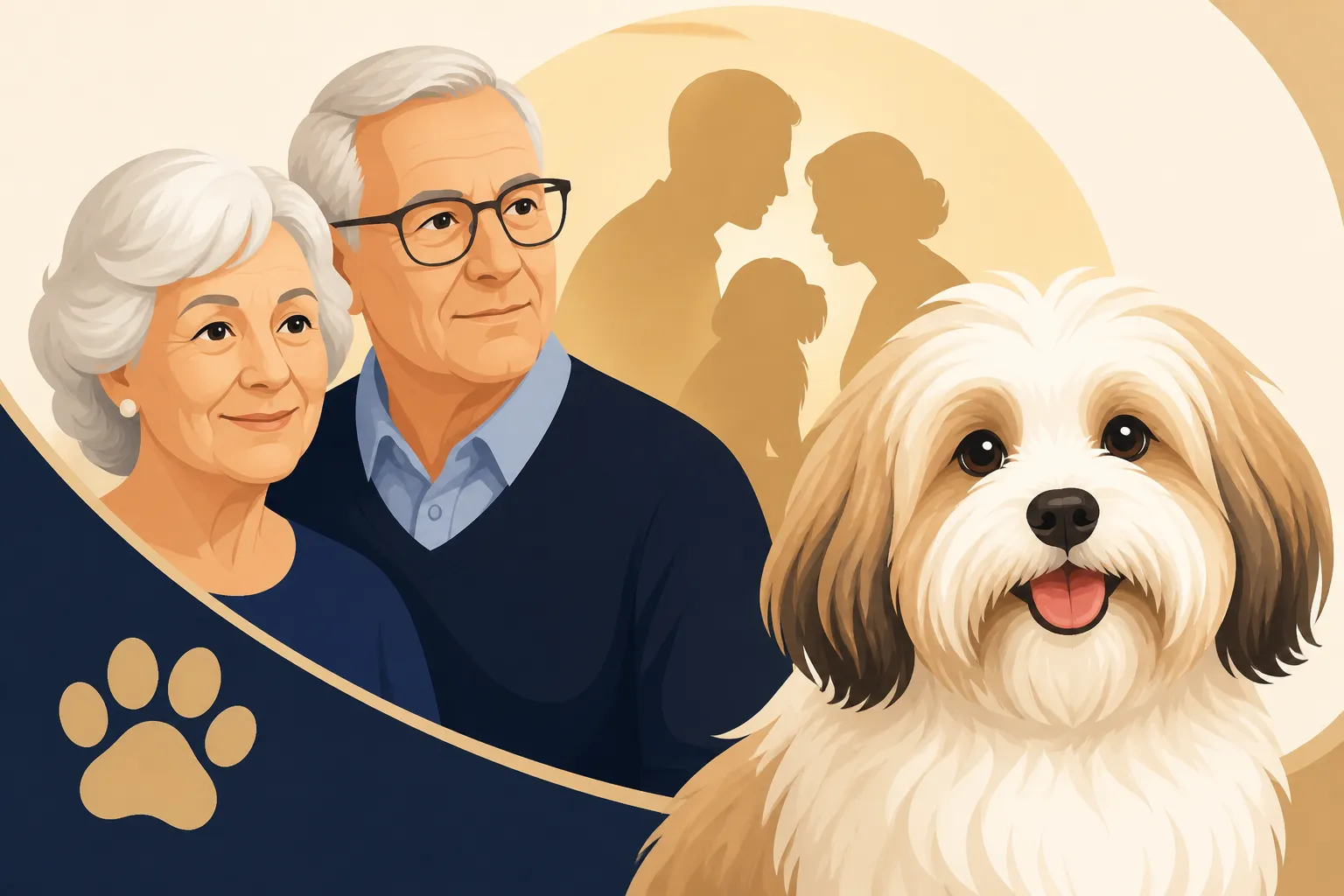
Who Dorothy and Burt Goodale Were
It's quite easy to look at our fluffy, affectionate Havanese companions today and assume they've always been around, a beloved fixture in homes across the country. But the truth is, this charming breed faced a very real, very frightening brush with extinction not so long ago. This guide is all about the incredible efforts of two individuals, Dorothy and Burt Goodale, whose passion and dedication pulled the Havanese back from the brink and gave them a future.
The Vanishing Havanese: Setting the Scene in Post-Revolutionary Cuba
To truly appreciate what Dorothy and Burt Goodale accomplished, we need to rewind a bit and understand the dire situation the Havanese found themselves in. Imagine a beautiful, unique breed, cherished for centuries in its homeland, suddenly facing an existential threat. That’s precisely what happened to the Havanese, the national dog of Cuba, during a tumultuous period in history. The circumstances were complex, and they created a perfect storm that nearly wiped this wonderful breed off the map entirely.
The Political Upheaval and Its Impact on Pets
The Cuban Revolution of 1959 brought about sweeping changes to the island nation. Society was fundamentally restructured, and many wealthy families, who had traditionally been the keepers of these exquisite companion dogs, found themselves facing immense pressure. As political and economic landscapes shifted dramatically, numerous families made the difficult decision to leave Cuba, seeking new lives in other countries, particularly the United States. This mass exodus had a profound and often heartbreaking impact on their personal lives, and sadly, their beloved pets were not always able to make the journey with them.
For those who did manage to bring their dogs, the focus was often on survival and rebuilding a new life in an unfamiliar land. The meticulous breeding practices, the careful record-keeping, and the cultural context that sustained the Havanese as a distinct breed in Cuba were all disrupted. It wasn't just about leaving a country; it was about leaving behind an entire way of life that had supported the breed's existence. The very concept of dog breeding as a leisure activity or cultural pursuit became secondary, if not impossible, for many.
How the Havanese Nearly Died Out After 1959
In the years following the revolution, the Havanese population in Cuba dwindled dramatically. Those families who remained might have kept their pets, but organized breeding programs largely ceased. The focus shifted from preserving pedigrees and careful selection to simply keeping beloved family members safe. It’s important to remember that communication and travel were also severely restricted, making it nearly impossible for anyone outside Cuba to assess the situation or acquire new breeding stock. The breed, once a symbol of Cuban aristocracy and companionship, became an endangered species within its own homeland.
The few Havanese that did make it out of Cuba with refugees were incredibly precious, but also incredibly few. They represented fragmented lines, often without extensive pedigrees or health information, simply surviving family pets. There was no concerted effort to bring a significant number of these dogs out, nor was there an organized plan to establish them elsewhere. Each dog was a testament to the love of an individual family, but collectively, they represented a genetic bottleneck. This period marked a critical low point for the Havanese, a moment when their future seemed uncertain. It's a sobering thought, isn't it? That a breed so vibrant today could have been lost forever. If you're curious about this fascinating period, you might want to read more about How the Havanese Nearly Died Out After 1959.
Dorothy Goodale's Passion: Discovering the Breed
Amidst this backdrop of near-extinction, a glimmer of hope began to emerge, largely thanks to the unwavering passion of Dorothy Goodale. She wasn't a professional dog breeder or a geneticist; she was simply a woman who fell in love with a unique breed and couldn't bear the thought of it disappearing. Her journey from casual observer to dedicated preservationist is a testament to the power of individual commitment.
An Unlikely Meeting: The First Havanese in America
Dorothy Goodale, along with her husband Burt, lived in the United States. It's unclear exactly when or how she first encountered a Havanese, but the story often told is that she saw a few of these charming dogs in the early 1970s, brought over by Cuban refugees. Imagine seeing a dog unlike any you'd ever seen before—small, vivacious, with a flowing silky coat and an intelligent, expressive face. These weren't widely recognized breeds in America; they were rare, almost exotic treasures. Dorothy was immediately captivated by their unique appearance and delightful personalities.
These initial encounters weren't with established American Havanese kennels, because such a thing barely existed. Instead, she was seeing the direct descendants of those "refugee dogs," living quiet lives as family companions in their new country. Many of these owners had no intention of breeding, nor did they fully grasp the rarity of their canine family members. For Dorothy, however, a seed was planted. She recognized something truly special in these dogs, something that deserved not just admiration, but active preservation.
The Vision to Preserve: Why She Felt Called to Act
What truly set Dorothy Goodale apart was her foresight and determination. She didn't just admire the Havanese; she understood the precariousness of their situation. She learned that these dogs represented some of the last remaining examples of the breed outside of Cuba, a breed with a rich history as The Havanese Is the Only Breed Cuba Ever Produced. The realization that these few scattered dogs were the only hope for the Havanese to survive ignited a fierce desire within her to take action.
She understood that without a concerted effort, these dogs would simply fade away, bred out of existence or lost to time as individuals passed on. It wasn't about personal gain or fame; it was about protecting a living piece of history, a charming companion that had so much to offer the world. Her vision wasn't just to have a Havanese, but to ensure that everyone could someday experience the joy of owning one. This deep sense of responsibility, coupled with her growing affection for the breed, became the driving force behind the immense task she and Burt were about to undertake.
Burt Goodale's Support: The Practicalities of a Breeding Program
While Dorothy's passion was the spark, Burt Goodale's practical support and involvement were crucial in turning that spark into a sustainable flame. Breeding a rare and nearly extinct breed isn't a whimsical endeavor; it requires immense dedication, financial resources, meticulous planning, and a pragmatic approach to genetic health. Burt was the steady hand, the partner who helped navigate the numerous challenges that arose.
Gathering the Remnants: Searching for Foundation Dogs
The first and most critical step was to locate the few existing Havanese dogs in the United States and identify those suitable for a breeding program. This wasn't a simple task of looking in classifieds; it was a detective mission. Dorothy and Burt actively sought out Cuban families who had immigrated with their pets, often relying on word-of-mouth and sheer persistence. They traveled extensively, sometimes to unlikely places, to meet these dogs and their owners. Imagine the careful conversations, the building of trust, and the gentle persuasion required to convince families to part with, or breed from, their cherished pets.
This search was about more than just finding dogs; it was about finding dogs with good health, sound temperaments, and diverse genetics—as much as could be hoped for given the circumstances. They had to rely heavily on the visual assessment and the anecdotal history provided by the owners, as formal pedigrees were often nonexistent or incomplete. This painstaking process of identifying and acquiring what would become The Refugee Dogs Every American Havanese Descends From was the bedrock of their entire effort. They effectively became custodians of the breed's last hope.
The Challenges of a Limited Gene Pool
Once a small number of foundation dogs were identified, the real genetic work began, and with it, the recognition of a significant challenge: a very limited gene pool. When a breed has dwindled to such low numbers, the genetic diversity is severely reduced. This means a higher risk of inbreeding and the potential for inherited health problems to become more prevalent. It was a tightrope walk for the Goodales: they needed to increase the population, but they also needed to maintain as much genetic health as possible with the limited resources they had.
This wasn't simply a matter of breeding any two Havanese together. They had to make careful choices, sometimes traveling across states to find the best possible pairings to minimize inbreeding and maximize the genetic variety available to them. This required deep study, careful record-keeping, and an understanding of basic genetic principles. They knew that their decisions in these early stages would shape the health and vitality of the Havanese for generations to come. It truly highlights why Whether a Havanese from a small gene pool is riskier is a valid concern for breeds saved from near extinction. They were setting the stage for every Havanese that would follow.
Building a Foundation: The Goodales' Breeding Philosophy
With their small but precious collection of Havanese, Dorothy and Burt Goodale established what would become the foundational breeding program for the modern Havanese breed in the United States. Their philosophy wasn't about rapid proliferation; it was about thoughtful, responsible breeding, focusing on the core characteristics that made the Havanese so special, while also ensuring the long-term health and stability of the breed.
Focusing on Health and Temperament
From the outset, the Goodales understood that a beautiful coat and charming looks wouldn't mean much if the dogs weren't healthy and well-adjusted. They prioritized health and temperament above all else. This meant carefully observing their foundation dogs for any signs of genetic conditions, even without the advanced genetic testing we have today. They relied on veterinary assessments and their own keen observations to make breeding decisions. A dog with a questionable temperament or apparent health issues, no matter how physically appealing, would likely not have been included in their breeding plans.
Their goal was to produce puppies that would not only embody the Havanese's cheerful, intelligent nature but also be robust and free from debilitating hereditary diseases. This involved rigorous selection, sometimes making tough choices about which lines to continue. This dedication to health from the very beginning has had a lasting impact, contributing to the breed's generally good health profile today. They were essentially laying the groundwork for future generations, ensuring that the breed would thrive, not just survive. This kind of careful planning is fundamental for any responsible breeder, much like understanding What a Havanese Breeder Spends Before a Litter Exists to ensure proper care.
Documenting the Lineage: The Importance of Records
One of the Goodales' most significant contributions was their meticulous record-keeping. In the chaotic aftermath of the revolution, formal pedigrees for many Havanese were lost or never existed. Dorothy and Burt took on the monumental task of reconstructing and documenting the lineage of their foundation dogs and their offspring. This meant creating detailed records of each dog, including their physical characteristics, temperament, health history, and parentage. This painstaking work was absolutely essential for tracking genetic lines, identifying potential health trends, and making informed breeding decisions.
They understood that without a clear paper trail, the breed's future would remain a guessing game. These early records formed the basis of what would become the modern Havanese pedigree database, providing invaluable information for subsequent breeders. This commitment to documentation helped transform the Havanese from a collection of "refugee dogs" into a recognized and traceable breed. It’s no exaggeration to say that every Havanese owner today benefits from their dedication to this critical, often unseen, aspect of breed preservation. The question of Whether every American Havanese shares a few ancestors is directly answered by the diligence of these early records.
A Lasting Legacy: The Havanese Today
The efforts of Dorothy and Burt Goodale laid the groundwork for the Havanese to not only recover but to flourish. Their vision and hard work in the 1970s and beyond created a legacy that continues to impact every Havanese living today, turning a handful of scattered dogs into the beloved, well-recognized breed we know.
The Spread of the Breed: From a Few to Many
Thanks to the Goodales' dedicated breeding program and their willingness to share their puppies with other responsible individuals, the Havanese population in the United States began to grow steadily. They weren't hoarders of the breed; they were ambassadors, carefully placing puppies in homes that understood the importance of carrying on the lineage and promoting the breed responsibly. They nurtured a community of early Havanese enthusiasts who shared their commitment to the breed's future.
This slow but deliberate expansion was critical. It meant that the genetic base, while initially narrow, was spread among more individuals, further safeguarding the breed. As more Havanese were born and placed in loving homes, their charming personalities and unique appeal naturally led to greater interest. Word spread, and soon, the Havanese started gaining recognition beyond the small circle of dedicated preservationists. This growth eventually made it possible for resources like Chewy to offer a wide array of products tailored for small breeds like the Havanese, from specialized kibble to comfy beds.
Recognizing the Havanese: From Obscurity to Breed Club
Beyond breeding, the Goodales were instrumental in establishing formal recognition for the Havanese. They recognized that for the breed to truly thrive and be protected, it needed a structured organization, a breed standard, and official acknowledgment from major kennel clubs. This meant working to form a breed club, setting up clear guidelines for what a Havanese should be, and preparing for the rigorous process of gaining American Kennel Club (AKC) recognition.
This was a long and arduous journey, involving countless hours of paperwork, advocacy, and presenting their dogs to kennel club officials. Their efforts culminated in the formation of the Havanese Club of America, which would become the parent club dedicated to the breed's welfare and promotion. Eventually, after years of diligent work, the Havanese achieved full AKC recognition. This was a monumental achievement, solidifying the breed's place in the canine world and guaranteeing its future. It truly marks a turning point, demonstrating the success of their work, as highlighted in topics like The Year the AKC Recognized the Havanese.
The Goodales' Enduring Principles for Havanese Breeding
The principles that guided Dorothy and Burt Goodale in their monumental task continue to resonate within the Havanese breeding community. Their foresight established a framework for responsible breeding that remains highly relevant today, emphasizing integrity, health, and a deep understanding of the breed's unique characteristics.
Ethical Breeding Practices and Genetic Health
The Goodales understood, perhaps more acutely than many, the profound responsibility that comes with breeding. They weren't just producing puppies; they were stewarding the future of an entire breed. This meant adhering to the highest ethical standards, even when resources were scarce and the challenges immense. Their focus was always on improving the breed, not just multiplying it. This philosophy translates today into an emphasis on health testing, careful selection of breeding pairs, and transparent communication with potential puppy owners. Breeders today strive to uphold these standards, conducting health checks like those discussed in The Health Tests Both Havanese Parents Should Have, to ensure the wellness of their lines.
They taught that good breeding isn't about chasing fads or maximizing profits, but about making informed decisions to produce healthy, well-socialized Havanese that will bring joy to families for many years. This foundational ethic helps protect the breed from careless practices that could reintroduce genetic issues or compromise temperament. When you're looking for a Havanese puppy, you're looking for a breeder who embodies these long-standing principles. Responsible breeders often encourage potential owners to consider what Whether a Havanese Breeder Should Show CHIC Numbers as a sign of their commitment to health.
Preservation of Type and Temperament
Beyond health, the Goodales were committed to preserving the true "type" of the Havanese. This wasn't just about physical appearance, but also about maintaining the breed's signature temperament. They sought to ensure that the Havanese remained the charming, intelligent, outgoing, and affectionate companion dog it was always meant to be. This meant carefully selecting dogs that exhibited these qualities, understanding that temperament is often hereditary and crucial for a successful family pet.
They recognized the unique spirit of the Havanese – their playful intelligence, their devotion to their families, and their happy-go-lucky nature. By breeding for these traits, they ensured that the Havanese would continue to be an ideal companion, adaptable to various living situations and bringing immense joy to their owners. This careful attention to both form and function has allowed the breed to retain its distinct personality and appearance, a blend of elegance and exuberance that makes them so beloved. This is why when you see a Havanese today, whether they got their last bag of dog food from Chewy or a local store, they still largely conform to the delightful characteristics cultivated by the Goodales.
Impact and Recognition Beyond the Initial Efforts
The Goodales' work didn't end with a few successful litters or even the initial AKC recognition. Their commitment catalyzed a broader movement, inspiring countless others to become involved in the Havanese community. Their legacy extended to the establishment of breed standards, the promotion of responsible ownership, and the ongoing stewardship of the breed's genetic health.
Establishing the Breed Standard and Community Growth
Part of gaining formal recognition for any breed involves defining a detailed breed standard, a written description of the ideal Havanese. The Goodales, through their understanding of the existing dogs and their historical context (descending from The Blanquito de la Habana the Havanese Came From), were instrumental in shaping this standard. This document ensures consistency in breeding efforts and provides a blueprint for what a Havanese should embody, guiding judges in the show ring and breeders in their selection. It covers everything from coat texture and color to gait and overall structure.
Moreover, their work fostered a growing community of Havanese enthusiasts. From a handful of passionate individuals, the community expanded to include dedicated breeders, exhibitors, and pet owners who all shared a love for this captivating breed. This collective effort, inspired by the Goodales' initial sacrifices, allowed for the continued growth and refinement of the Havanese, making it possible for new owners to find information, support, and resources, whether through online communities or retail partners like Chewy for all their Havanese needs.
Honoring Their Contribution: A Permanent Place in Havanese History
Dorothy and Burt Goodale's contribution to the Havanese breed is nothing short of legendary. Without their tireless efforts, it is highly probable that the Havanese would have faded into obscurity, a lost breed known only through historical texts. Instead, they ensured its survival and resurgence, allowing countless families today to experience the unparalleled companionship of a Havanese. Their story serves as a powerful reminder of how individual dedication can change the course of an entire breed's history.
Their names are etched into the foundation of the Havanese breed, a testament to their love for dogs, their perseverance, and their unwavering belief in the value of preserving a unique piece of canine heritage. Every Havanese owner, whether they know it or not, owes a debt of gratitude to Dorothy and Burt Goodale for the existence of their cherished pet. Their work is a cornerstone of Why the Havanese Is a Healthy Toy Breed Anyway, as their initial focus on health created a robust foundation.
Here is a summary of the Goodales' critical role in the Havanese breed's revival:
| Aspect | Pre-Goodale Era (Post-1959 Cuba Exodus) | Goodales' Intervention (Early 1970s onwards) | Legacy for Modern Havanese |
|---|---|---|---|
| Breed Status | Near extinction, scattered individuals, undocumented | Active preservation, meticulous search for foundation stock | Thriving, recognized breed worldwide |
| Genetic Diversity | Severely limited, high risk of inbreeding | Careful selection, strategic pairings to maximize existing diversity | Ongoing efforts to maintain and improve genetic health and variety |
| Population Size | Extremely low, unknown numbers, dwindling | Initiated controlled breeding programs, steadily increased numbers | Robust and growing population in many countries |
| Documentation | Largely lost, incomplete, or non-existent pedigrees | Reconstructed lineages, established detailed records for all breeding dogs | Comprehensive pedigrees and health databases for traceable lines |
| Recognition | Obscure, largely unknown outside Cuban refugee communities | Founded breed club, spearheaded AKC recognition efforts | Fully recognized and popular breed with established standards |
| Breeding Focus | Survival of family pets, informal breeding | Prioritized health, temperament, and adherence to breed type | Ethical breeding with emphasis on health testing and responsible ownership |
Disclaimer
This article is for general informational purposes only and does not constitute professional advice. Laws, prices and regulations vary by location and change over time. Consult a qualified professional for guidance on your specific situation.