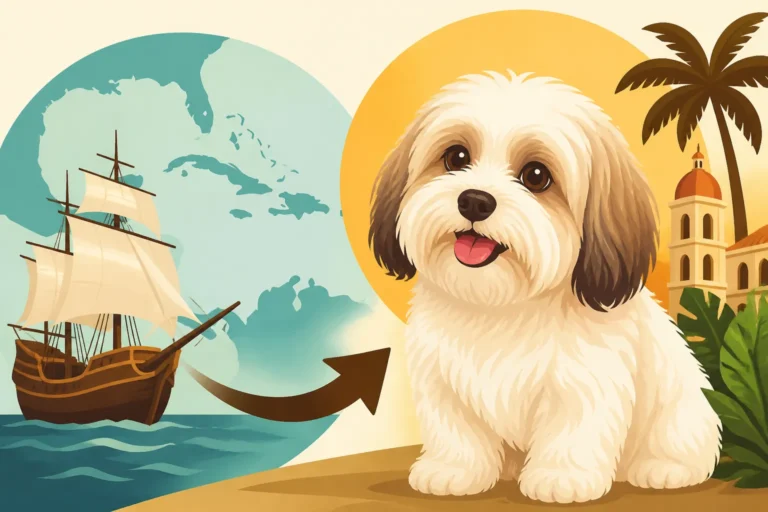
How the Havanese Nearly Died Out After 1959
It's hard to imagine our beloved Havanese, with their bright eyes and bouncy gaits, ever being on the brink of vanishing forever. Yet, for a time after 1959, the very existence of this charming Cuban breed hung by a thread, a casualty of political upheaval and social change. This guide will take you through the dramatic story of how the Havanese nearly became a forgotten footnote in history, and the remarkable efforts that brought them back from the edge.
The Golden Age of the Havanese in Cuba Pre-1959
Before the world changed for Cuba in 1959, the Havanese lived a life of relative luxury and esteem. These little "Havana Silk Dogs" were not just pets; they were integral members of society, particularly among the more affluent classes. Their story is deeply woven into the fabric of Cuban culture, reflecting a time of elegance and unique heritage.
Life as the Aristocrat's Companion
Imagine the grand homes of Havana, with their breezy courtyards and ornate interiors. Here, the Havanese reigned supreme. They were pampered companions, often seen gracing the laps of ladies and accompanying families on their strolls. These dogs were more than just charming; they were a quiet symbol of status and good living. Families invested in their care, ensuring they had the best food, meticulous grooming, and plenty of affection. They weren't expected to work or guard; their sole purpose was to bring joy and companionship, a role they excelled at with their intelligent and playful nature. This era saw the Havanese flourish as a treasured member of the household, a living testament to Cuba's rich cultural tapestry.
A Symbol of Cuban Culture
The Havanese wasn't just a dog in Cuba; it was a small, furry embodiment of Cuban identity. Descended from the European Bichon type dogs that arrived with Spanish settlers centuries prior, they evolved uniquely on the island, adapting to the climate and the specific desires of their human companions. Their distinct silky coat, often lighter in texture than other Bichon relatives, and their lively, intelligent disposition made them stand out. They were a source of national pride, a breed truly born of Cuba. While perhaps not always explicitly depicted in every painting or poem, their presence was understood in the background of genteel Cuban life, an enduring part of the country's social fabric. The Havanese Is the Only Breed Cuba Ever Produced tells you more about this unique origin.
Stable Breed Population and Pedigrees
In the decades leading up to 1959, the Havanese breed was well-established within Cuba. There were dedicated breeders who understood the importance of maintaining pure bloodlines, even if formal kennel clubs and registries as we know them today weren't as prevalent as in some other countries. Breeding was often done within a relatively closed community, with a focus on preserving the unique traits and temperament that defined the Havanese. Owners took pride in their dogs' lineage, and while detailed paper pedigrees might not have always been extensively documented for every single dog, there was a collective understanding of who bred what and to whom. This informal, yet effective, system ensured a stable and healthy population, with generations of Havanese thriving across the island.
The Cuban Revolution of 1959 and Its Immediate Impact
The year 1959 marked a seismic shift in Cuban history, and with it, the fortunes of many, including the cherished Havanese breed, took a dramatic turn. What was once a stable and beloved companion breed suddenly found itself in an incredibly precarious position as the nation grappled with profound change.
The Political Upheaval and Exodus
When Fidel Castro’s revolutionary forces seized power in January 1959, it wasn't just a change in government; it was a complete societal overhaul. The new regime brought radical reforms, including land redistribution, nationalization of industries, and a complete shift in political ideology. For many wealthy and middle-class Cubans, who had built their lives and businesses under the previous system, this meant an immediate and often terrifying loss of property, freedom, and future prospects. Faced with persecution, imprisonment, or simply an unrecognizable way of life, hundreds of thousands of Cubans made the agonizing decision to flee their homeland. This mass exodus, primarily to the United States, was a desperate flight for survival and liberty, often leaving everything behind.
The Fate of Possessions, Including Dogs
In the chaos and urgency of fleeing a homeland, people had to make heartbreaking choices about what they could carry with them. Personal belongings were often limited to what could fit in a single suitcase, if that. Luxuries like family heirlooms, fine art, and even beloved pets became impossible burdens for many. Imagine the wrenching decision: do you take your child's favorite toy, or your dog? The logistical nightmares of international travel with animals in such circumstances were immense, often insurmountable. Many Havanese, once pampered and adored, were tragically left behind, abandoned in homes or on the streets, their fate uncertain. The thought of those loyal little dogs watching their families leave, never to return, is truly heartbreaking.
Initial Decline and Dispersion
The immediate aftermath of the revolution saw the Havanese population in Cuba plummet. With so many of their owners fleeing, the structured breeding programs that had existed, however informal, simply ceased to function. Dogs that were once carefully managed for breeding purposes were now either abandoned, scattered, or perhaps even culled as priorities shifted dramatically from breed preservation to basic survival. Those few Havanese that did leave the island with their owners arrived in new countries, separated from their ancestral home and fellow breed members. This dispersion meant that the breed's genetic pool was fragmented, with only a tiny, isolated handful of individuals representing what was once a thriving population. It was a perilous time, a true bottleneck in the breed's history.
The Perilous Years: Why the Havanese Vanished from Cuba
As the years stretched on after the revolution, the situation for the Havanese breed in Cuba grew even more dire. The initial exodus was just the beginning; the subsequent changes within the country essentially extinguished the breed as a recognized entity on the island.
Economic Hardship and Changing Priorities
Life in post-revolutionary Cuba was characterized by immense economic hardship and austerity. Resources were scarce, and the focus of the new government and its citizens was on fundamental survival – food, housing, and basic necessities. The idea of keeping a purebred dog, especially one that had been associated with the aristocracy, became not just impractical but almost socially unacceptable. There was no longer a market or even an appreciation for luxury companion animals. Feeding an extra mouth, let alone providing specialized care for a long-coated breed, became an impossible burden for most families. The Havanese, once a symbol of opulence, found itself in a world where such symbols were actively discouraged, making its continued existence as a distinct breed within Cuba virtually impossible.
Lack of Formal Breeding Programs
With the economic and social landscape utterly transformed, the informal network of Havanese breeders completely collapsed. There were no longer individuals with the means or the inclination to maintain pedigree records, select breeding pairs for specific traits, or carefully plan for the future of the breed. Without dedicated programs, the surviving Havanese, if any remained, would have inevitably interbred with other local dogs. This meant that any unique genetic markers, coat qualities, or temperament traits that defined the pure Havanese would quickly be diluted and lost within the general canine population. The concept of "breed purity" became a relic of a bygone era, replaced by the simple need for a companion dog, regardless of its lineage.
Loss of Pedigrees and Genetic Diversity on the Island
The devastation extended beyond just the physical presence of the dogs; it impacted their very genetic legacy. The meticulous records, informal or otherwise, that once tracked Havanese bloodlines were lost, destroyed, or simply forgotten amidst the upheaval. This meant that even if a few pure Havanese dogs had managed to survive on the island, their lineage would be untraceable. This loss of documented history is crucial because it makes it impossible to prevent inbreeding or plan for genetic diversity in future generations. Without this knowledge, any remaining dogs would effectively be genetic orphans, unable to contribute to a structured breeding program. The Havanese breed, as a distinct, identifiable entity with a documented history, effectively ceased to exist on its native island. Whether a Havanese From a Small Gene Pool Is Riskier explores the challenges of limited genetic diversity.
The Havanese Diaspora: A New Hope Abroad
While the future looked bleak for the Havanese in Cuba, a tiny flicker of hope existed outside the island's borders. It was a story of incredible luck, foresight, and the enduring bond between people and their pets that ultimately saved the breed from total extinction.
The Few Who Fled With Their Dogs
Amidst the throngs of refugees desperately seeking passage out of Cuba, a minuscule number of families managed to bring their beloved Havanese with them. These were often individuals who had the foresight, the means, or simply the incredible determination to navigate the complex and often brutal logistics of international travel with a dog during a crisis. Imagine the sheer willpower it took, the sacrifices made, and the risks taken to bring these small companions. These dogs were not just pets; they were living links to a life and a country that their owners had lost forever. The families landed primarily in the United States, carrying with them not only their memories but also the genetic future of an entire breed. How Many Havanese Reached the United States highlights just how few these precious dogs were.
Initial Efforts to Preserve the Breed in Exile
Once settled in their new homes, these Cuban exiles faced the daunting task of rebuilding their own lives. Yet, for some, the preservation of their Havanese bloodlines was also a quiet, personal mission. They might have bred their dogs to a neighbor's Havanese, or perhaps even sought out other Cuban families in their new communities who had also managed to escape with their dogs. These initial efforts were often informal, driven by a deep love for the breed and a profound sense of responsibility. There were no breed clubs, no formal registries, just a handful of individuals trying to keep a precious piece of their heritage alive. They were often working in isolation, unaware of how few true Havanese existed in the world outside of their immediate circle.
Connecting the Scattered Pieces
The real turning point came when these scattered families, often by chance or through word of mouth, began to connect with each other. Imagine the joy and relief of finding someone else who understood the unique beauty and history of their Havanese! This network, initially small and informal, was the first step towards a concerted effort to save the breed. It was a slow process of discovery, often involving placing advertisements in Cuban-American newspapers or community bulletins. As more connections were made, the individuals involved began to realize the true rarity and preciousness of the dogs they possessed. This growing awareness laid the groundwork for a more organized approach, moving beyond individual efforts to a collective mission of breed preservation. The Refugee Dogs Every American Havanese Descends From delves into the pivotal role these few dogs played.
The Goodales' Pivotal Role in the Havanese Revival
No story of the Havanese revival would be complete without highlighting the extraordinary dedication of Dorothy and Burt Goodale. This American couple became the accidental, yet utterly essential, saviors of the breed, undertaking a mission that would span decades and shape the future of every Havanese we know today.
Discovering the Surviving Havanese
Dorothy Goodale first encountered a Havanese in the early 1970s and was instantly captivated by their charm, intelligence, and unique appearance. What started as a personal interest quickly blossomed into a profound passion when she learned the dramatic history of the breed and its near-extinction. She realized that the few Havanese she was seeing in the United States were direct descendants of those precious dogs that had escaped Cuba. It was a moment of clarity: this wasn't just about owning a beautiful dog; it was about preserving a living piece of history. The Goodales took it upon themselves to find and document these surviving dogs, understanding that without a concerted effort, these rare animals would simply disappear into obscurity. Who Dorothy and Burt Goodale Were paints a picture of this remarkable couple.
The Meticulous Search and Acquisition
The Goodales embarked on what can only be described as a painstaking, almost detective-like, quest. They placed advertisements in newspapers, followed leads, and corresponded with Cuban exiles across the United States. Their goal was to locate as many purebred Havanese as possible, verify their lineage (often through anecdotal evidence and old family photos, given the lack of formal Cuban pedigrees), and acquire them to form a foundational breeding stock. This wasn't about simply buying pets; it was about carefully selecting individuals that best represented the original Havanese type and ensuring genetic diversity within what was clearly a very small pool. They traveled extensively, interviewed countless individuals, and slowly, painstakingly, pieced together the puzzle of the surviving Havanese. How the Goodales Advertised for Havanese details their innovative search methods.
Establishing the Modern Havanese Foundation Stock
Through their monumental efforts, the Goodales eventually assembled a core group of just eleven Havanese dogs that became the progenitors of the modern Havanese breed. These dogs, with diverse appearances and origins among the refugee population, were carefully bred to one another, under the Goodales' watchful eye. Every litter, every puppy, was a precious step in rebuilding the breed. This small group formed the genetic bottleneck from which virtually every Havanese alive today descends. It was an immense responsibility, ensuring that the breed's health, temperament, and distinctive characteristics were preserved and enhanced for future generations. The dedication to careful record-keeping and thoughtful breeding during this critical period was paramount, laying the foundation for a breed that now thrives globally.
The Long Road to Recognition and Popularity
Saving a breed from extinction is one thing; getting it recognized and establishing it as a thriving, popular companion animal is another journey entirely. For the Havanese, this involved years of dedicated work by passionate enthusiasts, building infrastructure and proving the breed's worth to the wider dog world.
Building a Breed Club and Standard
Once a stable, albeit small, breeding population was established, the next crucial step was to form a breed club. The Havanese Club of America was founded, bringing together the scattered individuals who shared the Goodales' vision. This club was essential for creating a unified purpose and standard for the breed. A breed standard is a detailed written description of the ideal Havanese – its size, coat type, temperament, gait, and overall appearance. This document serves as a blueprint for breeders, guiding them in their decisions and ensuring that all Havanese share common characteristics. It also provides a framework for judges in conformation shows, ensuring consistency as the breed grows. Establishing this standard was a huge undertaking, requiring consensus among the early breeders about what truly defined the Havanese. The Year the Havanese Club of America Formed marked a significant milestone.
American Kennel Club Recognition
Achieving recognition from a major kennel club, like the American Kennel Club (AKC), is a monumental step for any emerging breed. It signifies legitimacy, establishes breed purity, and opens doors for participation in prestigious dog shows and events. The journey to AKC recognition is long and arduous, requiring a breed to demonstrate a substantial, healthy population, a well-defined breed standard, and a dedicated parent club. For the Havanese, this meant years of careful breeding, increasing the number of registered dogs, and proving that the breed was consistent in type and temperament. When the Havanese was finally granted full AKC recognition in the Toy Group, it was a triumphant moment, a testament to the decades of hard work and passion. The Year the AKC Recognized the Havanese was a pivotal moment, truly bringing the Havanese back into the mainstream.
The Havanese Today: A Thriving Legacy
Today, the Havanese is a beloved and increasingly popular breed, cherished by families around the world. Their intelligent, outgoing, and affectionate nature makes them wonderful companions, whether living in bustling city apartments or sprawling suburban homes. This widespread appeal is a direct result of the incredible efforts made by those who refused to let the breed disappear. From a handful of refugee dogs, the Havanese has grown into a vibrant community, a testament to resilience and the power of dedicated individuals. However, the legacy of their near-extinction still reminds breeders and owners of the importance of responsible practices. Maintaining health and genetic diversity remains a priority, ensuring that this wonderful breed continues to thrive for generations to come. Why the Havanese Is a Healthy Toy Breed Anyway touches on their general health, which is vital for their longevity.
Lessons Learned and Future Preservation
The dramatic story of the Havanese's near extinction and remarkable comeback offers invaluable lessons for breed preservation and responsible pet ownership. It underscores the fragility of rare breeds and the profound impact that dedicated individuals can have.
The Importance of Genetic Diversity
The Havanese breed's journey from a handful of survivors means that nearly all modern Havanese descend from a very small founder population. While the early breeders did an admirable job, this narrow genetic base means that maintaining diversity is an ongoing, critical concern. A limited gene pool can increase the risk of inherited health issues becoming more prevalent within the breed. Responsible breeders today prioritize understanding pedigrees and genetic health clearances to make informed breeding decisions, aiming to broaden the gene pool where possible and prevent the concentration of undesirable traits. It’s a delicate balance of preserving type while ensuring genetic health for the future. You can learn more about this by reading Whether Inbreeding Shows in Modern Havanese.
Ethical Breeding Practices
The Havanese story highlights why ethical breeding practices are not just a preference but a necessity for the long-term health and survival of any breed. Today, this means more than just having healthy parents; it involves extensive health testing for conditions common in the breed, such as eye diseases, patellar luxation, and cardiac issues. Reputable breeders will be transparent about their dogs' health clearances, often providing proof through organizations like the Orthopedic Foundation for Animals (OFA) or the Canine Eye Registration Foundation (CERF). They also strive to ensure their puppies are well-socialized and go to loving, prepared homes. This commitment extends beyond the initial sale, with breeders often remaining a resource for the lifetime of the dog. Understanding The Health Tests Both Havanese Parents Should Have is crucial for any potential owner. Ethical breeders invest significant time and resources into each litter, as highlighted in What a Havanese Breeder Spends Before a Litter Exists.
Havanese as a Global Breed
From a handful of dogs hidden in American suburbs, the Havanese has blossomed into a cherished global companion. You can find Havanese thriving in homes across North America, Europe, Asia, and beyond. This international spread is a testament to their delightful temperament and the tireless work of those early pioneers. This global presence also brings new opportunities for genetic diversity, as different lines from various countries can be carefully integrated to strengthen the breed's overall health. Today's Havanese owners can easily find specialized small breed food or grooming supplies on platforms like Chewy, a stark contrast to the scarcity faced by early enthusiasts. The breed's success story is a vibrant reminder of the passion that can drive a breed's resurgence, transforming it from obscurity to worldwide adoration.
Here's a quick look at the journey of the Havanese from near-extinction to global popularity:
| Period | Status in Cuba (On Island) | Status Abroad (Exiled Population) | Key Challenges | Key Turning Points/Efforts |
|---|---|---|---|---|
| Pre-1959 | Thriving, cherished aristocrat's companion | N/A | N/A | Established within Cuban society |
| 1959-Early 1970s | Vanishing, interbreeding, pedigrees lost | Small, scattered, isolated individuals | Political upheaval, economic hardship, abandonment | Few families bring dogs out of Cuba |
| 1970s-1980s | Essentially extinct as a pure breed | Discovery and consolidation of remaining dogs | Extreme genetic bottleneck | Goodales' search and acquisition of founders |
| 1980s-1990s | Non-existent | Growing population, breed club formed | Establishing breed standard, gaining recognition | Havanese Club of America formed, AKC recognition |
| Late 1990s-Present | Non-existent | Thriving, popular global companion | Maintaining genetic diversity, responsible breeding | Global popularity, continued preservation efforts |
Disclaimer
This article is for general informational purposes only and does not constitute professional advice. Laws, prices and regulations vary by location and change over time. Consult a qualified professional for guidance on your specific situation.