Whether a Havanese Is Longer Than It Is Tall
A Havanese can look almost square when its coat is trimmed, then seem much longer when its silky hair hangs down. That makes it easy to wonder whether your dog is built correctly or simply photographed at an odd angle. This guide explains the breed’s proportions, how to measure them consistently, and why appearance alone can be misleading.
Is a Havanese longer than it is tall?
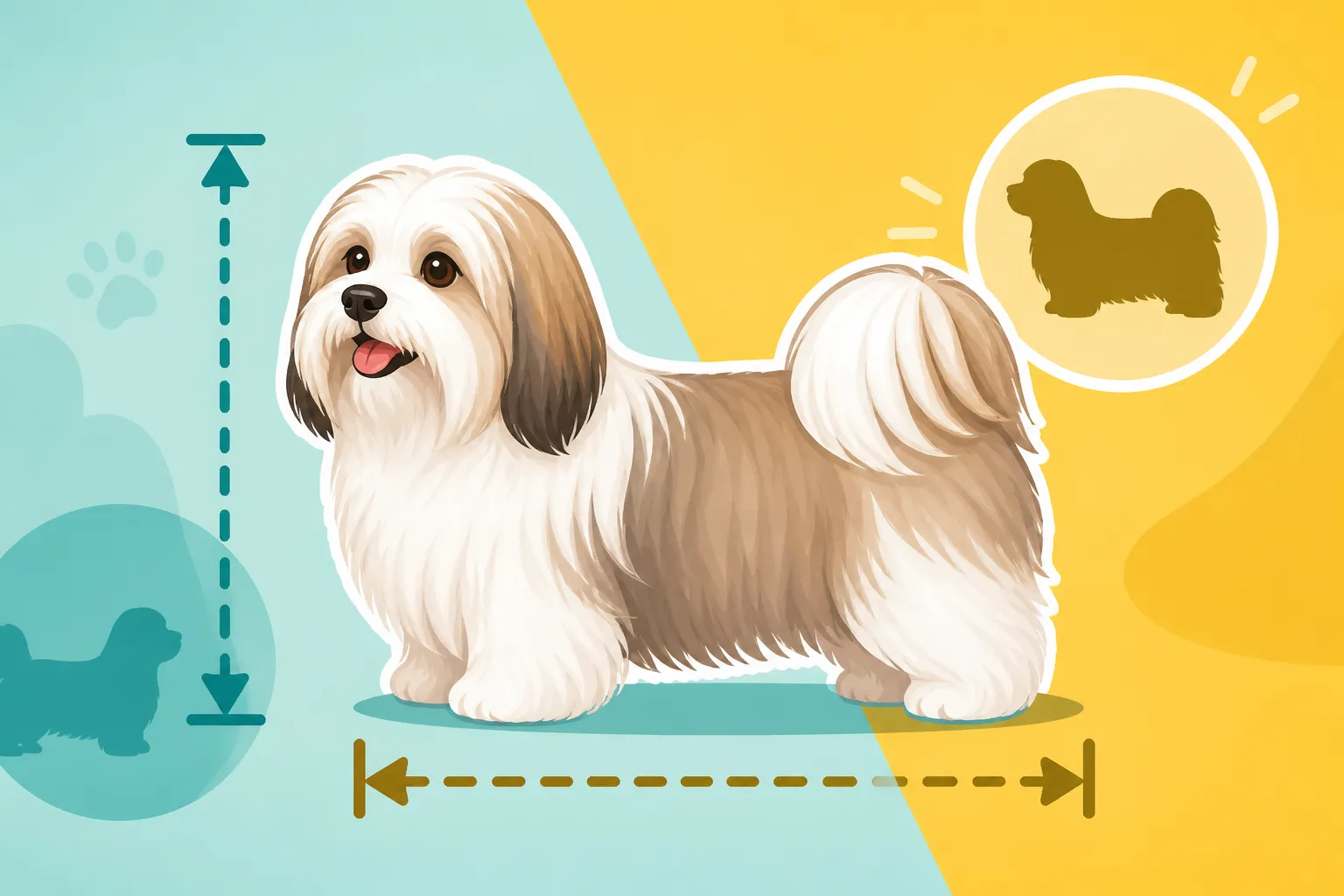
Yes. The Havanese is generally described as slightly longer in body than it is tall at the shoulder. That means the body’s horizontal length is a little greater than the dog’s height from the ground to the top of the shoulder area, or withers.
“Longer than tall” does not mean a Havanese should look stretched out, low to the ground, or unusually elongated. The difference is modest. A well-proportioned dog typically appears compact and sturdy, with a body that is just a little longer than its height. Its flowing coat can make that outline harder to see, especially when the hair is long.
This proportion is one part of the breed’s overall outline, not a stand-alone test of health or quality. A dog’s posture, coat, age, and body condition can all affect how its shape looks in a photo or while it is moving. For a broader look at the breed’s size and proportions, see How Big a Havanese Gets and Whether a Havanese Is Longer Than It Is Tall.
What “slightly longer” means in everyday terms
Think of the Havanese as a small, rectangular dog rather than a square one. The difference is usually subtle enough that you may not notice it immediately when your dog is standing naturally. A coat that falls along the sides can hide the waist and body outline, while a short clip may make the same dog’s proportions easier to see.
The phrase is about the dog’s frame, not the amount of hair between the shoulder and rump. A long coat can visually add length, but it does not change the underlying skeleton. Likewise, a fluffy topknot or a curled tail may alter the outline in a photograph without changing the dog’s body proportions.
A Havanese that looks longer than another Havanese is not automatically closer to the breed ideal. Individual dogs vary, and the outline should be considered alongside balance, movement, and overall health. If you are assessing a puppy, remember that its body can look temporarily awkward during growth. A growing dog may go through phases where the legs, body, and coat seem to develop at different rates.
Why the Havanese can look nearly square
The coat is a big part of the confusion. A full coat may hang from the body and obscure the natural waist, making the dog look wider or longer than it is. A tidy trim can reveal more of the body outline, but even then, the exact impression depends on how the hair is shaped and how the dog is standing.
Leg length can affect the eye, too. The Havanese is a small, sturdy dog, and a low camera angle or a relaxed stance can make the body seem more elongated. A dog standing with its rear legs tucked under itself may also appear shorter in height than one standing squarely.
Photographs are especially unreliable for judging proportions. A camera held close to the dog can distort its outline, and a dog turning slightly toward the lens may look broader or shorter than it really is. To understand the breed’s overall shape, it can help to compare your dog’s outline with How Tall a Havanese Stands and What an Adult Havanese Weighs, while remembering that height and weight alone do not define proportion.
How to measure a Havanese’s body and height
If you want to compare height and body length, measure both while your dog is standing naturally on a firm, level surface. Consistency matters more than achieving a perfect reading on the first try. A wiggly dog, a soft rug, or a tape held at an angle can make the result misleading.
For a casual home check, ask someone to help keep your Havanese calm and standing comfortably. Use a soft measuring tape, and avoid pulling your dog into a stiff pose. The goal is to understand the general outline, not to turn a relaxed measurement into a formal conformation assessment.
| Measurement | Where to measure | Common mistake |
|---|---|---|
| Height | From the floor to the top of the withers, the high point near the shoulder blades | Measuring to the top of the head or coat |
| Body length | From the point of the shoulder to the point of the buttock | Measuring from the nose to the base of the tail |
| Comparison | Compare body length with height using the same units | Measuring one dimension in a different posture or on a soft surface |
Measuring height at the withers
Have your dog stand with its feet on a level floor. The withers are the high point over the shoulder blades, where the neck transitions into the back. They are not the top of the head, and they are not the highest point of a fluffy coat.
If your Havanese has long hair, gently feel for the shoulder area rather than pressing down on the coat and guessing from its surface. A straight edge or a level held gently at the withers can help you locate the height point, but do not force it if your dog is uncomfortable. A calm, approximate home measurement is more useful than a precise-looking number taken while the dog is crouching or twisting away.
Repeat the measurement if your dog shifts its weight or bends its legs. Small variations are normal when measuring at home. If the number seems surprising, check the floor and your measuring method before assuming your dog’s structure is unusual.
Measuring body length consistently
For a basic comparison, measure along the body from the front point of the shoulder to the point of the buttock. Do not measure from the nose, and do not include the tail. Those measurements describe a different part of the dog and will make the body seem longer than it is.
Keep the tape close to the body’s outline without compressing the coat or stretching the dog into an unnatural pose. The shoulder and rear landmarks can be difficult to locate under long hair, so a second person may help gently feel for the points while you hold the tape.
Treat the result as an estimate, not a verdict. Measuring a dog’s proportions at home is useful for curiosity and for understanding the general idea of a slightly rectangular outline. It is not a substitute for an experienced breeder or veterinary professional assessing the dog in person. For more context about the breed’s distinctive outline and movement, read The Springy Gait a Havanese Is Judged On.
What can change the way your Havanese’s proportions look?
Even when the underlying frame stays the same, a Havanese’s visible outline can change from day to day. Coat length, grooming, posture, body condition, and the dog’s stage of growth all influence what you see. That is why a single photo rarely tells the whole story.
It can be tempting to compare your dog with a carefully posed show photograph, but those images often feature a groomed coat and a deliberate stance. Your Havanese may be standing casually after a walk, leaning toward a treat, or shifting its weight as you take a picture. Those ordinary differences can make the body appear shorter or longer.
Coat length and grooming
A long coat can soften the dog’s outline. Hair hanging below the belly may make the body look deeper, while hair that spreads outward can make the dog appear wider. A shorter, even trim may make the back and legs easier to see, but grooming should suit your household and your dog’s comfort—not just a desire to reveal a particular silhouette.
If you are considering changing the coat, think about maintenance as well as appearance. A long Havanese coat needs regular care to prevent tangles and mats, especially around areas where hair rubs or gathers. Owners trying to decide between a full coat and a shorter style may find The Puppy Cut Most Havanese Owners End Up Choosing helpful. The coat can be managed with supplies from pet retailers such as Chewy, but tools and products should be chosen for your dog’s coat and grooming routine rather than because a product claims to create a certain body shape.
A trim cannot change the dog’s height or skeletal length. It can, however, change how clearly you can see those proportions. If your dog looks different after grooming, that may be a change in the visual outline rather than a change in its actual structure.
Posture, age, and body condition
Posture is easy to overlook. A dog that stands with its back rounded, rear legs tucked, or front paws close together may appear shorter or longer than it would in a neutral stance. Excitement can create the same problem: a Havanese stretching toward a person or turning to look at a sound is not standing in a useful position for judging its proportions.
Age matters as well. Puppies change shape as they grow, and their coats may change texture and length during that time. The body can look temporarily less balanced while different parts develop. Adult dogs may also appear to change shape if their weight changes or their muscle tone shifts.
Body condition should not be confused with body length. A dog carrying extra weight may look broader or deeper through the middle, while a very lean dog can look more angular. Neither appearance tells you whether the dog’s frame is longer than its height. If your concern is weight rather than proportion, Whether a Havanese Is Longer Than It Is Tall is not the only useful comparison; your veterinarian can help assess body condition and recommend a suitable feeding plan. Chewy may carry food, treats, and measuring tools, but your dog’s nutritional needs are best discussed with a veterinary professional rather than inferred from its outline.
When should you be concerned about your dog’s shape?
A Havanese that looks a little longer than it is tall is consistent with the breed’s general outline. A single visual impression, however, cannot confirm whether a dog is healthy or well-proportioned. Look at the whole picture: how your dog stands, moves, and feels, and whether its shape has changed noticeably over time.
If you are choosing a puppy, it is reasonable to ask the breeder how they evaluate structure and movement. A responsible conversation should focus on the individual puppy and its parents, not just on a photograph or a promise that one puppy will meet a precise measurement. For a wider introduction to breed traits and the Havanese outline, see Whether a Havanese Has Short Legs on Purpose and What Havanese Owners Wish They Had Known.
Normal variation versus a reason to ask for advice
Small differences in appearance are common. Two healthy Havanese can look noticeably different because of coat, posture, age, and individual build. A dog that seems slightly longer in one picture may look more balanced when standing naturally from the side.
A sudden change in shape deserves a different kind of attention. If your dog seems to be holding its back differently, develops a limp, avoids movement, or appears uncomfortable when getting up, focus on those signs rather than trying to diagnose a proportion problem. A new, persistent change in posture or mobility is worth discussing with a veterinarian.
Also seek veterinary guidance if your dog’s weight changes unexpectedly, its appetite shifts, or you notice other changes in energy or comfort. Proportion descriptions are useful for understanding a breed, but they are not health tests. A veterinarian can assess body condition, movement, and any symptoms together.
Questions to ask a breeder or veterinarian
If you are meeting a breeder, ask how they describe the parents’ size and overall structure, and whether you can see the dogs standing and moving naturally. It is more helpful to watch a dog walk and turn than to rely on a posed photo. You can also ask how the breeder evaluates puppies as they develop and what health information they can share.
If your concern is your own dog, bring a few observations to the appointment: when the change began, whether it is constant or only visible in certain positions, and whether your Havanese seems uncomfortable. A side-view photo taken on a level surface can help document what you are seeing, but it should support—not replace—an in-person examination.
For everyday supply needs, Chewy is one possible retailer to browse for grooming tools or a soft tape measure; choose items that fit your dog and your routine. A tool can make measuring easier, but it cannot tell you whether a particular outline is medically significant. When there is a concern about pain, posture, or a sudden change, a veterinary assessment is the practical next step.
Disclaimer
This article is for general informational purposes only and does not constitute professional advice. Laws, prices and regulations vary by location and change over time. Consult a qualified professional for guidance on your specific situation.