Whether a Havanese Can Be Brindle
A Havanese can be brindle, although the pattern is less commonly noticed than solid, parti, or sable coats. Brindle describes dark stripes or streaks over a lighter background, not a single coat color. Because Havanese puppies can change shade as they mature, a young dog’s markings may look different later. This guide explains how to recognize brindle, what affects its appearance, and whether it matters for health or breed standards.
What brindle looks like on a Havanese
Brindle is a pattern, not a color
A brindle coat has uneven darker stripes or streaks layered over a lighter base color. The contrast can be strong and easy to see, or so subtle that the coat looks mostly dark until you part the hair or catch it in bright daylight. On a Havanese, the pattern may be easiest to spot on shorter hair, such as around the face or legs, though the exact appearance varies from dog to dog.
The stripes usually follow the direction of the hair rather than appearing as crisp, painted-on lines. A brindle Havanese might have a tan or cream background with darker brown or black streaking, for example. Other combinations can appear less sharply defined. Long, wavy hair can soften the pattern, and the coat’s movement may make the markings look different from one moment to the next.
That’s one reason owners sometimes disagree about whether a dog is brindle. One person may see stripes; another may see a dark coat with lighter patches or a mixed pattern. Looking at the coat in natural light and checking several areas—not just the back—can help. Keep in mind that a groomer’s clip can also change how clearly the markings show.
How brindle differs from other Havanese coat patterns
Brindle can be confused with sable, ticking, or a coat with mixed colors. These patterns may all produce a blend of light and dark hair, but the distribution is different. Sable often has darker tips or shading over a lighter base, while brindle is characterized by streaking or striping. Ticking refers to small flecks of color, often visible in white areas, rather than broader bands.
Parti describes a coat with patches of two or more colors, often with white as a prominent part of the pattern. A parti Havanese may also have colored areas that contain shading, but patches alone do not make the dog brindle. If you’re trying to sort out a puppy’s markings, Whether a Havanese Can Be Parti Colored can help clarify how a patchwork coat differs from other patterns.
| Coat description | What you may notice | How it differs from brindle |
|---|---|---|
| Brindle | Dark streaks or stripes over a lighter base | The darker color appears in a striped or banded pattern |
| Sable | Darker shading or tips on lighter hairs | The coat may look shaded rather than striped |
| Parti | Distinct patches of different colors, often including white | The main feature is the patches, not stripes within a base color |
| Ticking | Small colored flecks in lighter areas | The markings are speckled rather than striped |
| Solid | One main color, though shading may still occur | There is no obvious striped pattern |
Coat labels can be useful, but they aren’t always perfectly consistent between breeders, registries, and everyday conversation. If a breeder calls a puppy brindle, ask what markings they’re seeing and whether they expect the pattern to stay visible. Photos of the puppy’s parents and older relatives may offer context, though they can’t guarantee the exact adult appearance.
Why the pattern may be hard to see
A Havanese coat is long and can be wavy or softly curled. When the hair grows out, strands overlap and move, which can disguise stripes. The pattern may look clearer after a bath and thorough drying, or after a professional trim, simply because the coat is separated and easier to inspect. That doesn’t mean clipping creates brindle markings; it only changes how much of the pattern you can see.
Color can also vary across the body. A dog might have noticeable streaking on its legs or face but look nearly solid across the back. A puppy may have stronger contrast than the adult coat, or the reverse. For more on how the coat can shift with age, see Whether a Havanese Changes Color as It Grows and Whether a Havanese Puppy's Color Predicts the Adult.
Why Havanese coats can show brindle markings
Coat pattern comes from inherited traits
A puppy’s coat appearance reflects inherited traits from both parents. Brindle is associated with coat-pattern genetics, but the visible result depends on more than a simple one-gene explanation. Other inherited traits influence where darker pigment appears, how much of it is visible, and how it interacts with the dog’s base color.
That’s why a breeder may see brindle markings in a puppy even when the parents do not look obviously brindle. A pattern can be subtle, obscured by a longer coat, or expressed differently across relatives. Conversely, two dogs with similar-looking coats don’t necessarily produce puppies that look exactly like either parent. Coat appearance is not a reliable way to infer every inherited trait a dog carries.
If you’re choosing a puppy, it’s reasonable to ask the breeder how they describe the litter’s colors and patterns. But coat pattern should sit alongside more important questions about temperament, health, socialization, and the breeder’s care practices. A striking marking can catch your eye; it doesn’t tell you whether a puppy will suit your household or what its adult coat will look like.
Brindle is one part of a wide range of Havanese colors
Havanese coats come in many colors and combinations, and the breed is not limited to one traditional shade. Brindle can be less familiar simply because it is not the pattern people most often picture when they think of the breed. If you’re comparing coat descriptions, Every Color a Havanese Is Allowed to Be and Whether Any Color Is Wrong on a Havanese provide useful background on the breed’s broad range of appearances.
Some owners assume that a patterned dog must be a crossbreed because the markings look unusual to them. Coat color alone is not a dependable way to determine breed. If a dog’s background is uncertain, a pedigree and other reliable documentation are more informative than a visual guess. Even then, papers describe ancestry; they don’t determine whether a dog is a good companion for a particular family.
Brindle should also be kept separate from terms such as black, white, or silver, which describe colors rather than the striped pattern itself. A brindle coat may include dark pigment, but that does not automatically make the dog solid black. If you’re comparing those descriptions, Whether a Havanese Can Be Solid Black and Whether a Havanese Can Be Solid White explain how solid-color descriptions differ from mixed or patterned coats.
Coat color is not a dependable health indicator
A brindle pattern by itself does not tell you whether a Havanese is healthy, has a particular temperament, or will need more or less grooming. A dog’s overall health is better assessed through veterinary care, family health information, and appropriate screening—not by choosing a coat shade. For a broader look at the relationship between appearance and health, see Whether Color Affects a Havanese's Health.
Likewise, a particular color or pattern doesn’t guarantee that the coat will be easy to maintain. Brushing needs are influenced by coat length, texture, tangles, and the dog’s day-to-day activities. A brindle Havanese with a long coat can mat just as readily as a Havanese of another color. If the pattern is important to you, consider it a visual preference rather than a shortcut to predicting care needs or health.
Brindle Havanese puppies and adult coat changes
A puppy’s markings may not stay the same
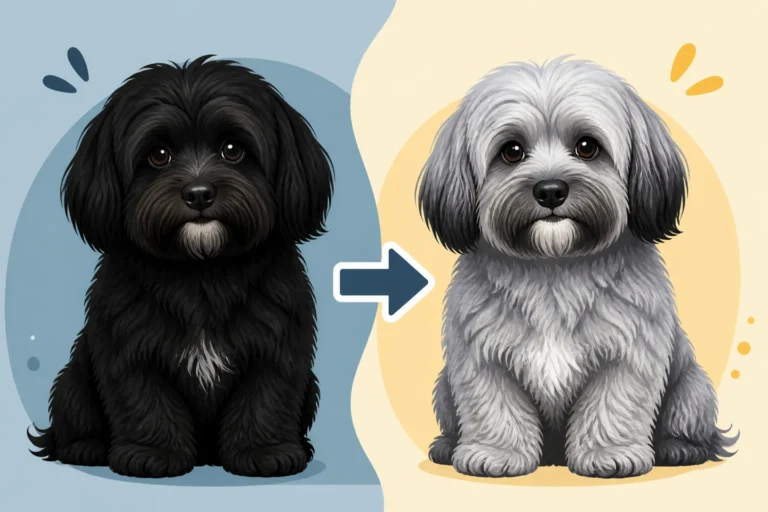
A Havanese puppy’s coat can change as it grows. The background shade may lighten or deepen, and markings can become more or less noticeable as the hair length and texture change. A puppy that looks strongly striped may develop softer contrast, while subtle streaks may become easier to see after a coat change or trim.
This can be frustrating if you fell in love with a puppy’s exact markings and imagined they would stay identical. It helps to think of the puppy’s appearance as a starting point, not a promise of the adult coat. A breeder may be able to describe changes seen in related dogs, but no photo or prediction can guarantee precisely how an individual puppy will look later.
Take clear photos in natural light if you want to track changes. Photograph the same areas over time, such as the shoulders, sides, and legs. This is more useful than comparing pictures taken under different indoor lighting, which can make warm tones look cooler or dark stripes look more pronounced.
Grooming changes what you can see
Long hair can make a brindle pattern look blended, while a shorter, tidy coat may reveal the contrast more clearly. That’s an appearance change, not a change in the dog’s underlying coat pattern. Before asking a groomer for a particular cut, explain that you want to preserve the coat’s condition and discuss what length will suit your maintenance routine.
A comb and brush suited to the coat can help you inspect the hair without tugging at knots. If you’re shopping for basic coat-care supplies, Chewy is one place owners may browse for combs, brushes, and dog shampoo; choose products based on your dog’s coat and skin needs rather than its color. For a Havanese that gets mats behind the ears or under the legs, gentle, regular brushing is more useful than trying to force a comb through a tight tangle.
Bathing and drying can also temporarily affect the way a coat lies. Damp hair clumps together and may make the pattern look darker or less distinct. Once the coat is dry and brushed out, the stripes may appear different. If you’re unsure whether a marking is brindle or simply uneven shading, ask a knowledgeable groomer or breeder to look at the coat in person.
Choosing and caring for a brindle Havanese
What to ask a breeder about coat descriptions
If you’re speaking with a breeder about a brindle Havanese puppy, ask how they describe the markings and whether they have photos of the puppy’s parents or adult relatives. You can also ask whether the litter’s coat colors have changed noticeably as the puppies have matured. These questions can help set realistic expectations, but they cannot lock in an adult coat pattern.
A responsible conversation should go beyond color. Ask about the puppies’ everyday handling, early socialization, health history, and the care the breeder provides. If the breeder focuses heavily on a rare-looking pattern but is vague about the dogs’ welfare or health information, treat that as a reason to slow down and ask more questions.
Avoid choosing a puppy solely because a coat pattern seems unusual or valuable. A Havanese is a long-term commitment, and the fit between the dog’s needs and your daily life matters far more than whether its stripes remain vivid. If you like brindle, enjoy it as one charming feature among many—not as proof of special health, temperament, or pedigree.
Everyday coat care applies regardless of color
Brindle hair does not need a special grooming routine. The same practical habits apply: check for tangles, keep the coat clean, and choose a length you can maintain. A long coat needs regular attention to prevent knots from tightening close to the skin. A shorter trim may make daily care easier, though it still requires brushing and routine grooming.
When choosing grooming products, focus on gentle handling and your dog’s skin and coat rather than trying to enhance the stripes. Chewy may be convenient for comparing basic grooming tools, but a product marketed for a particular color is not necessary to preserve a brindle pattern. If your dog develops irritation, unusual hair loss, or persistent itching, ask your veterinarian before changing shampoos or adding coat products.
For owners who want to record their dog’s appearance, take occasional photos before and after grooming and note the date and coat length. This can help you see how much of the pattern’s changing appearance comes from the coat being longer, shorter, wet, or freshly brushed. It also makes a sweet record of how your Havanese changes from puppyhood into adulthood.
How to describe the coat without overthinking it
If you’re filling out a casual profile or talking with a groomer, “brindle” is a reasonable description when you can see dark striping over a lighter background. If the pattern is subtle, you can say “brindle-like” or describe the colors and where the streaking appears. For official records, use the wording requested by the organization or the documentation provided by the breeder.
There’s no need to settle an argument over a label if the dog’s markings are mixed or hard to classify. Havanese coats can combine shades and patterns in ways that don’t fit a neat everyday category. The useful questions are whether the coat is comfortable, whether it can be maintained without painful matting, and whether the dog is thriving.
A brindle Havanese may be uncommon in your neighborhood, but the pattern is a variation in appearance—not a separate kind of Havanese. Whether the stripes are bold or faint, they don’t change the basics of caring for a sociable, long-coated companion. Focus on the individual dog, its care, and the relationship you’re building together.
Disclaimer
This article is for general informational purposes only and does not constitute professional advice. Laws, prices and regulations vary by location and change over time. Consult a qualified professional for guidance on your specific situation.