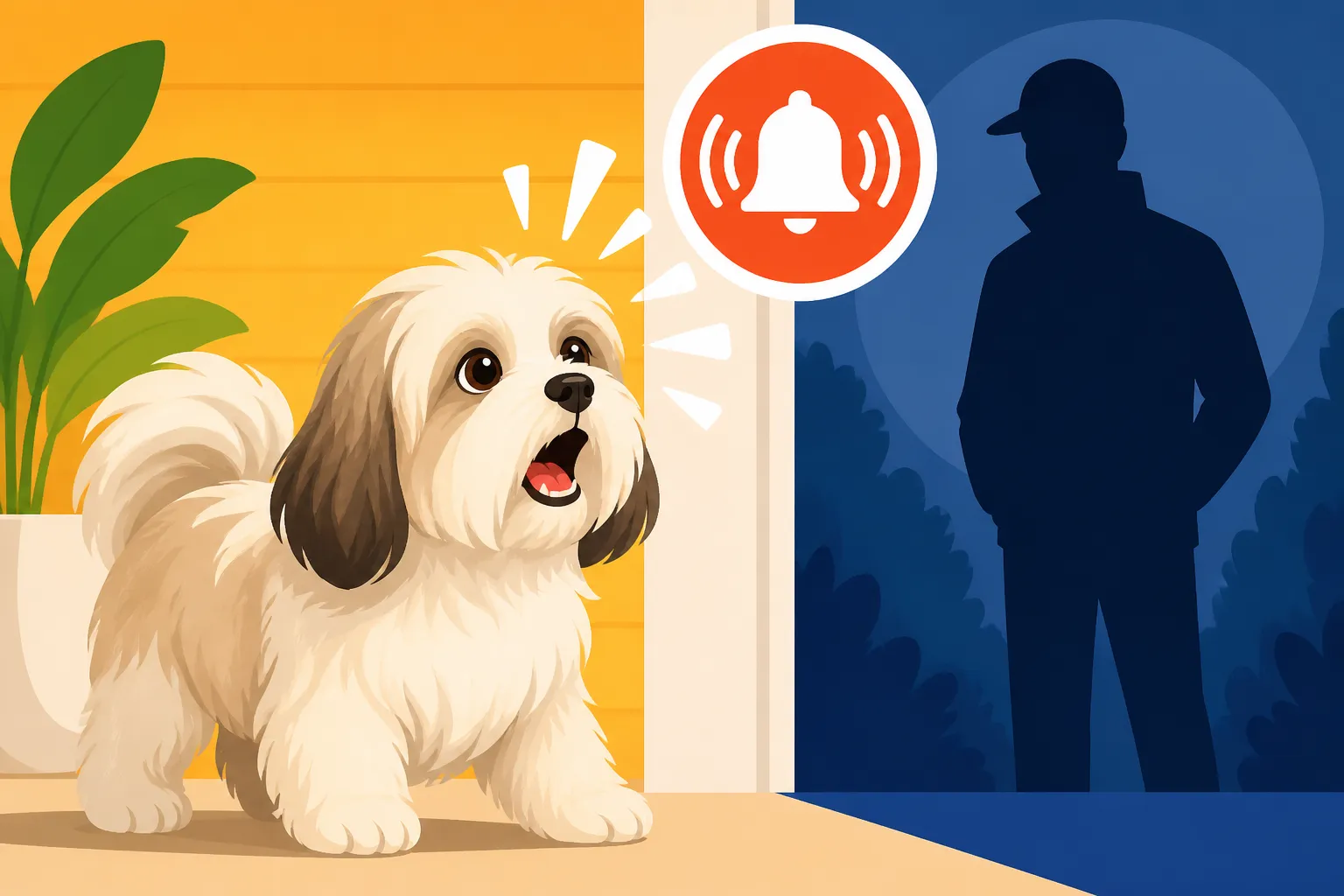
Whether a Havanese Alerts to Strangers
Many Havanese owners wonder if their fluffy companion will be a quiet, welcoming presence or a tiny alarm system when new people come around. It’s a common frustration to have a dog that barks incessantly at every knock, doorbell, or even just a stranger walking past the window. This guide aims to shed light on the Havanese's natural inclination to alert to strangers, help you understand why they do it, and provide practical strategies for managing and moderating this behavior so you can enjoy a calmer home.
The Havanese Nature: A Watchful Companion
Havanese, despite their small size and endearing appearance, often carry a surprisingly strong instinct to alert their families to perceived changes in their environment. They were historically bred as companions and watchdogs (though not guard dogs!), meaning their job was to notice things and let their people know. This isn't about aggression; it's about communication and a deeply ingrained loyalty to their pack — which is you! Their sweet disposition often belies a keen awareness of their surroundings, making them excellent little sentinels for the home.
Why They Might Bark: Instinct vs. Training
Think about the origins of the Havanese. They hail from a lineage of "Bichon type" dogs, often found in noble households. Their purpose was to be charming companions, yes, but also to announce visitors. They weren't expected to fight off intruders, but certainly to make enough noise to draw attention. This historical role means that a certain degree of "alert barking" is often hardwired into their DNA. It’s not necessarily a sign of a poorly behaved dog, but rather a manifestation of their historical job description, a trait that has served them and their human companions for centuries.
However, modern living often means that incessant barking isn't ideal. While their instinct is strong, a Havanese's reaction to strangers is also heavily influenced by their individual temperament, early experiences, and the training they receive. A Havanese that hasn't been exposed to many different people or situations as a puppy might default to barking out of uncertainty or fear, rather than just a polite "heads up." Understanding this interplay between innate tendency and learned behavior is the first step in managing their reactions. It's about recognizing that while the instinct is there, it can be shaped and refined.
It's a balance, really. We love their alertness because it means they're tuned into us and our homes, but we don't want it to escalate into a nuisance. The key is to teach them when it's appropriate to alert and when it's time to settle, ensuring they feel secure enough not to feel the need to sound the alarm for every leaf that blows past the window or every distant conversation they hear. By providing clear boundaries and consistent expectations, you empower your Havanese to be a discerning communicator rather than a reactive one.
The "Velcro Dog" Tendency and Its Impact on Alerting
The Havanese is famous for its "Velcro dog" tendency, a delightful trait where they bond intensely with their human companions and prefer to be by their side almost constantly. This deep attachment is one of the breed's most charming qualities, but it also plays a significant role in their alerting behavior. Because they are so attuned to their family and home environment, any perceived disruption to that peace can trigger a vocal response. They are deeply invested in your well-being and the stability of their shared space.
When a stranger approaches the house or enters their perceived territory, a Havanese’s instinct is often to protect their beloved humans and their shared space. They might not be thinking of themselves as fierce guard dogs, but more as tiny protectors sounding the alarm. This isn't usually born of aggression, but rather a combination of loyalty, a touch of territoriality, and sometimes, a bit of insecurity if they haven't been properly socialized. Their closeness to you means they're hyper-aware of your reactions and will often mirror your perceived anxiety or validate their own concerns with a bark.
Their close bond means they consider you and your space as extensions of themselves. If someone unfamiliar comes too close, they see it as a potential threat to their cherished family unit. This intense connection is why Why a Havanese Follows You Into Every Room is so common, and it's also why they take their "watchdog" duties so seriously. It's their way of saying, "Hey, human, there's something new and I want you to know about it, just in case!" This strong protective instinct, while endearing, needs careful guidance to ensure it doesn't become overwhelming.
Decoding the Bark: What Your Havanese Is Really Saying
Not all barks are created equal, especially when it comes to your Havanese. They have a surprisingly varied vocabulary, and understanding the nuances can help you address the root cause of their vocalizations. Is it excitement? Fear? Curiosity? Or just a demand for attention? Learning to distinguish these different barks is crucial for effective communication and training, helping you respond in a way that truly meets their needs.
Different Barks for Different Situations
A Havanese's bark can range from a sharp, urgent "Woof! Woof!" to a more playful, excited yip, or even a soft, questioning "Ruff?" when they're unsure. When a stranger is at the door, you might hear a rapid series of barks, often accompanied by a high-pitched tone, indicating alarm or excitement. This is their traditional "intruder alert" signal, even if the "intruder" is just the mail carrier. This type of barking is meant to get your immediate attention and announce a perceived change in their environment.
Contrast this with a "play bark," which might be higher pitched and interspersed with body language like a play bow or a wagging tail. If a stranger is invited inside and engaging playfully, the barks might shift to this more welcoming, albeit still vocal, type, accompanied by wiggles and happy panting. Conversely, a lower-pitched, sustained bark, possibly with some growling, could indicate genuine fear or discomfort, signaling that your Havanese needs space or reassurance. Observing their body language—ears, tail, posture—alongside the bark is essential to truly understand what they’re trying to convey. The Barking a Havanese Does at Every Sound might vary greatly depending on whether it's the mailman, a squirrel, or a friendly visitor.
Sometimes, their barks are simply a plea for attention. If they bark and you immediately go to investigate, you might inadvertently be reinforcing the behavior. They learn that barking brings you to them, regardless of the reason. So, when a stranger is present, their barks might be a mix of "alert!" and "pay attention to me!" Knowing the difference helps you respond appropriately, either by praising their initial alert and then redirecting them, or by ignoring attention-seeking barks once the initial "all clear" has been established. This teaches them that calm behavior earns rewards, not just noisy ones.
The Spectrum of Reactions: From Curious Sniff to Alarm Bell
A Havanese's interaction with strangers isn't always a binary choice between barking and silence. There's a whole spectrum of reactions in between. On one end, you might have a well-socialized Havanese who, after an initial "alert," will approach a friendly stranger with a wagging tail, offering a curious sniff and perhaps even a gentle lick. These dogs have learned that most new people are sources of potential pets and praise, not threats. They're confident and perceive new encounters as opportunities for positive interaction.
On the other end, some Havanese, particularly those with less socialization or naturally more timid personalities, might react with intense alarm barking, retreating behind their owner, or even showing subtle signs of fear like lip licking, yawning, or cowering. This isn't about being "mean"; it's a fear response. For these dogs, interaction with strangers needs to be handled with extreme care and positive reinforcement, ensuring they feel safe and not overwhelmed. Pushing them too quickly can exacerbate their anxiety.
Most Havanese fall somewhere in the middle. They will bark to alert, then observe. If the stranger appears friendly and their owner reassures them, they might cautiously approach, perhaps still vocalizing softly, before eventually accepting a gentle pet. The key is to guide them through these interactions, teaching them that your presence means safety and that you will handle the situation. This builds their confidence and reduces their perceived need to be the sole security detail. Understanding Whether a Havanese Wary of Strangers is common, helps in setting realistic expectations for their interactions.
Managing and Moderating Alert Barking in Havanese
The good news is that while Havanese have a natural tendency to alert, their intelligence and desire to please make them highly trainable. You don't have to live with constant barking at every leaf that blows past the window. With patience, consistency, and positive reinforcement, you can teach your Havanese appropriate ways to react to new people and sounds, turning their alert barks into a manageable cue rather than a continuous symphony.
Early Socialization: The Key to a Confident Havanese
One of the most powerful tools in moderating alert barking is early and extensive socialization. From a young age, expose your Havanese puppy to a wide variety of people, sights, sounds, and experiences. Think about different ages, genders, and appearances of people, from children to older adults. Take them to safe, controlled environments where they can observe strangers from a distance, like a quiet park bench, and gradually introduce them to friendly individuals in a positive manner.
The goal isn't to force interactions but to create positive associations. Have friends and family visit, always ensuring they offer your puppy treats and gentle praise for calm behavior. Enroll in a well-run puppy class, which can be an invaluable resource for controlled socialization and basic obedience. Programs like BAXTER & Bella offer online puppy training courses that can be incredibly helpful for owners who want to systematically introduce their puppies to new experiences and build confidence in a structured way, especially when in-person classes might not be readily available or suitable for a very young puppy. Where to Take a Havanese Puppy Before Full Cover is a critical question for many new owners.
A well-socialized Havanese learns that new people are generally not a threat and often bring positive experiences. This confidence reduces the likelihood of fear-based barking, allowing their natural "alert" instinct to be more measured and less frantic. Remember, a confident dog is often a calmer dog, less prone to sounding the alarm at every novelty because they trust that you have things under control.
Training for Calm Introductions
Once you've laid the groundwork with socialization, specific training techniques can help manage barking when strangers approach or enter your home. The "Quiet" command is a must-have. When your Havanese barks at the doorbell, acknowledge their initial alert (e.g., "Good alert!"), then calmly say "Quiet" while holding a high-value treat near their nose. The moment they stop barking, even for a second, praise them enthusiastically and give them the treat. Gradually increase the duration of silence required before the reward, building their self-control.
Another effective strategy is to teach them an alternative behavior. For instance, when the doorbell rings, instead of letting them bark, teach them to go to their mat or bed. Practice this with a "Go to your place" command. Start by ringing the doorbell yourself, then immediately directing your Havanese to their spot with a treat. Over time, they’ll associate the doorbell with going to their designated calming area rather than a barking frenzy. You can find excellent durable dog beds and training mats on Amazon that can serve as their "place" for this type of training, providing a consistent signal.
It’s also helpful to desensitize them to triggers. Record doorbells, knocks, or sounds of people walking past and play them at a very low volume, rewarding your Havanese for staying calm. Slowly increase the volume over several sessions, ensuring they remain relaxed. This teaches them that these sounds aren't always immediate threats requiring an alarm. Consistency is key here; everyone in the household needs to be on the same page with commands and rewards to avoid confusing your Havanese.
Tools and Techniques to Support Your Training
Beyond direct commands, various tools and techniques can assist your efforts to moderate alert barking. Management is often the first step: if your Havanese barks excessively at things outside the window, simply closing curtains or using window film can remove the visual trigger. This isn't a long-term solution to the underlying behavior, but it can provide immediate relief and reduce opportunities for rehearsal of the unwanted barking behavior. It gives you a chance to implement training without constant interruptions.
For those persistent barkers, interactive puzzle toys can be a godsend. Filling a Kong with peanut butter or another treat can keep your Havanese occupied and focused on something positive when a trigger might otherwise set them off. These can be particularly useful when you know guests are arriving, helping to redirect their energy and attention away from the door. Look for a variety of puzzle toys and long-lasting chews on Amazon to keep things interesting and mentally stimulating for your Havanese.
If you find yourself truly struggling, don't hesitate to consult a professional dog trainer or behaviorist. They can observe your Havanese's specific behaviors, identify underlying causes, and develop a tailored training plan. Sometimes, a fresh pair of expert eyes can make all the difference, providing insights and techniques you might not have considered. It's an investment in a calmer, happier home for everyone and can greatly enhance the bond you share with your Havanese. Whether a Havanese Needs a Professional Trainer is a decision many owners face.
| Bark Type | Common Cause | Havanese Body Language | Owner Response Strategy |
|---|---|---|---|
| Alarm Bark | Stranger/Threat detected, unexpected sound | Ears forward, stiff posture, tail erect/waving | Acknowledge calmly, then "Quiet" command and redirect |
| Excitement Bark | Familiar visitor, anticipated play, happy | Loose body, wagging tail, play bows, happy pant | Engage playfully, then "Quiet" if excessive, teach greetings |
| Fear Bark | Unfamiliar person, loud noise, startling | Cowering, tail tucked, lip licking, retreat | Create distance, reassure gently, positive association |
| Demand Bark | Wants attention, food, play item | Direct stare, pushing with nose, pawing, whining | Ignore until quiet, then reward desired behavior promptly |
| Greeting Bark | Hello to a familiar person upon arrival | Loose, wiggly body, happy panting, soft tail wag | Allow brief greeting, then encourage calm settling |
When Alert Barking Becomes a Problem
While some level of alert barking is normal and even desirable in a Havanese, there’s a point where it can cross the line from helpful communication to disruptive behavior. Recognizing when your Havanese's barking has become excessive or problematic is the first step toward addressing it effectively and ensuring both you and your furry friend can live together harmoniously, fostering a peaceful environment for all.
Identifying Excessive Barking
What constitutes "excessive" barking is subjective, of course, but generally, if your Havanese is barking at virtually every sound or sight, continuing for extended periods (e.g., several minutes after the trigger is gone), or becoming distressed by the triggers, it's likely problematic. If your neighbors are complaining, or you find yourself constantly stressed by the noise, it’s definitely time to intervene. A Havanese that barks non-stop at people walking past the window, even after they've gone, or who cannot settle when a guest is present, is probably experiencing anxiety or has learned that barking is a highly effective way to get attention or make things (like the mail carrier) "go away."
Consider the context: a few barks when the doorbell rings are understandable and helpful. Continuous, high-pitched barking for five minutes after the visitor has entered, or frantic barking at a distant pedestrian, is not. Also, observe if the barking is accompanied by other stress signals like pacing, drooling, destructive chewing, or inappropriate urination. These can be indicators of underlying anxiety, which needs a more holistic approach than just quieting the bark. Signs a Havanese Has Separation Anxiety can sometimes overlap with excessive alert barking, especially if it's tied to strangers approaching when you're not there to provide reassurance.
It's important not to just suppress the barking without addressing the underlying emotion. If your Havanese is barking out of fear, simply punishing the bark won't make them less fearful; it might even increase their anxiety or cause them to develop other behavioral issues. The goal is to teach them how to cope calmly and confidently with strangers, not just to silence them. This means fostering an environment of trust and security.
Seeking Professional Guidance
If you've tried consistent training, socialization, and management techniques, and your Havanese's alert barking remains excessive or seems rooted in deep-seated fear or anxiety, it's definitely time to seek professional guidance. A certified professional dog trainer or a veterinary behaviorist can provide invaluable assistance. These experts have the knowledge and experience to assess your dog's specific situation, identify the precise triggers and motivations behind the barking, and develop a customized behavior modification plan tailored to your Havanese's unique needs.
They might suggest different training protocols, recommend specific calming aids or environmental modifications, or even explore medication if anxiety levels are severe or impact their quality of life. Sometimes, what seems like simple barking might be a symptom of a larger issue, and a professional can help unravel that complexity. They can also teach you advanced techniques for counter-conditioning and desensitization that are hard to implement effectively on your own, ensuring safe and progressive learning. Remember, asking for help isn't a sign of failure; it's a commitment to your Havanese's well-being and your own peace of mind. Investing in expert help can transform your home environment and strengthen your bond with your Havanese significantly.
Disclaimer
This article is for general informational purposes only and does not constitute professional advice. Laws, prices and regulations vary by location and change over time. Consult a qualified professional for guidance on your specific situation.