Whether a Child Can Injure a Havanese by Dropping It
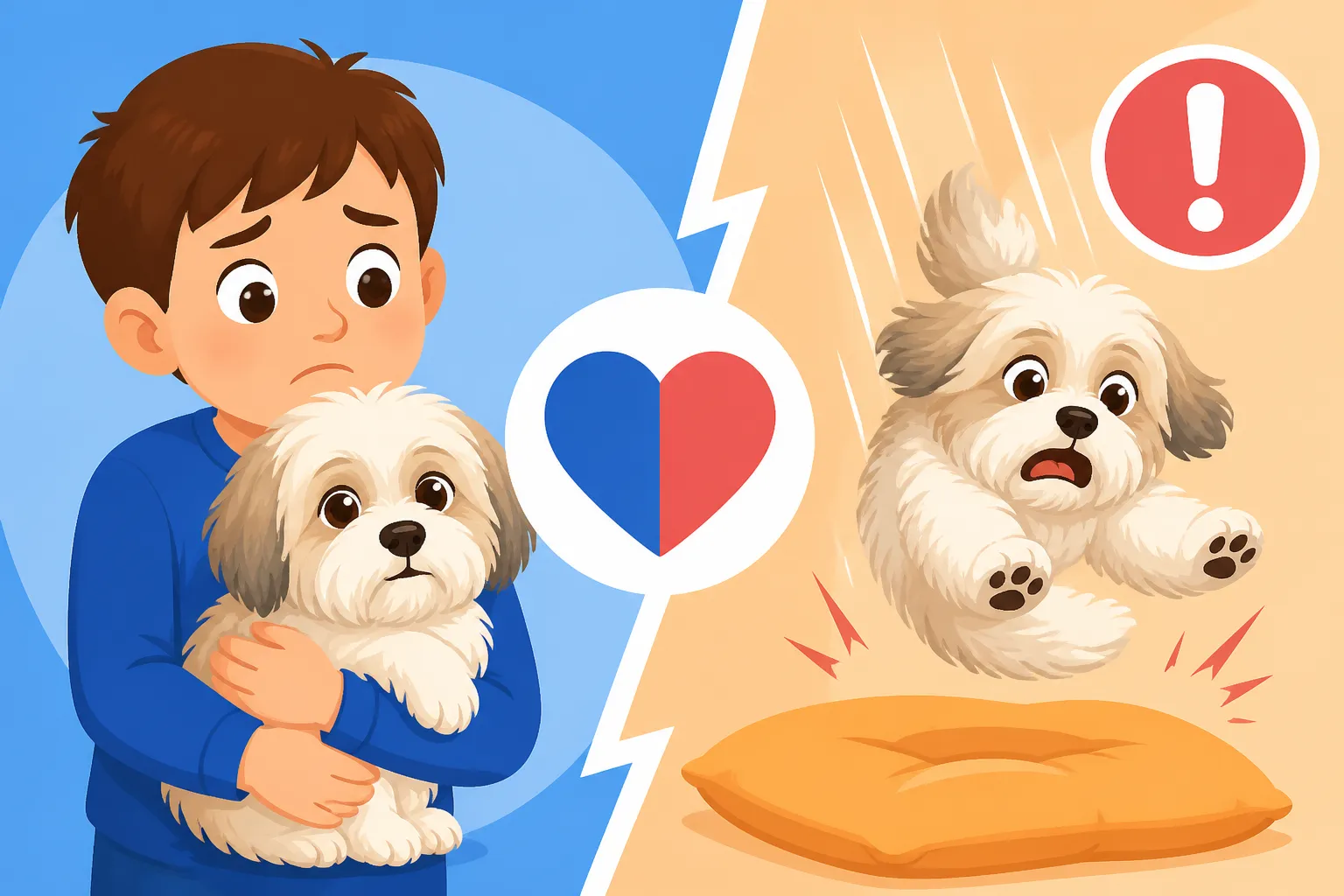
It’s a fear many Havanese owners with young children quietly harbor: the quick movement, the innocent but clumsy grab, and the unthinkable consequence of a small, delicate puppy being accidentally dropped. Believe me, you’re not alone in worrying about this. It's a very real and valid concern, as a child can indeed injure a Havanese, particularly a puppy, by dropping it. This guide aims to walk you through why these accidents are so serious, how to best prevent them, and what to do if the worst happens, ensuring your furry family member stays safe and sound in a bustling household.
The Delicate Nature of a Havanese Puppy
Our beloved Havanese might be full of vim and vigor, but beneath all that beautiful, flowing fur lies a surprisingly delicate structure, especially when they are young puppies. They aren't built like a sturdy Labrador; they are a toy breed, and that comes with its own set of vulnerabilities that we, as their guardians, need to be acutely aware of.
Understanding Their Bone Structure
Think about how small a Havanese puppy is, often weighing just a few pounds. Their bones are tiny, slender, and simply not designed to withstand the kind of impact that even a short fall can inflict. A human toddler, for example, can fall from their own height and often bounce back with just a bump or bruise. For a Havanese puppy, falling from a child's arms, even from a relatively low height, is akin to a human falling from a much greater distance. The force of impact on such small bones can be immense, leading to a range of potential injuries that are far more severe than what you might expect for their size.
It's not just the bones themselves; their joints, ligaments, and tendons are also miniature and can be easily strained or torn. Imagine the intricate workings of a tiny clock – every piece is essential and delicate. Our Havanese are much the same. Whether a Havanese Is Fragile Around Children is a question that often arises, and the answer, unfortunately, leans towards yes, especially when it comes to rough handling or accidental drops. Their physical structure simply doesn't offer the same resilience as larger, heavier-boned breeds.
Growth Plate Vulnerability
One of the most critical factors making puppies susceptible to injury is the presence of open growth plates. These are areas of cartilage at the ends of a puppy's long bones where new bone tissue forms, allowing the bones to lengthen as the puppy grows. They are softer than mature bone and are the last part of the bone to harden. In Havanese puppies, these growth plates usually don't fully close until they are around 8 to 12 months old, sometimes even later in specific areas.
An impact to an open growth plate can be particularly devastating. Instead of just a clean break, an injury to a growth plate can affect the bone's future development, leading to deformities, limb length discrepancies, or even premature arthritis down the line. It's not just about healing the initial fracture; it's about potentially impacting the dog's mobility and comfort for the rest of its life. This is why even a seemingly minor fall during puppyhood warrants immediate and careful attention.
The Impact of Falls on Small Bodies
When a small Havanese puppy takes a tumble, the potential injuries go beyond just broken bones. While fractures of legs (especially the radius and ulna in the front legs, or the tibia and fibula in the back legs) are common, there are other severe risks. A fall can lead to concussions or other head trauma, particularly if they hit their head on a hard surface. Their small skulls offer less protection than you might think. Spinal injuries, while less common from a drop, are also a possibility, especially if they land awkwardly on their back or neck.
Internal injuries are another silent danger. The impact can cause bruising or damage to internal organs, such as the lungs, spleen, or kidneys, which might not be immediately apparent. A puppy might seem okay at first, only to show signs of internal distress hours later. Soft tissue injuries like sprains and strains can also occur, causing significant pain and lameness. It’s a sobering thought, but understanding these risks is the first step in ensuring prevention. This is why vigilance, especially during The First Year With a Havanese Puppy, is absolutely key to their long-term health.
Why Children and Havanese Need Careful Supervision
Bringing a Havanese into a home with children is a beautiful experience, full of joy and companionship. However, it also brings a unique set of challenges. Children, especially young ones, often don't fully grasp the fragility of a small dog, and their enthusiasm can sometimes outweigh their carefulness. This isn't a criticism of children; it's simply a reality of their developmental stage, and it places the onus on us, as adults, to manage interactions.
Age-Appropriate Interactions
The way a child interacts with a Havanese should absolutely vary based on the child's age and maturity level. A toddler, for instance, operates largely on instinct and impulse. They might see a fluffy puppy as a living toy to be hugged, squeezed, or picked up indiscriminately. Their motor skills are still developing, making accidental drops a higher risk. For these very young children, direct, unsupervised physical interaction should be limited. Instead, teach them to interact gently with an adult present, perhaps by stroking the dog while it's on the floor or in an adult's lap.
Older children, say 6-10 years old, can understand more complex rules and develop a sense of responsibility. This is the age where you can begin to teach them how to properly pick up a Havanese – always supporting their chest and hindquarters – and how to hold them securely. Teenagers often have the motor skills and cognitive ability to be fully responsible, but even then, supervision isn't a bad idea, as distractions can always lead to momentary lapses. The goal is to build a foundation of mutual respect and gentle handling, which is crucial for A Havanese in a House With Children.
Teaching Safe Handling Techniques
Educating children on how to safely interact with a Havanese is paramount. It’s not enough to simply say "be gentle." We need to actively demonstrate and practice the right way.
Here are some key points to teach:
- Always Sit Down to Pet: Encourage children to sit on the floor when interacting with the Havanese. This reduces the height of a potential fall if the dog is dropped or jumps out of their arms, and it creates a calmer, less intimidating environment for the dog.
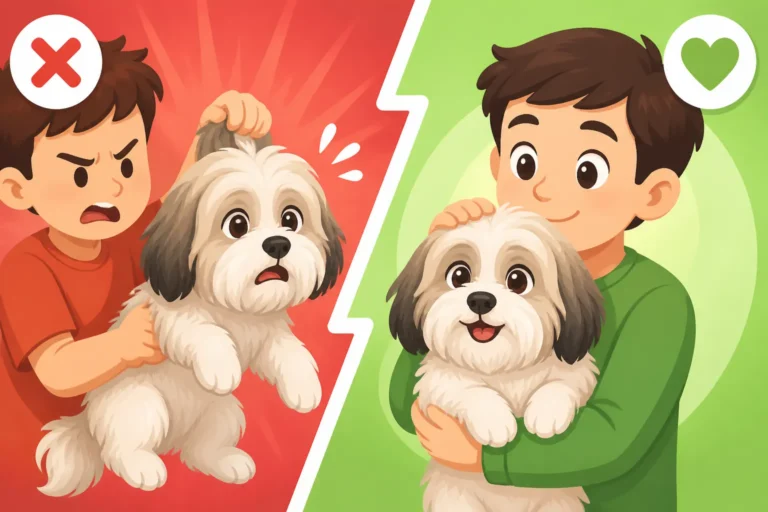
- Proper Lifting: For children old enough to lift the dog, teach them to place one hand under the dog's chest and the other under its hindquarters. Emphasize never picking the dog up by one leg, under the armpits, or by the scruff of the neck.
- Respect Boundaries: Teach children to recognize when the Havanese wants to be left alone. Signs like yawning, lip licking, turning away, or walking away should be respected. Never disturb a Havanese who is eating, sleeping, or in its designated safe space.
- Gentle Touch: Practice gentle petting, using open hands rather than grabbing or pulling. Show them how to stroke the fur in the direction it grows, avoiding roughhousing.
- No Face-to-Face: Teach children not to put their faces directly into the dog's face, as this can be perceived as threatening.
Online resources and puppy training programs, such as those offered by BAXTER & Bella, often have excellent modules specifically designed to help families, including children, learn appropriate interaction and handling techniques. These structured lessons can provide valuable guidance and practical tips.
The 'Oops' Factor: Accidents Happen
Despite our best efforts, accidents can, and sometimes do, happen. Children are still learning, and even the most well-behaved Havanese can make an unexpected jump or wiggle. A child might stumble, lose their balance, or simply get distracted. It’s not about blame; it’s about acknowledging reality. This is why having preventative measures in place is so crucial.
The "oops" factor is particularly prevalent when a child is learning to pick up or carry a Havanese. Even with perfect instruction, a sudden noise or an unexpected movement from the dog can lead to a momentary loss of grip. That split second can be all it takes for a Havanese to fall. While we strive for perfection, we must also prepare for imperfection. Think about it: a quick trip over a toy on the floor, an excited puppy wiggling to get down, or a moment of carelessness can have serious repercussions. This underscores why constant, active supervision is not a suggestion, but a necessity, especially with young puppies.
Preventing Accidental Injuries: Practical Strategies for Families
Preventing accidents involving children and your Havanese is a multi-faceted approach that involves physical barriers, consistent education, and smart supervision. It's about creating an environment where both your child and your dog can thrive safely, without constant stress or worry.
Creating Safe Play Zones
One of the most effective ways to prevent accidental drops and other injuries is to create designated safe zones within your home. These are areas where your Havanese can retreat and be undisturbed, and conversely, areas where children can play without access to the dog unless supervised.
- Pet Gates: Invest in sturdy pet gates. These are invaluable for managing access. You can find a great selection on Amazon, from pressure-mounted to hardware-mounted options. Use them to block off rooms where your Havanese can relax without interruption, or to create a puppy-proof playpen area where the dog can be safe while children play nearby. This is especially helpful if you’re cooking dinner or otherwise unable to provide undivided attention.
- Crates and Playpens: A comfortable crate or a spacious indoor playpen can serve as your Havanese's personal sanctuary. Teach children that this is the dog's "house" and they should never disturb the Havanese when it's inside. This provides a safe, secure space for the dog to nap, chew on a favorite toy, or just have some quiet time away from the hustle and bustle of family life.
- Designated Dog Beds/Areas: Ensure your Havanese has several comfortable beds or mats in different rooms, clearly designated as their relaxation spots. These spots, ideally in low-traffic areas, further reinforce the idea of personal space that children should respect.
These physical barriers are incredibly effective in preventing those "oops" moments that often lead to accidental injuries. They reduce the opportunities for children to spontaneously pick up the dog, or for the dog to be in the wrong place at the wrong time.
Educational Resources for Children
Beyond simply telling children what not to do, engage them in learning about dog safety and behavior. Knowledge empowers them to interact more thoughtfully and safely.
- Books and Videos: There are many wonderful children's books and educational videos specifically designed to teach kids how to be gentle and respectful with pets. Reading these together can spark conversations and help children internalize the rules in a fun, engaging way. Look for resources that use positive reinforcement and focus on empathy.
- Role-Playing: Practice safe interactions using a stuffed animal first. Let your child pretend the toy is the Havanese and practice gentle petting, how to approach, and how to "respect its space." This allows them to rehearse the behaviors without any risk to your actual dog.
- Involve Them in Care: When age-appropriate, involve children in positive care activities like helping to fill the food bowl (with supervision), throwing a soft toy for fetch, or assisting with brushing your Havanese while it's safely on the floor. This builds a positive relationship based on caring and responsibility, rather than just physical interaction. Training resources, like those offered by BAXTER & Bella, can equip your puppy with commands that also aid in safety around kids, such as "leave it" or "go to your mat," which can be invaluable in managing interactions.
Managing Interactions in Multi-Pet Homes
If you have other pets, managing the dynamics becomes even more important. While this article focuses on child-dog interactions, remember that other pets can also accidentally injure a Havanese, especially if there's a size disparity. Always introduce new pets slowly and supervise interactions carefully. Ensure your Havanese has its own safe space that larger or more boisterous pets cannot access. This might mean higher beds, crates, or gates that only the Havanese can navigate. Always make sure your Havanese can easily retreat if feeling overwhelmed.
| Interaction Type | Child's Age Group | Safety Recommendation | Potential Risks |
|---|---|---|---|
| Picking Up Dog | Toddler (1-3 years) | Never allow. Supervise all interactions. | High risk of accidental drop, crush injury, bites from fear. |
| Picking Up Dog | Young Child (4-7 years) | Only with direct adult supervision and guidance. Teach proper support. | Risk of accidental drop, dog jumping from arms. |
| Picking Up Dog | Older Child (8+ years) | Teach proper lifting; supervise until proficient. Still encourage ground interaction. | Lower risk, but still possible with distraction/clumsiness. |
| Petting/Touching | All Ages | Always supervise. Teach gentle strokes, no grabbing/pulling. Encourage sitting. | Pulling fur, poking eyes, startling dog. |
| Playing with Toys | All Ages | Supervise to ensure gentle play. Use soft toys. | Child getting mouthy dog's teeth, roughhousing. |
| Feeding/Treats | Young Child | Supervise closely. Teach 'soft hand' technique. | Accidental bites if child tries to take food back. |
| Feeding/Treats | Older Child | Can participate with supervision, understanding dog's resource guarding. | Minor risk with proper education. |
Whether a Havanese Should Use Steps to the Couch and Keeping a Havanese Off Furniture It Should Not Jump From are also important considerations for preventing injuries from falls that aren't directly related to being dropped by a child, but highlight the breed's general vulnerability to impact. Consider purchasing pet steps on Amazon to assist your Havanese in safely accessing furniture, reducing the risk of them jumping down incorrectly.
What to Do If Your Havanese Is Dropped
Despite every precaution, accidents can still happen. The moment you realize your Havanese has been dropped, your heart will probably leap into your throat. Remaining calm and acting swiftly and appropriately is crucial for your dog's well-being. Panic can make the situation worse, both for you and for your furry friend, who will pick up on your anxiety.
Immediate Assessment and First Aid
The very first step is to calmly approach your Havanese. Speak in a soothing voice to avoid further startling them. Gently assess the situation, even if it's painful to look.
- Observe Behavior: Does your Havanese cry out? Are they limping, favoring a limb, or unable to put weight on a paw? Are they disoriented, shaking, or unusually quiet? Any change in normal behavior is a red flag. Look for signs of pain: panting, trembling, tucked tail, or aggression when touched.
- Visual Check: Carefully look for any visible injuries. Is there bleeding, swelling, or an obvious deformity in a limb? Check their head for any bumps, cuts, or signs of concussion (dilated pupils, glazed eyes, unequal pupil size).
- Gentle Palpation: If the dog allows, very gently run your hands over their body, feeling for any lumps, bumps, or areas where they react with pain. Start away from any obvious injury and work your way towards it.
- Rest: The most important immediate first aid is to prevent further injury. If possible, gently move your Havanese to a quiet, confined space where they can rest. A crate lined with soft bedding is ideal. Do not force them to move or put weight on an injured limb.
Even if your Havanese seems to shake it off and appears fine initially, it's wise to continue monitoring them very closely. Sometimes, internal injuries or pain from fractures can be masked by adrenaline or simply not show up immediately.
When to Seek Veterinary Attention
When in doubt, always contact your veterinarian. It is far better to be safe than sorry, especially with such a small and vulnerable breed. Here's when immediate veterinary attention is absolutely necessary:
- Obvious Injury: If you see any visible signs of injury like a bone protruding, severe swelling, deep cuts, or an inability to bear weight on a limb.
- Limping/Lameness: Any persistent limping, favoring a leg, or reluctance to move.
- Pain Signals: If your Havanese is crying, yelping, panting excessively, trembling, or exhibiting any clear signs of pain.
- Neurological Signs: If they appear disoriented, their eyes are darting, pupils are uneven, they are bumping into things, or seem unresponsive. This could indicate head trauma.
- Breathing Difficulties: Labored breathing, coughing, or any respiratory distress.
- Internal Bleeding Signs: Pale gums, distended abdomen, extreme lethargy.
- Changes in Appetite/Thirst: Refusing to eat or drink, or excessive thirst.
- Vomiting/Diarrhea: These can be signs of internal upset or injury.
- Any Lingering Concern: If you simply have a gut feeling that something isn't right, trust it.
Explain clearly to the vet what happened, including the height of the fall, how the dog landed, and what symptoms you've observed. They may recommend X-rays to check for fractures, especially in vulnerable areas like legs or the spine. Lumps Worth Checking on a Havanese can sometimes be a direct result of trauma, so any new lump after a fall should be examined by a professional. Don't worry about the cost just yet; prioritize your Havanese's health. You can address concerns about What a Havanese Costs a Year to Keep later, but a medical emergency needs immediate attention.
Long-Term Monitoring and Recovery
Even after a vet visit and initial treatment, your Havanese may need ongoing care and monitoring.
- Follow Vet Instructions: Adhere strictly to medication schedules, activity restrictions, and follow-up appointments. If your dog has a cast or bandage, learn how to properly care for it.
- Physical Therapy: For some injuries, especially fractures or severe sprains, the vet might recommend physical therapy. This can help restore mobility, strength, and range of motion.
- Convalescence Space: Ensure your Havanese has a quiet, comfortable recovery space, ideally confined to prevent re-injury during healing. This might mean extended crate rest or limiting access to stairs and furniture.
- Emotional Support: Recovery can be a stressful time for a dog. Provide plenty of gentle affection, reassurance, and keep their routine as consistent as possible. This also means being extra mindful of interactions with children during this delicate recovery phase, reinforcing gentle handling and supervised visitation only.
Accidents are part of life, but with awareness, prevention, and quick action, we can minimize the risks and ensure our beloved Havanese thrive safely alongside their human siblings.
Disclaimer
This article is for general informational purposes only and does not constitute professional advice. Laws, prices and regulations vary by location and change over time. Consult a qualified professional for guidance on your specific situation.