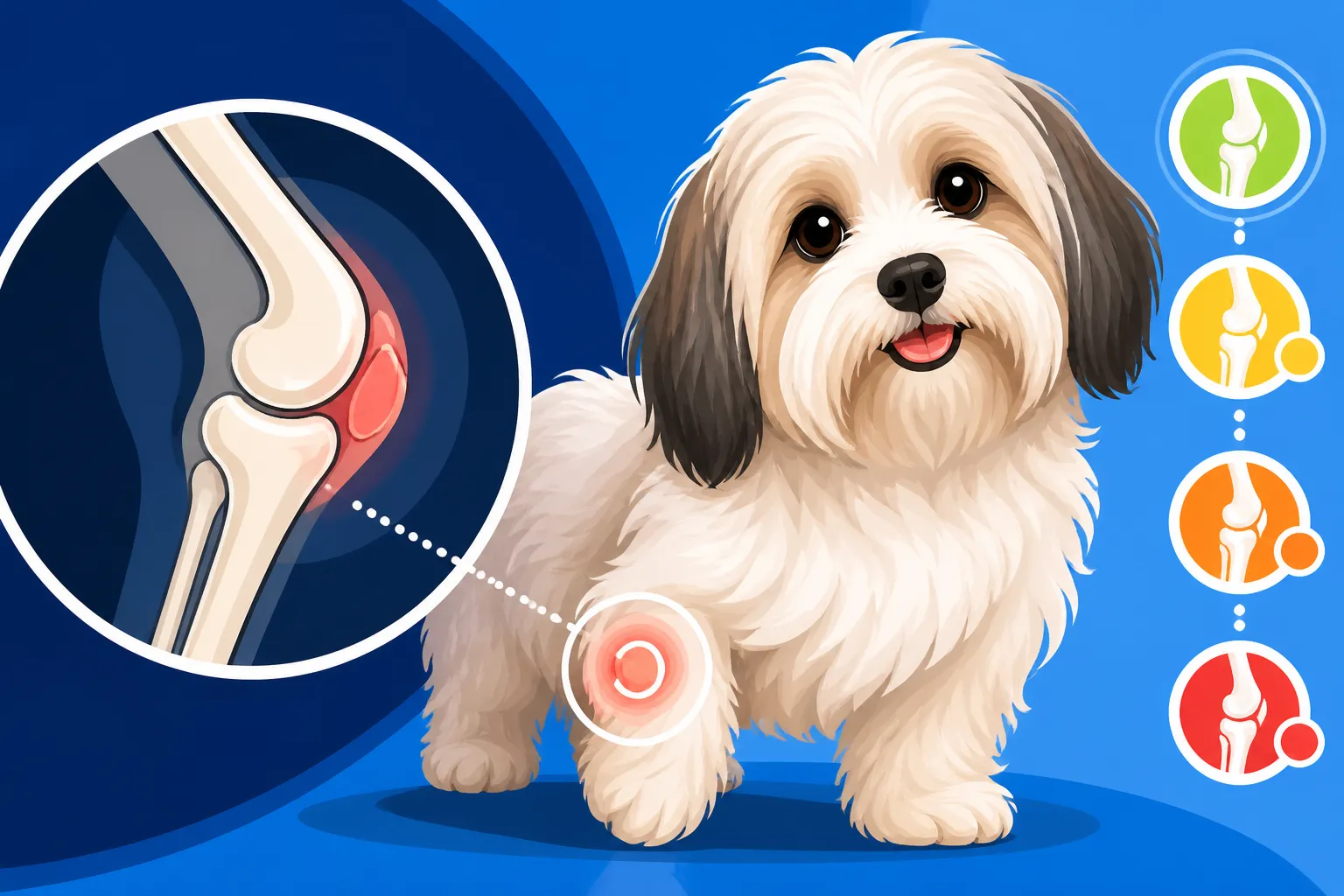
Grading a Havanese’s Luxating Patella
There’s nothing quite as heartbreaking as watching your beloved Havanese suddenly skip a step, hold up a back leg, or limp for a few moments, only for them to act completely normal a minute later. This frustrating inconsistency often leaves Havanese parents wondering what on earth just happened and if they’re overreacting. If you've observed this pattern, you might be seeing signs of patellar luxation, a common orthopedic issue in our charming little companions. This comprehensive guide will walk you through understanding what luxating patella is, how it's diagnosed, and specifically how a Havanese’s slipping kneecap is graded by veterinarians, helping you navigate this often confusing condition.
Understanding Luxating Patella in Havanese
Patellar luxation is a condition that sounds far more intimidating than it is, but it's certainly something Havanese owners need to understand. It's one of those health concerns that often pops up in conversations among small dog enthusiasts, and for good reason – our pint-sized pups are particularly susceptible.
What Exactly Is Patellar Luxation?
At its core, patellar luxation simply means the kneecap (patella) dislocates or "slips out" of its normal position. Imagine a small bone, like a little cap, that sits in a groove at the end of the thigh bone (femur), just above the knee joint. This groove is called the trochlear groove. When everything is working as it should, the patella glides smoothly up and down this groove as your Havanese bends and straightens their leg. It's a crucial part of the knee's mechanics, helping to extend the leg.
However, in cases of luxation, this kneecap pops out of that groove. Most commonly in Havanese and other small breeds, it slips inwards (medially), towards the other leg. Less often, it can slip outwards (laterally). When this happens, it can cause pain, discomfort, and an inability to properly bear weight on the affected leg. The severity and frequency of these "slips" are what veterinarians use to determine the grade of the condition. It's not always a constant problem; sometimes it pops out and then slides right back in on its own, which is why the symptoms can seem so fleeting and perplexing to us owners.
Why Havanese Are Prone to This Condition
It's truly unfair how some of the most adorable breeds also come with a predisposition to certain health quirks, and patellar luxation is definitely one for the Havanese. Our little cloud-like companions are genetically wired in a way that makes them more likely to experience this kneecap issue. One of the primary reasons lies in the way their bones and joints are structured. Many Havanese, and small breeds in general, are born with a trochlear groove that isn't deep enough to hold the patella securely. Think of it like a train track that’s too shallow – the train can easily derail.
Beyond the shallow groove, there can also be issues with the alignment of the leg bones themselves, such as the thigh bone or the shin bone. If these bones aren't perfectly aligned, they can pull the patella out of its natural path. Weakness or laxity in the surrounding ligaments and muscles can also contribute. Unfortunately, this is largely a hereditary condition. While not every Havanese will develop it, the risk is higher in the breed compared to larger dogs. This genetic link is precisely why responsible breeders are so diligent about screening their breeding stock, attempting to reduce the prevalence of conditions like the kneecaps a Havanese slips. Understanding this inherent susceptibility helps us, as owners, to be more vigilant in observing our dogs and proactive in seeking veterinary care if we notice any tell-tale signs.
Recognizing the Signs of a Slipping Kneecap
Catching patellar luxation early, especially in a breed like the Havanese, can make a huge difference in managing the condition and ensuring your pup's comfort. It's all about being observant and knowing what subtle cues to look for.
Early Indicators in Havanese Puppies
When you have a Havanese puppy, their playful antics and clumsy movements can sometimes mask underlying issues. However, if you keep a keen eye out, you might notice some early indicators of a luxating patella. The most common sign is often described as a "skip" or a "hop" in their gait. Your puppy might be running along, suddenly lift one back leg for a step or two, then put it down and continue as if nothing happened. It's almost like they momentarily lost their rhythm. This intermittent lameness can be very confusing because it’s not constant. They might run fine for days, then have a skipping episode, which can leave you wondering if you imagined it.
Another subtle sign might be a reluctance to put full weight on a particular leg immediately after standing up from a rest, or after a burst of activity. They might shake the leg a bit before settling their weight. It's rarely accompanied by overt crying or severe pain in these early stages, which makes it even harder to pinpoint. However, if you're consistently noticing your Havanese puppy doing this little "dance" or favoring a leg even for a moment, it’s definitely worth a chat with your veterinarian. Early intervention and management can sometimes help prevent the condition from worsening.
Advanced Symptoms in Adult Havanese
As a Havanese grows, if a luxating patella goes unaddressed or is a higher grade, the symptoms can become more pronounced and concerning. What started as an occasional skip can evolve into more frequent or persistent lameness. Instead of just a momentary lift, your adult Havanese might consistently limp or hold their leg up for longer periods. You might even hear a soft "pop" or "click" as the kneecap moves in and out of place.
The discomfort or pain can become more evident. Your Havanese might cry out when the kneecap dislocates, or they may become more reluctant to engage in activities they once loved, like jumping on the couch or climbing stairs. You might notice a change in their overall gait, where they walk with a crouch or their legs seem to bow outwards (if the luxation is medial, which is most common). In severe cases, where the kneecap is permanently dislocated, your Havanese might walk almost on the tips of their toes, with their knee bent and rotated, leading to a significant impact on their mobility and quality of life. It’s a stark reminder that if you see these signs, especially those of increased pain or difficulty moving, it’s time to see the vet for a thorough examination. Remember, keeping a Havanese off furniture it should not jump from can help alleviate stress on those delicate joints.
The Veterinary Examination and Diagnosis
When you bring your Havanese to the vet suspecting a luxating patella, don't worry – your vet won't just guess. There's a systematic approach they take to properly diagnose and grade the condition. It's a combination of hands-on examination and sometimes, a little help from technology.
How Your Vet Checks for Patellar Luxation
The first step in diagnosing patellar luxation is always a thorough physical examination. Your veterinarian will carefully feel your Havanese's hind legs, paying close attention to the knee joints. This process is called palpation. They'll gently manipulate the kneecap, trying to coax it out of its groove. What they're looking for is how easily the patella moves, whether it slips out, and if so, in which direction (medial or lateral) and how readily it pops back into place. They'll also assess the overall stability of the knee joint and the range of motion in the leg.
During this examination, your vet will also be observing your Havanese's natural gait, looking for any skips, limps, or unusual ways they carry their weight. They'll likely ask you a lot of questions about what you've observed at home – how often the skipping happens, what activities seem to trigger it, and if your Havanese seems to be in pain. Your detailed observations are incredibly valuable here, as the luxation can sometimes be intermittent and not present at the exact moment of the vet visit. This hands-on assessment is crucial for assigning an initial grade to the condition.
The Importance of X-rays and Other Diagnostics
While a physical exam is often enough to diagnose patellar luxation, X-rays play a vital role in understanding the full picture and ruling out other potential issues. X-rays allow your vet to visualize the bones and joints, giving them a clear view of the trochlear groove's depth, the alignment of the femur and tibia, and whether there are any signs of arthritis or other structural abnormalities. Sometimes, the physical exam might suggest one grade, but the X-rays reveal underlying bone changes that indicate a higher severity or chronic condition.
For example, a Havanese might have a shallow groove that predisposes them to luxation, and an X-ray can confirm this. X-rays are also indispensable for ruling out other orthopedic conditions that can cause similar limping, such as Legg-Calve-Perthes disease, which often shows up as hip pain in Havanese pups. In some complex cases, or if surgery is being considered, your vet might recommend additional imaging like an MRI or CT scan for an even more detailed view of the soft tissues and joint structures. These diagnostic tools ensure that your vet has all the information needed to accurately grade the luxation and recommend the most appropriate course of action for your Havanese's long-term health.
Deciphering the Patellar Luxation Grading System
Veterinarians use a standardized grading system to classify the severity of patellar luxation, typically ranging from Grade 1 (mildest) to Grade 4 (most severe). Understanding these grades is key to comprehending your Havanese's diagnosis and the recommended treatment path.
Grade 1: The Mildest Form
Grade 1 patellar luxation is often the earliest and mildest form of the condition. In this scenario, the kneecap usually sits correctly in its trochlear groove, but with manual pressure from a veterinarian, it can be gently pushed out of place. The good news is that once the pressure is released, or sometimes with a simple extension of the leg, the patella spontaneously pops right back into its proper position. It's a fleeting dislocation that often corrects itself immediately.
For a Havanese with Grade 1 luxation, symptoms might be minimal or even completely absent. You might occasionally notice that characteristic little "skip" or hop, where they hold up a back leg for a step or two, but it resolves quickly. There's usually no visible pain, and their overall activity level isn't significantly impacted. Because it's so mild and often asymptomatic, Grade 1 luxation is sometimes discovered incidentally during a routine veterinary check-up or when the vet is performing a pre-breeding health screening. Management for Grade 1 is typically conservative, focusing on monitoring, weight management to reduce stress on the joints (a Havanese should be kept slim for its joints), and sometimes joint supplements. Surgery is very rarely considered at this stage unless there's an unusual amount of discomfort or progression.
Grade 2: Intermittent Luxation
Moving up the scale, Grade 2 patellar luxation represents a more noticeable and often symptomatic stage. With a Grade 2 diagnosis, the kneecap will luxate (slip out) fairly easily, either with manual manipulation by the vet or sometimes simply through the dog's normal movement. The key differentiator here is that while it does slip out, it doesn't always go back into place on its own instantly. It might remain luxated until the dog extends its leg, or perhaps even needs a little external help (like the vet gently guiding it back).
A Havanese with Grade 2 luxation will typically show more frequent and obvious symptoms than a Grade 1. Those skips and limps will become more common, perhaps even several times a day or during specific activities like running or jumping. You might observe your Havanese briefly shaking or flexing their leg, which is their way of trying to pop the kneecap back into place. While not constantly painful, these episodes can be uncomfortable, and over time, the constant rubbing of the kneecap in and out of the groove can lead to degenerative joint changes and even arthritis. This is often the grade where owners start seriously considering surgical options, especially if the luxations are impacting their Havanese's quality of life, as the question of whether a Havanese's kneecap needs operating often arises.
Grade 3: Persistent Luxation with Manual Reduction
When we talk about Grade 3 patellar luxation, we're dealing with a condition where the kneecap spends most of its time out of the trochlear groove. In essence, it's persistently luxated. While it's usually dislocated, a veterinarian can still, with a bit of effort, manually push the kneecap back into its proper groove. However, it won't stay there for long; as soon as the manual pressure is released or the dog moves, it will often pop right back out again.
A Havanese suffering from Grade 3 luxation will almost certainly exhibit chronic lameness. Their gait will be noticeably abnormal, often a characteristic crouch or "bow-legged" stance (if medial luxation). They may struggle with normal movements like walking, running, or climbing, and the persistent dislocation causes significant discomfort and pain. Over time, the constant displacement can lead to changes in the bone structure, like a twisting of the tibia, as the body tries to adapt to the abnormal joint position. For Grade 3 patellar luxation, surgery is almost always the recommended course of action. Without surgical correction, the condition will continue to cause pain, worsen structural deformities, and lead to severe, debilitating arthritis.
Grade 4: Permanent Luxation
Grade 4 is the most severe form of patellar luxation, indicating a deeply entrenched and chronic problem. In this instance, the kneecap is permanently dislocated from the trochlear groove, and crucially, it cannot be manually pushed back into place by the veterinarian. The structural changes to the bones and soft tissues are so significant that the patella simply has no way to return to its proper position. The trochlear groove is often completely flat or even convex, offering no containment, and the surrounding tissues and bones are severely deformed.
A Havanese with Grade 4 luxation will experience profound and continuous lameness. They will likely walk with a severely abnormal, crouched gait, often with their knees permanently bent and rotated inwards, making movement extremely difficult and painful. Their legs may appear severely bowed or twisted. The quality of life for a Havanese at this stage is significantly compromised without intervention. Surgical correction for Grade 4 luxation is complex and may involve multiple procedures to reshape bones and realign structures. While surgery can significantly improve comfort and function, the prognosis for a complete return to normal mobility can be guarded due to the extent of the existing deformities. It's a challenging situation, highlighting why early diagnosis and intervention for lower grades are so important.
Here's a quick summary table of the patellar luxation grades:
| Grade | Description of Patella | Symptoms Observed | Typical Management |
|---|---|---|---|
| 1 | Luxates with manual pressure, spontaneously returns. | Occasional skip/hop, generally asymptomatic. | Monitoring, weight control, joint supplements. |
| 2 | Luxates with pressure/movement, stays out until leg is extended or manually reduced. | Frequent skips/limps, shaking leg, intermittent discomfort. | Conservative or surgical, depending on impact on life. |
| 3 | Persistently luxated, can be manually reduced but pops out again immediately. | Chronic lameness, abnormal crouched gait, significant pain. | Surgery highly recommended. |
| 4 | Permanently luxated, cannot be manually reduced. | Severe, constant lameness, profound pain, significant bone deformities. | Complex surgical correction. |
Living with Luxating Patella: Management and Treatment Options
A diagnosis of luxating patella doesn't mean your Havanese's happy, bouncy life is over. Many Havanese with this condition, even those requiring surgery, go on to live full and active lives with the right management and treatment. It's about finding the best path forward for your individual dog.
Conservative Management for Lower Grades
For Havanese diagnosed with Grade 1 or even some Grade 2 luxations that aren't causing significant pain or frequent lameness, a conservative approach is often the first line of defense. The primary goal here is to minimize discomfort, slow progression, and support joint health. One of the absolute most critical aspects of conservative management is weight control. Every extra pound your Havanese carries puts additional strain on those already vulnerable knee joints. Keeping your Havanese slim is paramount for its joints and overall well-being.
Many owners also find success with joint supplements, such as glucosamine, chondroitin, and omega-3 fatty acids. These can help support cartilage health and reduce inflammation. While they won't cure luxation, they can certainly help maintain comfort and joint integrity. Controlled, low-impact exercise, like regular leash walks, can help strengthen the muscles around the knee, offering more stability. However, avoid high-impact activities like excessive jumping or sudden starts and stops. Modifying your home environment with non-slip rugs on hard floors and ramps instead of stairs (especially for getting on and off furniture) can also reduce stress on the joints. If your Havanese experiences intermittent pain, your vet might prescribe anti-inflammatory medications (NSAIDs) for temporary relief. When considering ongoing costs for supplements, vet visits, or potential future treatments, remember that pet insurance providers like Healthy Paws can be a real lifeline in managing these expenses.
Surgical Interventions and Recovery
When conservative management isn't enough, particularly for Grade 3 or 4 luxations, or for Grade 2 cases that severely impact a Havanese's quality of life, surgical intervention becomes the best option. There are several surgical techniques, often performed in combination, to correct patellar luxation:
- Trochleoplasty (or Trochlear Wedge/Block Recession): This involves deepening the trochlear groove in the femur so the patella has a more secure channel to glide in.
- Tibial Crest Transposition: This procedure repositions the tibial crest (the bony prominence on the shin bone where the patellar ligament attaches) to ensure the patella tracks properly in the deepened groove.
- Fascial Release/Suture Tightening: Sometimes, the soft tissues on one side of the kneecap are too tight or too loose. The surgeon may release tight tissues or tighten loose ones to help the patella stay centered.
The costs associated with these surgeries can be substantial, often ranging from $1,500 to $4,000 per knee, depending on the severity and location. Recovery involves a period of strict rest, usually 6-8 weeks, followed by a gradual return to activity. This is where the importance of post-operative care, including physiotherapy, comes into play. Whether a Havanese needs physiotherapy after surgery is a common question, and the answer is often a resounding yes. It's vital for restoring strength, range of motion, and proper gait. While challenging, most Havanese recover very well from surgery, especially for Grades 2 and 3, often regaining excellent use of their leg and significantly improved comfort. Again, having robust pet insurance, such as a policy from Healthy Paws, can greatly ease the financial burden of these critical procedures.
Preventing Worsening and Ensuring Comfort
Whether your Havanese undergoes surgery or is managed conservatively, the journey with luxating patella is ongoing. The goal is always to prevent the condition from worsening and to ensure your furry friend remains as comfortable and mobile as possible throughout their life. Regular veterinary check-ups are non-negotiable. Your vet will monitor the affected joint for any signs of progression or the onset of arthritis, which is a common long-term complication.
Continuing with a healthy lifestyle is key. Maintain that ideal body weight religiously. Continue with joint supplements if your vet recommends them – whether joint supplements help a Havanese is widely supported for long-term joint health. Be mindful of activities that could exacerbate the condition. For example, high-impact activities, repetitive jumping off high surfaces, or playing rough on slippery floors can all put undue stress on the knee. Creating a safe home environment with non-slip surfaces and providing doggy steps or ramps to beds and sofas can go a long way. Remember, even little things like jumping off the bed hurts a Havanese with joint issues. By being diligent and proactive, you can help your Havanese live a wonderfully comfortable and happy life, even with a history of patellar luxation.
Choosing a Havanese Breeder: Proactive Steps
For anyone considering bringing a Havanese into their home, one of the most proactive and impactful steps you can take to mitigate the risk of patellar luxation is to choose a responsible breeder. A reputable breeder is not just selling puppies; they are guardians of the breed's health and future.
Health Screenings and OFA Certifications
A hallmark of a responsible Havanese breeder is their commitment to health screening their breeding dogs. Patellar luxation, being largely hereditary, is a condition that should be screened for in both parent dogs before they are ever bred. The Orthopedic Foundation for Animals (OFA) offers specific evaluations for patellar luxation. When a dog is examined by a veterinarian, and their patellas are deemed normal, they can receive an OFA certification number. This certification indicates that their patellas are free from luxation at the time of examination.
It’s not enough for a breeder to simply tell you their dogs are "healthy." You should always ask to see proof of these health clearances, specifically for patellas, but also for other common Havanese health issues like eye diseases and cardiac conditions. A good breeder will be transparent and proud to show you the OFA certificates for both the sire and dam of the litter. This due diligence is a vital part of finding a healthy Havanese puppy and helps you understand the health tests both Havanese parents should have. It reduces the likelihood that your puppy will inherit a predisposition to this potentially debilitating condition.
What to Ask Your Breeder About Patella Health
When you're speaking with a prospective Havanese breeder, don't be shy about asking direct and detailed questions about patella health. This isn't being nosy; it's being a responsible future dog owner. Start by asking if the parents of the litter have had their patellas checked and if they have OFA certifications. A breeder should readily provide you with the OFA numbers so you can verify them online. They should also be able to explain what these certifications mean and what the results were.
Beyond the parents, inquire about the patella health history of the broader lineage. Has any dog in the parents' pedigree (grandparents, aunts, uncles) ever been diagnosed with patellar luxation, and if so, what grade was it? While no breeder can guarantee a puppy will never develop a genetic condition, a responsible breeder will be honest about the health history of their lines and how they select breeding pairs to minimize risk. They should also be transparent about their own practices, for example, whether a Havanese breeder should show CHIC Numbers (Canine Health Information Center), which consolidate all recommended health clearances for a breed. Be wary of breeders who dismiss your concerns, claim their dogs are "too healthy" to need screening, or cannot provide verifiable health clearances. Such evasiveness is often a red flag.
Disclaimer
The information provided in this article is for general informational purposes only and is not a substitute for professional veterinary advice, diagnosis, or treatment. Always seek the advice of your veterinarian or other qualified health provider with any questions you may have regarding a medical condition. Never disregard professional veterinary advice or delay in seeking it because of something you have read in this article.