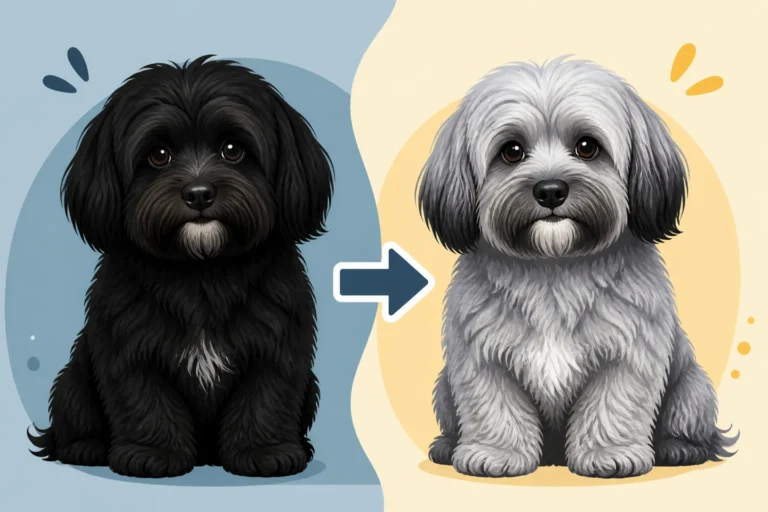
Whether the Havana Silk Dog Is a Separate Breed
It’s easy to feel overwhelmed and confused when you start researching potential Havanese puppies, especially when you encounter terms like "Havana Silk Dog." You might be left wondering if these are two entirely different breeds, a marketing ploy, or something in between. This guide will meticulously break down the historical context, the arguments for and against a separate breed distinction, and what this all means for you as a prospective Havanese owner, helping you understand the nuances of this fascinating debate.
The Historical Roots of the Havanese and the "Silk Dog" Idea
To truly understand the "Havana Silk Dog" discussion, we need to go back in time and trace the lineage of what we now know as the Havanese. It’s a rich history, deeply intertwined with the vibrant culture of Cuba, and it sets the stage for why some people felt a need to differentiate.
The Blanquito and Early Cuban Dogs
Before the Havanese as we know it, there was the "Blanquito de la Habana," or "Little White Dog of Havana." These were the charming, small, white dogs that accompanied Spanish colonists and later, Cuban aristocracy, as they settled the island. They weren't a formal breed in the modern sense, but rather a type of dog, much like many companion dogs throughout history, valued for their cheerful dispositions and suitability for a life of leisure. They were truly dogs of the gentry, often gifted among wealthy families.
These early dogs were primarily white, much like their European Bichon relatives, but their isolation on the island began to shape them. Over generations, they developed certain characteristics unique to their Cuban environment, adapting to the climate and the specific preferences of their owners. While the exact genetic makeup is hard to pin down centuries later, these "Blanquitos" are undeniably the foundational stock of our modern Havanese. You can read more about The Blanquito de la Habana the Havanese Came From.
The Influence of Poodles and European Crosses
As Cuba opened up more to international trade and travel, other European dogs found their way to the island. Among these were various small Poodle types, which were quite popular at the time. It’s believed that some crossbreeding occurred between the existing Blanquitos and these imported Poodles. This influx of new genes is thought to have introduced a wider range of colors into the predominantly white Blanquito population and potentially influenced coat texture.
This mingling of bloodlines helped create the diverse and colorful Havanese we see today. It’s a natural part of breed development; breeds rarely spring forth fully formed without some genetic exchange along the way. The result was a slightly more robust, colorful dog with a coat that, while still soft, could range in texture. This period of genetic diversification, however, would later become a point of contention for those who felt the original "silk dog" qualities were being diluted.
Post-Revolution: The Havanese Revival and Its Foundation Stock
The Cuban Revolution in 1959 was a pivotal moment for the Havanese breed. Many affluent Cuban families fled the country, often bringing their beloved dogs with them. Sadly, many more were left behind. The breed faced near extinction, with its numbers dwindling dramatically. It’s a poignant chapter in their history, highlighting how deeply these dogs were woven into the lives of their human companions. This dramatic reduction in numbers is often called How the Havanese Nearly Died Out After 1959.
The survival and subsequent revival of the Havanese breed in the United States owe a tremendous debt to a handful of dedicated individuals. Dorothy and Bert Goodale were instrumental in gathering the remaining Havanese dogs in America, painstakingly tracing their pedigrees and carefully planning breeding programs to rebuild the population. Every American Havanese today traces its lineage back to a very small pool of original refugee dogs. This narrow foundation stock meant a concentrated effort was needed to ensure genetic diversity and health. This small group of dogs became The Refugee Dogs Every American Havanese Descends From. It was this dedicated effort, starting from a very limited gene pool, that formalized the Havanese breed as we know it, leading to its recognition by major kennel clubs like the AKC.
The Havana Silk Dog Movement: What Prompted the Distinction
Despite the successful efforts to revive the Havanese, a segment of enthusiasts began to express concerns over the direction the breed was taking. This led to the emergence of the "Havana Silk Dog" movement, which aimed to preserve what they perceived as the original type of the Cuban companion dog.
Concerns Over Modern Havanese Type
As the Havanese gained popularity and formal recognition, some breeders and owners felt that the breed was beginning to deviate from its historical roots. They observed what they believed were changes in size, bone structure, and coat type that didn't align with their understanding of the "Blanquito" or the early Cuban Havanese. Specifically, there was a concern that Havanese were becoming larger, heavier-boned, and perhaps losing some of the exquisite "silky" texture that had earned them the moniker "Havana Silk Dog" in historical texts.
These concerns weren't about criticizing the existing Havanese, but rather about a passionate desire to maintain what they believed was a distinct and precious historical type. They felt the breed standard, as adopted by larger kennel clubs, was allowing for a broader interpretation that was moving away from the more delicate, refined, and truly "silken" dogs they envisioned. It was a cultural and historical preservation effort, rooted in deep affection for the breed's origins.
The Push for a Return to "Original" Appearance
The core of the Havana Silk Dog movement was a dedicated push to breed dogs that more closely resembled the dogs described in historical accounts and seen in older photographs – particularly those pre-1959. They focused on breeding for a smaller, lighter-boned dog, with a distinctive, single-layered, silky coat that truly felt like fine silk to the touch, rather than the thicker, sometimes denser double coat found in some modern Havanese lines. They believed this "silk" coat was a defining characteristic that had been diluted by the introduction of other bloodlines.
This emphasis on phenotype (observable characteristics) was a direct response to their perception of the modern Havanese. They sought to reverse what they saw as undesirable changes and re-establish a "purer" form. This isn't an uncommon occurrence in the dog world; throughout history, various factions within breeds have emerged, advocating for different interpretations of a breed's ideal. The entire discussion is fascinating and often referred to as The Havana Silk Dog Argument That Split the Havanese.
Goals of the Havana Silk Dog Registries
To achieve their goals, proponents of the Havana Silk Dog established their own separate registries and breed clubs, distinct from those that recognized the Havanese. Their aim was to create and maintain their own breed standard, specifically tailored to the characteristics they wished to preserve. These registries typically emphasize stricter requirements for size, weight, bone structure, and especially coat texture, aiming for that truly "silken" feel.
These separate organizations also implement their own breeding guidelines, health screening protocols, and show circuits. The idea is that by having a distinct registration and show system, they can ensure breeders are consistently working towards the "Havana Silk Dog" ideal without the broader genetic influence allowed by the larger Havanese standards. They are, in essence, trying to recreate a historical version of the dog and maintain it as a separate entity. What the Havana Silk Dog Club Wanted was to ensure this distinct type wouldn't disappear.
Key Differences Claimed by Havana Silk Dog Advocates
When discussing whether the Havana Silk Dog is a separate breed, it’s crucial to understand the specific differences that its proponents highlight. These distinctions are central to their argument for separate recognition.
Size and Structure: A More Delicate Build
One of the primary areas where Havana Silk Dog advocates claim a distinction lies in the physical size and structure. They argue that the original Cuban companion dogs were generally smaller and more delicately built than many modern Havanese. While the Havanese standard allows for a range of sizes, Havana Silk Dog enthusiasts typically aim for dogs at the lower end of the weight spectrum, emphasizing finer bone structure and a more refined appearance.
They often describe their dogs as having a more "fragile" or "dainty" build, in contrast to what they perceive as the increasingly sturdy or sometimes even stocky build seen in some Havanese lines. This isn't just about weight; it's about the overall skeletal structure, muscle mass, and proportions. A Havanese might weigh, for example, between 7 and 13 pounds, but the "Silk Dog" ideal leans heavily towards the lighter side, perhaps 6-9 pounds, with a proportionally lighter frame to match. You can explore What a Havanese Actually Weighs in more detail.
Coat Texture and Presentation: The "Silk" Factor
Perhaps the most emphasized difference, and the one that gives the "Havana Silk Dog" its name, is the coat. Advocates insist on a single-coated, truly silky texture, often described as feeling like raw silk or even human hair. This is in contrast to the Havanese, which, while known for its soft coat, is officially recognized as having a double coat, albeit a very soft one. The presence of an undercoat, even a fine one, is seen by Silk Dog proponents as a deviation from the original type.
The way the coat presents is also a key differentiator. The Silk Dog ideal typically involves a coat that is lighter, flows more freely, and is less prone to matting than a double-coated Havanese, especially during the challenging "coat change" phase when a Havanese puppy transitions to its adult coat. This distinction about the presence and nature of the undercoat is fundamental to the debate. To learn more about this, check out Whether a Havanese Has an Undercoat and The Silky Double Coat a Havanese Grows to the Floor. For owners of these beautiful coats, whether Havanese or Silk Dog, finding the right grooming tools and products from places like Chewy can make a huge difference in maintaining that luxurious feel.
Temperament and Health Allegations
While physical characteristics are often at the forefront, some Havana Silk Dog proponents also suggest subtle differences in temperament. They describe their dogs as being particularly attentive, perhaps even more inclined to a truly "lap dog" existence, with a slightly gentler demeanor. However, this is far less universally agreed upon than the physical distinctions, as individual dog temperaments can vary widely even within a single breed.
Regarding health, some advocates claim that breeding for the "original" type might lead to a healthier dog overall, particularly in terms of avoiding issues sometimes associated with heavier bone structure or denser coats. However, it's critical to note that robust health testing is paramount for any responsible breeder, regardless of which "type" they are breeding for. There's no scientific consensus that one "type" is inherently healthier than the other; responsible breeding practices, including genetic screening and good husbandry, are the real determinants of health for both Havanese and Havana Silk Dog puppies.
Recognizing the Havanese: Major Kennel Club Standards
The larger, more established kennel clubs play a significant role in defining and recognizing dog breeds. Their official standards are crucial in understanding the Havanese and its relationship with the Havana Silk Dog discussion.
AKC and FCI Standards: What They Emphasize
The American Kennel Club (AKC) and the Fédération Cynologique Internationale (FCI), which is the world's largest federation of kennel clubs, both recognize the Havanese. Their breed standards provide a detailed blueprint of the ideal Havanese dog, encompassing everything from size and weight to coat, temperament, and gait. These standards are developed by breed clubs and approved by the parent organization, serving as a guide for breeders, judges, and enthusiasts.
These standards typically describe the Havanese as a sturdy, yet small, companion dog, characterized by its long, soft double coat and springy gait. While variations exist, the emphasis is on a charming, outgoing temperament and a specific physical type that has been established through generations of careful breeding since the breed's re-establishment. Crucially, these standards do not differentiate between a "Havanese" and a "Havana Silk Dog" as separate breeds; they consider the latter to be a stylistic preference or a particular line within the recognized Havanese breed. This is why you won't find "Havana Silk Dog" listed as a separate breed in AKC or FCI registries.
The Broader Havanese Community's Stance
Within the larger Havanese community, including the Havanese Club of America (the AKC parent club for the breed), the prevailing view is that the Havana Silk Dog is not a separate breed, but rather a different type or style of Havanese. They acknowledge the historical roots of the breed and the desire to preserve certain characteristics, but they maintain that these dogs fall within the acceptable variations of the single Havanese breed standard.
Many long-time Havanese breeders and owners feel that the Havanese has always possessed a wide range of coat textures and sizes, even among the foundation dogs. They argue that a strict interpretation of "silky" might exclude many historically accurate Havanese from the official standard. The focus of the broader Havanese community remains on breeding healthy, well-tempered dogs that conform to the established standard, while still appreciating the diversity within the breed. For a historical context of how the breed was revived, consider How Many Havanese Left Cuba With Refugees.
Understanding Breed Registries and Their Roles
It's important to understand how breed registries work. Major organizations like the AKC or FCI have rigorous processes for recognizing new breeds, typically requiring a significant number of generations of consistent breeding to a specific standard, a distinct genetic profile, and a substantial population. The Havana Silk Dog movement, while earnest, has not met these criteria to be recognized as a fully separate breed by these larger entities.
Therefore, while smaller, independent registries might exist for "Havana Silk Dogs" to preserve their specific vision, these dogs cannot typically be registered as a "Havana Silk Dog" with the AKC or FCI, nor can they compete in their breed-specific conformation events under that designation. They would either be registered as Havanese, or they would remain outside the purview of these major registries. This distinction is crucial for anyone looking to show their dog or interested in pedigrees that are universally recognized. The standard, as it exists today, defines Whether the Havanese Standard Has Changed.
Navigating the Choice: Havanese or "Havana Silk Dog" for Your Family
If you’re considering bringing one of these delightful dogs into your home, you might be wondering how to navigate this distinction. Ultimately, the best choice depends on your personal preferences and what you prioritize in a canine companion.
Researching Responsible Breeders
Regardless of whether you are seeking a Havanese that aligns with the general AKC/FCI standard or one that specifically fits the "Havana Silk Dog" ideal, the most critical step is to find a responsible and ethical breeder. A good breeder will be transparent about their breeding practices, health testing, and the specific lineage and characteristics of their puppies. They will openly discuss the parent dogs' health clearances, temperament, and conformation.
Ask about the specific traits they prioritize in their breeding program. If you are leaning towards the "Havana Silk Dog" type, look for breeders who clearly articulate their adherence to those specific ideals – smaller size, finer bone, and the particular silky coat texture. Conversely, if you're looking for a Havanese, ensure the breeder is working towards the established AKC or FCI standard. Always be wary of anyone who focuses solely on appearance or demands exceptionally high prices based on vague "rare" traits without the backing of comprehensive health testing. A good breeder, whether of Havanese or "Silk Dog" type, will be open to showing you the health certifications of their breeding dogs, which should include things like eye exams, patella evaluations, and cardiac clearances. This is why The Health Tests Both Havanese Parents Should Have are so important.
Prioritizing Health Testing and Temperament
Beyond the physical appearance, health and temperament should always be at the top of your list. Both Havanese and Havana Silk Dog lines can be prone to certain genetic health conditions, such as luxating patellas, eye diseases, and cardiac issues. A reputable breeder, regardless of their specific "type" preference, will perform appropriate health screenings on their breeding stock to minimize the risk of passing on these conditions. Don't be shy about asking for proof of these tests.
Equally important is temperament. Havanese are known for their outgoing, playful, and affectionate personalities. They thrive on companionship and are generally excellent family dogs. Ensure that the puppies and their parents exhibit these desirable traits. A good breeder will raise their puppies in a stimulating home environment, ensuring they are well-socialized before going to their new homes. A dog from a well-socialized litter, whether you call it a Havanese or a Havana Silk Dog, is more likely to grow into a confident and loving companion. When preparing for a new puppy, stocking up on essentials like food, toys, and grooming supplies from a trusted retailer like Chewy can help ensure a smooth transition.
What to Expect from a Havanese Puppy
Whether you choose a Havanese from a breeder focused on the general standard or one specifically breeding for the "Havana Silk Dog" type, you can expect a loyal, intelligent, and highly affectionate companion. These dogs thrive on human interaction and do not do well when left alone for extended periods. They require regular grooming to keep their long coats free of mats, which can be a significant commitment. Daily brushing and professional grooming appointments are usually necessary.
They are generally eager to please and intelligent, making them highly trainable for tricks, obedience, and even canine sports. They are social butterflies who usually get along well with children and other pets, provided they are properly socialized from a young age. While there might be subtle differences in coat or build depending on the breeder's focus, the essence of the Havanese – a joyful, devoted, and charming little dog – remains consistent across all recognized lines. Finding high-quality food and treats for training is simple through Chewy, making puppy-raising a little easier.
To help clarify some of the claimed differences, here’s a quick overview:
| Feature | Havanese (AKC/FCI Standard) | Havana Silk Dog (Advocates' Claims) |
|---|---|---|
| Official Status | Recognized breed by major kennel clubs | Not recognized as a separate breed by AKC/FCI |
| Size/Weight | 7-13 lbs (approx.); sturdy small build | 6-9 lbs (approx.); finer bone, more delicate |
| Coat Type | Double coat, soft, wavy, can be dense | Single coat, truly silky, flowing, less dense |
| Grooming Need | High, prone to matting without care | High, but potentially less prone to matting |
| Temperament | Lively, intelligent, affectionate | Claims a slightly gentler, more "lap" oriented |
| Breeding Goal | Conformance to established breed standard | Return to perceived historical "Blanquito" type |
| Registration | AKC, FCI, etc. | Specific Havana Silk Dog registries only |
Ultimately, the term "Havana Silk Dog" describes a specific ideal within the Havanese breed, championed by those who wish to emphasize certain historical characteristics. While not a separate breed in the eyes of major kennel clubs, the passion and dedication of these breeders highlight the rich diversity and cherished history of the Havanese dog. Your priority should always be a healthy, happy puppy from a responsible breeder, regardless of the specific nomenclature. You may find yourself pondering Whether the Silk Dog Breeders Were Right About Type as you explore.
Disclaimer
This article is for general informational purposes only and does not constitute professional advice. Laws, prices and regulations vary by location and change over time. Consult a qualified professional for guidance on your specific situation.