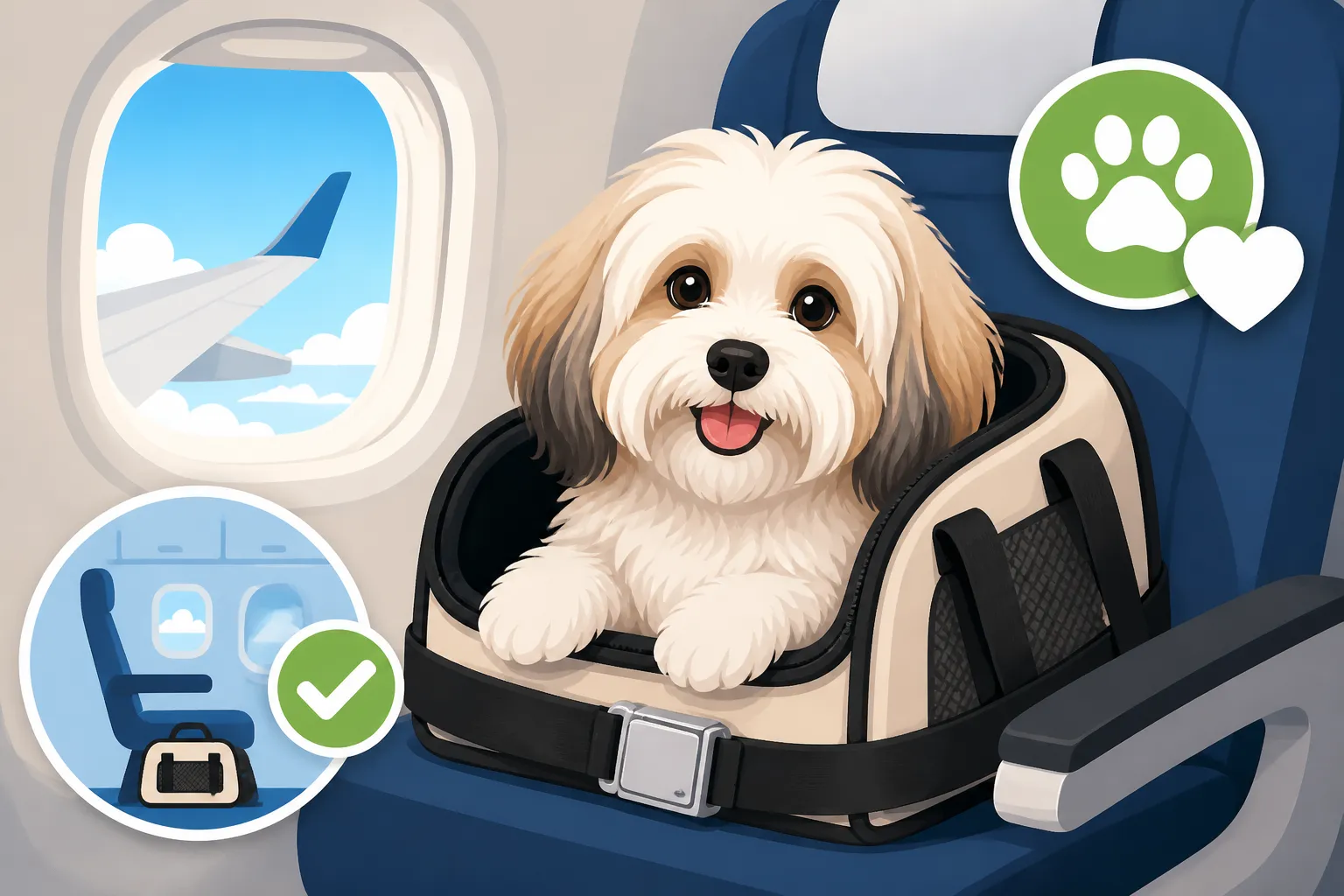
Whether a Havanese Can Fly in the Cabin
It's such a common dilemma: you love your Havanese, and the thought of leaving them behind when you travel, or worse, putting them in cargo, fills you with dread. Many of us want our furry companions by our side, especially on flights, but the rules and regulations can feel like a confusing maze. This guide is here to untangle all of that, walking you through everything you need to know about successfully flying with your Havanese in the airplane cabin, right there with you.
Understanding Airline Pet Policies for In-Cabin Travel
The dream of your Havanese snuggled under the seat in front of you is absolutely achievable, but it hinges entirely on understanding and adhering to airline pet policies. These aren't just suggestions; they are strict rules that airlines enforce for the safety and comfort of all passengers and pets. Failing to meet even one requirement can mean your Havanese won't be allowed on board.
Size and Weight Restrictions for Havanese
This is usually the first hurdle, and thankfully, Havanese are generally well-suited for in-cabin travel due to their compact size. Most airlines require that your pet, along with their carrier, must fit comfortably under the seat in front of you. This means the carrier needs to be small enough to slide into that designated space, which is often surprisingly snug.
Airlines typically have a maximum weight limit for pets (carrier included) that can travel in the cabin, often around 15-25 pounds. Since an adult Havanese usually weighs between 7 and 13 pounds, they often fall well within this range. However, it's crucial to check the exact weight limit for your chosen airline, as it can vary.
The carrier itself is equally important. While some airlines may allow hard-sided carriers, most prefer or even require soft-sided carriers for in-cabin travel. Soft-sided carriers are more flexible, making them easier to fit under varying seat dimensions. They must be leak-proof, well-ventilated with mesh windows, and allow your Havanese to stand up, turn around, and lie down comfortably without touching the top or sides. Remember, "comfortably" means they shouldn't be crammed in there. Always measure your Havanese and then double-check the carrier dimensions against your specific airline's requirements. These dimensions are usually found on the airline's website. A good quality soft-sided carrier can often be found on platforms like Amazon or Chewy, but make sure to compare its dimensions against your chosen airline's rules before purchasing.
Health and Documentation Requirements
Beyond fitting under the seat, your Havanese needs to be in good health and have the right paperwork. This isn't just bureaucracy; it's about preventing the spread of disease and ensuring your dog can handle the stress of travel.
Most airlines, and certainly all states and countries, require a valid health certificate issued by a licensed veterinarian. This certificate usually needs to be obtained within a specific timeframe before your flight, often 10 days, but sometimes less. The exact window can vary significantly depending on your destination (especially for international travel) and the airline. Your vet will perform a thorough examination to ensure your Havanese is fit to fly, free of contagious diseases, and up-to-date on all necessary vaccinations, particularly rabies. It's a good idea to schedule this vet visit well in advance, as last-minute appointments can be hard to secure. While you're at the vet, it's a great opportunity to discuss any general health concerns you might have. For instance, you could ask about conditions like What Havanese Are Most Often Treated For or ensure their eyes are healthy by asking Whether a Havanese Needs a Yearly Eye Exam.
Your Havanese should also be microchipped, not just for travel identification, but for their overall safety. Always carry copies of all your Havanese's vaccination records, especially rabies, and keep them easily accessible with your health certificate. For international travel, the requirements become far more complex, involving specific blood tests, parasite treatments, and sometimes even quarantine, depending on the country. Always consult the official government website of your destination country and speak with your veterinarian who is familiar with international travel regulations.
It's also worth noting that while some brachycephalic (short-nosed) breeds face specific restrictions due to potential breathing issues at altitude, Havanese are generally not included in these restrictions because their snout, while relatively short, is not as extreme as, say, a Pug or a Bulldog. However, it's always best to verify directly with your airline.
Preparing Your Havanese for a Smooth Flight
Getting your Havanese ready for the actual flight day is about more than just paperwork. It's about mental and physical preparation to minimize stress for both of you. A little groundwork can make a huge difference in how calmly your Havanese handles the experience.
Carrier Acclimation and Comfort
One of the biggest mistakes owners make is introducing the carrier for the first time on travel day. Imagine being suddenly shoved into a small box and whisked away to a strange, noisy place! Instead, begin acclimating your Havanese to their travel carrier weeks, or even months, before your flight.
Start by leaving the carrier out in a common area of your home, with the door open. Make it a positive, inviting space. Place soft, familiar bedding inside – perhaps an old t-shirt that smells like you, or their favorite small blanket. Toss in high-value treats and favorite toys. Feed them meals near or even inside the carrier. Gradually encourage them to spend time inside, praising and rewarding them for calm behavior. Practice zipping them inside for short periods, slowly increasing the duration. Take them for short car rides in the carrier, so they associate it with other forms of travel. The goal is for them to view the carrier not as a punishment, but as a cozy, safe den. If your Havanese already has trouble settling, you might find tips in Whether a Havanese Settles in a Carrier helpful for this process.
Managing Potty Breaks and Hydration
During a flight, your Havanese won't have access to regular potty breaks. This is a significant consideration, especially for longer flights. The general recommendation is to limit food and water a few hours before the flight to reduce the chances of accidents in the carrier.
However, don't completely dehydrate your dog. Offer small sips of water from a travel bowl or a Lixit-type bottle during layovers or before boarding, if permitted. For the carrier itself, place an absorbent potty pad or liner at the bottom. Accidents happen, and a good liner will help contain any mess and keep your Havanese dry.
Airports have designated pet relief areas, both inside and outside security. Research these locations for your departure, layover, and arrival airports beforehand. Plan to arrive at the airport with ample time for a final, thorough potty break before heading through security. Once through, seek out the indoor relief area if available. Remember, once you pass through security, you often can't leave and re-enter without going through the whole process again. For dogs that sometimes struggle with bladder control or who have Whether a Havanese Has Accidents When Excited, careful planning here is especially vital.
Calming Strategies for Travel Day
Many Havanese are inherently sensitive and deeply bonded to their people, making them prone to anxiety in new, stimulating environments. The Havanese That Cannot Be Left Alone speaks to this close bond. Sedation is generally not recommended by veterinarians for flying pets due to potential adverse reactions at altitude and interference with their ability to regulate body temperature. Always discuss any calming medications with your vet well in advance.
Instead, focus on natural calming strategies. A good, long walk or vigorous play session before heading to the airport can help expend excess energy and promote a sense of calm. Think about How Much Exercise a Havanese Needs and try to give them a good dose of it before your trip. Pheromone sprays (like Adaptil) designed for pet carriers or calming treats (you can find various options at Chewy or your local pet store) can sometimes offer a subtle calming effect. Most importantly, project a calm, confident demeanor yourself. Your Havanese picks up on your emotions, so if you're stressed, they will be too. Speak in soothing tones, offer gentle reassurance, and make the entire process as routine and unalarming as possible.
The Airport and In-Flight Experience with Your Havanese
Navigating the bustling environment of an airport and the confines of an airplane cabin requires a specific approach when you have your Havanese with you. Being prepared for each stage will make the journey much smoother.
Navigating Security Checkpoints
This is often the most anxiety-inducing part for pet owners. When you reach the security checkpoint, you will need to remove your Havanese from their carrier. The empty carrier will go through the X-ray machine like any other carry-on item. You will carry your Havanese in your arms or on a leash through the metal detector.
It's absolutely essential that your Havanese is well-behaved and comfortable being held or walking on a leash in a busy, noisy environment. Hold them securely, or if on a leash, keep it short and ensure they walk calmly by your side. Once you've cleared security, find a quiet spot to quickly and calmly place your Havanese back into their carrier. Having some high-value treats handy can help reinforce positive behavior during this stressful moment.
Boarding and Stowage Under the Seat
Airlines typically recommend that you board during your assigned group or slightly earlier, if offered, to allow you more time to get settled without feeling rushed. Once on the plane, locate the space under the seat in front of you. This space can vary slightly in size depending on the aircraft type, but it's usually smaller than you anticipate.
Place your Havanese's carrier under the seat with the opening facing you, if possible, so you can easily reach in to offer comfort. The carrier must remain completely stowed under the seat for the duration of the flight, including take-off and landing. It cannot block the aisle or protrude into your foot space in a way that would impede emergency egress. Your Havanese absolutely cannot be removed from the carrier during the flight. This is a non-negotiable safety rule enforced by flight attendants. While you might want to give them a comforting cuddle, resisting the urge is crucial for everyone's safety and to avoid potential issues with the crew.
During the Flight and Post-Arrival
Once airborne, your Havanese will likely settle down, especially if they are used to their carrier and had a good pre-flight exercise. The hum of the engines can often be quite soothing. You can discreetly reach a hand into the carrier to offer gentle pets and reassurance, or whisper calming words. Avoid loud talking or making a fuss, as this might draw unwanted attention or disturb other passengers. If your Havanese starts to whine or bark, try to soothe them quietly. Sometimes covering the carrier with a light blanket can help them feel more secure and block out visual distractions, as long as it doesn't obstruct ventilation.
Upon arrival, resist the urge to immediately pull your Havanese out of their carrier until you are safely off the plane and in a less crowded area. The very first thing you should do after exiting the terminal and finding an appropriate spot is to take your Havanese for a much-needed potty break. They've been holding it for a while! Offer them water and a small snack if they seem hungry, and give them plenty of praise for being such a good traveler. Remember, even a generally calm Havanese might be a little disoriented or wired after the experience, so be patient.
Common Concerns and Best Practices for Havanese Cabin Travel
Flying with a pet is a significant undertaking, and it's natural to have questions and concerns about their well-being throughout the journey. Let's tackle some of the most frequent ones.
Is it Really Safe for My Havanese?
This is perhaps the most important question. Generally speaking, flying in the cabin with your Havanese is significantly safer than sending them in cargo. In the cabin, your dog is in a temperature-controlled environment, monitored by you, and away from the extreme temperatures and pressures of the cargo hold. This is particularly important for small breeds like Havanese.
However, "safe" doesn't mean entirely stress-free. The airport environment is loud, crowded, and full of strange smells, which can be overwhelming. The confined space of the carrier for several hours, the changes in air pressure, and the general disruption to their routine can cause anxiety. If your Havanese is prone to anxiety, as some can be – perhaps showing signs similar to general anxiety or Whether a Havanese Tolerates Being Alone – then careful preparation is even more critical. Ensuring they are fully acclimated to their carrier, well-exercised, and have had a recent vet check to confirm their suitability for air travel will mitigate many risks. Always prioritize your Havanese's comfort and health above all else.
What About International Travel?
International travel with any pet, including a Havanese, introduces a whole new level of complexity. It's not just about the airline's rules; it's about the import regulations of your destination country, which can be incredibly stringent and vary wildly. Some countries, like the UK or Hawaii (which has similar strict regulations to many countries despite being a US state), require extensive blood tests, multiple vet visits, specific parasite treatments, and even quarantine periods that can last for weeks or months.
You absolutely must start planning international pet travel months in advance, often 6 to 12 months, as some tests and vaccinations have waiting periods. You'll need to consult with your veterinarian, preferably one experienced with international pet travel, and thoroughly research the official government website of your destination country. Don't rely on secondhand information; the rules change. This isn't a task to be taken lightly; a mistake in documentation can lead to your Havanese being denied entry, quarantined, or even sent back home.
Costs and Booking Tips
Flying with your Havanese in the cabin isn't free. Airlines charge a specific pet fee for in-cabin travel, which can vary significantly between carriers. These fees are usually per-segment, meaning if you have a layover and change planes, you might pay the fee again for the second flight, depending on the airline's policy. Always check the exact fee on your chosen airline's website.
Crucially, airlines have a limit on how many pets they allow in the cabin per flight, often just two to four. This means you need to book your flight, and specifically reserve your Havanese's spot, as early as possible. Do not assume there will be space. The process usually involves calling the airline directly after booking your own ticket to add your Havanese to your reservation. They will confirm if there's space and process the pet fee. If you're wondering about general costs related to your Havanese, What a Carrier for a Havanese Costs or What a Havanese Costs a Year to Keep might give you a broader financial picture.
When choosing an airline, compare their specific pet policies, fees, and even the under-seat dimensions on their fleet. Some airlines are more pet-friendly than others. Look for direct flights if possible, as this minimizes stress and the chances of complications during layovers. And remember to keep all your Havanese's travel documents, including health certificates and airline confirmations, easily accessible in your carry-on luggage. Your Havanese is a cherished family member, and careful planning ensures they can join you on your adventures. This is one of the ways Whether a Havanese Suits Someone Who Travels becomes a positive experience.
| Feature | Soft-Sided Carrier (Typical for Cabin) | Hard-Sided Carrier (Usually Cargo/Car) |
|---|---|---|
| Flexibility | Highly flexible, can often compress to fit under seats | Rigid, fixed dimensions |
| Weight | Lighter, contributes less to total pet+carrier weight | Heavier |
| Comfort | Often more plush lining, can conform to pet's shape | More open space, can be less cozy |
| Ventilation | Mesh windows on multiple sides for airflow | Metal grates or holes |
| Storage | Often has pockets for documents or treats | Less common to have external storage |
| Cleaning | Can be harder to deep clean if accidents occur | Easier to wipe down and sanitize |
| Durability | Fabric can be chewed or torn by determined chewers | Very durable, hard to damage |
| Security | Zippers can sometimes be less secure if not double-locked | Secure latch mechanisms, very escape-proof |
| Visibility | Mesh allows good visibility for pet and owner | Limited visibility through grates |
Disclaimer
This article is for general informational purposes only and does not constitute professional advice. Laws, prices and regulations vary by location and change over time. Consult a qualified professional for guidance on your specific situation.