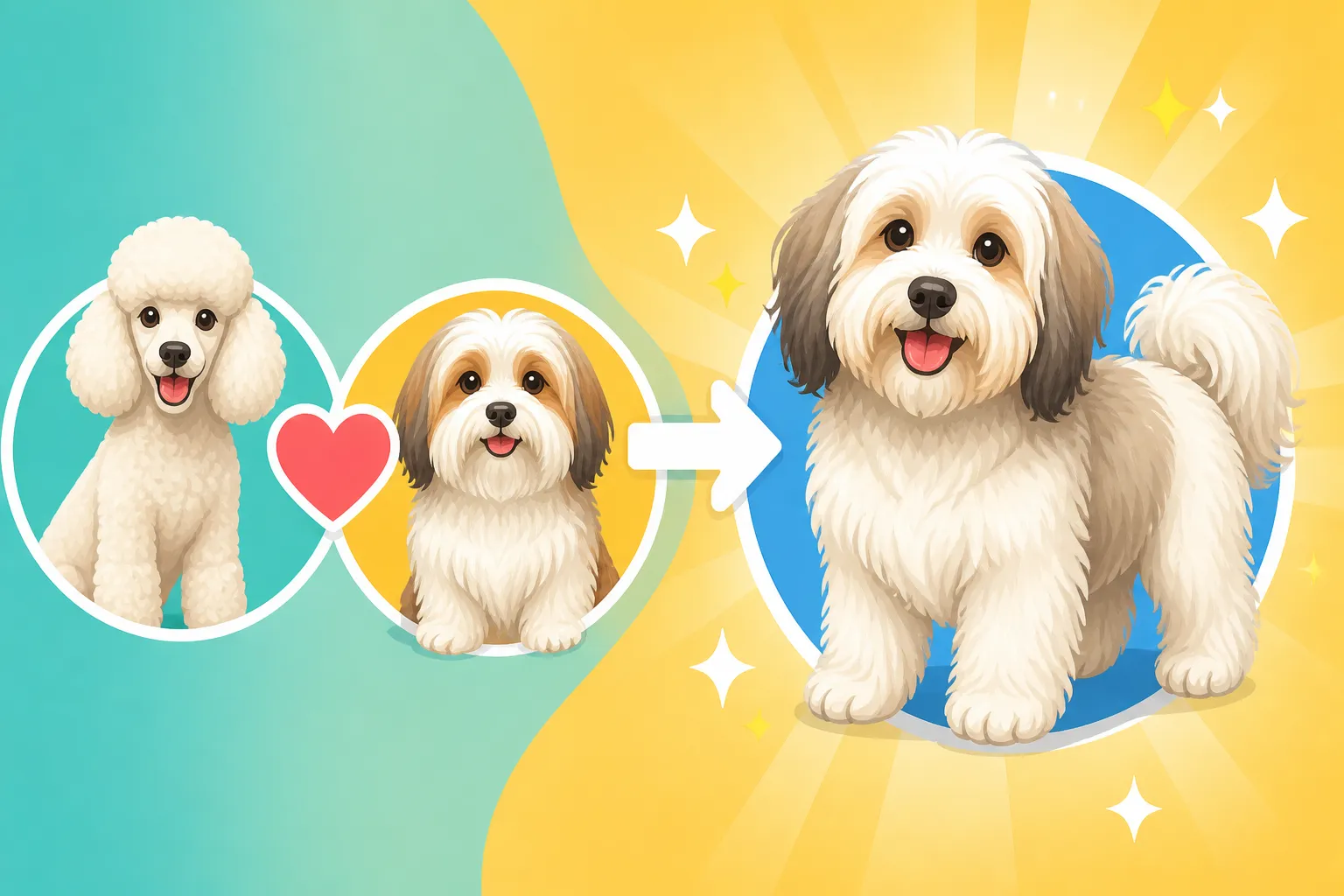
Whether Poodle Crossing Made the Havanese Bigger
It’s a natural curiosity when you look at a Havanese today – a delightful, small companion dog – and wonder about their history. Many people are especially interested in how their size came to be, and there's often talk about the influence of other breeds, like Poodles, in their lineage. This guide is here to shed some light on whether early Poodle crossings actually made the Havanese a bigger dog than its original ancestors.
The Historical Tapestry of the Havanese Breed
To understand the Havanese's journey and how its size developed, we need to take a little trip back in time to its roots in Cuba. This isn't just about tracing a family tree; it's about understanding the environment and intentions that shaped this charming breed.
The Blanquito de la Habana: A Smaller Ancestor?
Before the Havanese as we know it today, there was its direct ancestor, affectionately known as the "Blanquito de la Habana." Imagine a small, white, fluffy companion dog, cherished by Cuban aristocracy. The Blanquito was a true lapdog, bred purely for companionship in a warm, often humid climate. While definitive records on its exact size are sparse, historical accounts and illustrations suggest it was a delicate, small dog, likely similar in stature to what we consider a toy breed today, if not even a touch smaller. The focus was on its delightful personality and its luxurious, silky white coat. The idea was a small, elegant dog that could thrive indoors and provide endless affection. The Blanquito de la Habana the Havanese Came From offers more insight into this fascinating ancestor.
The Influx of European Breeds
Cuba, being a vibrant port and a melting pot of cultures, naturally saw many European visitors bringing their own beloved pets. It's widely accepted that during the 18th and 19th centuries, various European Bichon-type dogs, including some early forms of Poodles, were introduced to the Cuban gene pool. This wasn't necessarily a formal "crossing" as we think of it with strict breed standards today, but rather a natural intermingling over generations. Breeders, or perhaps just dog owners, in Cuba might have been looking to enhance certain traits – perhaps to introduce new coat colors, improve overall vigor, or even to fine-tune temperaments. The Poodle, even in its smaller varieties, was known for its intelligence, trainability, and distinctive non-shedding coat, traits that would certainly be appealing. This period of genetic exchange added a richness and diversity to the emerging Havanese type, moving it subtly away from the pure white Blanquito.
The Post-Revolutionary Reconstruction
The Cuban Revolution of 1959 marked a devastating period for many Cuban families and their beloved Havanese. As many fled the island, few were able to bring their dogs with them. The breed came perilously close to extinction. How the Havanese Nearly Died Out After 1959 delves into this critical time. The Havanese we know today largely descends from a very small number of dogs that were either brought out of Cuba by refugees or found and bred by dedicated individuals like Dorothy and Burt Goodale in the United States. This "bottleneck" effect meant that the genetic diversity was severely limited, and the traits present in those few surviving dogs became the foundation for the entire modern breed. When rebuilding the breed, careful consideration was given to health, temperament, and maintaining the desired small, sturdy, and charming appearance. The focus was on establishing a consistent breed type from the available stock.
Unpacking the Poodle's Influence on Havanese Size
When we talk about Poodle influence, it’s important to distinguish between the different sizes of Poodles and understand the motivations behind any historical intermingling. It wasn't simply about making the Havanese bigger.
Size Variation Within Poodle Breeds
Poodles come in several sizes: Standard, Miniature, and Toy. It's highly unlikely that the larger Standard Poodles played a significant role in the Havanese's development, given that the Havanese has always been valued as a small companion dog. However, Toy Poodles and Miniature Poodles, which are quite small themselves, could have contributed to the gene pool.
- Toy Poodles: These typically stand under 10 inches tall and weigh 4-6 pounds.
- Miniature Poodles: These range from 10 to 15 inches tall and weigh 10-15 pounds.
The modern Havanese breed standard generally calls for a dog standing 8.5 to 11.5 inches at the shoulder and weighing between 7 to 13 pounds. Looking at these figures, you can see that both Toy and Miniature Poodles fall within, or are very close to, the Havanese size range. So, if smaller Poodle varieties were introduced, they wouldn't necessarily have made the Havanese significantly larger than its Blanquito ancestors, which were already small. The Poodle's main contribution was likely more about traits like coat texture and color variation rather than a dramatic increase in size. You can see how the breed's size is measured and judged in How Tall a Havanese Stands.
The Goal of Crossbreeding: What Were Breeders Seeking?
Historical "crossings" or infusions of new blood weren't always about creating a larger dog. Often, the motivations were much more nuanced:
- Coat Enhancement: Poodles are renowned for their non-shedding, dense, curly coats. While the Havanese has a different, silkier texture, the introduction of Poodle genetics might have been aimed at reinforcing the non-shedding trait or influencing coat density and overall health.
- Color Diversity: The original Blanquito was primarily white. The Poodle, however, comes in a vast array of colors. Introducing Poodle lines could have been a way to introduce and solidify the wide spectrum of colors we see in Havanese today, from black and brown to sable, parti-color, and silver. Every Color a Havanese Is Allowed to Be shows just how diverse Havanese colors can be.
- Vigor and Health: Sometimes, new bloodlines are introduced to improve the overall health and genetic diversity of a localized population, combating potential issues arising from a very limited gene pool. This could have been a factor, especially if the Blanquito population faced its own challenges.
- Temperament Traits: Poodles are intelligent and highly trainable. While Havanese already possess a charming and smart disposition, an infusion of Poodle lines might have been intended to reinforce these desirable traits.
It's unlikely that the primary goal was to increase the Havanese's size. The Havanese was, and still is, cherished for its compact, portable nature. Increasing its size significantly would have gone against its fundamental identity as a small companion dog.
Genetic Influence and Phenotype
Genetics are a funny thing. When two breeds cross, the offspring don't necessarily end up as an exact average of the two parents. Traits like size are often polygenic, meaning multiple genes contribute to the final outcome. If a smaller Poodle was bred with a smaller Havanese ancestor, the resulting puppies might not have been noticeably larger. Furthermore, selective breeding plays a huge role. If breeders consistently chose to breed smaller individuals within the mixed population, the overall size could be maintained or even reduced over generations, regardless of the initial influence.
Think of it this way: even if a Poodle ancestor carried genes for a slightly larger frame, if subsequent generations were carefully bred to preserve the smaller, more compact Havanese type, those "larger" genes wouldn't become dominant in the established breed. The beauty of careful breeding is selecting for specific traits, and for the Havanese, "small companion" has always been paramount.
Modern Havanese Size and Breed Standard
So, what about the Havanese we see walking around today? Are they still influenced by these historical crossings, and what dictates their current size?
What the Breed Standard Dictates
The breed standard for the Havanese, as established by organizations like the American Kennel Club (AKC), is very clear about size. It specifies that Havanese should stand between 8.5 and 11.5 inches at the shoulder, with an ideal weight of 7 to 13 pounds. Dogs significantly outside this range are generally considered undesirable for showing, and responsible breeders strive to produce dogs within these parameters.
This standard didn't just appear out of nowhere; it was developed based on the surviving Havanese dogs rescued from Cuba, aiming to preserve their unique characteristics. It reflects the ideal size for a portable, sturdy, yet small companion dog – perfectly suited for sitting on your lap or accompanying you on outings. When you see a Havanese for sale from a reputable breeder, they are aiming for this standard, not for larger or smaller variations. What an Adult Havanese Weighs explores this in more detail.
Factors Affecting a Havanese's Size Today
While genetics are the primary driver of a dog's size, it's not the only factor. Several elements can influence how big a Havanese ultimately becomes:
- Parental Size: The most reliable indicator of a puppy's eventual size is the size of its parents. Reputable breeders will be able to show you the parents and even provide their weights, giving you a good idea of what to expect.
- Nutrition: During critical growth phases, proper nutrition is vital. A puppy that doesn't receive adequate, high-quality food might not reach its full genetic potential, though this is less about making a "bigger" dog and more about healthy development. Conversely, overfeeding can lead to obesity, which is unhealthy, but doesn't genuinely make a dog taller or longer in the skeletal sense. Feeding a Havanese, especially one that's a bit heavier, requires careful attention to portion control, and you can find many appropriate small-breed formulas on platforms like Chewy.
- Individual Variation: Just like in human families, there can be variation within a litter. Some puppies might be slightly larger or smaller than their siblings, even if they share the same parents. This is normal genetic variability.
- Health: Certain health conditions, particularly those affecting growth hormones or metabolism, could potentially impact a dog's size, though this is rare and usually indicative of an underlying issue rather than a breed characteristic.
Debunking the "Bigger Havanese" Myth
To directly answer the core question: no, Poodle crossing did not make the Havanese bigger in a way that fundamentally altered its identity as a small companion dog. While Poodles were undoubtedly part of the historical genetic mix that shaped the breed, the Havanese has always been, and continues to be, bred to a standard of small size.
Any larger individuals you might encounter in the Havanese breed today are more likely due to a combination of:
- Natural Genetic Variation: Just like some humans are taller than average, some Havanese might be on the larger end of their breed standard, or slightly over it, due to the natural variation that exists in any population.
- Breeding Choices: Less scrupulous breeders might not strictly adhere to the breed standard, or they might not prioritize size as much as other traits, leading to puppies that fall outside the ideal range.
- Misinformation: Sometimes, people might mistakenly believe a slightly larger Havanese is a result of a Poodle cross, when in reality, it's simply a Havanese that grew a bit more than average within its own lineage.
The overall goal of Havanese breeding, both historically and today, has been to maintain a small, sturdy, and affectionate companion dog. The Poodle influence helped diversify the breed and bring in certain desirable traits, but it didn't fundamentally shift the Havanese into a larger category of dog. The Havanese or Bichon Frise for a Family article also touches on similar companion breeds and their size expectations.
When you bring a Havanese into your home, you're welcoming a delightful, small companion that has been carefully bred over generations to fit that role perfectly. While the historical journey involved many twists and turns, including the influence of other charming breeds like the Poodle, the core identity of the Havanese as a compact, affectionate "lap warmer" has always endured. Understanding their history only deepens our appreciation for these wonderful little dogs, and the dedicated individuals who ensured their survival and thriving popularity. You might find yourself wondering What a Havanese Actually Weighs after reading about their origins!
| Havanese Ancestry Feature | Blanquito de la Habana (Ancestral) | Modern Havanese (Post-Reconstruction) |
|---|---|---|
| Typical Size (Approx.) | Small, delicate lapdog | 8.5 to 11.5 inches, 7-13 lbs |
| Primary Coat Color | Mostly White | Wide variety of colors and patterns |
| Breeding Focus | Companionship, elegance | Companionship, health, standard conformation |
| Poodle Influence | Less direct, indirect genetic contribution | Part of the diverse genetic foundation |
| Goal for Size | Maintain small, portable size | Adherence to established breed standard |
Ultimately, whether you're looking for a new puppy or just admiring the breed, you can trust that a well-bred Havanese will fit the charming, small stature that has made them beloved for centuries. Reputable breeders, often found through the Havanese Club of America, consistently aim to produce dogs within the established size and weight range, ensuring the legacy of this wonderful Cuban national dog continues. If you are ever curious about specific lineage, you can also consider whether a Havanese Breeder Should Show a Pedigree to better understand a puppy's background.
Disclaimer
This article is for general informational purposes only and does not constitute professional advice. Laws, prices and regulations vary by location and change over time. Consult a qualified professional for guidance on your specific situation.