Whether a Havanese Is Calmer Than a Bichon
A Havanese may seem calmer than a Bichon Frise in one home and more excitable in another. Both are cheerful companion dogs, and neither breed is reliably quiet or settled without enough exercise, company, and training. This guide compares their usual energy and behavior so you can judge which dog is more likely to fit your household.
Havanese vs Bichon Frise temperament
Is a Havanese generally calmer than a Bichon
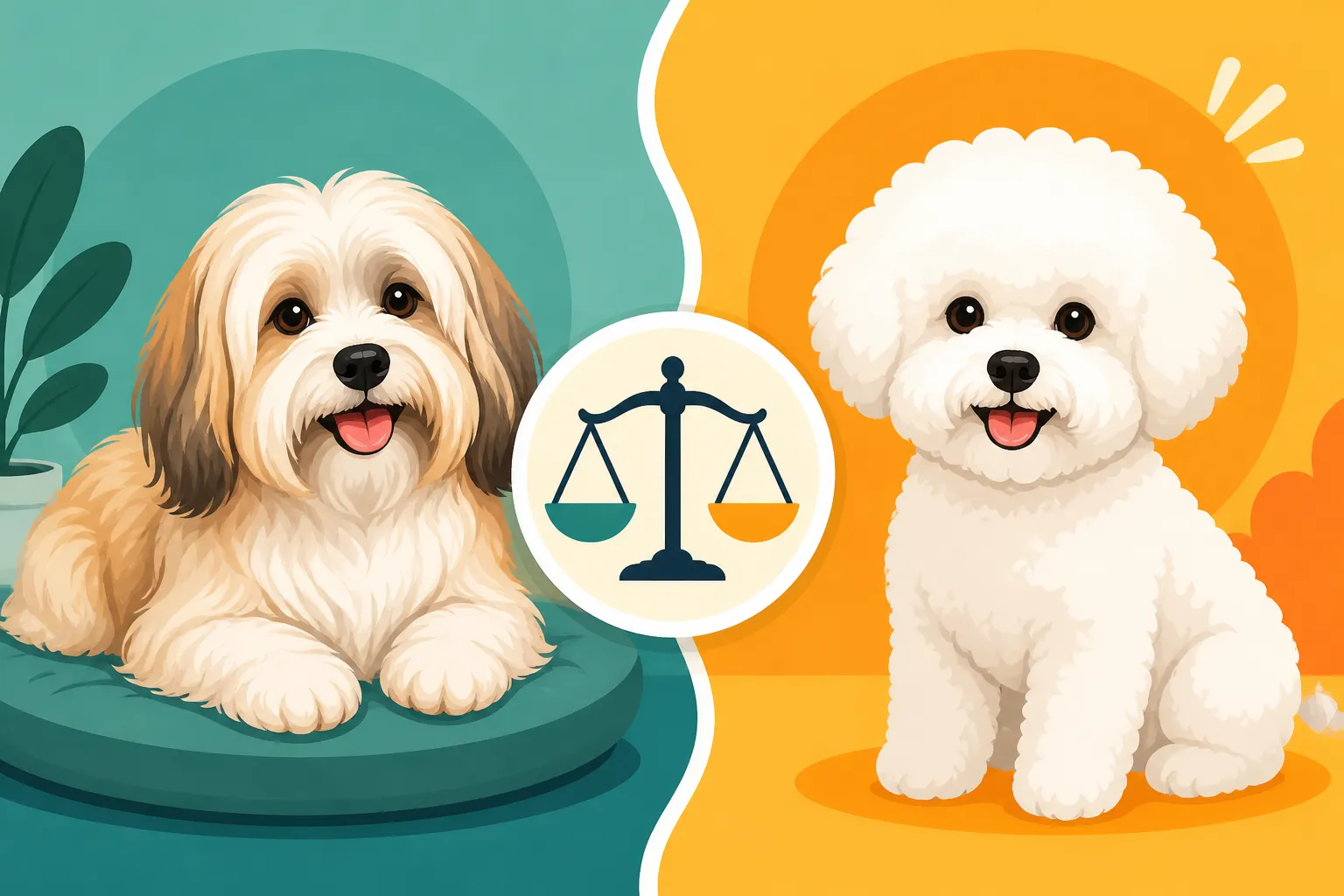
Often, a Havanese comes across as a little more adaptable and less constantly bouncy than a Bichon Frise. Many Havanese enjoy play and walks, then settle near their people once their needs are met. That can make them feel calmer in a home where the day has a predictable rhythm.
Bichons are often lively, sociable, and enthusiastic about whatever is happening. They may bounce around to greet visitors or turn a quiet moment into a game. That doesn’t mean every Bichon is high-energy, or that a Havanese is naturally mellow. It’s a broad tendency, not a promise about an individual dog.
The distinction can also be subtle. A playful Havanese may be just as active as a relaxed Bichon, especially during puppyhood. If you’re choosing between the breeds, pay attention to the actual dogs and their parents where possible. Ask how each puppy behaves after play, how quickly they settle, and how they respond to ordinary household activity.
For a wider comparison of their personalities and needs, see The Havanese Against the Bichon and the Maltese and The Havanese Against a Bichon Frise.
What “calm” looks like at home
A calm dog isn’t necessarily a dog that sleeps all day or never gets excited. It’s one that can recover after excitement, relax when nothing is happening, and cope with ordinary changes without staying wound up. A Havanese that greets a visitor with a burst of barking but settles on a bed shortly afterward may be easier to live with than a dog that appears quiet but becomes distressed whenever left alone.
Both breeds are people-oriented. A Havanese may follow a family member from room to room, while a Bichon may seek attention by bringing over a toy or inviting a game. Either can become restless if left without enough companionship or things to do. Calmness depends partly on whether the dog has learned how to switch off, not just on breed.
Think about the home you can offer. A household with a steady routine, a daily walk, short play sessions, and quiet rest periods may help either breed settle. A home with frequent visitors and constant activity can keep an excitable dog on alert. The same dog may look serene on a quiet afternoon and exuberant when children come home from school.
Energy, play, and daily routines
Exercise needs and indoor activity
Neither breed is usually a demanding endurance athlete, but both need regular movement and mental engagement. Walks, sniffing opportunities, training games, and play help prevent the sort of pent-up energy that can look like hyperactivity. A short walk followed by a food puzzle may suit some dogs better than an extended stretch of rough play.
Havanese are often willing to join family activities, whether that means a neighborhood walk or a game in the living room. Bichons can also enjoy walks and play, and some have a notably springy, energetic style. The difference between them may be less important than the individual dog’s age, health, and temperament. A young dog of either breed may need more structured activity than an older adult.
If your dog is busy indoors, add small activities rather than assuming it needs a much longer walk. Scatter a portion of its meal for sniffing, practice a few familiar cues, or offer a suitable puzzle toy. Chewy is one place owners may browse for food puzzles and enrichment toys, but choose an item appropriate to your dog’s size and chewing habits. Supervise new toys, particularly if your dog tends to pull pieces off.
For practical expectations, read How Much Exercise a Havanese Needs and Whether a Havanese Is Calm Indoors.
How age changes the picture
Puppies are rarely calm in the adult sense. They have brief bursts of play, need frequent toilet breaks, and can become overtired and rowdy when they have been awake too long. A puppy that races around the room may need a nap, not another game. This is true whether the puppy is a Havanese or a Bichon.
As dogs mature, many become more predictable about resting between activities. That doesn’t mean they stop needing walks, training, and social contact. An adult Havanese may still be vocal when someone arrives, and an adult Bichon may still rush into a game when a toy appears. Older dogs may slow down, but pain or illness can also change behavior, so a sudden shift in activity deserves attention.
When comparing dogs, ask about their normal routine rather than relying on one impression. A puppy seen after an energetic play session may seem wild; one seen just after waking may seem unusually placid. If possible, watch the dog in more than one situation and ask the breeder, rescue, or caregiver how it behaves when the room is quiet.
| Factor | Havanese | Bichon Frise |
|---|---|---|
| Typical impression | Often adaptable and companionable | Often lively and buoyant |
| Play style | Enjoys games and family activities | Often enthusiastic and playful |
| Settling indoors | Can settle with routine and company | Can settle with routine and enough activity |
| Common challenge | May follow people closely or bark at sounds | May be excitable or attention-seeking |
| What matters most | Individual temperament, training, age, and routine | Individual temperament, training, age, and routine |
Barking, attention, and learning to settle
Excitement can look like excess energy
Barking, jumping, pacing, and following people around are not always signs that a dog needs more exercise. They can reflect excitement, uncertainty, or a learned way to get attention. Havanese can be alert to sounds and visitors; Bichons can also become vocal or animated when something interesting happens. Neither breed should be assumed to be silent simply because it is small and affectionate.
A useful approach is to notice what happens just before the behavior. If the dog starts barking at the front door, practice a calm greeting routine before the door opens. If it gets frantic when a family member picks up a leash, bring the leash out at calm moments too, so its appearance doesn’t always predict an immediate burst of activity. Reward the behavior you want, such as sitting or settling on a mat.
Avoid trying to tire a dog out with nonstop stimulation. That can build stamina without teaching relaxation. Instead, mix activity with pauses: a walk, a few minutes of training, then a quiet rest with a chew or bed. Chewy carries a range of dog supplies, including enrichment items, but a simple towel with kibble scattered in its folds can also provide a supervised sniffing activity.
For more on vocal behavior, see Whether a Havanese Barks at Every Noise and Teaching a Havanese a Quiet Cue.
Teaching a dog to settle
Settling is a learned skill. Choose a comfortable mat or bed, reward your dog for approaching it, and gradually reward longer moments of quiet. Start when the dog is already fairly relaxed rather than waiting until it is racing around the house. Keep practice brief and low-pressure; the goal is for the bed to become a predictable place to rest, not a punishment.
Consistency matters more than a complicated routine. If the dog gets attention every time it paws, barks, or drops a toy in your lap, those behaviors may become its favorite way to start an interaction. Instead, give attention when it offers a calmer alternative, such as lying down near you or waiting quietly. Everyone in the household should follow the same basic pattern.
A dog that cannot settle may also be anxious, uncomfortable, or struggling with being alone. Look at the whole picture: Does it relax when someone is home? Does it become distressed only when left? Is this a new change? If restlessness is intense, persistent, or sudden, discuss it with a veterinarian or qualified behavior professional rather than treating it as a breed trait.
Choosing the better fit for your household
Match the dog to your real routine
If you want a companion who enjoys activity but may be content to relax beside you afterward, a Havanese could be a good fit. If you enjoy a particularly cheerful, animated dog and don’t mind a lively greeting or frequent invitations to play, a Bichon may suit you well. But these are tendencies, not reliable predictions. A calm Bichon can be less demanding than an excitable Havanese.
Consider how long the dog will be alone, how much time you can spend on walks and play, and whether barking would be a problem in your building. Both breeds often thrive on human company. A dog that is left alone for long stretches may struggle regardless of which breed seems calmer on paper. For a closer look at companionship needs, explore Whether a Havanese Tolerates Being Alone.
Grooming and training also affect everyday life. A dog that dislikes brushing or handling may seem restless during care routines, while a dog accustomed to gentle handling may accept them more easily. If you have children, visitors, or other pets, look for a dog that has been introduced to those situations thoughtfully, rather than assuming either breed will automatically be comfortable.
Questions to ask before deciding
Ask the breeder or rescue how the dog behaves after exercise, when a visitor arrives, and during quiet time. Find out whether it can rest alone in a room for a short period, how it responds to everyday noises, and what kinds of play it enjoys. These details are more useful than a simple label like “calm” or “energetic.”
If you’re meeting a puppy, ask to see its temperament across different moments. Does it recover after a sudden sound? Does it engage with people without becoming frantic? Can it pause and explore calmly? No single observation tells the whole story, but a thoughtful conversation can help you understand what you’re taking on.
Ultimately, the calmer choice is the individual dog whose energy, confidence, and need for attention fit your life. A Havanese may have a slight reputation for being more adaptable, while a Bichon may seem more animated, but daily routine and training make a substantial difference. Plan for a playful companion either way, and build in both activity and quiet time from the start.
Disclaimer
This article is for general informational purposes only and does not constitute professional advice. Laws, prices and regulations vary by location and change over time. Consult a qualified professional for guidance on your specific situation.