What an Anxious Havanese Chews
It’s a heart-sinking moment for any Havanese owner: you walk through the door, ready to be greeted by your fluffy companion, only to find a shredded couch cushion, a gnawed table leg, or your favorite slipper in tatters. This destructive chewing isn't just naughty behavior; often, it’s a desperate cry for help from an anxious Havanese who simply doesn’t know how else to cope with their feelings. This guide will delve into why your Havanese might be chewing due to anxiety, what they typically target, and practical steps you can take to redirect this behavior and help them feel more secure.
The Inner Turmoil: Why a Havanese Chews When Anxious
Havanese are known for being affectionate, intelligent, and deeply devoted to their families. This very devotion, however, can sometimes lead to intense anxiety when they feel separated or overwhelmed. Chewing is a natural dog behavior, but when it becomes destructive and tied to specific stress triggers, it's a clear sign that something deeper is at play. It's not about them being 'bad'; it's about them trying to manage big emotions.
The Urge to Self-Soothe
Think about how humans might fidget, bite their nails, or stress-eat when feeling overwhelmed. For dogs, especially a sensitive breed like the Havanese, chewing serves a similar purpose: it's a coping mechanism. The act of chewing releases endorphins, which have a calming, pain-relieving effect. When your Havanese is feeling anxious – perhaps because you've left them alone, or there's a new, unsettling routine – that physical sensation of chewing can provide a much-needed outlet for their pent-up stress. It's a way for them to "self-medicate" and try to bring their arousal levels down. They aren't trying to punish you; they're trying to soothe themselves. You might notice this kind of chewing being more frantic or intense than regular play chewing.
Lack of Appropriate Outlets
Sometimes, destructive chewing isn't just about the anxiety itself, but the lack of suitable alternatives. Your Havanese might be feeling anxious, and while they instinctually turn to chewing to cope, they might not have anything appropriate to chew on. Imagine being stressed and needing to do something with your hands, but only having your furniture available. Our Havanese often find themselves in a similar predicament. If they don't have a variety of engaging, durable chew toys readily available when they feel stressed, they'll turn to whatever is at paw-level – whether that's the leg of your antique chair, the corner of the rug, or your child's favorite toy. This highlights the importance of proactive management, especially if you know your Havanese struggles when left alone. The question isn't usually if they'll chew, but what they'll chew.
Breed Tendencies and Sensitivities
While any dog can suffer from anxiety, Havanese, with their strong bond to their human companions, can be particularly prone to separation anxiety. They are often described as "Velcro dogs" who love to be by your side. This intense desire for companionship means that being left alone, even for what seems like a short period to us, can be incredibly stressful for them. This can manifest in various ways, and destructive chewing is a very common one. You might notice other signs like excessive barking, pacing, or house-soiling when you're away. If you're observing these behaviors, it's worth reading up on Signs a Havanese Has Separation Anxiety to understand the full picture. Their sensitive nature means they can also be prone to other anxieties, such as noise phobias or general nervousness in new situations, all of which can trigger a chewing response.
Common Targets of Anxious Chewing
When a Havanese is overcome with anxiety and resorts to chewing, they aren't usually particular about what they chew, as long as it provides that sought-after relief. However, certain items tend to be more frequent targets due to their accessibility, texture, or even their scent. Understanding what your Havanese is drawn to can give you clues about their level of distress and help you to intervene effectively.
Household Items and Furniture
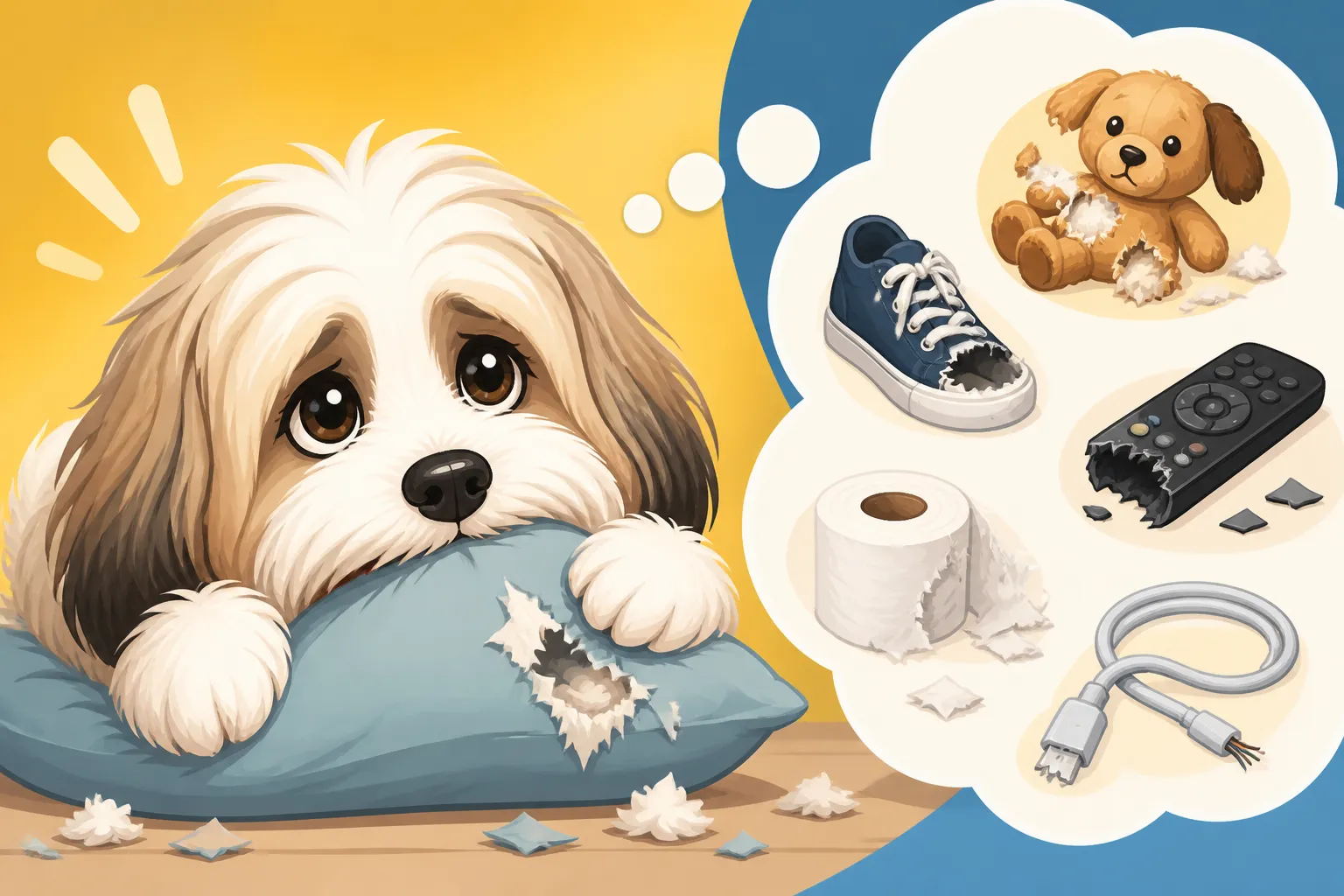
This is often the most frustrating and costly form of anxious chewing. Your Havanese might go for the legs of chairs and tables, the corners of baseboards, doorframes, or even the skirting of a couch. These items are often within easy reach and provide a satisfying, sturdy texture for frantic chewing. I’ve heard countless stories of beautiful wooden furniture bearing the battle scars of an anxious Havanese puppy or adult. Sometimes they seem to target areas that smell most like their absent human, such as the armrest of a chair you often sit on, or a pillow that carries your scent. It's a desperate attempt to feel closer to you, even if it means destroying something you value. This kind of destruction points to a deeper emotional need, rather than simple puppy mischief.
Personal Belongings
Nothing quite hits home like finding your favorite pair of shoes, your eyeglasses, or your remote control demolished. These items are often targeted for a couple of key reasons. Firstly, they are often easily accessible, perhaps left on a low table or dropped on the floor. Secondly, and more significantly, they carry your scent. For a Havanese experiencing separation anxiety, your smell is a powerful comfort. Chewing on something that smells strongly of you can be their way of trying to reconnect or draw comfort from your lingering presence. It's a bittersweet discovery: upsetting for your belongings, but a stark reminder of how deeply your Havanese misses and depends on you. This is why when considering Whether a Havanese Tolerates Being Alone, proactive measures are so crucial.
Themselves or Their Bedding
This is a particularly heartbreaking form of anxious chewing. Instead of inanimate objects, some anxious Havanese will turn their chewing inward. This might involve excessive licking or gnawing at their paws, legs, or tail, sometimes to the point of causing skin irritation, hot spots, or even open sores. This self-mutilation is a clear sign of severe distress and requires immediate attention. Another common target is their own bedding. A Havanese might chew, rip, and shred their bed, blankets, or crate mat. While sometimes it can be playful, when linked to anxiety, it’s often a frantic, destructive act. The texture of soft fabrics can provide a different kind of oral stimulation, and the act of tearing things apart can be a release for pent-up energy and stress. If you've wondered How Many Hours a Havanese Can Be Left Alone, these destructive behaviors can give you an answer.
How to Redirect Anxious Chewing
The good news is that anxious chewing can often be managed and redirected with patience, understanding, and the right strategies. The key is to address both the symptom (the chewing) and the underlying cause (the anxiety). This isn't a quick fix, but a journey towards helping your Havanese feel more secure and content.
Providing Appropriate Chew Toys
This is foundational. If your Havanese is going to chew, you need to ensure they have appealing, safe, and durable options available at all times. Look for a variety of textures and hardness levels to keep things interesting. Think about rubber toys that can be stuffed with treats, durable nylon bones, or even natural chews like bully sticks (under supervision). For a Havanese, who can have smaller mouths and delicate teeth, ensure the size is appropriate and won't splinter.
| Chew Toy Type | Best For | Features | Why It Helps Anxious Chewing |
|---|---|---|---|
| Stuffable Rubber Toys | Sustained chewing, mental engagement | Durable rubber, various shapes, hollow for treats like peanut butter or yogurt | Extends chewing time, provides mental distraction, releases endorphins |
| Durable Nylon Bones | Strong chewers, long-lasting | Hard plastic/nylon, flavored, various sizes | Satisfies intense chewing urges, very durable |
| Natural Chews (Bully Sticks, etc.) | High-value treat, intense chewing sessions | Single-ingredient, digestible (some), irresistible flavor (supervise!) | Highly engaging, provides significant stress relief (use sparingly) |
| Dental Chews | Mild chewers, dental health | Textured, designed to clean teeth | Satisfies light chewing, often palatable, short-term relief |
Companies like Kong make excellent stuffable rubber toys that can be filled with goodies and frozen, providing a long-lasting distraction. Even simple durable rubber balls or rings can be fantastic. You can find a huge variety of these on Amazon, making it easy to experiment and see what your Havanese loves most. Rotate toys regularly to keep them novel and exciting. If they have something more appealing to chew on than your furniture, they're more likely to choose that.
Mental and Physical Stimulation
An under-stimulated Havanese, even one prone to anxiety, is more likely to engage in destructive behaviors. While they are small, Havanese are intelligent and need mental challenges as much as physical activity. Daily walks are a must, but think beyond just a potty break. Let them sniff and explore. Engage in short, fun training sessions, teaching new tricks or reinforcing old ones. Havanese love to learn, and engaging their brains can be surprisingly tiring. Puzzle toys, where they have to figure out how to get a treat, are fantastic for mental enrichment. You can find many options where you fill the toy and they have to roll it, flip it, or nudge pieces to release the food. This kind of activity satisfies their natural instincts and can reduce anxiety.
Consider whether How Much Exercise a Havanese Needs is being met, and also think about What a Havanese Needs Beyond a Walk. Even indoor games like hide-and-seek with treats can provide valuable mental and physical exercise. A tired Havanese is often a less anxious Havanese.
Addressing the Underlying Anxiety
This is where the real work happens. If the chewing is truly anxiety-driven, simply redirecting it might not be enough. You need to identify what's causing the anxiety and work to mitigate it.
- Separation Anxiety: This is a common culprit. If your Havanese struggles when you leave, a structured plan to build their confidence in being alone is essential. This involves gradually increasing the time you're away, starting with just seconds. Practices like giving them a special, high-value chew toy only when you leave (and taking it away when you return) can help them associate your departure with a positive experience. You might also want to look into The Havanese That Cannot Be Left Alone for more in-depth strategies. Sometimes, leaving on a radio or TV can provide comforting background noise, as discussed in Whether Leaving the Radio On Helps a Havanese.
- Routine and Predictability: Havanese thrive on routine. A consistent schedule for feeding, walks, playtime, and alone time can provide a sense of security and reduce uncertainty that might fuel anxiety.
- Safe Space: Ensure your Havanese has a safe, comfortable den or crate where they can retreat and feel secure. If you're wondering Whether Crate Training Suits a Havanese, for many Havanese, a properly introduced crate can be a wonderful sanctuary. Make it a positive place with soft bedding and perhaps a special toy.
- Confidence Building: Enroll in positive reinforcement training classes. Not only is it a great bonding experience, but it also builds your Havanese's confidence and provides mental stimulation. The BAXTER & Bella Online Puppy School, for example, offers comprehensive, positive-reinforcement based training that can help build a strong foundation for a well-adjusted dog, even if they aren't puppies anymore.
Management and Prevention
While you're working on the core anxiety, it's crucial to manage the environment to prevent destructive chewing. This means "puppy-proofing" your home, even for an adult Havanese.
- Remove Temptations: If you know your Havanese targets specific items, put them away. Keep shoes in closets, remotes out of reach, and precious items off low tables.
- Block Access: Use baby gates or exercise pens to restrict your Havanese's access to certain rooms or areas when you can't supervise them directly. This is especially helpful during alone time.
- Supervision: When you are home, actively supervise your Havanese. If you see them eyeing a forbidden chew item, gently redirect them to an appropriate chew toy with praise and positive reinforcement.
- Scent Deterrents: For furniture or areas they frequently chew, you can try applying bitter apple spray or other non-toxic chew deterrents. Always test a small, inconspicuous area first to ensure it doesn't stain. The unpleasant taste can discourage chewing in those specific spots.
When to Seek Professional Help
If your Havanese's anxious chewing is severe, causing harm to themselves, or doesn't improve with consistent application of the strategies above, it's absolutely time to bring in professional help. This is not a sign of failure on your part, but rather an acknowledgment that sometimes, our beloved companions need a little extra guidance and expertise.
A certified professional dog trainer or a veterinary behaviorist can help you identify the specific triggers for your Havanese's anxiety and develop a tailored behavior modification plan. They can assess if the issue is purely behavioral, or if there's an underlying medical condition contributing to the anxiety. Sometimes, severe anxiety might even warrant a discussion about medication to help your Havanese get to a place where they can even begin to learn new coping mechanisms. It's not a magic bullet, but it can be a valuable tool in conjunction with behavioral therapy, as explored in articles like Whether Medication Helps an Anxious Havanese.
Remember, your Havanese isn't chewing out of spite. They're communicating their distress in the only way they know how. With patience, consistency, and a little help, you can guide them towards feeling more secure and content, transforming those destructive habits into healthier, happier behaviors.
Disclaimer
This article is for general informational purposes only and does not constitute professional advice. Laws, prices and regulations vary by location and change over time. Consult a qualified professional for guidance on your specific situation.