Whether a Havanese’s Ears Should Fold
A Havanese’s ears should generally hang down rather than stand upright: they are soft, floppy ears that fold over and frame the cheeks. But puppy ears can look uneven, shift as a dog grows, or be partly hidden by hair. This guide explains what is typical, what may be ordinary variation, and when a change in your dog’s ears deserves a closer look.
What a Havanese’s ears normally look like
The usual Havanese ear shape
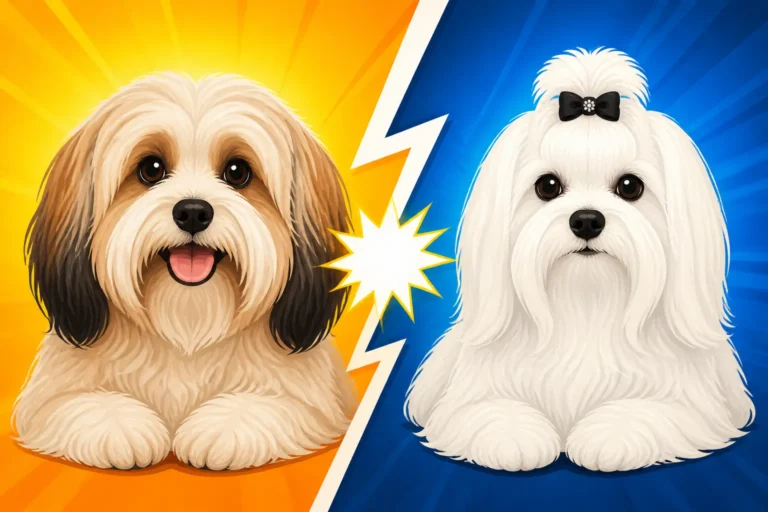
A Havanese is described as having drop ears. In everyday terms, that means the ear flap hangs down instead of standing straight up like a shepherd dog’s. The ears are usually soft, covered with hair, and carried close to the sides of the head. They may lift or move when your dog is alert, but they normally settle back into a folded, hanging position.
The word “fold” can be a little confusing. It does not mean that every Havanese ear must form a sharp crease or sit at an identical angle. One dog’s ears may lie close to the cheeks, while another’s hang with a little more space between the ear leather and the head. Hair, ear size, facial shape, and the way the dog holds its head can all affect what you see.
The important distinction is between a naturally hanging ear and an ear that is persistently upright. A Havanese may briefly raise an ear while listening, especially if something catches its attention. That momentary movement is different from both ears remaining stiffly erect when the dog is relaxed.
Why hair can make the ears look different
Havanese ears are often covered in long, silky hair. That coat can soften the outline of the ear flap, make one side look heavier, or make the ears appear to blend into the hair around the cheeks. If the coat is clipped short, you may suddenly notice the ear shape more clearly, even though the ear itself has not changed.
Hair can also hang forward or become tangled near the ear opening. A topknot, face trim, or recent grooming appointment may change how the ears appear from the front. If you are unsure whether you are looking at the ear flap or just a curtain of coat, gently part the hair without pulling and look at the ear’s natural position.
A Havanese’s overall silhouette changes as the coat grows, too. For a broader look at the breed’s proportions and appearance, see How Big a Havanese Gets and What Havanese Owners Wish They Had Known. The ears are one small part of a dog’s appearance, and coat styling can make them seem more prominent than they are.
A quick guide to common ear appearances
| What you notice | What it may mean | What to do |
|---|---|---|
| Ears hang down while your dog is relaxed | Typical drop-ear carriage | Keep the ears dry and check them during regular grooming |
| One ear lifts briefly when your dog listens | A normal alert response | Watch how the ear rests once your dog relaxes |
| Ears look uneven under a long coat | Hair length or coat direction may affect the appearance | Part the hair gently and compare the ear flaps |
| One or both ears stay upright much of the time | Individual variation, growth, or a possible breed-mix question | Ask your veterinarian or breeder if you are concerned |
| A hanging ear becomes red, painful, swollen, or smelly | Possible irritation or infection | Arrange veterinary advice rather than treating it as a shape issue |
Why a Havanese puppy’s ears may look different as it grows
Puppy ears do not always look symmetrical
Puppies are growing quickly, and their heads, coats, and facial features do not necessarily develop in a perfectly even way. One ear may seem to sit higher than the other for a while. A puppy may also hold one ear differently when tired, focused on a sound, or trying to work out what is happening around it.
Take a few relaxed photos over time rather than judging the ear position from one excited snapshot. A puppy photographed while watching a toy may have its ears held differently from the same puppy curled up after a nap. Consistent changes in the relaxed position matter more than a brief expression caught on camera.
There is no reliable home trick for making a Havanese’s ears fold into a particular position. Avoid taping, gluing, weighting, or manipulating the ears unless a veterinarian has specifically directed you to do so for a medical reason. Trying to reshape an ear can irritate delicate skin and may make a puppy uncomfortable without changing its natural structure.
What if a Havanese’s ears stand up?
If a Havanese’s ears appear upright, first check whether they are truly standing or whether the hair is simply lifting the edges. Look when your dog is calm, then compare what you see with the ears’ position during alert moments. Long hair, a short haircut, and the angle of a photograph can all create a misleading impression.
Some dogs may have ear carriage that differs from the typical breed description. Appearance alone does not tell you whether a dog is healthy, well cared for, or a purebred Havanese. If you are choosing a puppy and ear shape matters to you, ask the breeder what they have observed in the puppy and its relatives. A responsible conversation should be straightforward, not a promise that a puppy’s ears can be trained into a particular look.
If you already love the dog in front of you, an unusual ear position is not automatically a problem. Focus on comfort and function: Is your dog hearing and responding normally? Is the skin comfortable? Has the position changed suddenly? If the ear shape is part of a broader concern about breed identification, Whether the Havanese Standard Has Changed offers useful context on how breed descriptions and expectations are discussed.
How ear shape relates to everyday ear care
Floppy ears need sensible, gentle checks
A hanging ear can cover part of the ear opening, so it is worth making a quick visual check during grooming. Look for redness, swelling, discharge, a strong unpleasant smell, or signs that your dog is repeatedly scratching or shaking its head. These clues matter more than whether the ear flap folds at a particular angle.
A quick check does not mean poking inside the ear canal. Lift the ear flap gently, look at the visible skin, and stop if your dog resists or seems sore. A Havanese that pulls away, yelps, or guards one ear may be uncomfortable; do not force an inspection just to get a better look.
If you notice recurring irritation, ask your veterinarian what might be causing it. Ear infections can have different underlying contributors, and the right care depends on the cause. For more on warning signs, see Whether a Havanese Gets Ear Infections. If you are wondering whether hair inside the ear is involved, Whether Hair in a Havanese's Ear Canal Causes Infection explores that question in more detail.
Keep ears dry without overcleaning
After a bath or a walk in wet weather, gently dry the outside of the ears and the areas where damp hair rests against the head. Avoid rubbing vigorously, pushing cotton swabs into the ear canal, or using household products. Moisture and trapped debris can be irritating, but aggressive cleaning can irritate the skin too.
A veterinarian can recommend whether your dog needs an ear cleaner and how to use it. If a specific product is recommended, check its label and follow the instructions rather than choosing a treatment based only on online reviews. Pet retailers such as Chewy may carry a range of grooming supplies, but a product’s availability does not mean it is suitable for every dog or every ear problem.
If you are comparing supplies, make sure you know whether you need a routine cleaner, a drying product, or something else your veterinarian has advised. These are not interchangeable. Retailers such as Chewy can be a place to review product labels and options, but persistent odor, discharge, or discomfort calls for veterinary guidance—not a trial-and-error shopping routine. For practical cleaning frequency and bath-related care, see How Often a Havanese's Ears Should Be Cleaned and Whether a Havanese's Ears Need Drying After a Bath.
Be cautious about plucking ear hair
The question of ear hair often causes confusion. Some owners hear that hair should be removed to improve airflow, while others worry that plucking will irritate the ear. There is no one-size-fits-all grooming rule for every Havanese. Whether hair should be trimmed, left alone, or handled in another way depends on the individual dog and its ear health.
Do not pull hair from the ear canal just because it is visible. If your dog has a history of ear trouble or the hair seems to trap debris, ask your veterinarian or an experienced groomer to explain the safest approach for that dog. A painful ear should be assessed before grooming attempts continue. You can read more in Whether a Havanese's Ear Hair Should Be Plucked.
When an ear change deserves attention
A change in position is not always a medical problem
An ear can look different because a dog is alert, tired, recently groomed, or wearing its coat differently. A flap may also sit differently in a photograph depending on the dog’s head angle. If your dog is comfortable and the ears look otherwise healthy, a temporary difference in appearance is often less concerning than a sudden change accompanied by pain or irritation.
Pay attention to what is new for your dog. Has one ear started drooping when it used to sit normally? Is your dog shaking its head more often? Does it avoid having one side of its head touched? These details help a veterinarian understand whether the issue is simply appearance or whether something else may be going on.
If the ear position changes suddenly and your dog seems uncomfortable, arrange a veterinary check rather than trying to correct the fold yourself. Prompt advice is especially sensible when you see swelling, blood, discharge, a strong smell, or marked sensitivity. The goal is to identify the reason for the change, not to make both ears look alike.
When to contact a veterinarian
Contact your veterinarian if the ear is painful, very red, swollen, producing discharge, or has a persistent bad smell. Repeated head shaking, scratching, or rubbing the ear against furniture can also be signs of discomfort. A dog that suddenly seems less responsive to sounds should be assessed as well, particularly if the change is noticeable or paired with other symptoms.
Do not put leftover medication, human ear drops, oils, or home remedies into the ear unless a veterinarian tells you to. Some products can be harmful, and the right treatment depends on what is happening inside the ear. If the ear is sore, even routine cleaning can worsen the discomfort or make an examination harder.
For a healthy Havanese, the everyday answer is simple: the ears should generally hang down and fold naturally, but they do not have to look perfectly matched or form a precise crease. Watch your dog’s comfort, keep the coat and ears cared for gently, and ask a veterinarian about changes that come with pain or irritation. If you are looking for grooming products, Chewy and other pet retailers can help you compare options, but your veterinarian is the right person to guide treatment for an ear problem.
Disclaimer
This article is for general informational purposes only and does not constitute professional advice. Laws, prices and regulations vary by location and change over time. Consult a qualified professional for guidance on your specific situation.