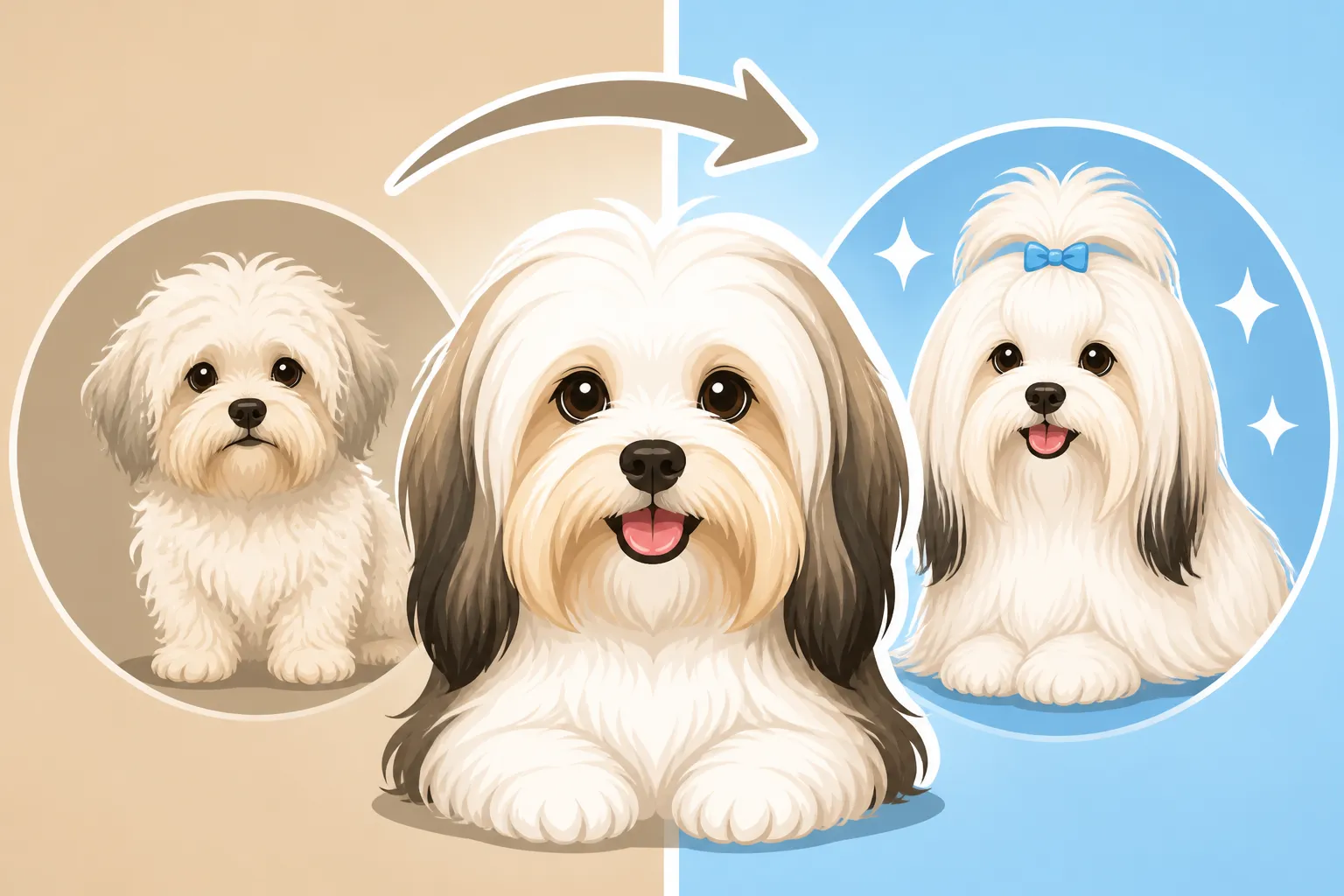
Whether the Havanese Kept the Blanquito’s Silky Coat
One of the most captivating features of the Havanese is undoubtedly their stunning, flowing coat. If you’re like many Havanese enthusiasts, you might find yourself wondering about the origins of this unique fur, especially how it compares to the ancestral dogs of Cuba, the "Blanquito de la Habana." It’s a fascinating journey into breed history, and yes, the silky coat we adore today absolutely traces its roots back to those charming, ancient companions.
The Ancestral Blanquito de la Habana and Its Fabled Coat
Before the Havanese as we know them came to be, there was the Blanquito de la Habana, a beloved companion dog in Cuba. These weren't just any dogs; they were cherished members of aristocratic families, little living treasures brought over from Europe and then meticulously bred on the island. Understanding their coat is key to appreciating the Havanese we share our lives with today.
Tracing the Ancestry of the Havanese Coat
The Blanquito de la Habana, often translated as "little white dog of Havana," was a truly unique breed in its time. Descended from the Bichon type dogs that arrived in Cuba with Spanish traders centuries ago, these canines evolved in a climate very different from their European ancestors. The intense tropical heat and humidity of Cuba meant that a dense, heavy coat would have been a significant disadvantage. Instead, nature, and selective breeding by their owners, favored a lighter, airier coat that still offered protection from the sun and insects without causing overheating.
Historical accounts and descriptions suggest that the Blanquito possessed a coat that was soft to the touch, often described as fine and silky, sometimes even wavy. This wasn't a wiry or curly coat designed for harsh outdoor work; it was a luxurious, touchable coat fit for lapdogs and parlor companions. Imagine a small, white cloud trailing behind a Cuban noblewoman, its coat shimmering in the Caribbean sun – that's the picture historical records paint. Their existence really sets the stage for what we see in the modern Havanese. To delve deeper into their lineage, you might find The Blanquito de la Habana the Havanese Came From an insightful read.
The "Silk" in the Havana Silk Dog
It's no accident that the Havanese was once, and sometimes still is, affectionately referred to as the "Havana Silk Dog." This moniker directly references the exquisite texture of its coat, a trait that was highly valued and specifically bred for in the Blanquito de la Habana. The word "silk" wasn't just poetic license; it was a precise description of the fine, soft, and flowing quality of their fur.
For the Cuban elite, these dogs were status symbols, and their beautiful, low-shedding coats were a significant part of their appeal. It meant less mess in opulent homes and a dog that could be pampered and adorned. The silky texture wasn't just about aesthetics; it also contributed to the coat's ability to protect the dog's skin from the elements without matting excessively, provided it received regular care. This emphasis on a silken coat has been a cornerstone of the breed's identity for centuries, linking the Havanese directly to its Blanquito ancestors.
The Modern Havanese Coat: A Silky Legacy Preserved
Fast forward to today, and the Havanese coat continues to be one of its most defining characteristics. While the breed's journey through history was turbulent, particularly during the Cuban Revolution when it almost vanished, dedicated breeders managed to preserve many of the Blanquito's treasured traits, including that signature silky coat.
Defining the Ideal Havanese Coat Texture
The breed standard for the Havanese today emphasizes a coat that is soft, often described as "silky" or "cottony-soft" to the touch, and wavy. It's a double coat, meaning it has both an outer coat and an undercoat, but unlike many double-coated breeds, the Havanese undercoat is typically very light, almost gossamer, which contributes to its overall luxurious feel without adding excessive bulk or heat retention. The outer coat should be long, flowing, and have a slight wave, not tightly curled or coarse.
This specific texture isn't just for show; it's a testament to the breed's heritage. A coat that is too thick, too coarse, or too curly deviates from this ideal, often losing that distinctive "silky" feel that made the Blanquito so cherished. Breeders work diligently to ensure their lines produce dogs with coats that align with this soft, flowing standard, reflecting the historical type that adapted so well to its tropical homeland. You'll often hear discussions about Whether a Havanese Coat Texture Varies by Line which speaks to the nuances within the breed.
Variations in Havanese Coat Type
While the ideal is silky and wavy, it's a common observation among Havanese owners that coat textures can, and do, vary. Some Havanese will have an incredibly fine, almost gossamer-like coat that truly feels like spun silk, falling straight with just a gentle wave. Others might have a slightly denser coat, still soft, but with a more pronounced wave or even a loose curl, often referred to as a "cottony" texture. Both are acceptable within the breed, but the degree of silkiness can differ.
These variations can be influenced by several factors, including genetics from specific lines and even the individual dog's age and health. For example, some puppies start with a very soft, fluffy coat that changes significantly as they mature, becoming longer and often wavier. It's a journey, and you might find that your Havanese's coat doesn't fully develop its adult characteristics until they are well over a year old. Regardless of the slight variations, the overarching characteristic remains that the coat should be soft and manageable, never harsh or wiry.
How Poodle Influences May Have Shaped the Coat
It's impossible to discuss the Havanese's history without acknowledging the role of other Bichon-type dogs, and specifically Poodles, in shaping the breed. While the Blanquito was established, various lines mingled over the centuries, contributing to the genetic tapestry of the modern Havanese.
The Introduction of Poodle Bloodlines
During the long history of the Bichon type dogs in Cuba, it wasn't uncommon for different small companion breeds, including Poodles (especially miniature and toy varieties), to be brought to the island. These dogs, prized for their intelligence and unique non-shedding coats, sometimes intermingled with the existing Blanquito population. This wasn't necessarily a formal "crossing" as we think of it today, but rather a natural flow of genes within a relatively confined geographical area.
The influence of these Poodle bloodlines is thought to have contributed to some of the variations seen in Havanese coats. Poodles, known for their dense, curly, and often voluminous coats, could introduce genes that would make a Havanese coat slightly thicker, curlier, or more prone to matting if not properly managed. This subtle infusion over generations is part of the genetic complexity that makes each Havanese coat unique, while still largely retaining the dominant silky traits of its Blanquito ancestors. You can learn more about this by reading How Poodles Changed the Blanquito.
Balancing the Silky and the Wavy in Breeding
For generations, dedicated breeders have been the custodians of the Havanese's distinctive qualities, including its coat. The challenge has always been to maintain that cherished silky, wavy texture that defines the breed while navigating the genetic legacy. This involves careful selection, choosing breeding pairs that consistently produce puppies with the desired soft, flowing coats.
Breeders look for an effortless elegance in the coat, one that moves freely and doesn't appear overly dense or cottony, even if it has a good amount of volume. It's a delicate balance; too much Poodle influence might lead to a coat that's too tightly curled or lacks the signature "silky" feel, while too little could result in a coat that lacks body. The goal is always to honor the Blanquito's legacy, preserving the practical beauty of a coat designed for comfort and charm.
Maintaining the Silky Havanese Coat in the Modern Home
Owning a Havanese means embracing a commitment to coat care. That beautiful, silky legacy from the Blanquito doesn't maintain itself, and understanding the demands of this unique double coat is crucial for keeping your Havanese comfortable and looking their best.
The Daily Commitment to Coat Care
The truth is, maintaining that exquisite silky Havanese coat requires daily attention. This isn't a wash-and-wear breed. Without regular grooming, that soft, fine hair will quickly tangle and matt, especially during the crucial coat change period around 8-15 months of age. A thorough daily brushing session, usually 15-30 minutes, is essential.
You'll need the right tools: a good quality slicker brush to remove loose hair and tangles, and a metal comb to work through knots and ensure you've reached down to the skin. Many owners also use a detangling spray to make the process easier and prevent breakage. Regular bathing, typically every 1-3 weeks depending on the dog's lifestyle, is also necessary, followed by thorough drying with a blow dryer to prevent matting. Think of it as a small daily ritual that strengthens your bond and keeps your pup comfortable. For more on this, check out How Often a Havanese Must Be Brushed.
Protecting the Coat from Matting and Damage
Matting is the bane of every Havanese owner's existence, and it seems to happen in the blink of an eye. The most common areas for matting are behind the ears, in the armpits, on the insides of the legs, and under the collar or harness. These are high-friction areas where the soft hairs intertwine easily.
To combat this, consistent brushing is your best defense. When you brush, ensure you're line-brushing, meaning you part the hair and brush in layers, making sure to get all the way down to the skin. This prevents mats from forming unseen underneath the top layer of hair. Using a soft harness instead of a collar for walks can also help reduce friction on the neck coat. For grooming supplies, many pet retailers like Chewy offer a wide array of brushes, combs, and detangling sprays specifically designed for long-haired breeds. Being proactive is far easier than trying to de-matt a felted coat!
The Puppy Coat Change and Beyond
If you thought puppyhood was all playful nips and adorable clumsiness, wait until your Havanese hits their "coat change" phase, typically starting around 8-15 months and sometimes lasting for several months. This is when their soft, fine puppy coat begins to shed out, making way for the adult double coat. During this time, the loose puppy hair gets caught in the incoming adult coat, creating a matting nightmare if not managed diligently.
This period demands even more frequent and thorough brushing, sometimes twice a day. It's a rite of passage for Havanese owners, and many opt for a shorter "puppy cut" during this time to make management easier. Once the adult coat fully comes in, it typically becomes a bit more stable, but still requires consistent care to maintain its silky splendor. Knowing when to expect this change, as discussed in When a Havanese Puppy Coat Changes, can save you a lot of frustration!
| Coat Feature | Blanquito de la Habana (Ancestral) | Modern Havanese (Breed Standard) | Common Havanese Variations |
|---|---|---|---|
| Texture | Soft, fine, silky | Soft, silky to cottony-soft | Can lean more silky or more cottony |
| Density | Light, adapted to tropical climate | Double coat, but light undercoat | Varies, some denser, some finer |
| Length | Long, flowing | Long, flowing, can reach floor | Often trimmed to a "puppy cut" |
| Wave/Curl | Gentle wave, slight curl possible | Wavy, not tightly curled or coarse | Ranges from gentle wave to loose curl |
| Maintenance | Required to prevent matting | High; daily brushing essential | Always high, regardless of variation |
| Primary Benefit | Comfort in heat, elegant appearance | Protection, low-shedding, aesthetic | Unique appearance, companionable |
Embracing the Silky Legacy
Ultimately, the Havanese has indeed retained the silky coat of its Blanquito de la Habana ancestors. It's a testament to dedicated breeders and the enduring appeal of this exquisite trait. While there might be subtle variations in texture influenced by centuries of shared lineage with other Bichon-type dogs, the core essence of the Havanese coat—its softness, its flowing quality, and its overall elegance—remains a direct link to those cherished dogs of old Havana.
Caring for such a coat is a labor of love, but the reward is a beautiful, healthy companion whose stunning appearance is steeped in history. Whether your Havanese has the finest silk or a slightly more cottony wave, you’re holding a piece of Cuban heritage, a living, breathing connection to a fascinating past.
Disclaimer
This article is for general informational purposes only and does not constitute professional advice. Laws, prices and regulations vary by location and change over time. Consult a qualified professional for guidance on your specific situation.