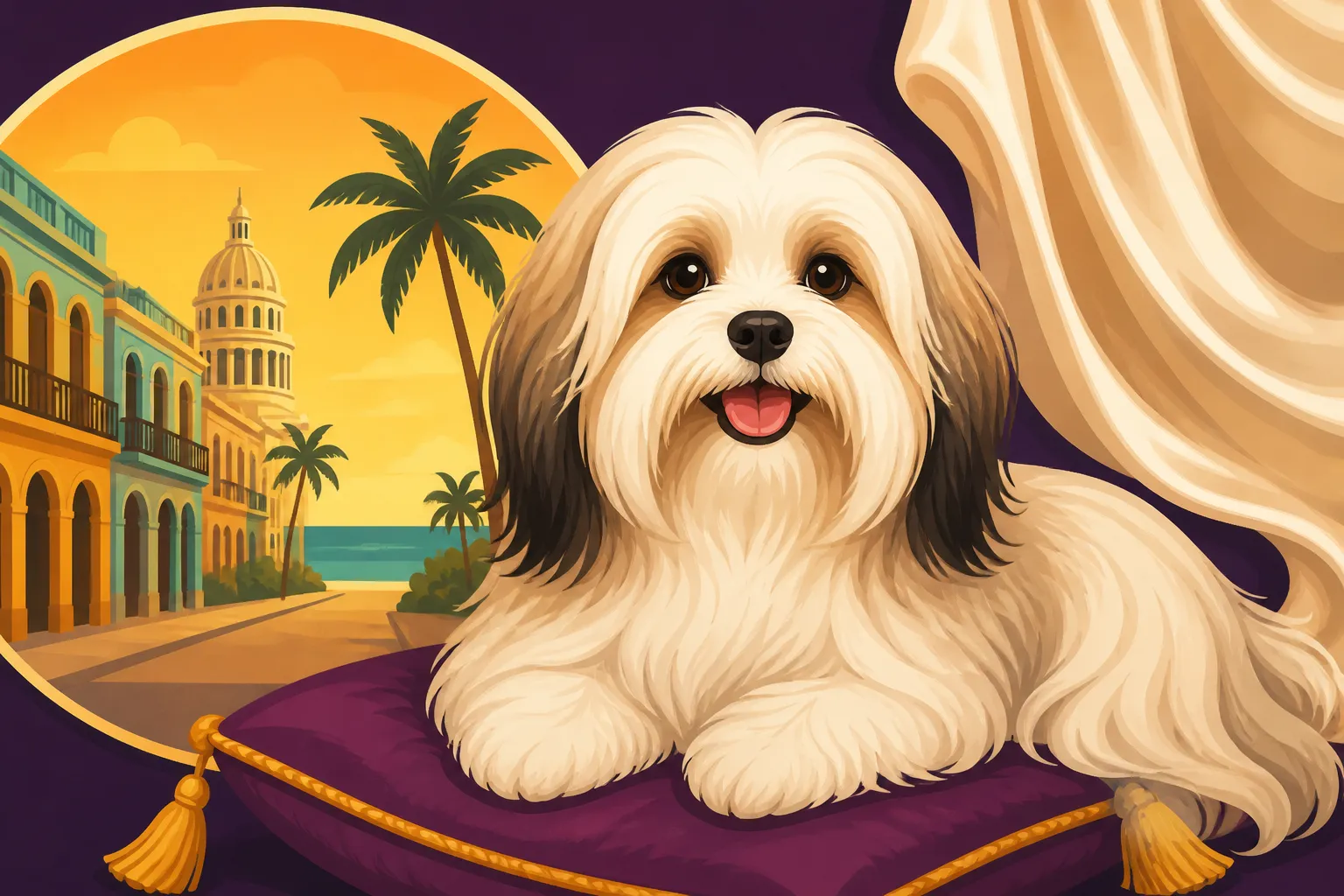
Why the Havanese Was Called the Havana Silk Dog
It’s perfectly natural to hear the name “Havanese” and then suddenly encounter “Havana Silk Dog” and wonder if you’re looking at two different breeds, or if there’s a secret history you’ve missed. This confusion is quite common, and for good reason! Many people stumble upon this older, more descriptive name and become curious about its origins and why it isn't the primary name today. This guide will unravel the fascinating story behind why the Havanese was once, and sometimes still is, referred to as the Havana Silk Dog, delving into its rich Cuban heritage and the passionate debates among breeders that shaped its identity.
The Whispers of a Silken Past: Origins of the Havanese in Cuba
The Havanese, our beloved little "Velcro dog," has a truly captivating history that’s as rich and colorful as its diverse coat. To understand why it was ever called the Havana Silk Dog, we have to journey back in time, all the way to its origins on the island of Cuba. This isn't just a simple name change; it’s a reflection of the breed’s unique characteristics and its historical significance.
The Blanquito de la Habana and the Bichon Family
Imagine Cuba centuries ago, a vibrant hub of culture and commerce. European traders and colonists brought small companion dogs with them, often of the Bichon type, to keep them company on long sea voyages and in their new homes. These little dogs thrived and adapted to the Cuban climate and lifestyle, eventually evolving into what was known as the Blanquito de la Habana, or "Little White Dog of Havana." This original Cuban dog was the direct ancestor of our modern Havanese. It’s a truly fascinating thought to consider that The Havanese Is the Only Breed Cuba Ever Produced, a testament to its unique development on the island.
These Blanquitos were cherished companions, particularly by the aristocracy and wealthy families. They weren't working dogs; their job was simply to provide affection, companionship, and a bit of lively entertainment. They were often seen perched on ladies' laps or trotting alongside their owners through grand colonial homes. This intimate role meant they developed a deeply devoted and intelligent personality, traits we still adore in the Havanese today. They were truly dogs of leisure and luxury, intimately woven into the social fabric of Cuban high society.
A Coat Like Silk: The Defining Feature
One of the most striking features of the Blanquito, and subsequently the Havanese, was its incredible coat. Unlike the coarser hair of some other small breeds, the Cuban dogs developed a long, soft, and exceptionally silky texture. This coat, which often grew to touch the floor in its natural state, wasn't just beautiful; it was practical, too. It provided a degree of insulation against both the tropical heat and cooler evenings. This luxurious, flowing coat was so distinctive that it became a hallmark of the breed.
It's easy to see how a dog with such an exquisite, fine coat would earn the moniker "Silk Dog." This isn't a coat that sheds profusely, which is a blessing for many owners, but it does require consistent care. If you've ever felt a truly well-maintained Havanese coat, you understand the "silk" description perfectly. It flows and shimmers, giving the dog an almost ethereal quality as it moves. The breeders and owners of old were just as captivated by this trait as we are today, and it’s no wonder they’d incorporate such a distinguishing feature into the dog’s informal title.
The Evolution of the Breed and the Poodle Influence
As the centuries passed, the Blanquito de la Habana continued to evolve, and its story became intertwined with other breeds brought to the island. This further development helped shape the Havanese we know today, deepening the characteristics that would eventually lead to the "Silk Dog" distinction.
The Original Cuban Companion and Its Natural Development
The early Blanquitos were somewhat isolated on the island, allowing them to develop distinct traits. They were generally small, sturdy, and remarkably intelligent, known for their playful antics and deep affection for their families. Their coat, as mentioned, was their crowning glory – soft, long, and flowing, perfectly suited to the warm, humid climate. These dogs were quite agile, despite their small size, and were often taught tricks to entertain their aristocratic owners. You can read more about The Blanquito de la Habana the Havanese Came From to get a full picture of their ancestral lineage.
They were more than just pretty faces; they possessed a keen intellect and a desire to please, making them excellent companions. Their natural affability meant they were great with families, fitting seamlessly into various households. This foundation of intelligence, charm, and a beautiful coat set the stage for the later "Havana Silk Dog" identification. It was about preserving the essence of this unique Cuban gem.
The Introduction of Other European Breeds
While the Blanquito was developing, Cuba remained a port of call, and over time, other European companion breeds found their way to the island. Among these, the Poodle played a significant role. Poodles, with their diverse sizes and coats, were popular throughout Europe and occasionally crossed with the existing Blanquito population. This was not always a formal breeding program; sometimes it was simply happenstance.
These crosses, particularly with smaller Poodle varieties, could have introduced a greater range of coat textures and colors, as well as influencing overall conformation. While the Havanese standard today is distinct from a Poodle, the infusion of new genes likely contributed to the refinement of the Havanese's coat, potentially making it even silkier and more abundant in some lines. It broadened the gene pool and added a little extra flair to the existing Blanquito. It’s one of those historical twists that often makes breed development so interesting, albeit sometimes a bit hazy in the details!
The Cuban Revolution and the Breed’s Near Extinction
The vibrant history of the Havanese took a dramatic turn in the mid-20th century, a period that severely threatened the breed’s very existence in its homeland. This pivotal moment directly influenced how the breed was perceived and named as it sought a new beginning.
A Breed’s Journey to Exile and Survival
When the Cuban Revolution swept through the island in 1959, life changed drastically for everyone, including the beloved Havanese. Many aristocratic and wealthy families fled Cuba, leaving behind their homes, possessions, and, unfortunately, often their dogs. The Havanese, once a symbol of luxury, suddenly faced an uncertain future. While some fortunate dogs were smuggled out with their owners, many were left behind, becoming strays or succumbing to the harsh realities of a country in upheaval. This period is a somber chapter in the breed's story, highlighting How the Havanese Nearly Died Out After 1959.
A handful of these resilient dogs, often those who left with refugee families, made their way to the United States. These few survivors were the precious genetic foundation from which the modern Havanese breed would be painstakingly rebuilt. It was a race against time, with only a limited number of individuals carrying the torch of their Cuban heritage. The stories of these "refugee dogs" are truly heartwarming, demonstrating the deep bond between humans and their canine companions even in the face of immense hardship. You can dive deeper into the resilience of The Refugee Dogs Every American Havanese Descends From.
Rebuilding the Breed in America: A New Identity
Upon arriving in the United States, these Cuban émigré dogs were rare, scattered, and largely unknown to the American public. A small group of dedicated enthusiasts took on the monumental task of preserving and re-establishing the breed. Among them, Dorothy Goodale played a pivotal role. She painstakingly sought out these rare Cuban dogs, often tracking them down through word-of-mouth and classified ads. It was a true labor of love, a quest to gather enough genetic material to ensure the breed’s survival.
During this period of reconstruction, distinguishing these dogs from other small, fluffy breeds was crucial. The term "Havana Silk Dog" began to gain traction, not just as a descriptive name but as a way to emphasize their unique Cuban origin and that exquisite, hallmark silky coat. It was a way to say, "These aren't just any small dogs; they are the distinct, silken companions from Havana." This descriptive name served to highlight their rarity and special qualities as they slowly gained recognition and began to flourish again in their new home. You'll find more on her efforts in Dorothy Goodale and the Rebuilding of the Havanese.
The Havana Silk Dog Controversy and the Breed Standard
As the Havanese breed began to gain formal recognition in the United States, a passionate debate arose among breeders regarding the "true" type of the dog, leading directly to the "Havana Silk Dog" controversy. This period was marked by differing philosophies on what constituted the ideal Havanese.
A Question of "Type": Different Visions for the Breed
When a breed is being re-established from a very small founder population, there's always a degree of variation in the dogs available. Breeders then face the challenge of deciding which traits to emphasize and standardize. For the Havanese, this led to a divide. Some breeders felt that the emerging standard, particularly as it was adopted by larger kennel clubs, was moving away from the delicate, silkier, and somewhat lighter-boned dogs that they believed represented the original Cuban Blanquito. They were concerned that the breed was becoming too generic, too much like other Bichon-type dogs.
This concern crystallized into a movement that advocated for the "Havana Silk Dog" as a distinct "type" within the broader Havanese population. These proponents argued for a return to what they considered the historical purity, believing that the official Havanese standard was allowing for a heavier-boned dog with a denser, sometimes coarser coat that deviated from the original Cuban ideal. It was a heartfelt disagreement driven by a deep love for the breed and a desire to honor its heritage. This whole situation is often referred to as The Havana Silk Dog Argument That Split the Havanese.
What the "Silk Dog" Faction Emphasized
The breeders who championed the "Havana Silk Dog" moniker generally sought to preserve very specific characteristics. They often emphasized a slightly smaller, more refined build, and, crucially, a truly silken coat. This meant a coat that was fine in texture, flowing, and not overly dense or cottony, which they felt was creeping into some Havanese lines. They also paid close attention to head shape, eye placement, and overall balance, aiming for a more elegant and delicate appearance than they felt the evolving mainstream Havanese was exhibiting.
For these breeders, the name "Havana Silk Dog" wasn't just a nostalgic nod; it was a mission statement. It conveyed their commitment to a specific ideal, a living connection to the breed's aristocratic Cuban past. They felt this particular "type" was paramount to the breed's unique identity. While both sides shared a love for the Havanese, their vision for its future diverged. It truly was a fascinating time in the breed's development, highlighting the passion and dedication involved in preserving a rare and cherished lineage. You can imagine the lively discussions at dog shows and club meetings! For owners looking for specific characteristics, understanding these distinctions helps them choose a puppy that aligns with their preferences. For instance, if you're keen on the classic silky texture, you might specifically seek out breeders who share that focus. Chewy offers a variety of grooming products that can help maintain that glorious, flowing coat, whether your Havanese tends towards silkier or slightly more abundant hair.
Here’s a simplified comparison of the perceived differences that fueled this discussion:
| Characteristic | Mainstream Havanese (AKC/FCI Standard) | Havana Silk Dog (Advocated Type) |
|---|---|---|
| Coat Texture | Long, soft, can be wavy or curly; double coat but typically non-shedding. | Ultra-silky, fine, flowing; less dense, specifically soft and lustrous. |
| Coat Density | Moderate to abundant. | Lighter, more sparse, allowing for a more 'flowing' appearance. |
| Body Build | Sturdy, slightly longer than tall; moderate bone. | More refined, elegant, often perceived as lighter-boned. |
| Head & Muzzle | Broad skull, full muzzle, expressive eyes. | Often advocated for a more delicate head and finer muzzle. |
| Overall Impression | Merry, resilient, sturdy toy dog. | Elegant, graceful, distinctly 'silken' in appearance. |
Why the "Silk Dog" Name Persisted and Then Faded
The "Havana Silk Dog" name has a storied past, emerging from both romantic ideals and practical concerns. Its journey from a beloved descriptive term to a niche designation reflects the complex process of breed standardization and recognition.
Marketing, Historical Connection, and Breed Identity
For many years, particularly during the breed's re-establishment in North America, "Havana Silk Dog" served a dual purpose. Firstly, it was a powerful marketing tool. In a world full of small, fluffy white dogs (or dogs of varying colors), emphasizing "Havana" immediately connected the breed to its exotic, aristocratic Cuban heritage. "Silk Dog" then instantly conjured images of luxury, softness, and a unique coat. This helped differentiate the Havanese from other Bichon-type breeds and attract those looking for something truly special.
Secondly, it reinforced a historical connection that breeders cherished. For those who had painstakingly brought these dogs out of Cuba or dedicated themselves to their revival, the name "Havana Silk Dog" was a proud declaration of lineage and a reminder of the breed's almost miraculous survival. It helped tell the story of The Havanese Is the Only Breed Cuba Ever Produced and its dramatic journey. The name evoked a sense of romance and exclusivity, suggesting a dog of rare beauty and distinction. Owners frequently refer to their Havanese as their little silken companions, a tribute to that historical nomenclature.
The Unification Under the "Havanese" Name
Despite the passionate advocacy for the "Havana Silk Dog" designation, the mainstream kennel clubs, such as the American Kennel Club (AKC), ultimately recognized the breed simply as "Havanese." This decision was largely driven by the practicalities of breed standardization and the desire for a single, unified identity for registry purposes. While the arguments for a distinct "Havana Silk Dog" type were heard, the general consensus aimed for a broader standard that could encompass the genetic diversity available in the re-established population.
The name "Havanese" itself directly references Havana, the capital city of Cuba, unequivocally linking the breed to its origins. It's concise, clear, and avoids the implication of a separate breed or sub-type, which could have complicated registration and showing. Today, while the official name is Havanese, the term "Havana Silk Dog" still holds sentimental value for many and is sometimes used informally or by those who appreciate the historical 'type.' It serves as a reminder of a fascinating period in the breed's development and the enduring appreciation for its magnificent, silky coat. When searching for supplies for your Havanese, whether for grooming that distinctive coat or for toys to engage their clever minds, a site like Chewy will simply categorize them under "Havanese." The focus is on the unified breed we all know and love today.
The Enduring Legacy of the "Havana Silk Dog"
Even though "Havanese" is the official and widely accepted name, the "Havana Silk Dog" moniker hasn't completely vanished. It lives on in various ways, reminding us of the breed's rich past and its unique characteristics.
The Name as a Nod to Heritage and Distinctive Traits
For many Havanese enthusiasts, referring to their dogs as "Havana Silk Dogs" is a loving nod to the breed's heritage. It's a way to acknowledge the specific qualities that made these dogs so special in their native Cuba: their intimate connection to the city of Havana and, of course, their truly silken coats. It’s not about undermining the official breed name but rather celebrating a descriptive title that encapsulates so much of what makes the Havanese unique.
You'll still hear it in casual conversation among breeders and owners who have a deep appreciation for the historical context. It’s a term of endearment, a way to emphasize the elegance and luxurious feel of their Havanese's coat. When you spend time grooming The Silky Double Coat a Havanese Grows to the Floor, you truly understand the "silk" part of that historical name. It’s a physical characteristic that remains a cherished part of the breed’s appeal.
Modern Havanese and Their Connection to the Past
Today's Havanese, whether they have a coat that's super silky or a bit wavier, all share that common ancestry traced back to Cuba. The efforts of early breeders like Dorothy Goodale truly saved the breed, ensuring that the wonderful qualities of the original Blanquito de la Habana were preserved. Every Havanese puppy scampering around today is a testament to that dedication. If you're looking for a Havanese, you'll find that their intelligence and eagerness to please are still very much intact, making them delightful companions. You might even find some breeders who specifically breed for the "silky" texture that the Havana Silk Dog proponents admired.
While the name "Havana Silk Dog" might not be the official designation, its spirit lives on in the hearts of Havanese lovers everywhere. It’s a beautiful reminder of where these cheerful, intelligent little dogs came from, and the exquisite qualities that first captivated people centuries ago. It's also a testament to the passionate debates and efforts that go into preserving and refining a breed over generations. Whether you call them Havanese or occasionally give a respectful nod to the Havana Silk Dog, one thing is for sure: these dogs are pure joy wrapped in a beautiful, often silken, package. And if you’re ever curious about their temperament or how they adapt, consider topics like Whether a Havanese Suits an Apartment or Whether a Havanese Is the Smartest Toy Breed.
The Ongoing Legacy: What "Havana Silk Dog" Means Today
The journey of the Havanese, from the Blanquito de la Habana to the Havana Silk Dog debate and finally to the widely recognized Havanese, is a testament to the enduring appeal of this charming breed. The historical moniker continues to resonate with enthusiasts, symbolizing a cherished past and distinctive traits.
Distinguishing a Cherished Lineage
Even though "Havanese" is the established name, the term "Havana Silk Dog" carries a certain gravitas and historical significance for many. It often speaks to a preference for a particular type or lineage that emphasizes the breed's original appearance: that softer, more flowing coat, and sometimes a slightly more refined build. For those passionate about the finer points of Havanese history and conformation, using "Havana Silk Dog" is a way to distinguish this specific aesthetic within the breed. It allows them to maintain a connection to what they perceive as the purest form of the Cuban companion dog.
It’s about more than just a name; it’s about a vision for the breed that prioritizes historical accuracy and a particular kind of beauty. This passion contributes to the rich tapestry of the Havanese community, demonstrating the diverse perspectives and deep commitment breeders and owners have for these wonderful dogs. It's not uncommon for conversations among long-time Havanese aficionados to delve into the nuances of coat texture and bone structure, keeping the spirit of the "Silk Dog" alive.
Educating New Owners About the Breed's Rich History
Understanding the "Havana Silk Dog" background is also a fantastic way to educate new Havanese owners about the breed's incredibly rich and dramatic history. It’s not just a cute, fluffy dog; it’s a survivor, a symbol of Cuban heritage, and a product of dedicated preservation efforts. Knowing this history deepens the appreciation for every Havanese. It helps owners understand why their dog has such a unique personality, why its coat is so special, and why the breed faced near extinction.
This historical context enriches the experience of owning a Havanese, turning every grooming session or playful moment into a connection with a remarkable past. It helps new owners understand the true value of their furry friend, far beyond its adorable appearance. When you delve into the stories of The Refugee Dogs Every American Havanese Descends From, you realize the profound journey these animals have undertaken. So, whether you encounter the name in an old book or a passionate breeder's discussion, know that "Havana Silk Dog" is a cherished part of the Havanese story, keeping its unique Cuban origins and magnificent coat firmly in the spotlight.
Disclaimer
This article is for general informational purposes only and does not constitute professional advice. Laws, prices and regulations vary by location and change over time. Consult a qualified professional for guidance on your specific situation.