Whether a Havanese’s Tail Should Curl Over Its Back
A Havanese may carry its plumed tail in a jaunty curl over its back one moment and let it hang lower the next, which can leave owners wondering what is normal. This guide explains the breed’s typical tail carriage, why it changes with mood and movement, how coat can disguise its shape, and which sudden changes deserve a veterinary check.
What a Havanese tail normally looks like
The breed’s characteristic tail carriage
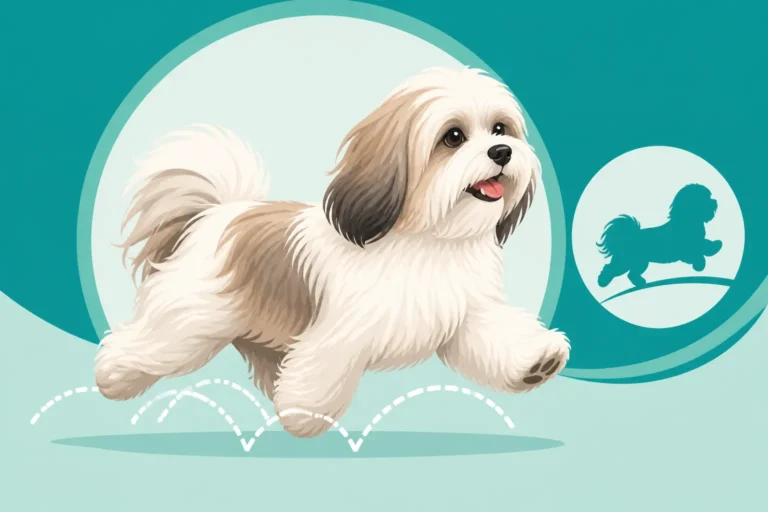
The Havanese is generally recognized by a tail carried high and arched over the back, with a long plume of hair. From the side, the tail may look like a soft curve resting above the rump. The plume can drape across the back or fall to one side, so it may not look like a neat, symmetrical ring.
That familiar silhouette is part of the breed’s overall outline, not a requirement that the tail stay in one exact position every minute. A Havanese at rest may carry its tail lower than when walking or greeting someone. The tail’s height and curve can also change as the dog shifts its weight, turns, or begins to trot.
The curve is usually more of an arch than a tight spiral. If you are comparing your dog with breed descriptions, remember that the tail is only one feature of the whole dog. The Havanese’s lively, springy movement contributes just as much to its characteristic appearance; The Springy Gait a Havanese Is Judged On and Whether a Havanese's Gait Is Distinctive offer more context on how carriage and movement fit together.
A curled tail is not always a tightly curled tail
People sometimes expect the Havanese tail to form a compact circle, like a tightly curled tail on some other breeds. That is not the best way to picture it. A Havanese commonly carries its tail curved over the back, but the outline can be open, loose, or partly hidden by the plume.
The dog’s actual tail and its coat can create two different visual impressions. A long, soft plume may sweep forward and make the curve look fuller than it is. In another Havanese, the hair may hang more downward, making the tail appear straighter even when its underlying position is similar.
This is one reason photos can be misleading. A dog caught mid-turn, sitting down, or looking back over its shoulder may show a very different shape from the same dog standing comfortably. If you want to compare the usual carriage with your Havanese’s own posture, Whether a Havanese Carries Its Tail Over Its Back focuses specifically on that breed feature.
What the tail can and cannot tell you about type
Tail carriage is one part of appearance, but it does not by itself determine whether a Havanese is healthy, well bred, or a good companion. Dogs vary in build and coat, and a tail may look less curved in a relaxed snapshot without indicating a problem. A single photo is especially poor evidence because posture and timing change the outline.
Likewise, the dog’s size or leg proportions do not tell you exactly how its tail will sit. Overall shape is made up of several features, including body proportions and movement. For a broader picture of the breed’s build, see What a Havanese Actually Weighs and Whether a Havanese Has Short Legs on Purpose.
| What you notice | Common explanation | What to consider |
|---|---|---|
| Tail arches over the back while walking | Typical Havanese carriage | Compare with your dog’s relaxed posture, too |
| Tail hangs lower during rest | Relaxed posture or a change in activity | Watch whether it returns to its usual position when the dog is alert |
| Plume makes the tail look unusually full | Long hair changes the visible outline | Gently part the coat to see the tail’s natural shape |
| Tail suddenly stays low or is held stiffly | Possible discomfort or a change in condition | Contact a veterinarian, especially if there are other symptoms |
| Dog has always carried its tail a little differently | Individual variation may be involved | Ask your veterinarian or a knowledgeable breed professional if you are unsure |
Why tail position changes from moment to moment
Mood and activity affect carriage
A Havanese may lift its tail when it is excited, curious, or moving around, then lower it when it settles on the sofa. A dog greeting a familiar person at the door may hold its tail differently from one resting after a walk. That variation is ordinary body language, not necessarily a change in the tail itself.
Pay attention to the whole dog rather than interpreting the tail alone. A relaxed face, loose body, and comfortable movement suggest a different situation from a tucked tail paired with cowering, trembling, or an attempt to avoid touch. One tail position cannot reliably tell you how a dog feels without the rest of its posture and circumstances.
Excitement can also make a tail look more tightly curved simply because the dog is holding it higher. When the dog is sleepy or focused on something nearby, the plume may drop and spread across the back. A short video of your Havanese moving naturally at home can be more useful than repeatedly posing the dog for a still picture.
Age, growth, and coat can change the silhouette
A puppy’s proportions and coat are still developing, so its tail may not look like an adult dog’s. As the coat grows, the plume can become more noticeable and change the apparent curve. The transition from puppy coat to adult coat can also make grooming and coat texture seem different for a while; Whether a Havanese Coat Is Silky or Wiry explains why coat feel and appearance can vary.
Body condition can affect the way a dog looks from above or from the side, but the coat can make it difficult to judge proportions by eye. If you have questions about whether your dog’s body condition is healthy, ask your veterinarian to assess the dog rather than trying to infer it from a fluffy outline. Weight and proportions are best considered together, as discussed in What a Havanese Actually Weighs.
A tail that has always been carried in a slightly different way is a different concern from a sudden change. Note what is normal for your individual dog: how the tail sits during a relaxed stand, how it moves on a walk, and whether your Havanese can wag or lift it comfortably. That baseline makes new changes easier to spot.
How to tell normal variation from a possible problem
Look for a change from your dog’s usual pattern
If your Havanese’s tail sometimes hangs lower but the dog is otherwise comfortable, walking normally, and willing to move it, the change may simply reflect posture or mood. Watch what happens across different situations rather than judging from one moment. A dog that lowers its tail when settling down may lift it again when it hears a familiar sound.
A sudden change deserves more attention, particularly if the tail remains low, becomes unusually stiff, or seems painful to move. Consider whether anything happened shortly before you noticed it: rough play, a fall, getting caught in a door, or an intense activity. Do not pull or bend the tail to test it; a dog in pain may react defensively, and handling could worsen an injury.
Notice other changes as well. Difficulty sitting, reluctance to climb or jump, yelping, unusual sensitivity near the tail or back, or a change in walking can help your veterinarian understand what is happening. These signs do not identify a cause on their own, but they make a professional assessment more important.
When to contact a veterinarian
Contact your veterinarian if the tail suddenly appears painful, stays limp or unusually low, has swelling or an obvious injury, or your dog seems distressed when moving it. Prompt advice is also sensible if the change appears with weakness, trouble walking, loss of bladder or bowel control, or other significant symptoms.
If the tail looks different but your dog is comfortable and behaving normally, you can still mention it at a routine appointment. A brief video of the dog walking and standing naturally may help show what you mean. Avoid making the dog hold a position for the camera if that seems uncomfortable.
A veterinarian can examine the tail and the surrounding areas and decide whether further evaluation is needed. Online breed comparisons cannot tell you whether a particular dog has pain or an injury. The most useful information you can bring is a clear description of when the change began, whether it is constant, and what else you have noticed.
Caring for the Havanese tail and its plume
Keep the coat free of tangles without tugging
The tail plume can tangle, especially where it rests against the body or brushes against bedding and harness straps. Check it gently during normal grooming. Work through small tangles patiently rather than pulling hard from the end; holding the hair near the skin can reduce tugging while you loosen a knot.
A comb suited to your dog’s coat can help you check whether you have reached through the plume, rather than smoothing only the visible surface. The right grooming routine depends on coat texture and length, so How Often a Havanese Must Be Brushed and Whether a Havanese Should Keep a Long Coat can help you think through the maintenance involved. If you purchase a comb or coat-care product from Chewy or another pet retailer, choose an item intended for dogs and follow its directions.
Regularly look for debris caught in the hair, dampness, or mats close to the skin. A long plume can hide small tangles, so a quick glance may not be enough. If a knot is tight, close to the skin, or painful for your dog, ask a groomer or veterinarian for help instead of cutting near the skin with scissors.
Keep handling calm and comfortable
Some dogs enjoy being brushed; others get wiggly when their tail is handled. Make grooming brief and predictable. Let your Havanese stand or lie in a comfortable position, reward calm behavior, and pause if the dog becomes tense. The goal is a pleasant check, not a perfect show-ring outline.
Do not use bands or clips that pull the tail hair tightly, and avoid tying the plume in a way that restricts movement. If your dog wears a harness, check that straps fit comfortably and do not rub or catch the coat. Chewy and local pet shops carry different grooming and walking supplies, but fit and your dog’s comfort matter more than a particular style or brand.
For a dog with a short clip, the tail may look less dramatic because there is less plume to emphasize its curve. That alone does not mean the tail has changed shape. Keep observing your dog’s natural posture and movement, and raise concerns with your veterinarian if the tail’s position changes suddenly or appears uncomfortable.
Disclaimer
This article is for general informational purposes only and does not constitute professional advice. Laws, prices and regulations vary by location and change over time. Consult a qualified professional for guidance on your specific situation.