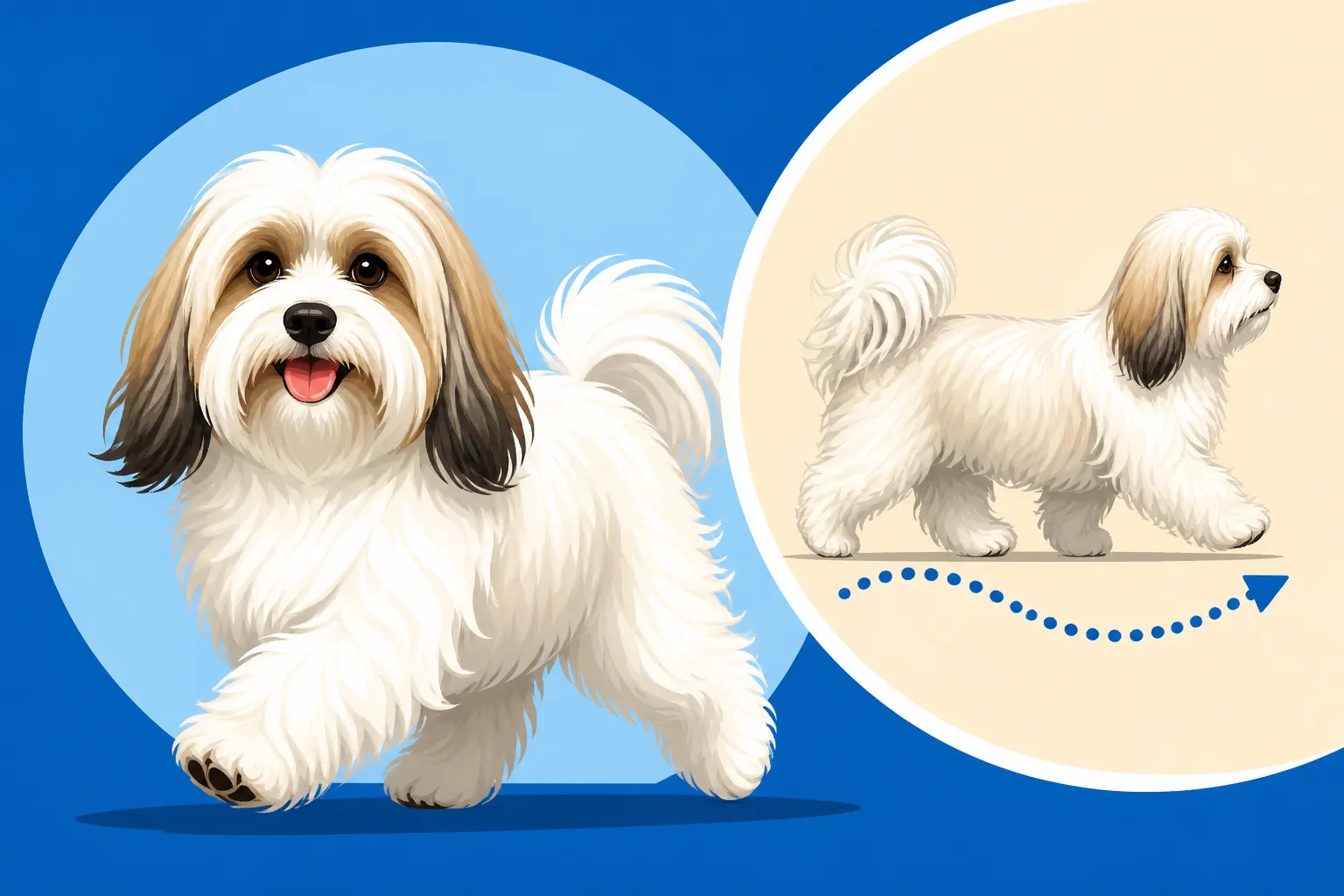
Whether a Havanese’s Gait Is Distinctive
A Havanese’s lively little trot can look different from the stride of a larger dog, and a fluffy coat can make it harder to see what the legs are doing. This guide explains the breed’s characteristic gait, what may be ordinary variation, and which changes—such as persistent limping or stiffness—deserve a veterinarian’s attention.
What makes a Havanese’s gait distinctive
The breed is expected to move freely and springily
The Havanese is a small, sturdy dog whose ideal movement is often described as free, lively, and springy. In everyday terms, a healthy Havanese may seem to bounce along with an easy rhythm rather than plod or take long, ground-covering strides. The characteristic look comes from the dog’s size and proportions as well as the way its front and rear legs work together.
The word “springy” does not mean that every Havanese should hop, prance, or lift its feet unusually high. A dog moving comfortably should generally look coordinated, with a regular rhythm and no obvious sign that one leg is being protected. The breed’s movement is distinctive, but it should still look natural and unforced.
If you are comparing your dog’s movement with a breed description, remember that descriptions of ideal movement are not a home diagnostic test. A show dog may be led at a particular pace in a ring, while your companion may be ambling around the kitchen or trotting on a walk. Both the pace and the surface affect what you see. For more detail on the breed’s movement, see The Springy Gait a Havanese Is Judged On.
Balance matters more than an exaggerated bounce
A Havanese is somewhat longer than it is tall, and its body should look balanced as it moves. At a comfortable trot, the legs should work in a coordinated pattern rather than swing wildly out to the sides or cross over repeatedly. The back should appear reasonably steady, and the dog should not need to twist its body to keep moving forward.
The tail is commonly carried over the back, which contributes to the breed’s familiar outline. A tail held up does not, by itself, tell you whether a dog’s movement is healthy. Look at the whole dog: its pace, rhythm, comfort, and willingness to use all four legs matter more than one feature in isolation.
Proportions can also make one Havanese’s stride look different from another’s. Some have a more compact appearance, while others seem leggier or more stretched out. Those differences do not automatically mean something is wrong. The discussion of How Big a Havanese Gets and Whether a Havanese Has Short Legs on Purpose can help put body shape into context.
A casual walk is not the same as a show-ring gait
At home, a Havanese might stroll, sniff, speed up to greet someone, or pause to investigate every interesting patch of grass. A show-ring gait is a more controlled movement, typically observed at a steady pace. It is easier to judge rhythm and coordination when the dog is moving forward consistently than when it is turning, sniffing, or pulling toward something.
That is why an owner should not worry simply because a dog does not trot like a carefully presented show dog on every walk. Instead, notice whether the movement is comfortable and consistent for that individual. A dog that usually trots happily but suddenly avoids putting weight on one leg is more concerning than a dog whose normal walk is simply a little less animated than a show description suggests.
How to tell normal variation from a possible problem
Consider age, speed, surface, and coat
A young puppy may move with less coordination than an adult, especially during energetic play. Older dogs may take longer to get moving after rest or show a gradual change in pace. A Havanese that is excited may trot quickly and appear bouncy; one that is tired may shorten its stride. These observations are useful context, but a new or worsening change should not be dismissed as a personality quirk or a normal part of aging.
The walking surface matters too. A dog may shorten its steps on slick flooring, hesitate on stairs, or move cautiously over rough ground. On a slippery floor, a Havanese may spread its feet for balance or take small steps without having a problem that is specific to the joints. If traction seems to change how your dog moves, Whether Slippery Floors Hurt a Havanese offers related guidance.
A long coat can obscure the legs and feet, particularly when the hair swings with each step. If you are watching movement at home, look from the side and from behind in good light, and pay attention to the feet touching down rather than judging by the swish of the coat. You do not need to trim your dog’s hair to assess its gait, but keeping the hair around the feet tidy can make the paws easier to see.
Watch for persistent asymmetry or discomfort
A brief stumble during play is not the same as a repeated limp. More concerning signs include favoring one leg over several steps, repeatedly skipping on the same leg, holding a paw up, reluctance to walk, or a clear difference between the left and right sides. Stiffness after resting, difficulty rising, or a new reluctance to jump may also be worth discussing with a veterinarian, particularly if the change persists or gets worse.
Some dogs have a short, intermittent skip and then return to normal movement. That pattern can be difficult to interpret from appearance alone. A recurring skip is worth recording and sharing with your veterinarian rather than assuming it is harmless. You can read more about this specific observation in The Skip That Means a Havanese's Knee Has Gone and about kneecap concerns in The Kneecaps a Havanese Slips.
Changes that come on suddenly deserve particular attention. If your dog cannot bear weight, appears to be in severe pain, drags a limb, collapses, or has trouble standing, seek prompt veterinary care. Avoid trying to test the leg by bending or stretching it yourself; that may cause discomfort and will not reliably identify the cause.
| What you notice | What it may suggest | A sensible next step |
|---|---|---|
| An even, comfortable trot that looks similar from step to step | Normal movement for that dog | Keep observing during ordinary walks |
| A brief stumble on an uneven surface, followed by normal walking | A momentary loss of footing | Watch for repetition or signs of pain |
| Repeated skipping or favoring the same leg | A movement change that needs assessment | Record a short video and contact your veterinarian |
| Stiffness, reluctance to walk, or trouble rising that persists | Possible pain or reduced mobility | Arrange a veterinary evaluation |
| Sudden inability to bear weight, severe pain, or limb dragging | A potentially urgent problem | Seek prompt veterinary care |
A video can help your veterinarian assess the change
If your dog’s movement looks unusual but the change comes and goes, a short video can be helpful. Film the dog walking at a comfortable pace on a flat, well-lit surface. If it is safe and your dog is willing, capture a few seconds from the side and from behind. Keep the leash loose enough that it does not pull the body into an unusual posture, and do not make the dog run or repeat a movement that seems painful.
Try to capture what happens naturally. A clip of the first few steps after getting up may be useful if stiffness appears then; another clip from a normal walk may show whether the movement changes after activity. Note when you first noticed the change, whether it affects one or both sides, and what your dog was doing beforehand.
You can use your phone to keep these observations together with appointment notes. If you prefer a paper record, a notebook from a general retailer such as Chewy is simply one option; the important part is recording dates and changes clearly. Video can provide context, but it does not replace a hands-on examination.
Why body shape and joints can affect movement
Short-legged proportions do not automatically mean a gait problem
Havanese legs can look short beneath a long, flowing coat, and the dog’s proportions may make its stride appear different from that of a taller breed. Short legs alone do not prove that a dog is uncomfortable or unable to move normally. The key question is whether the dog moves comfortably and consistently for its own build.
Likewise, a dog’s appearance is not enough to identify a structural problem. The way its legs look while standing may differ from how they function in motion. If you are concerned about leg proportions, Whether a Havanese's Front Legs Are Shorter Than Its Back explores how the breed’s body shape can be perceived.
Avoid judging a puppy’s future movement from one awkward moment. Puppies change as they grow, and a single photo or brief stumble may not tell you much. However, persistent limping, bowed limbs, or difficulty keeping up should be raised with a veterinarian rather than monitored indefinitely at home.
Knee and hip conditions can change how a dog moves
A limp or skip can have many possible causes, including paw discomfort, an injury, a joint issue, or another health problem. A visible gait change does not identify which cause is responsible. For example, a dog that shifts weight away from one hind leg may look different from one that is stiff in both back legs, but appearance alone cannot confirm a diagnosis.
Havanese owners may encounter questions about kneecaps and hips because these are areas that can affect a small dog’s movement. If your dog develops a recurring skip or limp, a veterinarian can examine the joints and decide whether further evaluation is appropriate. For broader background, see Whether a Havanese Gets Hip Dysplasia and The Kneecaps a Havanese Slips.
Do not start joint supplements, pain medicine, or activity restrictions based only on a video or an online description. Some human pain relievers can be dangerous to dogs, and the right plan depends on the cause of the movement change. Until you have professional guidance, avoid strenuous play if it appears to make your dog uncomfortable and keep walks gentle.
Weight and everyday footing influence comfort
Carrying extra weight can make movement more demanding, especially for a small dog with short legs. A healthy body condition supports comfortable activity, but a dog’s ideal weight is individual. Ask your veterinarian to assess body condition and recommend an appropriate feeding or activity plan rather than relying on a number alone.
At home, simple environmental changes may help a dog move with more confidence. If your Havanese slides on polished floors, consider adding secure, washable runners in the places it walks most often. If you are looking at floor coverings or a walking harness, retailers such as Chewy are one possible place to browse, but equipment cannot diagnose or treat a gait problem.
A well-fitted harness may make ordinary leash walks easier to manage, especially if your dog tends to pull. It should not restrict shoulder movement or be used to force a dog through discomfort. You can look at options through a local pet store or Chewy, then ask your veterinarian or a qualified fitting professional if you are unsure about fit. Any persistent limp still calls for an examination rather than a change in gear alone.
How to observe your Havanese’s gait at home
Establish what is normal for your dog
The most useful reference point is your dog’s own ordinary movement. Notice how it walks when relaxed, how it trots when interested in something, and whether it rises smoothly after resting. A mental picture is helpful, but occasional notes or video make gradual changes easier to recognize.
Keep observations specific. Instead of writing “walks funny,” note that your dog has shortened its stride on the right hind leg for several walks, or that it hesitates before climbing a familiar step. Include the setting, such as slick flooring or a long outing, and whether the movement improved with rest. These details help your veterinarian understand the pattern.
If you are preparing for a veterinary visit, do not wait for a dramatic limp if a repeated change is already affecting daily life. A dog may hide discomfort, and small changes in willingness to walk, play, or climb can be worth discussing. On the other hand, avoid repeatedly asking the dog to demonstrate a movement that seems painful.
Keep activity comfortable while you arrange advice
When a movement change is mild but persistent, choose calm, controlled activity until you have professional advice. Short, ordinary leash walks may be more manageable than vigorous fetch or jumping on and off furniture. Use a secure lead, let the dog set a comfortable pace, and stop if it begins to limp or resist.
Avoid trying to “work through” a limp with extra exercise. More activity is not automatically better when pain or injury is possible. Similarly, do not confine a dog for a long period without veterinary direction unless a professional has advised it; the right balance depends on what is causing the change.
If your dog has a sudden severe problem, prioritize prompt care rather than home observation. If the change is gradual, write down what you see and arrange a veterinary assessment. Breed descriptions are useful for understanding the Havanese’s typical outline, but your own dog’s comfort and function are what matter most.
Disclaimer
This article is for general informational purposes only and does not constitute professional advice. Laws, prices and regulations vary by location and change over time. Consult a qualified professional for guidance on your specific situation.