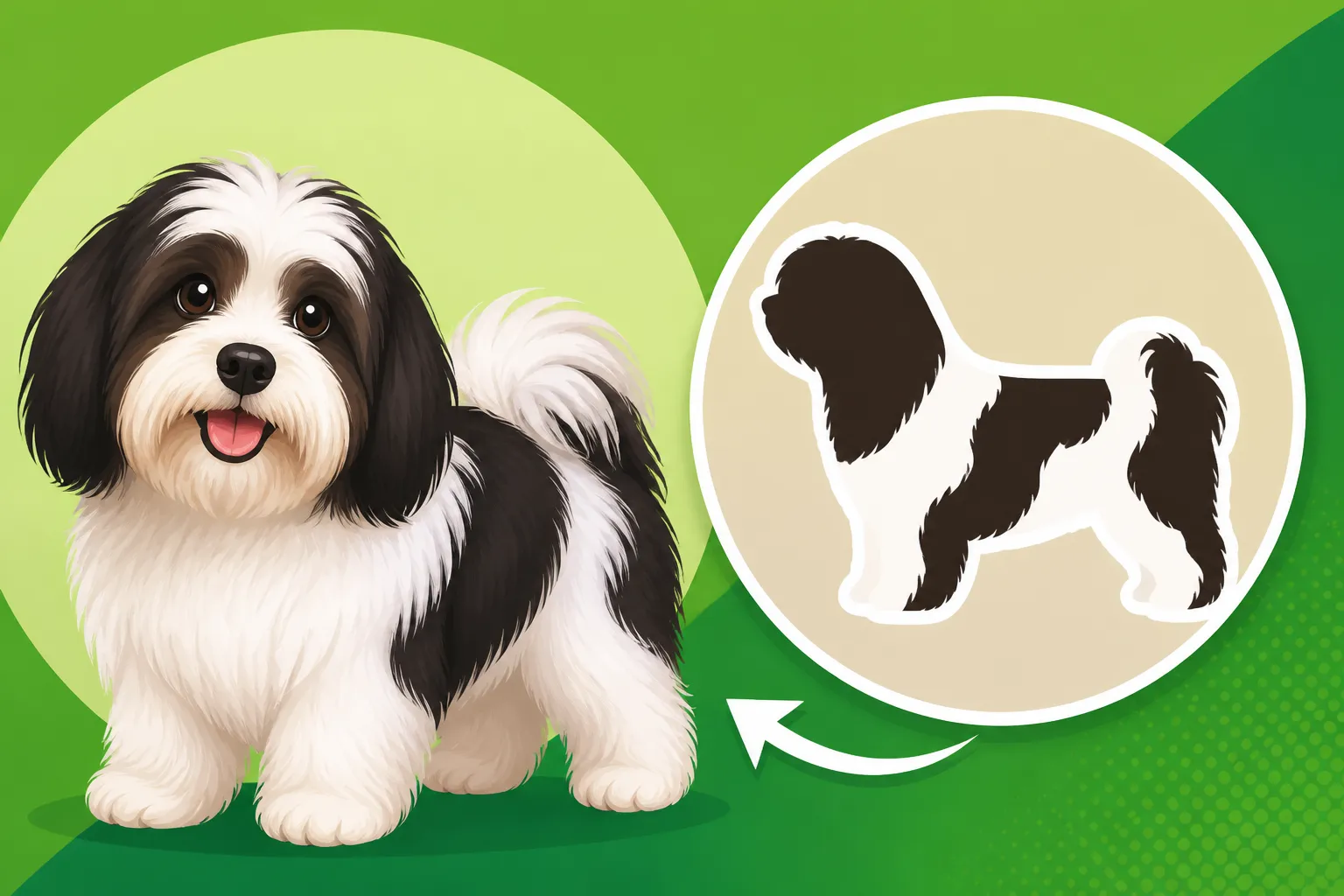
What Irish Pied Means on a Havanese
An Irish pied Havanese has a colored coat with white markings, often on the chest, feet, face, or tail tip. The term can be confusing because breeders and owners do not always use coat-pattern labels in exactly the same way. This guide explains what Irish pied usually describes, how it differs from similar patterns, and what to ask when choosing a puppy.
What Irish pied usually means on a Havanese
The typical Irish pied appearance
“Irish pied” generally describes a dog whose body is mostly a solid color, with white markings in familiar spots. A Havanese might have white on the chest and feet, a stripe or patch on the face, a white collar, or a white tail tip. The amount and placement of white can differ from dog to dog.
Imagine two puppies from the same litter: one has a small white patch on its chest and white toes, while the other has a broader chest marking, white lower legs, and a blaze between the eyes. A breeder might describe both as Irish pied, even though they look quite different. That variation is one reason it helps to look at photographs and ask what a particular breeder means by the label.
The word “pied” refers to a coat with patches or areas of more than one color. “Irish” usually points to a pattern of white markings around the chest, feet, muzzle, or collar, rather than large, irregular white patches covering much of the body. For examples and a closer visual explanation, see What an Irish Pied Havanese Looks Like.
Is Irish pied an official Havanese color?
Irish pied is best treated as a descriptive pattern name, not a promise of one exact arrangement of markings. People may use the term when describing a Havanese’s appearance, but the label alone does not tell you precisely how much white the dog has or where it appears. It is sensible to ask the breeder to describe the puppy in plain language and share clear photos.
Havanese coats come in a wide range of colors and combinations. The breed’s accepted color variety is one reason that everyday descriptions can overlap: one person may emphasize the white markings, while another focuses on the base color. If you are trying to understand the broader range, Every Color a Havanese Is Allowed to Be and Whether Any Color Is Wrong on a Havanese offer useful context.
A label is also not a measure of quality. “Irish pied” does not automatically mean a puppy is more valuable, healthier, or closer to the breed standard than a Havanese with a different pattern. When assessing a puppy, pay attention to health, temperament, early care, and the breeder’s transparency—not just a fashionable color description.
How Irish pied compares with other Havanese patterns
Irish pied, parti, and solid coats
The terms Irish pied and parti can be used inconsistently in casual listings, so it is safer not to assume they mean exactly the same thing. In general, Irish pied suggests a colored coat with white markings in a more familiar arrangement, while parti often describes a coat with more conspicuous areas of white and another color. The distinction is not always applied uniformly, and the dog’s actual appearance matters more than the word used.
A solid-colored Havanese may still have small white markings, depending on how the owner or breeder uses “solid.” Likewise, a dog described as parti may have a lot of white, or a more balanced mix of colors. If a seller’s terminology is unclear, ask for a full-body photo in natural light and a close-up of the face, chest, and legs. Whether a Havanese Can Be Parti Colored explores that related pattern in more detail.
| Description | What it commonly suggests | What to check in a photo |
|---|---|---|
| Irish pied | A colored coat with white markings, often on the chest, feet, face, collar, or tail tip | How much white appears and where the markings fall |
| Parti | A more visibly mixed pattern of white and another color, though usage varies | Whether white covers a large portion of the body |
| Solid | One main coat color, sometimes with small markings | Whether there are white patches that the label does not mention |
These are practical descriptions, not a substitute for examining the actual dog. Two breeders may use different words for coats that look quite similar. That can be frustrating when you are comparing puppy listings, but it is easily resolved by asking for photos and a direct explanation of the markings.
Why photos can be more useful than color labels
A single close-up can make white markings look more extensive than they are, while a puppy photographed against a bright background may appear lighter or darker than it does in person. Ask for photos taken in daylight, ideally showing the dog standing and the full coat. If the puppy is very young, remember that its coat may change as it matures.
It also helps to ask whether the breeder is describing the puppy’s current coat or predicting its adult appearance. Havanese colors can shift with age, and a puppy’s early coat is not always a perfect preview of the adult dog. For more on that, read Whether a Havanese Changes Color as It Grows and Whether a Havanese Puppy's Color Predicts the Adult.
If you are browsing remotely, request a recent video as well as still photos. A short video can show the coat from several angles and make it easier to see where the white areas begin and end. Retailers such as Chewy may be useful when you are gathering basic grooming supplies, but product choices should follow the dog’s coat needs rather than its color name.
Why the markings vary and whether they change
White markings and coat genetics
White markings are influenced by inherited coat-color factors. The visible result can vary, even among puppies in the same litter, because each puppy inherits a different combination of traits from its parents. A pattern name can describe what you see, but it does not reveal the full genetic story or guarantee that a puppy’s markings will match a particular template.
If a breeder makes a specific claim about a puppy’s coat genetics, ask what the claim is based on and whether it matters for the decision you are making. For most pet owners, the practical questions are simpler: What does the coat look like now? Is the puppy healthy? Are the parents’ health records available? Whether Color Affects a Havanese's Health helps separate color-related questions from the health checks that deserve closer attention.
Do not confuse Irish pied markings with merle. These are different coat descriptions, and a seller using one term should be able to explain what they mean. When a color label is doing more work than the available evidence, step back and ask for straightforward details rather than relying on an impressive-sounding phrase.
What to expect as a puppy grows
A Havanese puppy’s coat may change in shade, texture, or overall appearance as it grows. White areas may remain visually distinct, but the colored portions can lighten, darken, or develop a different-looking texture over time. The timing and extent of change vary, so no one can judge every adult coat from a puppy photograph alone.
This is worth remembering if you have your heart set on a particular contrast, such as a dark body with bright white feet. The markings may remain recognizable, but the colored coat can evolve, and the final look may not match an early photo exactly. Ask the breeder whether the parents’ coats changed with age, while keeping in mind that family resemblance is informative rather than a guarantee.
Keeping a small folder of puppy photos can make those changes easier to appreciate. Take pictures in similar lighting every few months, and avoid judging color from images that use filters or strong indoor lighting. If you are preparing a basic care kit, Chewy is one place owners may browse for combs and coat-care items; choose tools suited to the coat’s length and texture, not to the Irish pied label.
Choosing and caring for an Irish pied Havanese
What matters more than the pattern
Irish pied describes appearance; it does not tell you whether a puppy has been well bred or carefully raised. Ask about veterinary care, the puppy’s socialization, and the health screening recommended for the breed. A responsible breeder should be willing to discuss the parents and provide relevant records, rather than steering the conversation back to color alone.
A practical set of questions includes:
- How do you describe this puppy’s markings, and what areas are white?
- Can I see recent photos or video of the puppy and its parents?
- What health screening has been done on the parents?
- What changes have you seen in coat color among related dogs as they matured?
- What support and records will come with the puppy?
The goal is not to challenge every description a breeder uses. It is to make sure the puppy’s appearance and background are clear before you make a commitment. For a broader overview of breed-health considerations, see The Health Tests Both Havanese Parents Should Have and Whether a Havanese From Two Champions Is Any Healthier.
Coat care is about texture, not white markings
Irish pied Havanese need the same kind of thoughtful coat care as other Havanese. White areas may make dirt or tear marks more noticeable to some owners, but the coat’s length, texture, and tendency to tangle are more important when planning brushing and grooming. Check behind the ears, under the collar or harness, around the legs, and in the armpits, where tangles can form out of sight.
Use a gentle routine that your dog can tolerate. Work through small sections rather than pulling at a knot, and pause if your puppy becomes uncomfortable. A comb can help you check whether you have reached through the coat instead of smoothing only the top layer. If you are comparing grooming tools, Chewy may carry options such as combs and brushes; choose based on your groomer’s advice and your dog’s coat, and introduce each tool calmly.
White fur can show food or eye-area staining more visibly, but staining is not unique to Irish pied dogs. Keep the face clean and dry with a gentle routine, and ask your veterinarian if you notice persistent discharge, redness, odor, or skin irritation. Avoid using harsh whitening products simply because a marking looks less bright in a photo.
When the label should not drive your decision
It is easy to become attached to a particular pattern while looking through puppy photos. That is understandable—coat color is one of the first things people notice. Still, a specific marking pattern cannot guarantee a certain temperament, adult size, or health outcome. Give yourself room to consider the puppy as an individual, including its behavior and the care it has received.
If you are choosing between puppies, compare what you can assess reliably: how they respond to people, whether they appear alert and comfortable, what the breeder can tell you about their development, and whether the documentation is clear. The puppy that best suits your household may not have the exact arrangement of white markings you imagined.
For everyday supplies, focus on practical needs such as a comfortable harness, a comb, and gentle cleaning materials. Chewy can be one shopping option for those basics, but your veterinarian or groomer can help you choose products if your puppy has sensitive skin or a coat that tangles easily. Irish pied is a useful description of a Havanese’s appearance—not a care plan, health certificate, or promise about what the dog will look like as an adult.
Disclaimer
This article is for general informational purposes only and does not constitute professional advice. Laws, prices and regulations vary by location and change over time. Consult a qualified professional for guidance on your specific situation.