Whether a Havanese Enjoys Puzzle Toys
It's a common dilemma for Havanese owners: you know your little fluffball is brimming with intelligence, perhaps even a touch of mischief, and a simple walk around the block sometimes just isn't enough to satisfy their curious mind. A bored Havanese can quickly become a creative Havanese, and that creativity often manifests in ways you'd rather avoid, like chewing on your favorite rug or engaging in a symphony of barks at every passing leaf. This guide is all about whether puzzle toys can be the secret weapon in your arsenal to keep your Havanese mentally stimulated, happy, and out of trouble, exploring how these ingenious gadgets work and how to find the perfect match for your clever companion.
Why Mental Stimulation Matters for Your Havanese
The Brains Behind the Fluff: Understanding Havanese Intelligence
Your Havanese might look like a cuddly, charming companion (and they absolutely are!), but beneath that luxurious coat lies a surprisingly sharp mind. These dogs weren't just bred to sit on laps; their ancestors were performers, companion dogs who engaged with their aristocratic families and even captivated audiences in circuses. This rich history isn't just a charming anecdote; it's a testament to their innate intelligence and a strong indicator that they thrive on mental engagement. Their ability to learn quickly and solve problems means their brains need a workout just as much as their bodies do. If you've ever found yourself wondering how your Havanese figured out how to open a cabinet or outsmarted your efforts to keep them off the couch, you've witnessed their intellect in action.
Ignoring this mental need can lead to an unhappy dog. It’s not about over-exercising them physically; a Havanese, while enjoying a good stroll, won't be satisfied by endless walks alone if their brain isn't challenged. Think of it like a highly intelligent person needing more than just physical labor to feel fulfilled. They need problems to solve, new things to learn, and engaging activities to prevent their minds from stagnating. This drive for mental activity is a core part of their breed, making puzzle toys a natural fit for their enrichment needs. It's about tapping into that clever, problem-solving spirit that has been part of the Havanese for generations. If you've ever heard of The Circus Dog Brain Inside a Havanese, you'll understand just how much mental aptitude these delightful dogs possess.
The Cost of Boredom: Common Havanese Mischief
When a Havanese's intelligent mind isn't given appropriate outlets, boredom can quickly set in, often leading to behaviors that most owners find, well, less than delightful. A common manifestation of this pent-up mental energy is destructive chewing. That lovely table leg or the corner of your favorite book can become an irresistible target for a dog desperately seeking an activity. Similarly, excessive barking isn't always about guarding; it can be a self-soothing or attention-seeking behavior from a dog that simply doesn't have enough to occupy its thoughts. These aren't signs of a "bad" dog, but rather a dog that's trying to communicate a fundamental need for engagement.
The real "cost" of boredom isn't just the damaged furniture or the frayed nerves from constant barking. It's the missed opportunity for your Havanese to live a more fulfilling life, and for you to build a stronger bond through shared, positive experiences. When a dog consistently resorts to these unwanted behaviors, it's often a cry for help, signaling that their environment isn't providing the necessary mental stimulation. Puzzle toys offer a fantastic way to redirect this natural drive into acceptable and constructive channels. Instead of channeling their cleverness into dismantling your home, they can use it to figure out how to get a tasty treat from a toy. It's a win-win situation that addresses their needs and saves your sanity (and your furniture!). If you're struggling with behaviors like chewing, exploring What an Anxious Havanese Chews might shed more light on your Havanese's motivations.
Choosing the Right Puzzle Toy for Your Clever Havanese
Levels of Difficulty: Matching the Toy to Your Dog
One of the most crucial aspects of introducing puzzle toys to your Havanese is selecting the appropriate level of difficulty. Imagine giving a first-grader a calculus problem; it would be utterly frustrating and likely lead to them giving up entirely. The same principle applies to our canine companions. You want to start with something relatively easy to ensure immediate success and build their confidence and enthusiasm for the game. These "beginner" toys might involve simple treat dispensing mechanisms, like a ball with a hole where treats easily fall out with a nudge. The goal here is to make it incredibly rewarding, so they quickly associate the toy with positive outcomes.
Once your Havanese has mastered the basics and is showing genuine enjoyment, you can gradually increase the complexity. "Intermediate" toys often require more deliberate actions, such as sliding panels or flipping lids to reveal hidden compartments. "Advanced" puzzles can involve multiple steps, sequences, or even combinations of different mechanisms that truly challenge their problem-solving skills. Remember, the journey should always be fun and engaging, not a source of frustration. Always supervise your Havanese, especially with new toys, to ensure they're using it safely and not becoming discouraged. A great place to explore the vast array of options is online marketplaces like Amazon, where you can read reviews and compare different brands and difficulty levels to find the perfect fit.
Types of Puzzle Toys Your Havanese Might Love
The world of dog puzzle toys is wonderfully diverse, offering a range of options to suit different preferences and problem-solving styles. For many Havanese, the sheer variety means there’s something out there they’ll absolutely adore.
Kongs and Similar Stuffable Toys: These are often the go-to for beginners, and for good reason. A classic Kong toy, for example, is made of durable rubber with a hollow interior that you can stuff with kibble, wet dog food, peanut butter, or even yogurt. The challenge comes from getting the goodies out. For an easier start, simply put loose kibble inside. As your Havanese gets the hang of it, you can stuff it more densely or even freeze it overnight to create a long-lasting project that can keep them occupied for a significant amount of time. These are fantastic for when you need your Havanese to settle down or to help manage separation anxiety for short periods.
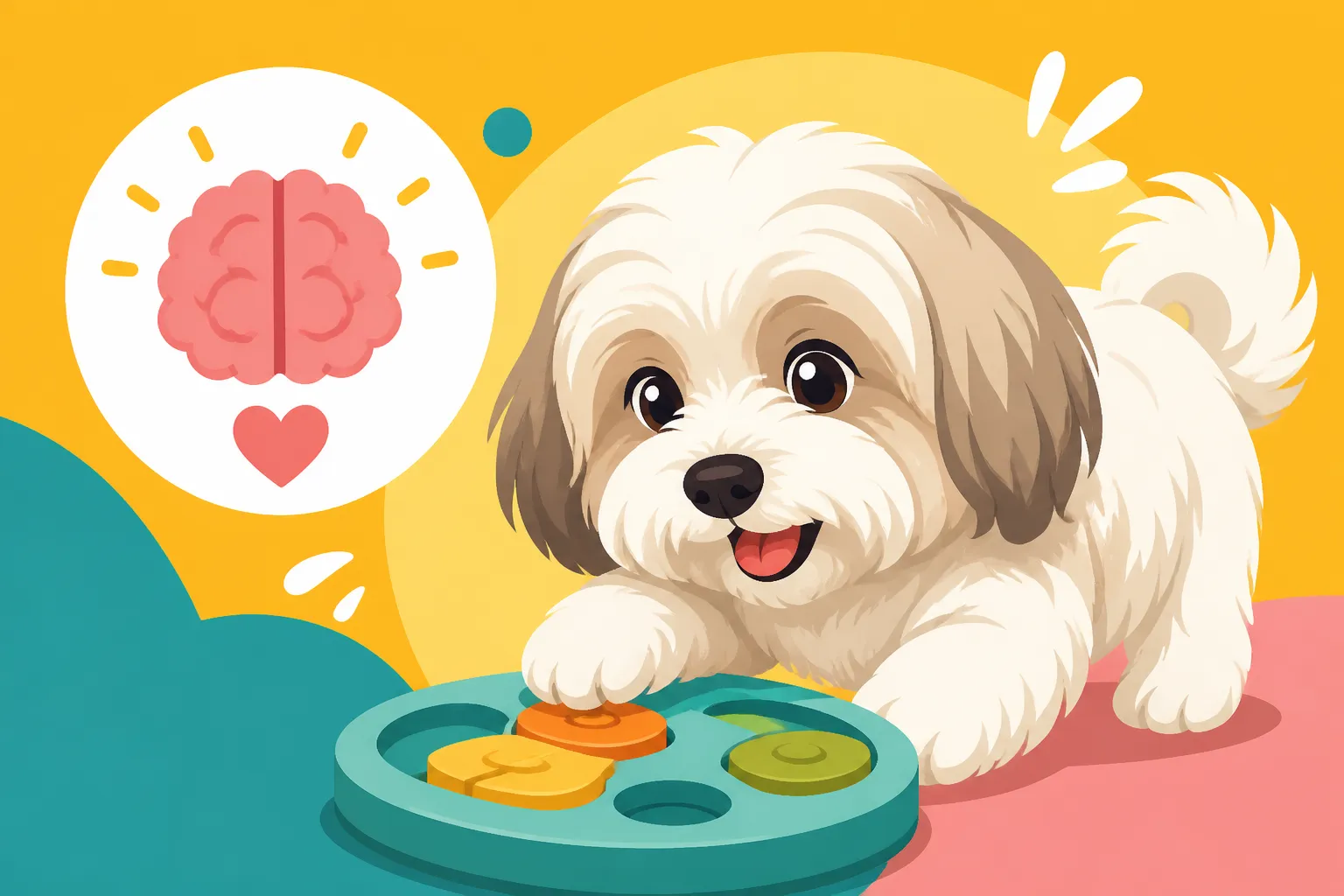
Slider and Flap Puzzles: These toys introduce a more direct problem-solving element. They typically feature a base with multiple compartments covered by sliding discs or hinged flaps. Your Havanese needs to learn to push, lift, or slide these components to uncover the hidden treats. These come in various difficulty levels, from simple one-move puzzles to intricate multi-step challenges. They engage your Havanese's cognitive abilities and fine motor skills (or paw-motor skills!). Many Havanese, with their keen intelligence, take quickly to these types of puzzles, enjoying the mental workout.
Snuffle Mats: While not a "puzzle" in the traditional sense of mechanical parts, snuffle mats are incredible for engaging your Havanese's powerful sense of smell. These soft fabric mats have numerous folds, pockets, and fringes where you can hide kibble or small treats. Your Havanese then uses their nose to "snuffle" through the fabric to find their reward. This activity is incredibly enriching and naturally calming, as scent work is a very instinctual and satisfying behavior for dogs. It's also an excellent way to slow down fast eaters and make mealtime a more engaging experience.
Dispensing Balls and Rollers: These are often simpler, more active puzzles. Treats are placed inside a ball or roller, and as your Havanese nudges, bats, or rolls it across the floor, treats intermittently fall out. This provides both physical and mental stimulation, encouraging movement and interaction. They're perfect for dogs who enjoy a bit more action in their play and who are motivated by immediate gratification. Just ensure the size and weight are appropriate for your Havanese to comfortably manipulate without injury.
Here's a quick comparison of some popular puzzle toy types:
| Puzzle Toy Type | Engagement Style | Difficulty Range | Best For |
|---|---|---|---|
| Stuffable Toys | Chewing, Licking | Easy to Medium | Calming, lasting engagement, crate training |
| Slider Puzzles | Paw/Nose Manipulation | Medium to Hard | Cognitive challenge, problem-solving |
| Snuffle Mats | Scent Work, Foraging | Easy | Slow eating, calming, nose work |
| Dispensing Balls | Rolling, Nudging | Easy to Medium | Active play, quick rewards |
| Interactive Feeders | Multi-step, Sequential | Medium to Hard | Advanced mental challenge |
Introducing Puzzle Toys: Tips for Success and Engagement
Making the First Experience Positive
The key to your Havanese truly enjoying puzzle toys is to make their initial encounters overwhelmingly positive. Think of it as a fun game rather than a test. Start by using their absolute favorite, highest-value treats. These could be small pieces of cooked chicken, cheese, or special training treats. The higher the reward, the greater their motivation to figure out how to get it. For the very first toy, you might even "cheat" a little by leaving some treats easily accessible or making the puzzle incredibly simple to solve, almost guaranteeing success right away. This immediate gratification teaches them that the toy is fun and rewarding.
When you present the toy, show them how it works. If it’s a slider puzzle, demonstrate sliding a panel to reveal a treat. Let them see and smell the reward. Then, step back and allow them to try. Don’t hover too closely or micromanage; give them space to experiment and learn on their own. Keep these initial sessions short, perhaps just five to ten minutes, ending on a high note before they lose interest or get frustrated. If you notice them getting frustrated – perhaps pawing aggressively, barking at the toy, or giving up – intervene gently. Make it easier, guide them slightly, or put the toy away for a while and try again later with an even simpler version. The goal is to build excitement and curiosity, making them eager for the next puzzle session. For more on how they learn, check out Whether a Havanese Learns a New Trick.
Integrating Puzzle Toys into Your Havanese's Routine
Once your Havanese has grasped the concept and shows enthusiasm for puzzle toys, the next step is to seamlessly integrate them into their daily routine. This isn't just about occasional entertainment; it's about providing consistent mental enrichment that benefits their overall well-being. A fantastic time to introduce a puzzle toy is when you need your Havanese to settle down. For instance, if you're about to start working from home, offering a stuffed Kong can keep them quietly occupied while you focus. It’s also excellent for those times you need to leave them alone for a bit, providing a positive distraction that associates your departure with something enjoyable. This can be especially helpful if you're working on making them comfortable with being by themselves; exploring tips in How Many Hours a Havanese Can Be Left Alone can complement this approach.
To keep the excitement fresh, remember to rotate your puzzle toys. Having a small collection means you can introduce a "new" challenge every few days, preventing boredom and maintaining their interest. Don't be afraid to experiment with different types of treats or stuffings to keep things novel. Puzzle toys can also become part of their regular mealtime. Instead of just putting kibble in a bowl, divide it into two or three different puzzle toys, turning mealtime into a mental treasure hunt. You might even find that some training programs, like those offered by BAXTER & Bella, incorporate mental enrichment strategies like puzzle toys into their comprehensive curriculum, recognizing their value in a well-rounded training approach. Integrating these activities is part of providing What a Havanese Needs Beyond a Walk, ensuring their clever minds are as engaged as their active bodies.
Beyond the Toy: Maximizing the Benefits of Mental Play
Observing Your Havanese: Signs of Enjoyment and Frustration
Being attuned to your Havanese’s body language and reactions is crucial for maximizing the benefits of puzzle toys. When a Havanese is genuinely enjoying a puzzle, you’ll likely see a focused intensity in their eyes, a wagging tail, and perhaps soft, happy grunts or sighs as they work through the challenge. They’ll be persistent, trying different methods – nudging, pawing, licking – until they achieve their goal. Success will be met with visible excitement, often followed by them eagerly looking for the next piece or another turn with the toy. This positive engagement indicates that the toy is appropriately challenging and rewarding, contributing to their overall happiness and mental satisfaction.
On the flip side, it's just as important to recognize the signs of frustration. A Havanese that’s getting overwhelmed might start pawing at the toy aggressively, barking at it in exasperation, or simply give up and walk away. Some might even try to chew or destroy the toy out of frustration rather than engaging in problem-solving. If you see these signs, it's a clear signal that the toy is too difficult, or perhaps they're not in the right mindset for a challenge at that moment. Don't push it. Instead, either make the puzzle significantly easier, offer a simpler, more guaranteed reward, or put the toy away and try again another time. The goal is positive reinforcement and enjoyment, not stress. Keeping an eye on these cues can also help if your Havanese is prone to anxiety; puzzle toys can be a calming distraction, as detailed in discussions around Signs a Havanese Has Separation Anxiety.
The Long-Term Impact: A Well-Adjusted Havanese
Regular engagement with puzzle toys offers far more than just momentary entertainment; it contributes significantly to the long-term well-being and adjustment of your Havanese. A dog whose mental needs are consistently met is generally a calmer, more content, and better-behaved companion. Think of it as intellectual exercise that helps drain their mental energy in a constructive way, reducing the likelihood of them resorting to undesirable behaviors born out of boredom or frustration. This consistent mental stimulation can act as a preventative measure against a host of common behavioral issues, transforming potentially mischievous energy into focused, rewarding effort.
Furthermore, the process of solving puzzles can boost your Havanese's confidence. Each successful solve reinforces their problem-solving abilities and teaches them that persistence pays off. This sense of accomplishment contributes to a more secure and resilient personality, making them better equipped to handle novel situations or minor stressors. Even as your Havanese ages, puzzle toys can be adapted to keep their minds sharp and engaged, offering gentle yet effective mental exercise that supports cognitive health. It strengthens the bond between you, too, as you observe their triumphs and help them through challenges, fostering a deeper understanding and appreciation for your clever little friend. Even for senior dogs, Whether an Old Havanese Still Wants to Play is an important consideration, and puzzle toys can certainly keep their minds spry.
Disclaimer
This article is for general informational purposes only and does not constitute professional advice. Laws, prices and regulations vary by location and change over time. Consult a qualified professional for guidance on your specific situation.