Whether Cording a Havanese Is Less Work Than Brushing
Many Havanese owners dream of that effortlessly chic, corded look, often wondering if it could actually be a secret shortcut to easier grooming. It’s a common fantasy, especially when you’re elbow-deep in a brushing session, battling tangles and wondering if there’s a less demanding path to a beautiful Havanese coat. While cording does change the type of grooming you do, the idea that it’s inherently less work than traditional brushing is a myth that needs a serious reality check.
The Reality of Maintaining a Corded Havanese Coat
Let's be upfront: cording a Havanese coat is not for the faint of heart, nor is it a "set it and forget it" solution. It's a commitment that shifts your grooming tasks rather than eliminating them. The initial phase alone is intense, and the ongoing care, while different, is anything but minimal.
Initial Investment of Time and Effort
When you decide to cord your Havanese, you're not just letting the coat "do its thing." It's a deliberate, hands-on process that requires careful attention, especially in the beginning. Think of it like cultivating a specific garden, not just letting weeds grow.
First, the coat needs to be clean and healthy. You can't start with a matted mess and expect it to magically cord into perfect dreadlocks. The existing coat needs to be grown out to a certain length, often several inches, before cords can even begin to form properly. This means you're still brushing regularly during this grow-out phase, trying to prevent mats while encouraging the coat to clump naturally. Then comes the actual cording. This involves manually separating small sections of the coat, twisting them gently from the skin, and encouraging them to felt together. This isn't a quick task; it's meticulous and time-consuming. You'll spend hours, often over several weeks or even months, carefully working through the entire coat, ensuring each cord forms correctly and uniformly. If you've ever heard about Cording a Havanese and What It Commits You To, you know this isn't a weekend project. Neglect this crucial stage, and you'll end up with a solid, matted pelt rather than individual, healthy cords.
Ongoing Maintenance for Cord Health
Once the cords are established, the work doesn't stop. In fact, it merely changes form. You won't be brushing, true, but you'll be dedicating time to maintaining the integrity of each cord and the overall cleanliness of your Havanese.
Regular cord separation is paramount. Cords have a natural tendency to merge at the root, forming larger, thicker mats close to the skin. This can be incredibly uncomfortable for your dog, pulling at their skin and potentially leading to skin infections if moisture gets trapped. You'll need to go through the entire coat, cord by cord, separating them right down to the skin. This isn't a casual run-through; it requires patience and a good eye. Beyond separation, bathing a corded Havanese is an entirely different beast. The cords act like sponges, absorbing water and becoming incredibly heavy. Drying can take hours, sometimes even days, especially if done naturally. You must ensure the cords are thoroughly dried all the way to the skin to prevent mildew, odor, and skin problems. This often involves squeezing out excess water, towel-drying extensively, and then using a powerful force dryer, carefully directing air into the base of each cord. Many owners report that drying a fully corded Havanese can take longer than brushing out a long, flowing coat. If you’re curious about Whether a Corded Havanese Smells, improper drying is often the culprit. Maintaining a corded coat also means regular checks for debris caught within the cords – burrs, twigs, food particles – which can be challenging to remove without damaging the cord structure.
The Demands of Brushing a Traditional Havanese Coat
For most Havanese owners, the traditional long, flowing coat is the ideal, but it comes with its own rigorous set of grooming requirements. There’s a reason why The Puppy Cut Most Havanese Owners End Up Choosing is so popular – managing that signature silky double coat is a daily endeavor.
Daily Brushing as a Ritual
The Havanese coat, truly The Silky Double Coat a Havanese Grows to the Floor, is stunning when well-maintained, but that beauty is earned through consistent effort. It's not enough to just run a brush over the top layer; you need to get right down to the skin to prevent mats from forming at the roots.
This means mastering the art of "line brushing." You essentially part the hair in small sections, hold the top layer up, and brush the hair underneath, working your way up the body. This technique ensures that every strand of hair is detangled from skin to tip. Depending on the length and thickness of your Havanese's coat, this can easily take 30 minutes to an hour every single day, especially if your dog has a full, untrimmed show coat. Missing a day or two can quickly lead to bigger problems, as mats begin to form where friction occurs – behind the ears, in the armpits, and around the collar area. It becomes a dedicated ritual, often done while your Havanese is relaxing, transforming it into a bonding experience rather than a chore. Many owners find quality tools from retailers like Chewy or Amazon to be indispensable for this daily routine, making the process smoother for both dog and owner. For more insight, check out How Long Brushing a Havanese Takes Daily and Which Brush Suits a Havanese.
Dealing with Matting and Shedding
Despite the common misconception that Havanese don't shed, they do, but their hair often gets caught in their double coat, leading to matting. This, combined with the "coat change" phase, can be incredibly frustrating.
The infamous "puppy uglies" or "coat change" phase, usually around eight to twelve months of age, is when the soft puppy coat transitions to the denser adult coat. This is a prime time for matting, as the old and new hair intermingle and clump together. This is precisely Why a Havanese Mats at Eight Months and Not Before. During this period, grooming vigilance needs to be at an all-time high, with brushing potentially needing to happen twice a day. If mats do form, dematting can be a painful and time-consuming process for both you and your Havanese. It requires patience, specialized tools, and often a very unhappy dog. In severe cases, where mats are too tight or extensive, a professional groomer might recommend shaving the coat down completely – a drastic measure that can be heartbreaking for owners who cherish the long coat. This scenario often forces owners to confront the reality of Whether a Matted Havanese Must Be Shaved. While Havanese are often touted as a "non-shedding" breed, it's more accurate to say they are low-shedding because their loose hair gets trapped in the coat, requiring thorough brushing to remove it before it forms mats. This trapped hair contributes to the density that makes matting such a challenge.
Comparing the Workload: Cording vs. Brushing
So, after all that, is cording truly less work than brushing? The short answer is no, not really. It's different work, demanding different skills and time commitments, but rarely less.
Time Commitment Comparison
Let's look at the time commitment over the long haul.
| Grooming Method | Initial Setup/Weekly | Ongoing Daily/Weekly | Special Considerations |
|---|---|---|---|
| Cording | Weeks/Months of manual separation (intense initial time) | Daily/every-other-day cord separation (15-30 min); infrequent but long baths & drying (3-6+ hours per bath) | Professional help often needed for initial cording and occasional maintenance. |
| Brushing | Minimal beyond initial puppy grooming | Daily line brushing (30-60 min); weekly baths & drying (1-2 hours per bath) | Requires consistent dedication; professional grooming every 4-8 weeks to manage length/trims. |
As you can see, the nature of the time commitment changes. Cording demands a massive upfront investment to establish the cords, and then regular, meticulous maintenance to keep them healthy and separated at the skin. Bathing is less frequent but far more arduous and time-consuming. Brushing, conversely, is a daily ritual of shorter duration but higher frequency. If you neglect brushing, mats form, leading to hours of painful dematting or a complete shave. If you neglect cording, you end up with a felted mess, which is even harder to undo than a matted brushed coat. For many, Whether a Havanese Coat Gets Harder to Manage with age is a factor regardless of method, as skin can become more fragile.
Skill and Technique Required
Both methods require skill, but they are distinct skill sets.
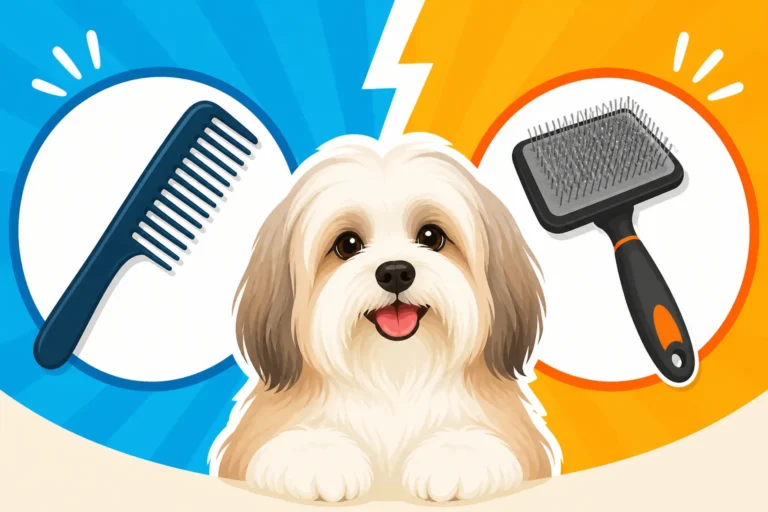
For cording, you need an eye for uniform sections and a delicate touch to separate cords without ripping them or the skin. You also need to understand the texture of your individual Havanese's coat – some coats cord more easily and neatly than others. There's a certain art to it that many owners choose to learn from an experienced groomer or breeder. It’s a process that develops over time, and patience is your best friend. For brushing, especially a full-coated Havanese, the key is consistency and proper technique. Line brushing takes practice to ensure you're getting down to the skin without causing brush burn or missing spots. You need to know how to use your tools effectively – a good slicker brush and a metal comb are essential. Resources abound, from online tutorials to private lessons with a groomer, and many owners find themselves browsing Chewy for the perfect comb.
Lifestyle Considerations
Your lifestyle plays a huge role in which grooming method might be a better fit, but remember, neither is a "low maintenance" option.
If you have a very active Havanese who loves to roll in the mud or romp through tall grass, a corded coat can become a magnet for debris, making maintenance even more challenging. Getting mud out of cords is a significant undertaking. However, a corded coat, once properly dried, can be surprisingly robust in damp weather, as the cords themselves shed water more effectively than a fluffy coat. For the brushed coat, outdoor adventures mean more frequent and thorough brushing sessions to remove debris and prevent mats. Owners who prefer a very clean house might find loose hairs from brushing more manageable than the potential for dirt trapped in cords. Ultimately, both styles require a dedicated owner who is willing to put in the time and effort. If you're looking for a genuinely low-maintenance dog, a Havanese with either a corded or long brushed coat might not be the right fit, though a frequent The Puppy Cut Most Havanese Owners End Up Choosing can drastically reduce daily brushing.
Making the Right Grooming Choice for Your Havanese
Choosing between cording and brushing isn't about finding the easier path; it's about choosing the path that best suits your lifestyle, your dog's comfort, and your commitment level.
Assessing Your Time and Dedication
Before embarking on either grooming journey, take an honest look at your schedule and your personality. Are you someone who thrives on a consistent, daily routine? Then traditional brushing might be a better fit. You'll spend 30-60 minutes each day, but the task is generally predictable. Are you someone who can commit to a huge upfront investment of time and then manage less frequent but more intensive grooming sessions? Cording might appeal, but be prepared for the marathon bathing and drying sessions.
Remember, consistency is key for both. Skipping brushing leads to painful mats. Skipping cord separation leads to a felted mess. Neither option allows for significant neglect without consequences for your Havanese's comfort and health. It’s a commitment for the duration of your Havanese’s life, which can be The Fourteen to Sixteen Years a Havanese Lives.
Considering Your Havanese's Comfort and Coat Type
Not every Havanese coat is ideal for cording. Some Havanese have very soft, fine hair that struggles to felt into distinct cords, instead forming flat, wide mats. Others have a denser, more textured coat that cords beautifully. If you're considering cording, talk to an experienced groomer or breeder who understands Havanese coats. They can assess your dog's coat type and tell you if it's a good candidate.
More importantly, consider your dog's temperament. Both cording and brushing require your Havanese to tolerate being handled for extended periods. If your dog hates grooming, either method will be a challenge. A corded coat, while unique, can also be heavy and warm, so consider your climate and your dog's comfort. Ensure your dog is comfortable with the handling involved, whether it's the daily brush or the occasional, lengthy cord separation and bath.
Professional Help and Resources
Whether you choose a corded or brushed coat, professional help can be invaluable. A good groomer can not only provide services but also teach you the proper techniques. For brushing, they can show you how to line brush effectively and recommend the best tools for your specific Havanese coat, which you can often find readily available on Amazon or Chewy. They can also offer The Puppy Cut Most Havanese Owners End Up Choosing to make things more manageable.
For cording, finding a groomer experienced with corded breeds is essential. They can help you start the cords, maintain them, and handle those marathon bathing and drying sessions. Don't be afraid to invest in a few professional sessions, especially in the beginning, to ensure you're on the right track. Beyond groomers, there are many online communities, books, and videos dedicated to Havanese grooming, covering both traditional brushing and cording. A healthy diet, like options from Ollie, can also contribute to a healthy coat, making it easier to manage regardless of the chosen style. Educating yourself is one of the best investments you can make for your Havanese's well-being.
Disclaimer
This article is for general informational purposes only and does not constitute professional advice. Laws, prices and regulations vary by location and change over time. Consult a qualified professional for guidance on your specific situation.