The Springy Gait a Havanese Is Judged On
Watching your Havanese bounce across the living room, you might notice something quite distinctive about their movement. It’s not just a walk or a trot; there's a certain lightness, a particular elasticity to their steps that makes them look like they're practically dancing. This unique quality, often described as a "springy gait," is a hallmark of the breed and something that judges in the show ring pay close attention to. If you've ever wondered why your Havanese moves the way they do, or what makes their gait so special, this guide is for you. We're going to dive deep into the fascinating world of Havanese movement, from its historical roots to how it reflects their overall health and well-being.
Decoding the Havanese Signature Gait
The way a Havanese moves is more than just a means of getting from one place to another; it's a defining characteristic of the breed, a testament to their heritage and structure. Understanding this signature gait helps us appreciate these wonderful dogs even more.
What Does "Springy Gait" Truly Mean?
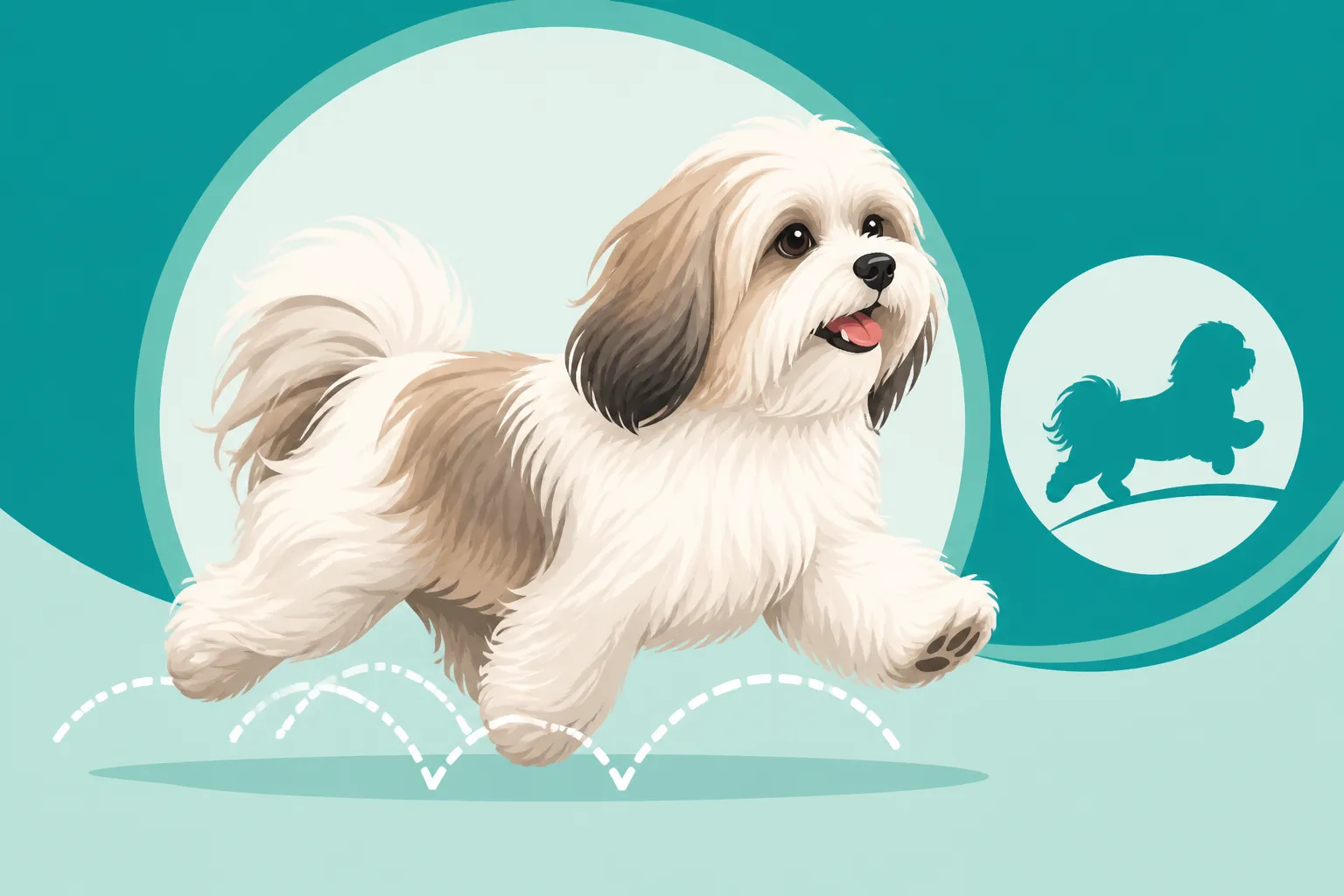
When we talk about a "springy gait" in a Havanese, we're not just using a cute phrase. It refers to a specific type of movement where the dog exhibits a lively, elastic, and somewhat bouncy quality, particularly in their hindquarters. Imagine a tiny coiled spring releasing and recoiling with each step; that's the essence of it. Their feet don't just plod along; there's a distinct lift and drive, especially when they move at a brisk trot. This isn't an exaggerated high-stepping action, but rather a fluid, energetic bounce that conveys both agility and elegance.
It's a movement that suggests lightness and freedom, allowing them to cover ground efficiently without appearing heavy or cumbersome. This springiness is what gives them that characteristic charm, making them seem as if they're floating just above the ground. For many Havanese owners, it's one of the first things they fall in love with when watching their puppies play—that effortless, joyful bounce that just radiates happiness. It's a key part of their breed identity.
The Anatomical Secrets Behind the Havanese Movement
The unique spring in a Havanese's step isn't magic; it's a direct result of their carefully evolved anatomy. Their bone structure, muscle development, and overall proportions all contribute to this distinctive gait. A Havanese is typically described as being slightly longer than tall, with a moderate bone structure. This ratio, combined with well-laid-back shoulders and a strong, muscular loin, allows for excellent reach and drive. Their angulation, particularly in the hindquarters, is crucial. Good angulation provides the necessary leverage for that powerful push-off that creates the "spring."
Their feet, too, play a role. Compact, well-arched feet with thick pads act like natural shock absorbers and provide excellent traction. When you combine these elements – the body length, shoulder and hip angulation, and foot structure – you get a dog that is built for agile, resilient movement. It’s a complete package designed for the type of movement the breed standard calls for. Without the correct anatomical foundation, that signature spring simply wouldn't be possible, and it’s why breeders pay such close attention to conformation. How Tall a Havanese Stands and What a Havanese Actually Weighs both directly influence this delicate balance of structure.
How History Shaped Their Distinctive Trot
The Havanese's gait is deeply rooted in its history as a companion dog. These charming little dogs originated in Cuba, where they were cherished pets of the aristocracy. Unlike many breeds developed for specific working tasks like herding or hunting, the Havanese's primary "job" was to be an engaging and elegant companion. Their movement didn't need to cover vast distances quickly or navigate rough terrain with power. Instead, it needed to be graceful, light, and engaging.
This meant they were selected for a movement that was appealing to watch, nimble for indoor living, and easy to maintain. The "springy gait" allowed them to keep up with their human companions on leisurely strolls or trot playfully around a grand estate without exhausting themselves. It's a reflection of a life of ease and companionship, where quick bursts of energy and playful antics were more valued than endurance or brute force. Their ancestors, The Blanquito de la Habana the Havanese Came From, likely possessed similar joyful movements, passed down through generations.
Appreciating the Havanese in Motion
Once you know what to look for, watching a Havanese move becomes an even more delightful experience. It’s like noticing the intricate steps in a dance you've only seen superficially before.
Identifying the "Spring" in Everyday Walking
To truly see the springy gait, observe your Havanese as they move at a moderate pace, perhaps trotting beside you on a walk or when they're excited to greet you at the door. You'll notice a distinct lift and push-off from their hind legs. Their back will remain relatively level, but their entire body will seem to rise and fall slightly with each stride, almost like a pogo stick in miniature. The head and tail should be carried jauntily, adding to the overall impression of vivacity.
Pay attention to their footfall: it should be light and precise, not heavy or dragging. The pads of their feet should briefly touch the ground before lifting cleanly. There shouldn't be any wasted motion; every part of their stride contributes to that effortless bounce. If you watch them from behind, you'll see their hocks (the joint above their back feet) driving forward, propelling them with purpose. It's a beautiful, efficient movement that speaks volumes about their joyful nature. Even a simple walk around the block becomes a demonstration of their inherent grace and athleticism, provided they're moving freely and comfortably.
Subtle Differences from Other Bichon-Type Breeds
While the Havanese belongs to the Bichon family, sharing ancestry with breeds like the Bichon Frise, Maltese, and Coton de Tulear, their gait has subtle distinctions. Many Bichon-type breeds share a generally light and active movement, but the Havanese's "spring" is often more pronounced and specific. A Maltese might have a more flowing, elegant stride, while a Bichon Frise often exhibits a more playful, almost scurry-like gait. The Havanese, however, has that distinct, almost buoyant quality that sets it apart.
The Havanese standard often emphasizes the "springy gait" as a defining characteristic, whereas other similar breeds might focus more on factors like "light-footed" or "free-moving." This difference is subtle but important, reflecting how each breed has been refined over time. It's not about one being "better" than the other, but about appreciating the nuances that make each breed unique. When considering The Havanese Against the Bichon and the Maltese, their unique movement is certainly a key differentiator. It's these subtle variations that give each breed its individual charm and character.
The Ideal Havanese Movement According to Breed Standards
For those involved in conformation showing, the breed standard is the ultimate blueprint for the ideal Havanese, and movement is a critical component. The standard typically describes the gait as "light, springy, and lively." It emphasizes that the movement should be straight and true, meaning the legs move in parallel lines without crabbing (moving sideways) or paddling (feet swinging out). The dog should move with good reach in the front and strong drive from the rear, covering ground effortlessly.
The top line (the dog's back) should remain firm and level while moving, indicating strong musculature and a sound structure. Any rolling, swaying, or dipping of the back can be considered a fault. The tail, a characteristic plume carried over the back, should also remain upright and gracefully curved, completing the picture of a proud and lively dog. It's a demanding standard, requiring balance, power, and elegance, all culminating in that unmistakable spring. This ideal movement is a direct indicator of the dog's overall soundness and health.
The Havanese Gait in Competition
For Havanese breeders and exhibitors, the gait isn't just a pretty sight; it's a crucial element that can make or break a dog's chances in the show ring. Understanding what judges are looking for and avoiding common pitfalls is essential.
What Judges Are Critically Evaluating
When a Havanese enters the show ring, the judge's eye immediately goes to its movement. They are looking for the embodiment of the breed standard's description. First and foremost, they want to see that distinctive "springy gait" – the elasticity and vivacity that define the breed. They'll observe the dog moving down and back, and then around the ring, to assess all angles. They're checking for straightness of movement, ensuring the legs track true without deviation.
The judge will also assess the dog's balance and coordination. Is the movement fluid and effortless, or does it appear strained or unbalanced? They're looking for good reach in the front legs and powerful drive from the rear, allowing the dog to cover ground with efficiency. A firm top line, a high-set tail carried correctly, and a confident, happy demeanor all contribute to the overall impression of proper Havanese movement. It’s a holistic assessment, but the gait is arguably the most dynamic and telling part.
Common Structural and Movement Faults
Even in well-bred Havanese, certain structural and movement faults can crop up, and judges are trained to spot them. One common issue is a lack of "spring" or elasticity, where the dog's movement appears flat-footed or lacking in drive. This can sometimes be due to insufficient angulation in the hindquarters or weak musculature. Another fault is crabbing, where the dog moves with its body at an angle to the direction of travel, often compensating for structural imbalances.
Paddling or high-stepping, where the front feet swing out or lift excessively, can indicate issues with shoulder layback or front assembly. Conversely, a stilted gait, where the dog moves stiffly and without flexion, suggests a lack of proper angulation or even discomfort. Overreaching or under-reaching, where the front and rear legs interfere or don't coordinate properly, are also signs of structural imbalance. The Chondrodysplasia That Runs in Certain Havanese Lines can sometimes lead to altered movement patterns, even if not strictly a "gait fault" in the traditional show sense, it certainly impacts how a dog moves. Recognising these issues is key to selecting healthy breeding stock and understanding a dog's capabilities.
Training Your Havanese for a Confident Ring Presence
Preparing a Havanese for the show ring, particularly focusing on movement, requires patience and consistent training. It starts with proper lead training, teaching your Havanese to walk calmly and confidently at your side, neither lagging nor pulling. The goal is a steady, even trot that showcases their natural gait. Many handlers use a bait (a small treat) held at a specific height to encourage the dog to carry its head high and extend its neck, which enhances the overall profile while moving.
Practicing on different surfaces and in various environments helps your Havanese become comfortable and confident. Start with short sessions, gradually increasing the duration as your dog builds stamina and focus. It’s also crucial to teach your Havanese to "stack" (stand still in a posed position) after moving, allowing the judge to get a good look at their static conformation. Positive reinforcement is key; make it a fun and rewarding experience. Remember, a happy, confident dog will always move better than a stressed one. Investing in high-quality treats from a place like Chewy can be a great motivator for training sessions.
When Gait Indicates Health: A Havanese Perspective
Beyond the show ring, your Havanese's gait is a crucial indicator of their health and comfort. Any significant change in their movement should always warrant your attention.
Recognizing Early Signs of Discomfort or Change
As a Havanese owner, you become intimately familiar with your dog's normal movement. This makes you uniquely positioned to spot subtle changes that could signal an underlying issue. If your usually springy Havanese suddenly seems reluctant to jump, hesitates going up or down stairs, or develops a noticeable limp, it’s a red flag. Perhaps they seem a bit stiff when getting up after a nap, or their once-energetic trot looks more subdued and cautious.
Other signs to watch for include favoring one leg, a bunny-hopping gait (where both hind legs move together), dragging a paw, or a decrease in overall activity level. They might also begin to pant excessively during exercise or show reluctance to engage in play they once loved. Even subtle changes in posture while standing, or how they shift their weight, can be indicators. Never dismiss these changes as "just getting old," especially if your Havanese is still relatively young. Early detection of issues can lead to more effective treatment and a better quality of life for your furry friend.
Common Health Issues That Affect Havanese Movement
Several health conditions common in Havanese can directly impact their gait and overall mobility. One of the most well-known is patellar luxation, or "slipping kneecaps," where the kneecap temporarily dislocates. You might notice a sudden skip in their step, where they momentarily hold up a back leg, then put it down and resume normal movement as the kneecap pops back into place. This can range from mild and infrequent to severe and debilitating. The Kneecaps a Havanese Slips are a classic example of a health issue that dramatically alters gait.
Another concern for some Havanese is Legg-Calve-Perthes disease, a condition affecting the hip joint, particularly in small breeds. This can lead to limping, pain, and a reluctance to bear weight on the affected leg, especially in younger dogs. Legg Calve Perthes and the Limping Havanese Puppy is a very serious condition that can be heartbreaking to witness. Arthritis, particularly in older Havanese, can also manifest as stiffness, reduced range of motion, and a general slowing down of their once-springy gait. Neurological issues, disc disease, or even paw injuries can also result in altered movement.
Proactive Care for Lifelong Agility
Maintaining your Havanese's agility and springy gait throughout their life involves a combination of proactive care and attentive observation. Regular, moderate exercise is crucial to keep their muscles strong and joints flexible without overstraining them. Think short, brisk walks rather than intense, long-distance runs. Providing a balanced diet specifically formulated for small breeds, like many options available on Chewy, helps maintain a healthy weight, which is paramount for joint health. Whether a Havanese Should Be Kept Slim for Its Joints is not just good advice, it’s essential for their longevity and comfort.
Preventative health screenings, especially those recommended by responsible breeders for conditions like patellar luxation, can help identify potential issues early. Regular veterinary check-ups are non-negotiable, providing opportunities to discuss any subtle changes you've noticed. For older Havanese, consider joint supplements, physical therapy, or even orthopedic dog beds to provide extra comfort and support. Creating a safe home environment, free from slippery floors or high jumps, also minimizes the risk of injury. Keeping a Havanese Off Furniture It Should Not Jump From can prevent injuries to their delicate joints.
Living with a Havanese and Their Unique Movement
Beyond show rings and vet visits, the springy gait of a Havanese is a constant source of joy and fascination in everyday life. It shapes how they interact with their world and with you.
Harnessing Their Natural Enthusiasm for Activity
The Havanese's springy gait isn't just for show; it's an expression of their vibrant personality and natural enthusiasm for life. They are typically playful, active dogs who genuinely enjoy movement. This means they often thrive on engaging activities that allow them to use their natural agility. Short bursts of fetching, chasing a toy, or even a game of hide-and-seek can bring immense joy and provide excellent mental and physical stimulation.
Instead of just passive walks, try to incorporate activities that let them bounce, turn, and dart, engaging those agile muscles. Many Havanese excel in dog sports like agility or rally obedience, where their quick feet and eager-to-please nature shine. These activities not only provide physical exercise but also build confidence and strengthen the bond between you and your dog. Remember, even with their small size, they have a good amount of energy to burn. What a Havanese Needs Beyond a Walk highlights the importance of varied activities.
Adapting Your Home for Optimal Havanese Movement
While Havanese are adaptable, making a few adjustments to your home environment can significantly benefit their joint health and allow them to move more freely and safely. Slick surfaces like hardwood or tile floors can be challenging for their small, often long-coated feet, making them prone to slipping and potential injury. Placing runners, area rugs, or non-slip mats in high-traffic areas can provide much-needed traction.
Consider ramps or steps for accessing furniture like couches or beds, especially if your Havanese enjoys cuddling up with you. Repetitive jumping on and off high surfaces puts considerable strain on their knees and hips over time. Dog beds with orthopedic support can be particularly beneficial for senior Havanese or those with developing joint issues. Ensuring their toys are easily accessible and that they have a designated safe space where they can relax and stretch out without obstruction also contributes to their overall physical well-being.
When to Consult Your Vet About Gait Concerns
It's natural to be a little anxious when you notice something different about your dog, but it's always better to be proactive when it comes to changes in gait. If you observe any persistent limping, favoring a leg, sudden lameness, obvious pain when moving, or a reluctance to engage in activities they once enjoyed, it's time to call your veterinarian. Don't wait, hoping it will resolve on its own.
Even subtle changes, like a decrease in their usual springiness, stiffness after rest, or a change in how they bear weight, warrant a professional opinion. Describe what you're seeing in detail, and if possible, take a short video of your Havanese moving. This can be incredibly helpful for your vet in diagnosing the issue. Remember, your vet is your partner in keeping your Havanese healthy and happy, and they can provide the best guidance. Conditions like The Age a Havanese Shows Hip Pain are much better managed with early veterinary intervention.
No matter whether your Havanese is a show dog or simply your beloved companion, their springy gait is a joy to behold and a key indicator of their health. By understanding its nuances, appreciating its beauty, and being vigilant about any changes, you can ensure your Havanese continues to dance through life with that characteristic Cuban charm.
Disclaimer
This article is for general informational purposes only and does not constitute professional advice. Laws, prices and regulations vary by location and change over time. Consult a qualified professional for guidance on your specific situation.