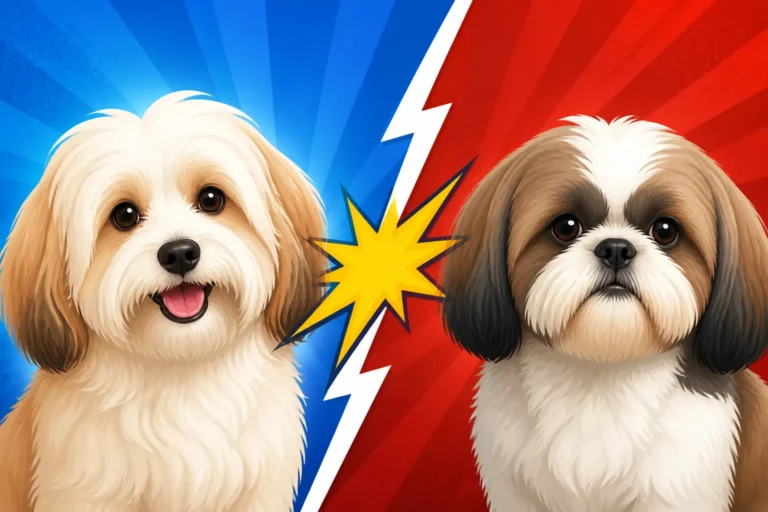
Whether a Havanese’s Front Legs Are Shorter Than Its Back
A Havanese may look as though its front legs are shorter than its back legs, especially when its coat is long or it is standing at an angle. But that appearance alone does not mean anything is wrong. This guide explains what proportions are typical, what can create a misleading silhouette, and which changes in a puppy or adult dog deserve a closer look.
Are a Havanese’s front legs shorter than its back legs
The short answer on Havanese leg proportions
A Havanese is not generally expected to have noticeably shorter front legs than back legs. The breed is a small, sturdy dog with a body that is slightly longer than it is tall, and its front and rear limbs should look balanced with the body. There can be subtle differences in shape and muscle between the two sets of legs, but a strong front-to-back height difference is not simply a defining Havanese feature.
That can be hard to judge by eye. A Havanese’s coat may hang low and blur the outline of its limbs, while the angle of its stance can make one end of the dog appear higher. A dog photographed with its hind legs stretched back, for instance, may look as if its rear is elevated even when its underlying proportions are ordinary.
If you are wondering whether a Havanese is meant to have short legs, it helps to consider the dog’s entire outline rather than compare the visible lengths of its front and rear legs in isolation. The breed’s slightly longer body can make the legs seem shorter overall. For more on that silhouette, see Whether a Havanese Is Longer Than It Is Tall and Whether a Havanese Has Short Legs on Purpose.
Why the front and rear legs can look different
Front legs and rear legs do different jobs, and they do not have identical structure. The front limbs support much of a dog’s weight and help absorb impact. The hind limbs provide much of the push that moves the dog forward. Differences in shoulder position, hip shape, muscle, and leg angle can affect how each end looks without meaning that one pair is abnormally short.
A dog’s stance matters, too. When a Havanese stands squarely, with its legs underneath its body, you get a more useful view of its proportions. If it leans forward, sits unevenly, or places one hind leg out to the side, the topline and leg lengths may look different. A soft couch cushion or slippery floor can make a dog shift its weight, adding to the illusion.
Coat length adds another layer of confusion. Long furnishings around the legs can obscure where the leg ends and the paw begins. A full coat may also make the body look lower to the ground. A shorter, even trim can make the dog’s true outline easier to see, but the coat should not be treated as a substitute for a veterinary assessment if you are concerned about a structural change.
The breed’s outline and its springy movement
A Havanese should move comfortably and freely, not appear stiff or struggle to coordinate its front and rear limbs. Breed descriptions often emphasize a lively, springy gait. That does not mean every step should look exaggerated, nor does it mean the dog should bounce because its front and back legs are markedly different in length. For more detail on the breed’s movement, read The Springy Gait a Havanese Is Judged On and Whether a Havanese’s Gait Is Distinctive.
When you watch your dog walk, look at the whole movement rather than trying to judge leg length from one step. Does it move forward smoothly? Are the steps reasonably even from side to side? Does it seem willing to walk, turn, and play? A Havanese that moves normally may simply have a coat or posture that makes its proportions look unusual in a still photograph.
For a clearer view, watch your dog walk on a flat, nonslip surface from the front, side, and back. A short video can help you compare its movement over time and can be useful to show your veterinarian. Avoid forcing the dog into a particular pose or repeatedly exercising it to “test” the legs; ordinary, relaxed movement is more informative and less stressful.
What can make the legs look uneven
Coat, posture, and camera angle
A Havanese’s coat can change the visual impression of its shape dramatically. Long hair along the belly and legs may make the torso appear lower, while trimmed furnishings can make the limbs look longer or more clearly defined. Hair around the shoulders and hips can also create an uneven outline even when the underlying body is balanced.
Posture is another common culprit. If a dog stands with its front feet close together and its rear feet spread apart, the two ends may seem to sit at different heights. A dog that is looking toward a treat or person may lean onto its front legs. After resting, it may stand with one back leg relaxed. Those positions are not reliable ways to assess a dog’s skeletal proportions.
Photos can be especially misleading. A camera held low, a sloped driveway, wide-angle distortion, or a dog standing with one paw closer to the lens can alter apparent limb length. If you are comparing puppy photos, try to use images taken on the same level surface, from roughly the same angle, with the dog standing naturally.
Puppy growth and changing proportions
Puppies can look temporarily out of proportion as they grow. Their bodies and limbs do not always change at the same pace, and a puppy’s coat may also shift as it matures. A young Havanese can look lanky at one stage, compact at another, and differently balanced after a trim. Small changes in appearance over time do not automatically indicate a problem.
Still, an apparent difference that is increasing, paired with a limp or discomfort, deserves attention. A puppy with legs that seem persistently bowed or unusually shaped should be assessed rather than watched indefinitely at home. Whether a Havanese Puppy’s Legs Should Look Straight explains what owners often notice, while Spotting Bowed Legs in a Havanese Puppy covers signs worth discussing with a veterinarian.
Do not try to correct a puppy’s stance with braces, supplements, special exercises, or changes to its diet without veterinary advice. Growth and limb development are not issues that can be diagnosed from a photo alone. A veterinarian can examine how the joints move, check the dog’s gait, and decide whether further evaluation is appropriate.
When a structural or health issue may be involved
Some conditions can affect the shape or alignment of a dog’s limbs. Chondrodysplasia is one term associated with differences in bone and limb development, but a short-looking leg or an unusual silhouette is not enough to identify it. For background on the condition and its relationship to the breed, see Whether Chondrodysplasia Is Unique to the Havanese.
Knee problems can also change how a dog stands or moves. For example, a dog with kneecap trouble may briefly skip, hold a back leg up, or shift its weight. That can make one side of the body look higher, even though the underlying issue is not that the front legs are shorter. You can learn more about the condition in The Kneecaps a Havanese Slips.
A veterinarian should assess a sudden or persistent change, especially if your dog is limping, reluctant to jump or walk, showing pain when handled, or placing one paw differently from the other. Contact your clinic promptly if the change follows an injury, worsens quickly, or comes with significant distress. A dog that looks proportionate but moves comfortably is a different situation from one whose apparent imbalance is new and accompanied by pain.
How to assess your Havanese at home
Check the dog standing naturally
Choose a level, nonslip floor and let your Havanese stand without being held or posed. Look at the dog from the side, front, and rear. Notice whether the back appears level or consistently sloped, whether the limbs seem aligned under the body, and whether the dog stands evenly on all four paws.
Then observe a short, ordinary walk across the room or along a flat path. Watch for repeated skipping, limping, stumbling, stiffness, or a clear difference between the left and right sides. Try not to judge a single awkward step: dogs shift their weight, turn, and pause for all sorts of ordinary reasons. A repeated pattern is more useful than one moment.
If you want to document what you see, take a few brief videos from different angles on the same surface. Include the dog walking at a relaxed pace rather than running. Write down when you first noticed the difference and whether it changes after exercise or rest. These details can help your veterinarian understand the concern without you needing to diagnose it yourself.
Compare the outline, not just the visible leg hair
A useful assessment considers the whole dog: body length, topline, shoulder and hip position, paw placement, and movement. The question is not merely whether the visible front leg looks shorter than the visible rear leg. It is whether the dog appears balanced and moves comfortably for its own usual pattern.
If the coat hides the outline, a groomer may be able to tidy the leg furnishings so you can see the limbs more clearly. Keep any trim comfortable and practical, and avoid shaving close to the skin just to make a comparison. You can also ask your veterinarian to assess proportions during a routine exam if the dog is otherwise comfortable and moving normally.
Breed size can be useful context, but weight alone will not tell you whether a dog’s limbs are proportionate. Havanese vary in build, and a dog’s coat can make its body look heavier or lower than it is. For a broader look at expected size and build, see How Tall a Havanese Stands.
Make everyday movement safer if you are concerned
If your Havanese seems hesitant on smooth floors, make the walking route more secure while you arrange any needed veterinary advice. Washable nonslip runners can help provide traction in a hallway or beside a favorite resting spot. Chewy is one place owners may look for floor mats or pet-safe home supplies; focus on a surface that lies flat and does not bunch underfoot.
A ramp or pet steps may also reduce repeated jumping onto furniture, but they are not a treatment for a limb problem. Introduce them gradually and make sure your dog can use them without slipping. Chewy carries different home and mobility products, so check that any item fits your dog’s size and the layout of your home rather than choosing by appearance alone.
For walks, use equipment that lets you control your dog without pulling on its neck. If your dog is already limping or seems painful, skip strenuous activity and ask your veterinarian what level of movement is suitable. Chewy may offer harnesses and other everyday pet gear, but equipment cannot correct bone alignment or replace an examination. Stop using anything that rubs, restricts movement, or makes your dog more uncomfortable.
What to notice and when to call the veterinarian
The following guide can help you sort out what you are seeing. It is not a diagnosis, and a dog’s usual behavior is important: a new change in a normally active Havanese is more concerning than a long-standing, harmless-looking difference.
| What you notice | What it might suggest | A sensible next step |
|---|---|---|
| Legs look different in one photo but your dog moves normally | Angle, posture, coat, or camera distortion | Observe your dog standing and walking on a level surface |
| Front and rear seem uneven only when the dog is stretched or sitting | Position rather than a consistent proportion difference | Watch a relaxed stand and walk |
| Your puppy’s legs look bowed or the appearance is becoming more pronounced | A growth or limb-shape concern that needs assessment | Arrange a veterinary examination |
| Your dog repeatedly skips, limps, or holds up a leg | Possible pain or joint issue | Contact your veterinarian and describe when it happens |
| A sudden change follows a fall or other injury | Possible acute injury | Seek veterinary advice promptly |
| Your dog avoids normal walks, play, or putting weight on a limb | Pain or reduced mobility may be present | Contact a veterinarian rather than trying home treatment |
Signs that deserve prompt attention
Call your veterinarian if your dog has a persistent limp, repeated skipping, pain when a leg is touched, swelling, unusual stiffness, or reluctance to put weight on a limb. A sudden change after a fall or collision should also be taken seriously. If your dog cannot bear weight, appears very distressed, or is worsening quickly, seek urgent veterinary guidance.
For a puppy, tell the clinic if you have noticed a change in the shape of the legs, a difference between sides, or trouble keeping up with normal play. It can help to share a video and explain whether the issue appears all the time or only after activity. Do not give human pain medicine unless a veterinarian specifically tells you to; some common medications can be dangerous for dogs.
What a veterinary exam may involve
The veterinarian will usually ask when you first noticed the difference and whether your dog is limping, avoiding movement, or behaving differently. They may watch the dog walk and stand, feel the limbs and joints, and compare movement from side to side. The next steps depend on what they find, your dog’s age, and whether there are signs of pain or an injury.
An unusual appearance does not automatically mean that imaging or treatment is needed. On the other hand, a photo cannot rule out a problem when the dog is uncomfortable or moving abnormally. The useful goal is to figure out whether you are seeing a harmless difference in appearance or a change that deserves a closer medical look.
If your Havanese has always looked a little uneven but walks, runs, and plays comfortably, mention it at the next routine visit rather than trying to measure its legs yourself. If the difference is new, worsening, or paired with pain, call sooner. In either case, a relaxed stance and a short walking video can help make the conversation more specific.
Disclaimer
This article is for general informational purposes only and does not constitute professional advice. Laws, prices and regulations vary by location and change over time. Consult a qualified professional for guidance on your specific situation.