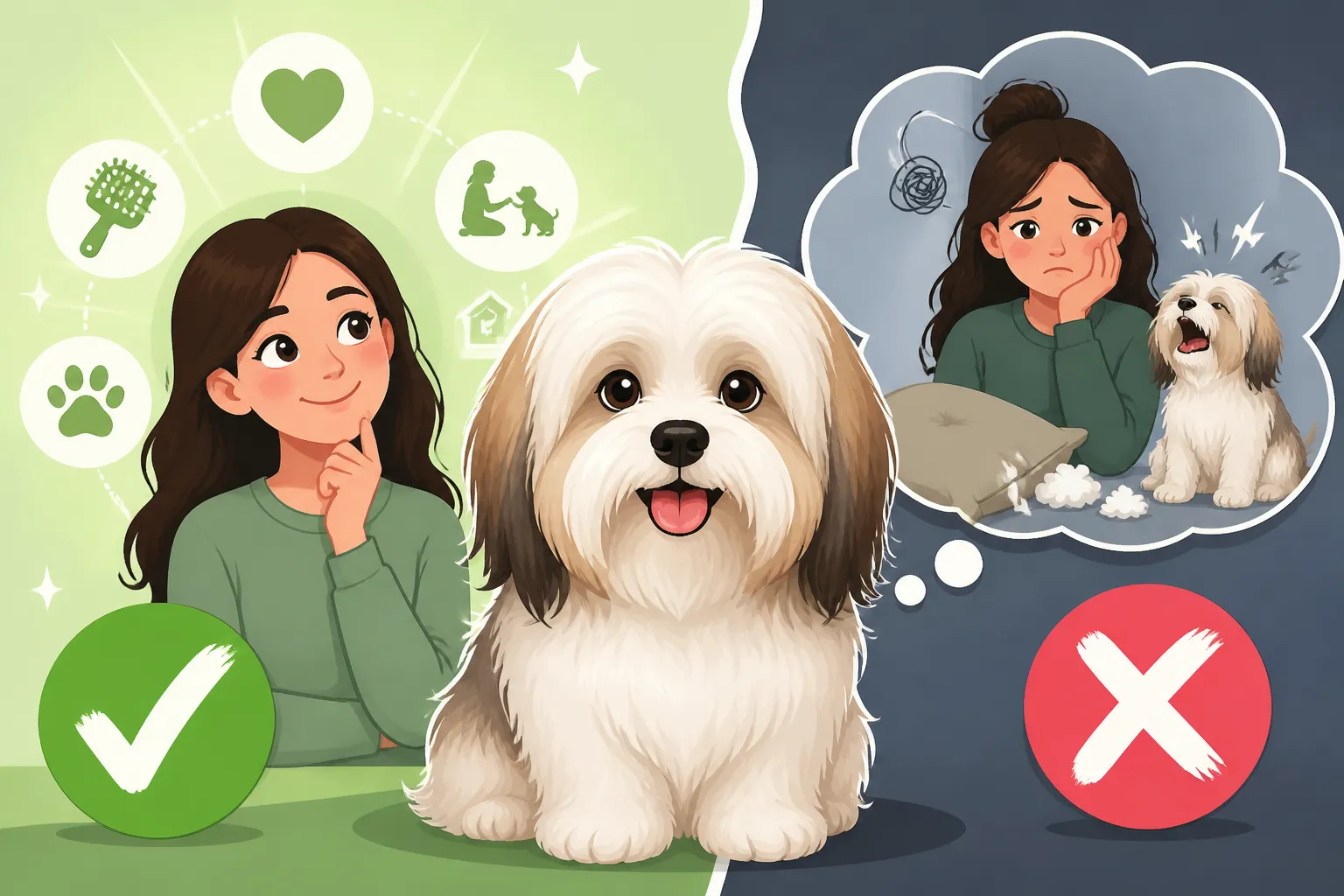
Whether a Havanese Suits a First Time Dog Owner
A Havanese can be a lovely first dog, but a small, friendly companion is not automatically an easy one. New owners often underestimate the coat care, house-training patience, and company this people-focused breed needs. This guide explains what daily life with a Havanese is really like, where beginners may struggle, and how to decide whether the breed fits your home and routine.
What makes a Havanese appealing to a first-time owner
A sociable companion with a quick mind
Havanese are known for being affectionate, playful, and closely attached to their people. Many enjoy meeting visitors, learning small tricks, and joining in with everyday household activity. For a first-time owner, that can make training feel rewarding: your dog may be keen to engage, and short, upbeat sessions can become a fun part of the day.
Their intelligence is a plus, but it also means they notice patterns quickly. If barking reliably brings attention, for example, a Havanese may repeat it. If jumping up earns a greeting, the habit can become part of the welcome routine. Gentle consistency matters more than being stern. Reward the behavior you want, and try to avoid accidentally reinforcing the behavior you are working to change.
A Havanese’s social nature can suit someone who wants a companion close by. It may be less suitable for a household where the dog will regularly be alone for long stretches without a plan for breaks, company, or gradual alone-time practice. Read more about Whether a Havanese Suits a First Time Owner alongside The Household a Havanese Was Bred For when thinking about the kind of home this breed tends to enjoy.
Small size, but not a toy to handle casually
A Havanese’s compact size can make daily routines simpler than they might be with a large, powerful dog. They can be easier to carry when necessary, and many can adapt to apartment life if their exercise, training, and toileting needs are met. A yard is not a substitute for walks and interaction, but a yard is not essential for every Havanese household either.
Small does not mean indestructible. A fall from furniture, rough play, or an accidental step can be a serious risk for a little dog. In homes with young children, adults need to supervise closely and teach children to sit calmly when holding or petting the dog. A Havanese should have a quiet place to retreat, and children should never be expected to manage the dog’s safety on their own.
Consider the everyday logistics as well as the appealing size. Can you prevent access to unsafe stairs or high furniture when needed? Will you use a well-fitted harness and supervise outdoor time? Do you have a plan for visitors who may not notice a small dog underfoot? These details are manageable, but they are part of responsible ownership.
The responsibilities beginners should understand
Coat care is a regular commitment
The Havanese coat can be long and silky, and it needs consistent care to prevent tangles and mats. Friction-prone areas such as behind the ears, under the legs, and around a harness can become snarled before the rest of the coat looks untidy. A quick glance over the top is not enough; you need to work through the coat carefully and check close to the skin.
There is no single grooming style that suits every household. Keeping the coat longer means more frequent brushing and careful maintenance. A shorter clip can reduce the amount of coat to manage, but it still requires routine grooming, bathing, nail care, and attention to ears and eyes. Ask a groomer to show you how to maintain the chosen style between appointments rather than assuming a salon visit alone will prevent mats.
If you are preparing a first grooming kit, focus on tools and products recommended for your dog’s coat and your groomer’s routine. Chewy is one place owners may look for basic grooming supplies, but the useful choice is the one that suits the coat and is comfortable for you to use safely. For a closer look at the routine, see How Often a Havanese Must Be Brushed and The Puppy Cut Most Havanese Owners End Up Choosing.
Training and house-training take patience
House-training can be frustrating with any puppy, and a small dog’s signals may be easy to miss. A puppy might need to go shortly after waking, eating, playing, or getting excited. If you wait for a clear signal, an accident may happen first. A predictable schedule, close supervision, and calm praise for toileting in the right place make it easier to build a habit.
Accidents are information, not evidence that your dog is being spiteful. If they happen repeatedly, consider whether the puppy had enough opportunities to go outside, whether you were able to supervise, and whether the routine changed. Clean accidents thoroughly, avoid punishment, and return to a schedule the puppy can succeed with. For a young puppy, close management is often more effective than expecting them to understand the whole household routine at once.
Training goes beyond toileting. Teach simple cues, polite greetings, settling on a mat, and calm handling for brushing and grooming. Use brief sessions with rewards, then practice the same skill in different rooms and situations. A puppy class can help with basic skills and safe social exposure, while a qualified trainer can offer individual help if a specific problem is becoming difficult. The First Year With a Havanese Puppy and Why a Havanese Is Slow to House Train offer more on these early routines.
A realistic look at everyday Havanese life
Exercise, enrichment, and being left alone
A Havanese may be small, but they still need daily movement and mental engagement. Walks, play, sniffing opportunities, and simple training games can all contribute. The right amount depends on the individual dog’s age, health, and temperament; a puppy’s activity should be appropriate for its stage of development, while an older dog may need gentler outings.
Mental activity does not have to mean complicated equipment. You can hide a few pieces of your dog’s usual food for a supervised sniffing game, practice a familiar cue in a new room, or offer a suitable puzzle toy. If you shop for enrichment items, Chewy is one retailer where owners may browse different types of toys; choose items appropriate to your dog’s size and chewing habits, and supervise until you know how the dog uses them.
Alone-time skills deserve attention from the beginning. Start with very brief, low-pressure separations and build gradually, returning before your dog becomes distressed when possible. A dog that follows you from room to room may still learn to relax independently, but simply leaving for a long stretch and hoping they adjust can make the transition harder. A camera, a trusted visitor, or a midday break may help you understand what happens after you leave. See Whether a Havanese Tolerates Being Alone for more context.
Grooming, health care, and budgeting time
A first-time owner should think about routine care before bringing a dog home. This includes veterinary checkups, vaccinations and preventive care discussed with a veterinarian, nail trimming, dental care, and grooming. A Havanese’s coat may be the most visible task, but it is only one part of maintaining a comfortable, healthy dog. Small dogs can also need particular attention to dental hygiene, so ask your veterinarian how to build a practical tooth-brushing routine.
The easiest way to stay on top of care is to make it familiar rather than treating it as an occasional big project. Handle paws gently, reward calm brushing, and let the puppy get used to brief checks around the ears and face. If grooming becomes difficult, slow down and practice in short sessions rather than wrestling through a full routine. A groomer can help with coat maintenance, but the dog still benefits from comfortable handling at home.
Plan for the recurring time and costs of care, not only the initial supplies. Food, grooming, veterinary visits, training, and occasional unexpected needs all belong in the picture. Chewy may be useful for comparing routine pet-care items such as food or dental supplies, but follow your veterinarian’s advice when choosing a diet or health product. To consider the coat in more detail, explore Why a Havanese Mats at Eight Months and Not Before and What a Havanese Needs Every Day.
| Part of life with a Havanese | Why beginners may enjoy it | What requires planning |
|---|---|---|
| Companionship | Affectionate, people-oriented temperament | Gradual alone-time training and daily interaction |
| Training | Many enjoy learning with rewards and attention | Consistency, patience, and practice in different settings |
| Size | Easier to manage physically than many larger breeds | Protection from falls, rough handling, and being underfoot |
| Coat care | Grooming can become a calm bonding routine | Frequent maintenance and professional grooming as needed |
| Exercise | Walks and indoor games can fit varied homes | Regular activity and mental enrichment rather than a yard alone |
| Home life | Can adapt to different living arrangements | Toileting schedule, supervision, and a safe resting space |
How to decide whether this breed fits you
Questions to ask before bringing one home
Start with your normal week rather than your ideal week. How long will the dog be alone on an average workday? Who can provide a break if your schedule changes? Are you comfortable making grooming part of the routine, even when you are tired or busy? A realistic answer is more useful than assuming you will always have extra time.
Think about the people and animals already in your home. A Havanese may enjoy family life, but introductions still need to be gradual and supervised. If you have children, teach them safe, gentle handling and make sure the dog can move away when it wants a break. If you have another dog or a cat, plan controlled introductions and separate spaces rather than expecting instant friendship.
Also ask yourself whether you enjoy interacting with a dog throughout the day. A Havanese may want to be near you while you work, cook, or relax. Some owners love this closeness; others find it demanding when they need uninterrupted time. Consider What Havanese Owners Wish They Had Known and Whether a Havanese Is More Work Than It Looks as you weigh the realities against the appeal.
A simple readiness check
A first-time owner does not need to know everything before bringing home a dog. You do need a willingness to learn, a plan for basic care, and the patience to guide a puppy through mistakes. A Havanese can be a strong match if you enjoy an interactive companion and can provide regular grooming, training, company, and age-appropriate activity.
It may be worth reconsidering or waiting if you expect a dog that can entertain itself for most of the day, needs almost no coat maintenance, or will reliably learn household rules without repetition. These are not flaws in the breed; they are mismatches between expectations and the dog’s needs. Waiting until your schedule or support system is more suitable can be kinder to both you and the future dog.
Before committing, speak with responsible breeders, rescue groups, and veterinary professionals. Ask how puppies are raised, what health information is available, how the adult dogs behave in ordinary home settings, and what support is offered after placement. A thoughtful decision is not about finding a perfect dog. It is about choosing a companion whose needs you can meet consistently and whose personality fits the life you actually lead.
Disclaimer
This article is for general informational purposes only and does not constitute professional advice. Laws, prices and regulations vary by location and change over time. Consult a qualified professional for guidance on your specific situation.