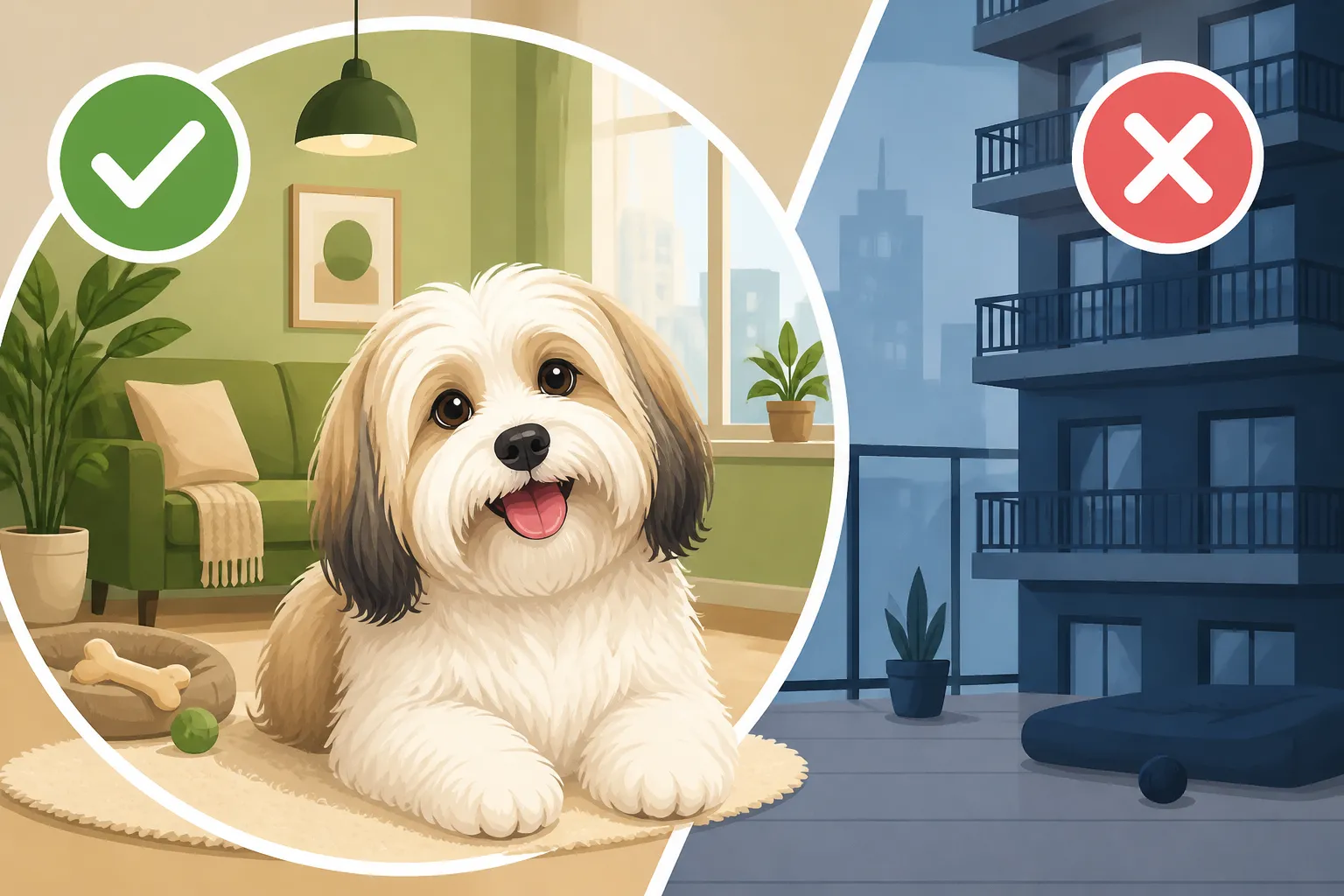
Whether a Havanese Suits an Apartment
A Havanese can be a lovely apartment companion, but a small body does not automatically mean an easy fit. The breed is social, lively, and often quick to notice sounds in a shared building. This guide explains what apartment life is really like with a Havanese, including exercise, barking, alone time, grooming, and the practical checks to make before bringing one home.
Why a Havanese can fit apartment life
Small size helps, but temperament matters more
Havanese are small dogs, so they generally need less indoor room than a large, athletic breed. They can play, nap, and hang out with their people in a modest apartment without needing a yard. A home with a safe spot for a bed, toys, food, and a little indoor play space may be enough.
The catch is that a Havanese is not a decorative dog who will be content simply because the apartment is comfortable. This breed was developed as a companion, and many Havanese want to be close to their people throughout the day. A dog that follows you from room to room may seem charming when you are home, but that same attachment can make long absences difficult.
Think about the rhythm of your household, not just its square footage. A person who works from home, takes the dog along on errands where appropriate, or can arrange a midday visit may find apartment life manageable. A household where the dog is alone for a long stretch most days may need a realistic care plan before adopting. For more on how closely the breed tends to bond, see Why a Havanese Follows You Into Every Room.
A yard is optional, but daily activity is not
A fenced yard can make quick bathroom trips convenient, but it is not essential. Many Havanese live happily in city apartments when their owners provide regular walks, bathroom breaks, play, and time to sniff and explore. A short outing around the block can be useful for toileting, while a longer walk or a playful session gives the dog more to do.
Indoor activity helps, too. A few minutes of training, a food puzzle, gentle fetch in a clear hallway, or a search game with kibble can make a rainy afternoon less dull. Keep play appropriate for the dog’s size and age, and avoid encouraging repeated leaps from furniture. The goal is variety, not exhausting a small dog with marathon exercise.
For a clearer picture of the breed’s activity needs, read How Much Exercise a Havanese Needs. Apartment living can also be a good match for people who enjoy taking a dog out for walks but do not have the time or space to maintain a large yard. The important part is making those outings a dependable part of the day rather than assuming the dog will exercise itself indoors.
The apartment challenges to plan for
Barking can affect your neighbors
Havanese are alert and expressive. Some bark when they hear footsteps in the hallway, a lift opening, a door closing, or a delivery arriving. In a detached home, a burst of barking may be less noticeable to others. In an apartment, the same sound can travel through a shared wall or corridor, so it is worth treating noise habits as part of your preparation.
Pay attention to what triggers the barking. If your dog reacts to activity outside the front door, a bed placed away from the entrance may reduce the temptation to patrol. Window access can be stimulating for some dogs, so observe whether your Havanese settles better with a view or with curtains partly closed. When the dog notices a sound, calmly redirecting them to a mat or rewarding a quiet pause can be more useful than yelling, which may add to the excitement.
Training takes repetition. Practice a simple “quiet” cue when the dog is calm, reward brief silence, and build up gradually. Avoid waiting until the dog is already barking intensely to start teaching. A dog who reacts to every building noise may benefit from support from a qualified, reward-based trainer. For practical ideas, see Teaching a Havanese a Quiet Cue and Whether a Havanese Barks at Every Noise.
| Apartment concern | What it may look like | Practical first step |
|---|---|---|
| Hallway noise | Barking at footsteps, doors, or the lift | Identify triggers and reward calm responses |
| Long absences | Whining, pacing, chewing, or trouble settling | Arrange gradual alone-time practice and a care plan |
| Bathroom access | Accidents when breaks are too far apart | Set a consistent schedule and adjust it to the dog |
| Limited indoor space | Restlessness or attention-seeking | Add walks, short training sessions, and safe enrichment |
| Coat upkeep | Tangles after walks or time on the floor | Brush regularly and keep grooming tools within reach |
Alone time needs an honest plan
A Havanese may struggle if expected to spend much of the day alone without preparation. That does not mean every dog will develop separation anxiety, but the breed’s strong social nature makes it sensible to teach comfortable independence early. Start with brief, low-pressure absences and gradually extend them only when the dog remains settled. Leaving for a full workday on the first few days can be a rough transition.
A comfortable resting area, a safe chew, or a food puzzle can help some dogs, but enrichment is not a substitute for companionship when the dog is distressed. If you are away for a long period, consider whether a trusted visitor, dog walker, sitter, or suitable daycare arrangement could break up the day. Introduce any caregiver gradually and make sure the setting is a good match for your dog’s temperament.
A camera can help you understand what happens after you leave: a dog who naps after a brief protest has different needs from one who barks continuously, pants, or tries to escape. Avoid treating signs of distress as misbehavior. For more detail on building a realistic routine, see Whether a Havanese Tolerates Being Alone and Signs a Havanese Has Separation Anxiety.
Making apartment routines work
Bathroom breaks and building logistics
Apartment living adds a few steps to house-training. A puppy may need to be carried or guided through a hallway, taken in a lift, and walked to an appropriate outdoor spot before having a chance to go. If the route is slow or the weather is unpleasant, an urgent bathroom need can turn into an accident on the way out.
Choose a predictable toilet area and take your dog there after waking, meals, play, and naps, as well as whenever your puppy’s age and routine call for it. Praise and reward outdoor toileting promptly. Keep a leash and cleanup supplies near the door so you are not scrambling while the dog waits. If your building has a long walk to the exit, plan extra time rather than relying on a last-minute dash.
Indoor pads may be useful in some circumstances, but they can also complicate the routine if your long-term goal is outdoor toileting. Discuss the approach with your breeder, rescue, or veterinary professional, especially for a young puppy. For common training hurdles, see Why a Havanese Is Slow to House Train.
Before bringing a dog home, check your lease and building policies. Confirm whether dogs are permitted, whether there are size or breed rules, and what the building expects for waste disposal, common areas, elevators, and noise. A friendly dog still needs to be on leash where required, and not every neighbor will want an enthusiastic greeting in a narrow corridor.
Set up a calm, safe home base
Give your Havanese a comfortable place to rest that is not directly beside the front door or a busy window if those areas make the dog bark. A bed or crate can serve as a quiet retreat when introduced positively; it should not be used as punishment or as a way to leave the dog confined for an unreasonable stretch. Use gates or closed doors to keep the dog away from hazards, particularly during the settling-in period.
Small apartments can be easier to manage when everyday items have a designated place. Keep leash, harness, waste bags, towels, and grooming supplies near the exit. Chewy may be one convenient place to look for basics such as a leash, brush, or food puzzle, but choose items that suit your dog’s size and comfort rather than buying a large assortment at once. A properly fitted harness is especially useful for walks; see Whether a Havanese Should Wear a Harness.
Flooring deserves attention, too. Smooth floors can be slippery for small dogs, especially when they turn quickly or race to greet someone. Area rugs or non-slip runners can create more secure paths between the bed, water bowl, and door. Keep cords, small objects, and tempting food out of reach, and make sure any balcony or open window is securely protected.
Grooming and shared spaces
A Havanese coat needs regular care whether the dog lives in a studio or a house. Apartment owners may notice tangles after walks, particularly around the ears, legs, and areas touched by a harness. A quick check after outings and a consistent brushing routine can prevent small knots from becoming uncomfortable mats. If you prefer a shorter style, talk with a groomer about a practical cut and how much upkeep it still requires.
Wet-weather routines can take a little more planning without a private yard. Keep a towel by the entrance, dry the feet and belly after a rainy walk, and check for grit or road salt in winter. In a shared building, be ready to clean up promptly if your dog has an accident in a hallway or lift. Neat, considerate habits help maintain good relationships with neighbors and building staff.
Chewy may also be useful when you need to restock everyday grooming supplies, such as a comb or paw towel. The best choice depends on your dog’s coat and how you plan to maintain it; a product that works for one Havanese may not suit another. If grooming sounds like a major part of your decision, How Often a Havanese Must Be Brushed offers a helpful look at the routine.
How to decide whether an apartment suits your Havanese
Match the dog to your real schedule
An apartment can work well if you can provide frequent interaction, consistent outings, and training around household noises. It may be a harder fit if the dog will regularly be left alone for long stretches, barking would create serious conflict with neighbors, or bathroom access is difficult to arrange. Those are not automatic deal-breakers, but they deserve a practical solution before you commit.
Consider writing out a normal weekday. Include when the dog will wake, go outside, eat, play, rest, and be alone. Then ask what happens if you have a late meeting, a bad-weather day, or an unexpected trip. If the plan depends on everything going perfectly, add backup care or adjust your expectations.
A puppy’s needs will differ from an adult dog’s. Young puppies generally need closer supervision and more frequent bathroom opportunities, while an adult may already have useful routines and skills. A rescue dog may need extra time to settle into new sounds, neighbors, and elevators. Ask about the individual dog’s behavior and history instead of assuming every Havanese responds the same way.
A quick readiness check
Before deciding, consider whether you can answer yes to most of these questions:
- Does your lease allow a dog, and have you checked the building’s rules?
- Can you provide daily walks and bathroom breaks without relying on a yard?
- Do you have a plan for barking at hallway sounds and visitors?
- Can you arrange companionship or a break if the dog will be alone for a long time?
- Are you prepared to maintain the coat and clean up after wet or muddy outings?
- Can you create a safe resting area and prevent repeated jumping from furniture?
- Do you have time for training, play, and gradual adjustment to apartment noises?
If several answers are no, that does not mean you can never have a Havanese. It means the setup may need to change first. A dog walker, a different work schedule, a grooming plan, or a quieter apartment layout can make a substantial difference. Chewy can help with some practical supplies, but no item can replace time, training, or a suitable daily routine.
Ultimately, a Havanese does not need a large home to thrive. The breed needs company, thoughtful training, regular care, and a household willing to make room for a small dog’s very real needs. When those pieces are in place, apartment life can be comfortable for both the dog and the people sharing the walls around you.
Disclaimer
This article is for general informational purposes only and does not constitute professional advice. Laws, prices and regulations vary by location and change over time. Consult a qualified professional for guidance on your specific situation.