Whether an Old Havanese Still Wants to Play
Senior Havanese energy changes, joint stiffness, and sensory issues explain why older dogs play differently and how to adapt activities safely.
Know what to watch for.
Breed-specific conditions, screening and DNA tests, what surgery actually costs, and the daily habits that stretch a healthy lifespan.

Senior Havanese energy changes, joint stiffness, and sensory issues explain why older dogs play differently and how to adapt activities safely.

Canine Cognitive Dysfunction Syndrome in aging Havanese dogs causes disorientation, behavioral shifts, and disrupted sleep patterns.

Senior Havanese vision loss from cataracts, progressive retinal atrophy, and glaucoma, plus home care and medical causes.

Common physical and behavioral signs of aging in Havanese dogs include reduced mobility, dulling senses, and altered sleep patterns.
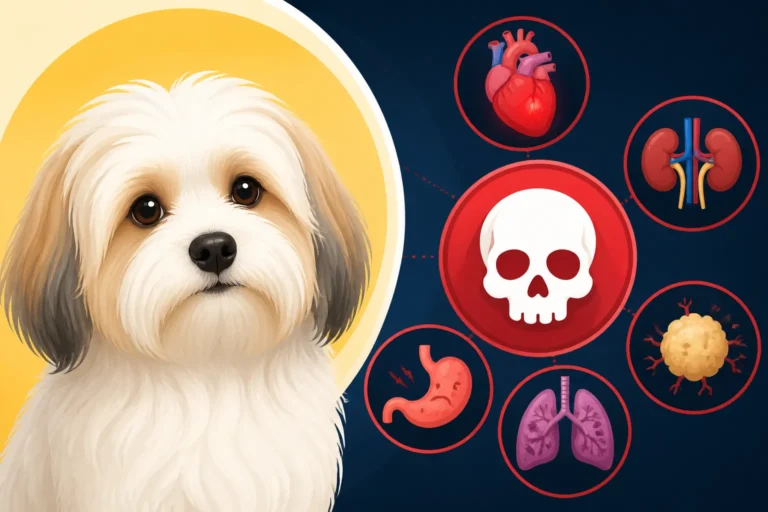
Common causes of death in Havanese dogs include serious health conditions like infections from dental disease and organ damage.

Havanese usually live 12 to 15 years, and some reach 16 or 17, which places the breed among the longer-lived small dogs when kept in good care.

Havanese and Maltese lifespans, health conditions, and care practices reveal how these toy breeds live up to sixteen years.

Havanese cancer risk involves genetics, environment, and aging, as long lifespans allow age-related conditions to develop.

Havanese lumps and bumps range from harmless benign growths to serious issues, explaining which masses need veterinary intervention.

Epilepsy in Havanese dogs involves recurrent unprovoked seizures, categorized as idiopathic, structural, or reactive types.