Whether a Second Dog Settles a Havanese
It’s a common scenario: you’ve got a wonderful Havanese, full of personality and charm, but perhaps they struggle when you leave for work, or they seem a little restless even when you’re home. The thought often crosses an owner’s mind – could a second dog, another Havanese perhaps, be the answer to settling them, providing companionship, and easing any loneliness or anxiety? It's a question rooted in both hope and a genuine desire for your dog's well-being, and it’s one that requires careful consideration beyond just imagining two fluffy bundles playing together. This guide will walk you through the various aspects of bringing a second canine companion into your home, exploring whether it truly settles a Havanese and what that commitment entails.
Understanding the Havanese Need for Companionship
Havanese are, by their very nature, deeply social creatures. They were bred for centuries to be companion dogs, nestled in the laps of Cuban aristocracy, always close to their humans. This isn't just a cute quirk; it's an intrinsic part of their breed DNA.
The Havanese as a 'Velcro' Dog
If you own a Havanese, you likely know exactly what I mean by "Velcro dog." They’re the little shadows that follow you from room to room, often preferring to be touching you, whether that’s curled at your feet, in your lap, or even just leaning against your leg while you cook dinner. This intense desire for proximity and interaction is a hallmark of the breed. They thrive on being part of the family action, observing everything you do, and offering their unwavering devotion.
Their history as pampered companions meant they rarely spent time alone. They were bred to provide comfort and entertainment, and in return, they expected constant human presence. When you bring a Havanese into your life, you're not just getting a pet; you're gaining a constant companion who will bond deeply with you and your family. This strong attachment, while incredibly endearing, can sometimes lead to challenges when their human companions aren't readily available. Their world often revolves around your presence, and any significant disruption to that can cause them distress. It's truly a unique bond, and understanding Why a Havanese Follows You Into Every Room is key to appreciating their inherent social needs.
Signs of Loneliness or Anxiety in a Single Havanese
When a Havanese, or any highly social dog, feels lonely or anxious, they often communicate this through a range of behaviors that owners might mistakenly attribute to naughtiness or stubbornness. It’s crucial to recognize these as cries for help rather than deliberate disobedience. One of the most common signs is excessive barking, particularly when left alone. This isn't just an occasional "woof" at the mailman; it's often a persistent, high-pitched vocalization born of distress. They might bark at every perceived sound outside the window, seemingly attempting to alert you to their loneliness or to call for attention.
Other tell-tale signs can include destructive chewing, not just on their toys but on furniture, shoes, or doorframes – objects that smell like you or provide a release for pent-up stress. You might also notice pacing, restlessness, or even house-soiling accidents, even if they are perfectly house-trained when you are present. Some Havanese will become excessively clingy when you are home, trying to prevent you from leaving their sight. In more severe cases, they might refuse to eat or drink when alone, or show signs of withdrawal. These are all significant indicators of distress, hinting that their current environment, particularly the amount of solitary time, might not be meeting their profound need for companionship. Understanding Signs a Havanese Has Separation Anxiety can help you differentiate between typical Havanese clinginess and genuine anxiety.
The Logic Behind Getting a Second Dog for Companionship
When faced with a lonely or anxious Havanese, the idea of a second dog naturally comes to mind. It seems like such an intuitive solution: another dog for company, a built-in playmate, someone to share the sofa with when you’re out. And often, it can work beautifully.
How a Companion Might Help
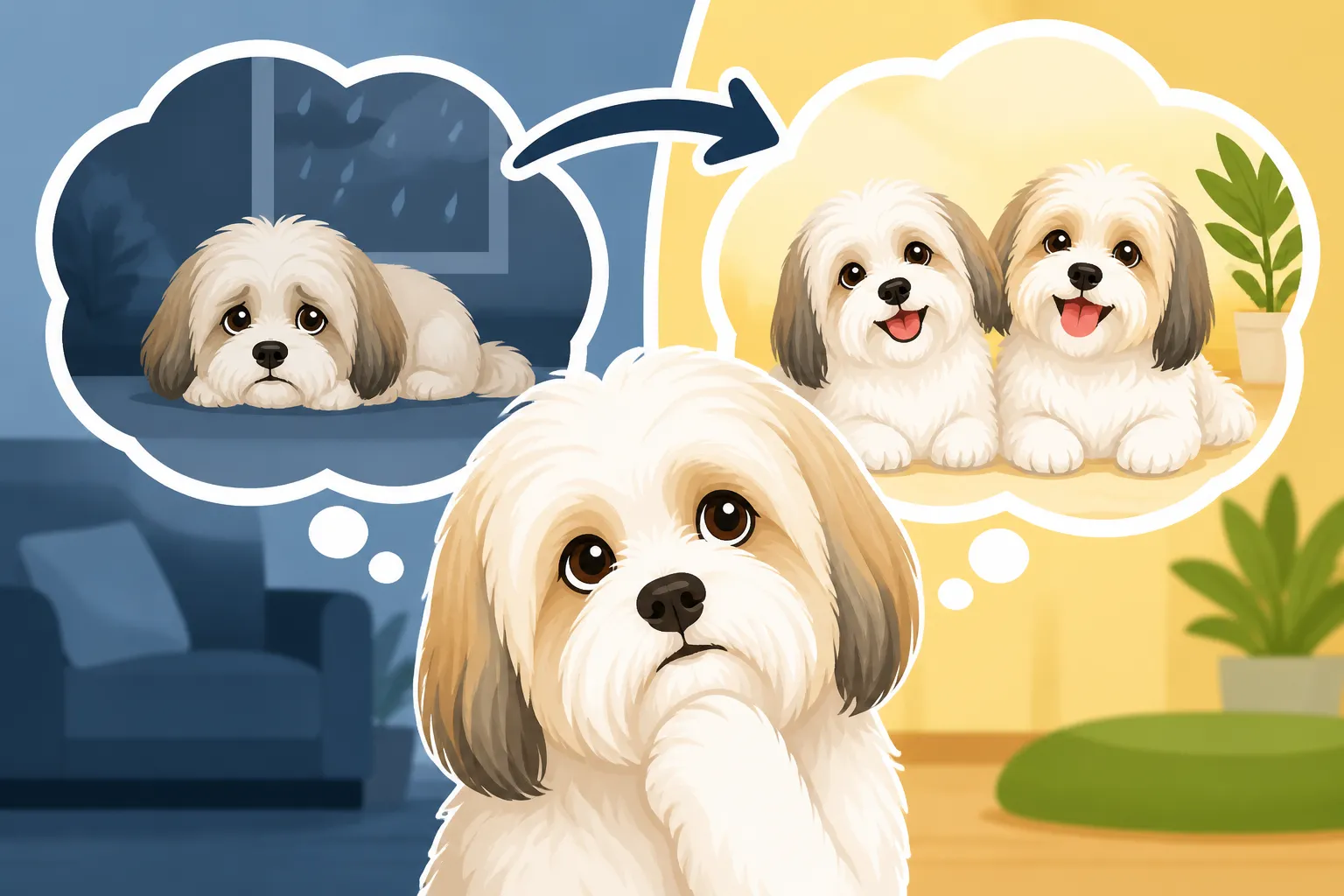
A second dog can indeed be a wonderful addition, often bringing a renewed sense of purpose and joy to your existing Havanese. For many Havanese, having another canine in the household provides a constant source of mental and physical stimulation that human interaction alone might not always fulfill. Imagine your Havanese engaging in a lively game of chase with their new friend, or wrestling playfully, expending energy and satisfying their innate desire for interaction. This companionship can drastically reduce feelings of isolation during times when you're away from home. Instead of lying by the door, pining for your return, they might be curled up together for a nap, or engaged in a quiet chew session.
The presence of another dog can also foster a sense of security. Dogs are pack animals, and even a small, human-oriented breed like the Havanese benefits from having a fellow canine around. They might eat better, sleep more soundly, and generally appear more relaxed. For an anxious Havanese, a calm and confident second dog can act as a reassuring presence, a canine anchor in their world. You might notice a reduction in destructive behaviors, less incessant barking, and an overall happier demeanor. They’re no longer solely dependent on you for all their social needs, creating a more balanced and resilient emotional state. It’s truly a joy to see two Havanese romping and cuddling, creating their own little world of canine camaraderie.
Potential Pitfalls and Unrealistic Expectations
While the prospect of a canine buddy for your Havanese sounds idyllic, it's vital to temper expectations. A second dog is not a guaranteed solution to all your Havanese's behavioral issues, and sometimes, it can even create new challenges. The biggest misconception is that any second dog will magically fix separation anxiety or loneliness. If your current Havanese suffers from severe separation anxiety, rooted in a deep-seated fear of being alone, merely adding another dog might not resolve the core issue. The anxiety is often tied to the absence of their primary human, not just the absence of any living being. In such cases, the new dog might simply observe and even pick up on the anxious behaviors, leading to two anxious dogs instead of one.
Furthermore, a second dog doubles your responsibility, not halves it. You’ll have twice the feeding, twice the vet bills, twice the grooming needs, and twice the training effort. If you're hoping the new dog will "train" your current one, you might be disappointed. Both dogs will require individual attention, training, and bonding time with you. There's also the very real possibility of personality clashes. Just like people, dogs have distinct personalities. A boisterous puppy might overwhelm a shy older Havanese, or two strong-willed dogs might constantly vie for attention or resources. It's not uncommon for owners to inadvertently create new problems like resource guarding, jealousy, or even inter-dog aggression if the introduction isn't handled carefully. Think of it less as "getting a replacement friend" and more as "expanding the family dynamic" – which always requires work.
Factors to Consider When Introducing a Second Havanese
Bringing a second dog into your home is a big decision, and it's not one to be rushed. The success of the integration often hinges on careful planning and realistic assessment of both your current Havanese and the potential newcomer.
Age and Temperament of Your Current Havanese
The age and existing temperament of your Havanese are perhaps the most critical factors in determining how well they will adapt to a new canine companion. A young, confident, and well-socialized Havanese puppy might take to a new playmate with open paws, viewing it as an exciting addition to their world. They are often more resilient and adaptable to change. However, an older Havanese, particularly one who has been an "only child" for many years, might find the intrusion of a new dog, especially a rambunctious puppy, incredibly stressful. They've established their routines, their space, and their bond with you, and a new dog can feel like an unwelcome disruption.
Consider your Havanese's energy levels. If you have a calm, mature Havanese who enjoys quiet cuddles and gentle strolls, bringing home a high-energy puppy who constantly wants to play might be overwhelming for them. Conversely, if your Havanese is still quite active and playful, a younger, similarly energetic companion could be exactly what they need to burn off steam and stay engaged. Observe your Havanese closely: do they enjoy meeting other dogs on walks? Are they generally easygoing or more particular about their personal space? An anxious Havanese, for instance, might become even more withdrawn or reactive if suddenly forced to share their space with a pushy newcomer. While Whether a Havanese Is Calm Indoors often depends on their individual personality, it's a good gauge of their general energy level. It's about finding a match that complements their existing disposition, rather than expecting them to dramatically change for the new addition.
Choosing the Right Companion
Once you've assessed your current Havanese, the next crucial step is choosing the right companion. This isn't about simply picking the cutest puppy; it's about finding a personality that will harmoniously blend with your existing dog and your lifestyle.
Breed Considerations: While another Havanese often seems like the natural choice – after all, they speak the same "language" – similar-sized, low-to-medium energy companion breeds can also be excellent matches. Bichon Frise, Maltese, or even a smaller poodle might fit the bill. The key is to avoid breeds with vastly different energy levels or play styles that could clash.
Age Difference: A common strategy is to bring home a puppy to an adult dog. This often works well because the puppy naturally defers to the older dog, and the older dog can help teach boundaries. However, remember that puppies are a lot of work. They need extensive training, supervision, and play. If your current Havanese is senior and less tolerant, a puppy might be too much. Conversely, adopting an adult dog with a known temperament can provide a more immediate and predictable companion. Many shelters and rescues can offer insights into an adult dog's personality.
Sex: Generally, introducing a dog of the opposite sex tends to lead to fewer potential issues with same-sex aggression, especially if both dogs are spayed/neutered. While not a hard and fast rule, it can sometimes make introductions smoother.
Matching Energy Levels and Play Styles: This is paramount. If your Havanese is a gentle player, avoid bringing home a dog that plays roughly. If your Havanese loves to run and chase, a similarly active dog would be ideal. Observing potential new companions in different settings, if possible, can give you a better idea of their natural inclinations. A good breeder or rescue organization will often help you assess these matches. For those considering a puppy, online training programs like BAXTER & Bella can be incredibly helpful for managing the integration and training needs of a new young dog, ensuring they learn good manners from the start, which benefits both dogs. Remember, you're looking for a complementary relationship, not a competitive one.
The Introduction and Integration Process
Bringing a new dog home is exciting, but for your existing Havanese, it can be a significant, even stressful, event. A thoughtful, gradual introduction is paramount to fostering a positive relationship between your dogs and preventing future behavioral issues. Rushing this step can set the stage for conflict and unhappiness.
The Initial Meeting (Neutral Territory is Key)
The very first meeting between your Havanese and the potential new companion should always take place on neutral territory. This means somewhere that neither dog perceives as "their" space, which reduces the likelihood of territorial or possessive behaviors right from the start. A local park, a friend's large fenced yard, or even a quiet street where you can walk side-by-side are ideal.
Here’s a step-by-step approach to consider:
- Leashed and Controlled: Both dogs should be on leashes, handled by separate, calm adults. This allows you to maintain control and gently guide their interactions.
- Parallel Walk: Start by walking them parallel to each other at a comfortable distance, allowing them to sniff the same ground and get used to each other's presence without direct, intense contact.
- Gradual Closeness: As they seem comfortable, slowly decrease the distance, letting them briefly sniff each other’s rear ends. Keep interactions short and positive. Look for relaxed body language: loose tails (not tucked or rigidly high), soft eyes, relaxed mouths. Avoid prolonged staring or stiff body posture.
- Positive Reinforcement: Shower both dogs with praise and high-value treats (perhaps something special like small pieces of cooked chicken) for calm, polite interactions. This helps them associate each other's presence with good things.
- Keep it Brief: The first meeting doesn't need to be an hour-long playdate. A successful 10-15 minute encounter is far better than a stressful, forced longer one. End on a positive note and separate them before any tension can build. Repeat these neutral territory meetings a few times over several days, gradually increasing the duration as they show comfort. This process helps establish a relaxed foundation before they ever step paw inside your home together. When introducing your existing Havanese to a new friend, it really is a matter of patience and understanding, much like A Havanese Meeting the Dog You Already Have suggests, emphasizing the importance of a calm and structured introduction.
Setting Up the Home Environment for Success
Once initial neutral-territory introductions have gone well, it's time to bring the new dog home. However, you can't just open the door and let them figure it out. The home environment needs to be carefully managed to prevent competition, reduce stress, and establish clear boundaries.
- Separate Entry: Bring the new dog into the home first, perhaps on a leash, allowing them to explore a designated area while your current Havanese is temporarily in another room or safely outside. This allows the new dog to acclimate without immediate pressure from the resident dog.
- Gradual Indoor Introduction: Reintroduce them indoors, still on leashes, in a neutral, calm area of the house (not your Havanese's favorite napping spot). Keep it short and supervised.
- Individual Resources: This is absolutely critical. Provide separate food and water bowls, placed in different areas to prevent guarding. Each dog should have their own bed, crate, or designated safe space where they can retreat and be undisturbed. Consider having more toys than dogs to avoid arguments, and put away any highly valued, possessive toys initially. You can find excellent gates and playpens on Amazon that can help you manage spaces effectively, allowing dogs to see and smell each other without direct, unsupervised contact.
- Crate Training: If the new dog is a puppy, crate training is invaluable. Not only does it help with house-training, but it also provides a secure den for the puppy and gives your Havanese a break from constant puppy energy. It's a great way to ensure both dogs have a safe, personal space. Whether a Havanese Should Be Crate Trained for Toileting is a good resource if your current Havanese isn't already crate trained and might benefit from one too.
- Supervised Interactions: For the first few days to weeks, all interactions between the dogs should be supervised. Separate them when you can't actively watch them, especially during meal times or when high-value treats are involved.
- Maintain Your Havanese's Routine: Try to keep your original Havanese's feeding, walking, and play routines as consistent as possible. This reassures them that their world hasn't been completely turned upside down. Continue to give your Havanese plenty of individual attention, reassuring them of their special place in your family.
Ongoing Management and Observing Changes
The initial introduction is just the beginning. The real work of integrating a second dog into your Havanese's life is an ongoing process that requires vigilance, patience, and a willingness to adapt. This isn't just about coexistence; it's about helping them form a genuine, positive bond.
Monitoring Behavior and Addressing New Issues
Bringing a new dog into the home inevitably shifts the existing dynamics, and it’s important to be constantly on the lookout for how your Havanese, and the new companion, are adjusting. Don't assume that once the initial excitement wears off, everything will be smooth sailing. It's common for new behaviors or subtle tensions to emerge as both dogs settle into their roles within the household.
Watch for any signs of stress, such as one dog constantly trying to escape the other, excessive licking of lips, yawning, or a tucked tail when the other is near. Resource guarding is a significant concern, especially in multi-dog households. This could manifest as one dog growling over a food bowl, a favorite toy, or even a coveted spot on the couch. Your Havanese might suddenly start guarding their food, a behavior they never exhibited before, or the new dog might try to take over their preferred sleeping spot. Understanding Whether a Havanese Guards Its Food can help you proactively prevent or address such issues.
Bullying, even if subtle, can also occur. One dog might consistently block the other from getting to you, or always claim the prime resting spots. It’s important to intervene firmly but calmly to ensure both dogs feel safe and have equal access to resources and attention. Remember, you are the leader of the pack, and it's your responsibility to ensure fair treatment and a harmonious environment for all. Don't hesitate to consult a professional dog trainer or behaviorist if you observe persistent issues that you're struggling to manage. Sometimes, subtle body language cues can be hard for us humans to interpret, and an expert eye can make all the difference.
| Potential Benefits of a Second Dog | Potential Challenges of a Second Dog |
|---|---|
| Reduces loneliness/separation anxiety | Can create more anxiety in some cases |
| Provides constant companionship | Requires double the training and effort |
| Offers mental & physical stimulation | Personality clashes can lead to conflict |
| Built-in playmate | Resource guarding (food, toys, attention) |
| Fosters a sense of security | Increased veterinary and grooming costs |
| Can boost confidence in shy dogs | One dog might bully or overwhelm the other |
| Enriches the lives of both dogs | Requires strict supervision initially |
| Opportunity for shared experiences | Can inadvertently teach bad habits |
The Importance of Continued Training and Individual Attention
It’s easy to fall into the trap of thinking that two dogs will entertain each other, freeing you up from some of your duties. However, this couldn’t be further from the truth. While they certainly will interact and play, both your original Havanese and the new addition still require consistent, individualized training and dedicated one-on-one attention from you.
Each dog needs to understand the household rules, and consistent training reinforces their good manners and strengthens your bond with them individually. This means separate training sessions, even if brief, working on basic commands like "sit," "stay," and "come." These sessions aren't just about obedience; they're about engagement and communication between you and each dog. You'll likely discover that How Much Exercise a Havanese Needs might even increase with a second dog, as they often encourage each other to be more active.
Beyond formal training, quality individual attention is paramount. Make time each day for solo cuddles, a short walk with just one dog, or a focused play session with their favorite toy. This ensures that neither dog feels neglected or less important than the other. It also helps prevent one dog from becoming overly dependent on the other for all their social needs. You want them to be companions, not co-dependent. This individual time reinforces your unique relationship with each dog and reassures your Havanese that their spot in your heart and home is secure. The goal isn't just to add another dog, but to enrich the lives of all family members, including the four-legged ones, and that takes thoughtful, continuous effort. Truly understanding What a Havanese Needs Every Day means acknowledging their need for both canine and human connection.
Ultimately, deciding Whether Two Havanese Are Easier Than One is less about ease and more about the depth of commitment you're willing to make. A second dog can bring immense joy and a wonderful dynamic to your home, and for many Havanese, it absolutely helps them feel more settled and secure. However, it's not a quick fix for behavioral issues and requires a thoughtful approach to selection, introduction, and ongoing management. If done correctly, with patience and understanding, welcoming a second Havanese can create a harmonious, loving pack that enriches everyone's lives for years to come.
Disclaimer
This article is for general informational purposes only and does not constitute professional advice. Laws, prices and regulations vary by location and change over time. Consult a qualified professional for guidance on your specific situation.