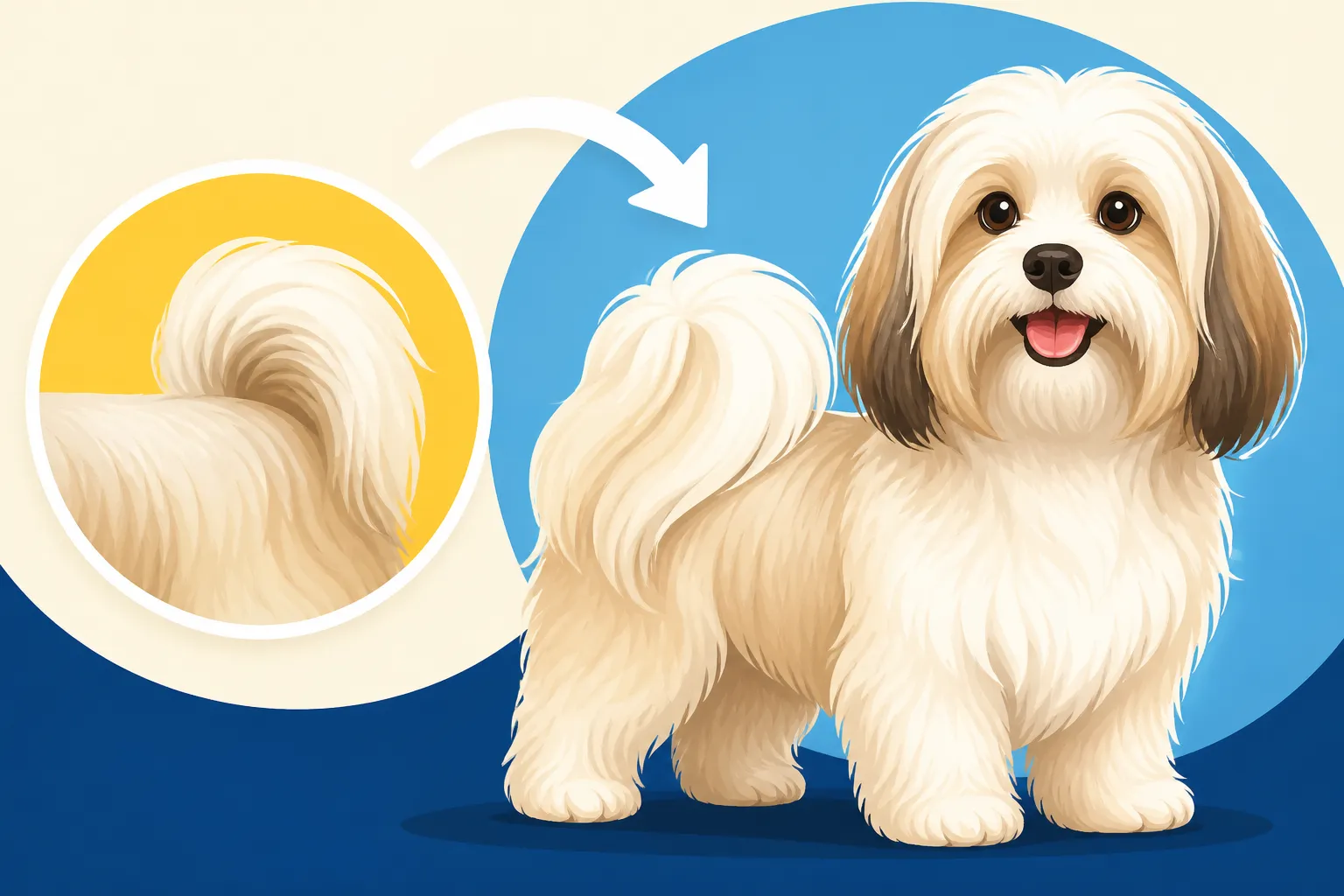
Whether a Havanese Carries Its Tail Over Its Back
It's completely normal to find yourself observing your Havanese, wondering about every little nuance of their appearance and behavior – especially something as distinctive as their tail! Many new Havanese parents, myself included, have spent time poring over breed standards or looking at photos, trying to figure out if their beloved companion's tail is exactly as it should be, curled gracefully over their back. This guide is here to reassure you and explore the wonderful world of Havanese tail carriage, distinguishing between the ideal, the common variations, and when a tail might be telling you something important about your dog's health or mood.
The Signature Havanese Tail: What the Standard Calls For
When you look at a truly stunning Havanese in a show ring, one of the first things that catches your eye, beyond that gorgeous coat, is often their tail. It’s part of their undeniable charm and balance. The breed standard, which is essentially the blueprint for what an ideal Havanese should look like, describes the tail with quite specific characteristics. It’s not just about fluff; it's about set, carriage, and even the texture of the hair on it.
Ideal Tail Set and Carriage
The ideal Havanese tail is described as being carried high and arching over the back. Think of a graceful plume, often described as a "plume of feathers," that follows the curve of their spine. This high set is crucial; it means the base of the tail sits quite high on the rump, not low, giving it that upward sweep right from the start. The curl itself isn't a tight, corkscrew curl like some breeds, but rather a softer, more elegant arch. It might even rest lightly on their back or flop over a bit to one side, but the overall impression is one of loftiness and a cheerful, active display. This carriage contributes significantly to the Havanese's overall lively and happy demeanor, almost as if their tail is a constant exclamation point to their joy.
This characteristic tail set is a hallmark of the breed, differentiating it from others. It's a key part of the silhouette and is indicative of their unique heritage as a companion dog, always ready to engage and express themselves. While the length of the hair on the tail contributes to its "plume" appearance, the underlying bone structure and muscle tone determine its natural set and how it's carried.
The Role of the Plume
The Havanese tail isn't just carried over the back; it's also adorned with a magnificent plume of long, silky hair. This abundant feathering is consistent with The Silky Double Coat a Havanese Grows to the Floor, extending the visual length and elegance of the tail itself. The hair on the tail should be long and flowy, often matching the length and texture of the body coat. This plume enhances the arched carriage, making it appear even more dramatic and beautiful. Imagine the tail moving as your Havanese prances, the hair swaying gently – it adds to their unique, almost aristocratic charm.
This plume requires regular grooming, just like the rest of their coat, to prevent mats and tangles that could pull uncomfortably and affect how they carry their tail. A good quality slicker brush and a metal comb, perhaps from a reputable pet supplier like Chewy, are essential tools for keeping that tail feathering in tip-top condition. Without proper care, mats can form, weighing the tail down or causing discomfort, which would certainly deter your Havanese from carrying it with its characteristic flourish.
Anatomy of a Havanese Tail: More Than Just a Fluffy Plume
While we often focus on the visual elegance of the Havanese tail, it's essential to understand that it's a complex anatomical structure. It's not just a decorative appendage; it's an extension of their spine, comprised of vertebrae, muscles, ligaments, and nerves, all working in concert. The way these elements are formed and function directly dictates how the tail is set and carried.
Vertebrae and Muscle Structure
A Havanese tail typically consists of around 18-20 caudal vertebrae, which are smaller bones that extend from the sacrum at the base of the spine. These vertebrae decrease in size towards the tip of the tail, allowing for flexibility and movement. Surrounding these bones is a intricate network of muscles and ligaments. These muscles control the tail's movement, allowing your Havanese to raise it, wag it, tuck it, and, yes, arch it proudly over their back. The strength and development of these muscles play a significant role in the tail's ability to maintain that characteristic high, arched posture.
Think about how your Havanese uses their tail for communication. A happy, excited Havanese will often have that tail wagging vigorously, a testament to the powerful muscles at its base. A nervous or submissive Havanese, on the other hand, might tuck their tail tightly between their legs, again demonstrating the wide range of motion these muscles afford. Any structural abnormality in these vertebrae or significant weakness in the surrounding muscles could impact the natural high carriage.
Nerve Endings and Communication
Beyond its structural components, the Havanese tail is rich in nerve endings. This makes it not only a highly expressive tool for communication but also a sensitive one. These nerves allow your Havanese to feel sensations in their tail and contribute to its voluntary movement. The tail is often considered an extension of their emotional state. A high, actively wagging tail typically signals happiness, excitement, or confidence, while a low or tucked tail might indicate fear, submission, or discomfort.
Understanding this sensitivity is crucial, especially when it comes to grooming. Careless brushing or pulling on mats can cause genuine pain, potentially making your Havanese hesitant to have their tail handled or even carried in its usual position. This connection between the tail and the nervous system also highlights why a sudden change in tail carriage, especially if accompanied by pain or weakness, can be a red flag for underlying health issues, such as those related to the spine or nerves. Whether a Havanese Gets Disc Disease could certainly manifest in changes to tail carriage and overall comfort.
Variations in Tail Set and Carriage: Is "Over the Back" Always "Over the Back"?
While the breed standard paints a picture of the ideal Havanese tail, it's important to remember that not every Havanese will look like a perfect show dog, nor do they need to! Just like people, dogs within a breed can have natural variations in their physical traits, and tail carriage is no exception. What you see in a photograph of a champion Havanese is often the pinnacle of the breed ideal, but many perfectly healthy, happy Havanese might have a tail that sits a little differently.
Common, Acceptable Deviations
You might notice that your Havanese's tail doesn't always lie perfectly flat on their back. Sometimes it might be carried more to one side, curving gracefully but settling slightly off-center. Other times, the curl might be a bit looser, not quite touching the back, or perhaps it forms more of a gentle C-shape rather than a full, tight arch. These variations are generally considered acceptable as long as the tail still conveys a sense of cheerfulness and is carried with purpose and strength. The key is that the tail still appears "high-set" and contributes to the overall balanced appearance of the dog.
For instance, some Havanese might have a tail that arches high but then flops over to the left or right, rather than resting squarely along the spine. This can simply be a minor anatomical quirk, like how some people have a cowlick in their hair, and it doesn't detract from the dog's quality of life or health. As long as the tail is flexible, well-haired, and the dog can move it freely, these minor deviations from the absolute ideal are typically nothing to worry about. It’s a part of what makes each Havanese uniquely charming.
When a Tail Carriage is Considered Faulty
While variations are common, there are certain tail carriages that are considered "faults" in the context of the breed standard, particularly in the show ring. A tail that is carried too low, for example, or one that is tucked tightly most of the time without any external cause (like fear), would be considered incorrect. A tail that lacks its characteristic plume, either due to sparse hair or a naturally short tail, would also be a deviation from the ideal. Sometimes, a tail might have a kink or an unnatural bend that suggests a structural issue, which would also be considered a fault.
It's important to distinguish between a "fault" in a show standard sense and a health concern. A low-set tail, for example, might be undesirable for show purposes, but it doesn't necessarily mean the dog is unhealthy. However, a tail that is always tucked, or one that suddenly drops and becomes limp, could certainly indicate discomfort or injury. This is why knowing the ideal helps you identify true anomalies. Understanding The Havanese Is the Only Breed Cuba Ever Produced gives you an appreciation for the specific traits breeders strive to preserve, including this distinctive tail carriage.
Factors Influencing Your Havanese's Tail Position
Your Havanese's tail is a dynamic part of their body, and its position can change throughout the day, influenced by a myriad of factors. It's not a static sculpture; rather, it's a living barometer of their mood, environment, and physical well-being. Observing these changes can give you wonderful insights into your furry friend's inner world.
Mood and Emotion
Perhaps the most obvious influence on tail carriage is your Havanese's emotional state. A happy, confident, and excited Havanese will almost certainly carry their tail high and proudly arched, often with a lively wag. When you come home from work, or when they anticipate a walk or a treat, that tail becomes a blur of joyful motion, a clear indicator of their delight. This is the classic "happy Havanese tail."
Conversely, a Havanese that is feeling shy, nervous, fearful, or even unwell, might carry their tail lower, or tuck it tightly between their legs. This is an instinctual response to protect a vulnerable part of their body and signal submission or discomfort. If your normally cheerful Havanese suddenly starts carrying their tail low for no apparent reason, it's worth taking a moment to consider what might be bothering them. Did something startle them? Are they feeling under the weather? It's a key part of how they communicate their internal state, and a well-loved Havanese will use it to tell you how they're feeling, even if you don't realize it right away.
Health and Comfort
Beyond emotions, physical health can profoundly impact how your Havanese carries their tail. Because the tail is an extension of the spine, any injury or discomfort in the lower back, hips, or tail itself can lead to a change in carriage. Conditions like intervertebral disc disease (IVDD) or even a simple strain can make it painful for your Havanese to raise or arch their tail. Whether a Havanese Gets Disc Disease is a real concern for any breed, and a change in tail carriage, especially a limp or low-slung tail, can be an early indicator.
Similarly, an injury directly to the tail, such as a sprain, fracture, or even a severe mat that pulls on the skin, can cause them to hold it differently. Sometimes, even anal gland issues can cause enough discomfort that a dog will hold their tail clamped down. If you notice a sudden, persistent change in tail carriage, especially if your Havanese also shows signs of pain, reluctance to move, or changes in behavior, it's always best to consult your veterinarian. They can help rule out any underlying medical conditions.
Genetics and Age
Just like coat color or What a Havanese Actually Weighs, genetics play a significant role in determining the natural set and curve of your Havanese's tail. Some lines might consistently produce dogs with a very high, tight curl, while others might tend towards a slightly looser arch. This is simply a manifestation of their genetic blueprint. As long as it falls within the acceptable range of the breed standard and the dog is healthy, it's just part of their individual charm.
Age can also be a factor. While puppies usually start with a fairly consistent tail carriage, sometimes as they mature, their muscles and bone structure develop, and the final "adult" tail carriage becomes more evident. In very senior Havanese, especially those with arthritis or other age-related discomfort, you might notice a slight change in how high or how consistently they carry their tail. Arthritis in a Havanese at Twelve or older could certainly lead to some stiffness that impacts their natural movements, including their tail.
| Factor | Typical Tail Carriage Effect | Notes |
|---|---|---|
| Happy/Excited | High, arched, active wagging, often resting lightly on the back. | The quintessential Havanese tail. A clear sign of positive emotion. |
| Fearful/Nervous | Low, tucked tightly between legs, minimal movement. | An instinctual self-protective or submissive posture. Can indicate environmental stress or anxiety. |
| Pain/Injury | Low, limp, held stiffly, or guarded; reluctance to move it. | A significant red flag. Could be tail specific, spinal, or hip pain. Requires veterinary attention. |
| Relaxed/Calm | High, gently curved, resting, or subtle sway; less active wagging. | A comfortable, at-ease posture. Not necessarily excited, but content. |
| Curiosity/Alert | High, often held still or with a slight quiver, attentive posture. | When assessing a new smell or sound, the tail acts as a balance and focus point. |
| Genetics | Can influence tightness of curl, height of set, and how it rests. | Inherited traits, accounting for minor variations among healthy individuals. |
| Grooming | Mats can pull it down; a well-groomed plume enhances the appearance. | Neglected tails might be carried lower due to discomfort from matting. |
When Tail Carriage Might Signal a Health Concern
While a low or less-than-perfectly-arched tail can often be a benign variation or a reflection of mood, there are definitely times when changes in your Havanese's tail carriage warrant a closer look from a veterinarian. Being observant of these shifts is a crucial part of being a responsible Havanese parent. You know your dog best, and recognizing subtle changes can be key to early detection of issues.
Sudden Onset of a Low or Limp Tail
One of the most concerning signs is a sudden, unexplained change in tail carriage, especially if the tail becomes limp, appears painful, or is consistently held low and tucked. This isn't just a temporary drop due to being startled; this is a sustained change in its resting position. A "limber tail" or "cold tail" can occur after overexertion, especially in cold water, where the tail muscles become strained and painful. While more common in working breeds, it can happen to any dog and would make them reluctant to raise their tail.
Beyond muscle strains, a limp or painful tail could indicate an injury to the tail itself, such as a fracture or sprain. Even a seemingly minor bump could cause significant discomfort. If your Havanese yelps when you touch their tail, or if they're holding it oddly, it's time to get it checked. Lumps Worth Checking on a Havanese could also include any abnormal growths on or near the tail base that might be causing pain or discomfort.
Signs of Pain or Discomfort
A low-slung tail isn't always the only indicator. Look for accompanying signs of pain or discomfort. Is your Havanese reluctant to wag their tail, even when excited? Do they whimper or flinch when you try to pet their lower back or the base of their tail? Are they having trouble sitting or lying down comfortably? These behaviors, combined with a change in tail carriage, strongly suggest an underlying issue that needs veterinary attention. Pain in the lower back or hips, which are connected to the tail's movement, can also cause a dog to carry their tail differently.
Other symptoms like lethargy, loss of appetite, changes in potty habits, or aggression when touched can all point to a dog in pain. Remember, Havanese are excellent at masking discomfort, so you might only notice subtle cues. Paying attention to their overall demeanor and body language, alongside tail carriage, can provide vital clues. If you regularly use a quality pet food from a place like Chewy, ensure they are still eating well, as a lack of appetite can be a strong indicator of pain or illness.
Grooming the Havanese Tail: Enhancing Its Natural Beauty
The Havanese tail, with its beautiful plume, is a key feature of the breed's overall appearance. Proper grooming not only keeps it looking fabulous but also ensures your Havanese is comfortable and healthy. Neglecting the tail can lead to discomfort, matting, and even changes in how it's carried. Regular grooming is a commitment, but it’s incredibly rewarding to see that silky tail flowing.
Brushing and Dematting
The long, silky hair on a Havanese tail is prone to matting, especially where it rubs against surfaces or tangles with itself. Daily brushing, or at least every other day, is essential to keep the plume free of knots. Use a good quality slicker brush and a metal comb to thoroughly work through the hair, making sure to reach the skin. Start at the tip and work your way up to the base, separating the hair in layers if necessary. This process is similar to how you would groom the rest of their flowing coat, as detailed in How Often a Havanese Must Be Brushed.
If you encounter a mat, resist the urge to pull or yank at it, as this can be very painful for your Havanese and make them dislike grooming. Instead, gently work it apart with your fingers, using a detangling spray if needed. You can also use a mat splitter tool, carefully, to break up stubborn mats. Always praise and reward your Havanese during grooming sessions, perhaps with a high-value treat from Chewy, to make it a positive experience. Teaching them to Teaching a Havanese to Lie Still for Grooming early on will make this much easier for both of you.
Trimming and Maintenance
While the goal is usually to maintain the natural length and plume of the Havanese tail, sometimes a light trim might be necessary for hygiene or to neaten the edges. Some owners opt to trim a very small amount of hair from around the anus for sanitary reasons, ensuring that the longer tail hair doesn't become soiled during potty breaks. This is a "sanitary trim" and should be done very carefully with blunt-nosed scissors. The rest of the tail's plume should generally be left long to maintain the breed's characteristic look.
Regular baths, using a gentle dog shampoo and conditioner, also contribute to a healthy, flowing tail. Ensure the tail is thoroughly rinsed and then carefully dried, ideally with a forced-air dryer on a cool setting, to prevent mats from forming as it dries. Air drying a Havanese tail, especially a thick one, can leave it prone to tangles and even skin issues if not dried properly. Proper grooming helps showcase that wonderful tail and contributes to What a Havanese Needs Every Day for overall well-being.
Disclaimer
This article is for general informational purposes only and does not constitute professional advice. Laws, prices and regulations vary by location and change over time. Consult a qualified professional for guidance on your specific situation.