Teaching a Havanese to Lie Still for Grooming
It's a common struggle for Havanese owners: you love their beautiful, flowing coats, but the thought of grooming them turns into a wrestling match worthy of an Olympic event. Your sweet, fluffy companion suddenly transforms into a squirming, nipping, or simply uncooperative bundle of fur the moment the brush comes out or the clippers buzz. This guide is here to help you turn those stressful grooming sessions into calm, cooperative experiences, fostering trust and making coat care a positive part of your Havanese's life.
Understanding Why Your Havanese Resists Grooming
Before we can teach our beloved Havanese to lie still for grooming, we first need to understand why they might be resisting in the first place. It's rarely out of malice; more often, it stems from a combination of their innate traits, past experiences, and their clever, sensitive personalities. Understanding these roots helps us approach the problem with empathy and an effective strategy.
Natural Instincts and Sensitive Skin
Havanese were originally bred as companion dogs, specifically lap warmers and entertainers for the Cuban aristocracy. They weren't developed for rugged outdoor work or to endure extensive, potentially uncomfortable handling by strangers. This means their natural instincts often lean towards comfort, closeness, and gentle interaction rather than tolerating being held still for long periods, especially if an unfamiliar tool is involved. Their entire purpose was to be cherished and pampered, and sometimes, a forceful grooming session can feel like anything but pampering.
Moreover, their skin is remarkably delicate, hidden beneath that glorious double coat. While their coat is non-shedding, it's also prone to matting, and those mats pull directly on their sensitive skin. Imagine having your hair pulled repeatedly – it's irritating and painful. A Havanese that has experienced painful mat removal, or even just persistent pulling from a brush, quickly learns to associate grooming with discomfort. This memory can make them wary of future attempts, turning even the most innocent brush stroke into a perceived threat.
Their ears, paws, and tail are also highly sensitive areas. Paws are crucial for movement and exploration, and many dogs dislike having them restrained or touched excessively, especially when it involves nail trims. The sound and vibration of clippers can be startling to their delicate ears, and their tail, an important communication tool, is often held aloft and free. Any perceived invasion of these personal spaces can trigger a natural flight or fight response, making them try to escape the situation.
Past Negative Experiences or Lack of Early Socialization
Just like people, dogs remember negative experiences. A single painful mat removal session, an accidental nick with clippers, or even an overly zealous groomer can leave a lasting impression on your Havanese. These memories can create a strong aversion, making them anticipate pain or fear whenever grooming tools appear. It's not that they're being "naughty"; they are simply protecting themselves based on past learning. This fear can escalate into full-blown anxiety or even defensive aggression, manifesting as nipping, growling, or frantic squirming.
Equally impactful is a lack of early socialization to grooming. The critical socialization period for puppies typically ends around 16 weeks of age. During this time, puppies are sponges, eagerly absorbing new experiences and forming associations that will last a lifetime. If a Havanese puppy isn't consistently and positively introduced to brushing, nail trims, baths, and the sounds of clippers during this crucial window, they miss out on forming positive associations. Instead, these activities might be perceived as strange, scary, or invasive when introduced later in life.
Think of it like learning to ride a bike: if you have a traumatic fall early on, you might be hesitant to get back on. For a Havanese, if grooming wasn't introduced as a gentle, positive, treat-filled experience, it's akin to being suddenly forced onto that bike without warning, leading to panic. This is why breeders and new owners are often advised to start handling and "mock grooming" a puppy from day one, making it a regular, enjoyable part of their routine.
The Havanese Personality: Smart, Sassy, and Sensitive
Havanese are renowned for their intelligence. They are quick learners, often excelling in trick training and even dog sports like agility. While this intelligence is wonderful for teaching them fun cues, it also means they can quickly learn what they don't like and how to manipulate situations to avoid them. If squirming results in the grooming session ending, they'll learn that squirming is an effective strategy. They are smart enough to test boundaries and try different tactics to get their way, especially if they perceive the grooming as unpleasant.
Along with their intelligence, Havanese often have a distinct "sassy" streak. They can be incredibly charming and affectionate, but they also have strong opinions and aren't afraid to express them. If they've decided they don't like something, they can be quite stubborn. This isn't defiance; it's often a reflection of their strong personality and their desire for comfort and control over their own bodies. They need to feel like they are partners in the grooming process, rather than passive recipients.
Finally, their sensitivity plays a huge role. Havanese are deeply attuned to their owners' emotions. If you approach grooming with anxiety, frustration, or a sense of dread, your Havanese will pick up on that energy immediately. This can heighten their own stress, creating a self-fulfilling prophecy where your tension makes them more difficult, which in turn makes you more tense. Creating a calm, confident, and positive environment is paramount, as their sensitive nature means they'll reflect the energy you bring to the grooming table.
Essential Tools for Stress-Free Havanese Grooming
Having the right tools is half the battle when it comes to stress-free grooming. Using dull clippers, the wrong type of brush, or struggling to hold your dog in an awkward position can quickly turn a potential bonding experience into a frustrating ordeal for both you and your Havanese. Investing in good quality, appropriate equipment is crucial for your Havanese's comfort and your peace of mind.
Selecting the Right Brushes and Combs
The Havanese coat, whether kept long or in a Puppy Cut Most Havanese Owners End Up Choosing, demands specific tools to prevent mats and keep it healthy. A high-quality slicker brush is your primary weapon against tangles. Look for one with fine, bent wire pins that are gentle on the skin but effective at reaching through the coat. A softer slicker is usually better for puppies and sensitive areas, while an adult Havanese with a dense coat might benefit from a slightly firmer one. The goal is to brush down to the skin without scratching.
A good pin brush, with rounded pins, is excellent for finishing, fluffing the coat, and general daily brushing if the coat is tangle-free. It's often more comfortable for the dog for lighter maintenance. However, it won't effectively remove mats or reach deep into a thick coat like a slicker can. For serious detangling and ensuring you've found every knot, a metal grooming comb is indispensable. A "greyhound" comb with both wide and narrow teeth is ideal; the wide teeth for general detangling and the narrow teeth for finer work and checking for hidden mats, especially behind the ears, in the armpits, and around the sanitary areas. A small face comb is also invaluable for safely cleaning up around the eyes and muzzle without poking. For more detailed advice on selection, you might find Which Brush Suits a Havanese a helpful read.
When selecting any brush or comb, always test it on the back of your hand. If it feels scratchy or uncomfortable to you, it will be even more so for your Havanese. Remember, quality tools are an investment in your dog's comfort and coat health, reducing pulling and making the experience more pleasant. Using the wrong brush or a cheap, flimsy one can cause pain, breakage, and damage to their delicate coat, exacerbating any existing grooming resistance.
Choosing Clippers, Scissors, and Nail Trimmers
When it comes to clippers for your Havanese, especially if you plan to do full body trims, a good quality animal clipper is essential. Human clippers are simply not powerful enough and will pull at the coat. Look for quiet, low-vibration clippers, as the noise can be a major source of anxiety for many Havanese. Cordless models offer more flexibility, but corded clippers often provide more consistent power. You'll need various blade sizes, such as a #10 for sanitary areas and paw pads, and longer blades like #4F or #5F for body work, depending on the desired length. Always use coolant spray on your blades to prevent them from overheating and potentially burning your dog's skin.
Grooming scissors are crucial for tidying up delicate areas. A pair of blunt-nosed or ball-tipped scissors is a must for safely trimming around the eyes, face, and paw pads where accidental nicks could cause injury. Straight shears are useful for shaping the body coat, while thinning shears can help blend lines and reduce bulk, particularly if your Havanese has a very thick or unruly coat. Always use sharp scissors; dull blades will pull hair and cause discomfort. If you're wondering about the overall investment in these tools, What Clippers Cost a Havanese Owner provides some context.
For nail trims, you have a couple of options: guillotine-style trimmers, scissor-style trimmers, or a nail grinder. Many Havanese owners find a grinder like a Dremel to be less intimidating for their dogs, as it gradually files down the nail rather than cutting. If using trimmers, ensure they are sharp to make a clean cut. Regardless of the tool, early introduction and positive reinforcement are key. Remember to never cut into the quick (the pink part of the nail) as this is painful and will cause bleeding, creating a negative association that is hard to overcome. Always have styptic powder on hand in case of an accidental quicking.
Grooming Tables, Restraints, and Drying Equipment
A dedicated grooming table can be a game-changer for maintaining good posture and control during grooming sessions. It elevates your Havanese to a comfortable working height, saving your back, and its non-slip surface provides stability for your dog. More importantly, it helps define the grooming space as a "work zone," mentally preparing your Havanese for what's to come. For nervous dogs, the table can actually make them feel more secure than being on a slippery counter or floor. Many tables are foldable, making them practical for home use. You can find a good selection of these on platforms like Amazon, alongside other grooming essentials.
Grooming loops or restraints are vital safety tools, but they should never be used to punish or forcefully hold your dog down. Instead, they act as a gentle reminder to stay still and prevent your Havanese from jumping off the table and potentially injuring themselves. A belly band can also be helpful for dogs who like to sit down during grooming. Always supervise your dog closely when using any restraint and ensure it's comfortably fitted around their neck or belly, allowing them to stand and turn their head without choking.
Finally, proper drying equipment is essential, especially for a Havanese coat. A high-velocity force dryer, though initially intimidating, is incredibly efficient at drying the coat quickly and straight, which helps prevent mats. The powerful airflow separates the hairs, reducing drying time and making subsequent brushing much easier. Introduce the dryer gradually, starting on a low setting and holding it far from your dog, slowly moving closer as they acclimate, always pairing it with treats. Never use a human hairdryer, as they get too hot and can burn your dog's delicate skin. Learning How Long Home Grooming a Havanese Takes often reveals how much time is spent on drying, making a force dryer a worthwhile investment.
Building a Positive Grooming Foundation from Puppyhood
The absolute best time to start positive grooming habits is when your Havanese is a young puppy. This early foundation is critical for preventing future struggles and ensuring a lifetime of cooperative grooming. Think of it as investing in their future comfort and your peace of mind.
Early Introduction to Touch and Handling
From the moment you bring your Havanese puppy home, begin a routine of gentle, positive handling. This isn't about full grooming sessions yet, but about making touch a normal, pleasant part of their daily life. Spend a few minutes each day gently touching their paws, wiggling their toes, looking in their ears, lifting their tail, and opening their mouth to inspect their teeth. Pair every touch with calm praise and high-value treats. The goal is to create a positive association: "When my human touches my paws, I get a yummy treat!"
Keep these sessions incredibly short, perhaps just one to two minutes, especially at first. You want to end on a high note, leaving your puppy wanting more, rather than dreading the experience. Consistency is key here; doing it daily, even if it's just a quick paw massage, will build their tolerance and trust over time. This foundational work helps them understand that being handled in various ways is safe and rewarding. If you're looking for guidance on this initial stage, Getting a Havanese Used to Brushing as a Puppy is an excellent resource to start with.
Remember to vary your touch and the areas you focus on. Don't just stick to the back; make sure to gently touch their belly, their sensitive armpits, and under their chin. These are all areas that will be handled during grooming, and getting them comfortable with it now will prevent resistance later. Always be gentle and observant of your puppy's reactions. If they show signs of stress, such as lip licking, yawning, or pulling away, ease off slightly and try again with even more delicious treats and a calmer approach.
Desensitization to Grooming Tools and Sounds
Once your Havanese puppy is comfortable with general handling, it's time to introduce them to the actual grooming tools, but in a gradual, non-threatening way. This process, called desensitization, involves slowly exposing them to the sights, sounds, and sensations of grooming tools, always pairing them with something positive. Start with the tools off and just present them. Let your puppy sniff a brush, a comb, or the clippers, then immediately reward with a treat. Repeat this several times.
Next, move to the sound. Turn the clippers on in a different room, far enough away that your puppy barely registers the sound. Give treats. Gradually, over days or weeks, bring the clippers closer, always rewarding their calm demeanor. Do the same with a force dryer, if you plan to use one. The idea is to make the sound a predictor of good things, not scary things. Once they're comfortable with the sound, turn the tool on and let them feel the vibration (for clippers) or the air (for a dryer) on a part of their body they are least sensitive to, like their back, for just a second, then reward generously.
This process takes patience, but it's incredibly effective. For instance, with nail trimmers, show them the trimmers, give a treat. Touch the trimmers to their paw, treat. Gently tap the trimmers on a nail (without cutting), treat. Build up slowly to actually trimming one tiny tip, then celebrate with a jackpot of treats and praise. Never rush this stage. A positive first experience with a tool, even if it's just a glimpse, is worth a hundred forced, stressful encounters. This method helps prevent your Havanese from becoming fearful or reactive, which can be a common problem, as discussed in Whether a Havanese Fights a Brush.
Creating a Consistent and Predictable Routine
Dogs thrive on routine and predictability, and Havanese are no exception. Establishing a consistent grooming routine from a young age helps your puppy understand what to expect, reducing anxiety and making them more cooperative. Try to groom your Havanese at roughly the same time each day or week, in the same location (ideally a dedicated grooming area or table). This ritual signals to them that "it's grooming time," allowing them to mentally prepare.
Keep grooming sessions short and frequent rather than long and infrequent. For a puppy, daily 5-10 minute sessions are far more beneficial than one hour-long session once a week. Frequent short sessions mean their coat never gets too matted, minimizing painful pulling. It also provides more opportunities for positive reinforcement, reinforcing the idea that grooming is a pleasant, quick interlude followed by rewards. A routine also makes it easier for you to stay on top of their coat care, which, for a Havanese, is a significant commitment.
A predictable routine extends beyond just brushing. Incorporate regular eye cleaning, ear checks, and paw inspections into your daily or weekly schedule. This consistent engagement with all aspects of their body, even when not actively grooming, helps them become more accepting of the overall process. When grooming becomes a non-negotiable, predictable part of their day, rather than a sporadic, surprising event, they are far more likely to accept it with grace. This proactive approach helps avoid larger issues and ensures What a Havanese Needs Every Day includes their grooming regimen.
Step-by-Step Training for Lying Still During Grooming
Once your Havanese has a positive foundation with handling and tools, it's time to deliberately teach them to lie still for extended periods during grooming. This requires patience, consistency, and breaking down the process into achievable, rewarding steps. Remember, we're building trust and cooperation, not forcing compliance.
"Down-Stay" on the Grooming Surface
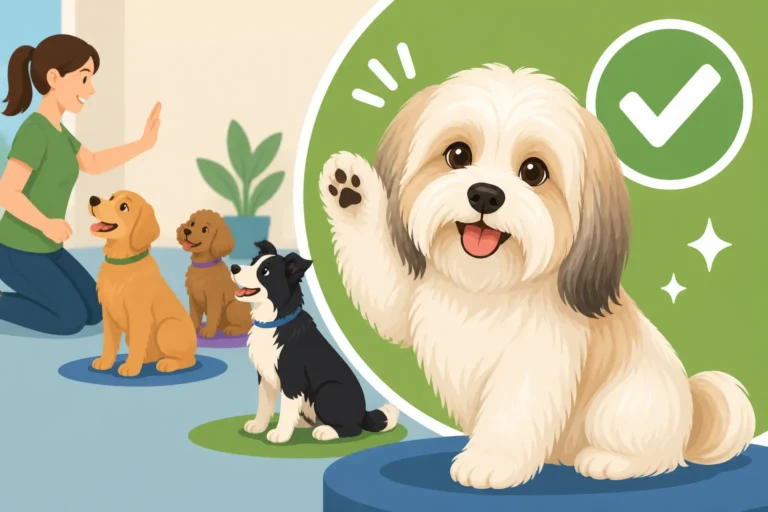
A solid "down-stay" command is invaluable for grooming. Start by teaching your Havanese a reliable down-stay on a non-slip surface on the floor. Lure them into a down position with a treat, mark the behavior with a verbal cue like "Yes!" or a clicker, and reward. Gradually extend the duration of the stay, starting with just a second or two, then building up to longer periods. Practice in various locations with minimal distractions. For comprehensive guidance on building these foundational behaviors, online training programs like those offered by BAXTER & Bella can be incredibly helpful. They often break down complex training into easy-to-follow steps for owners.
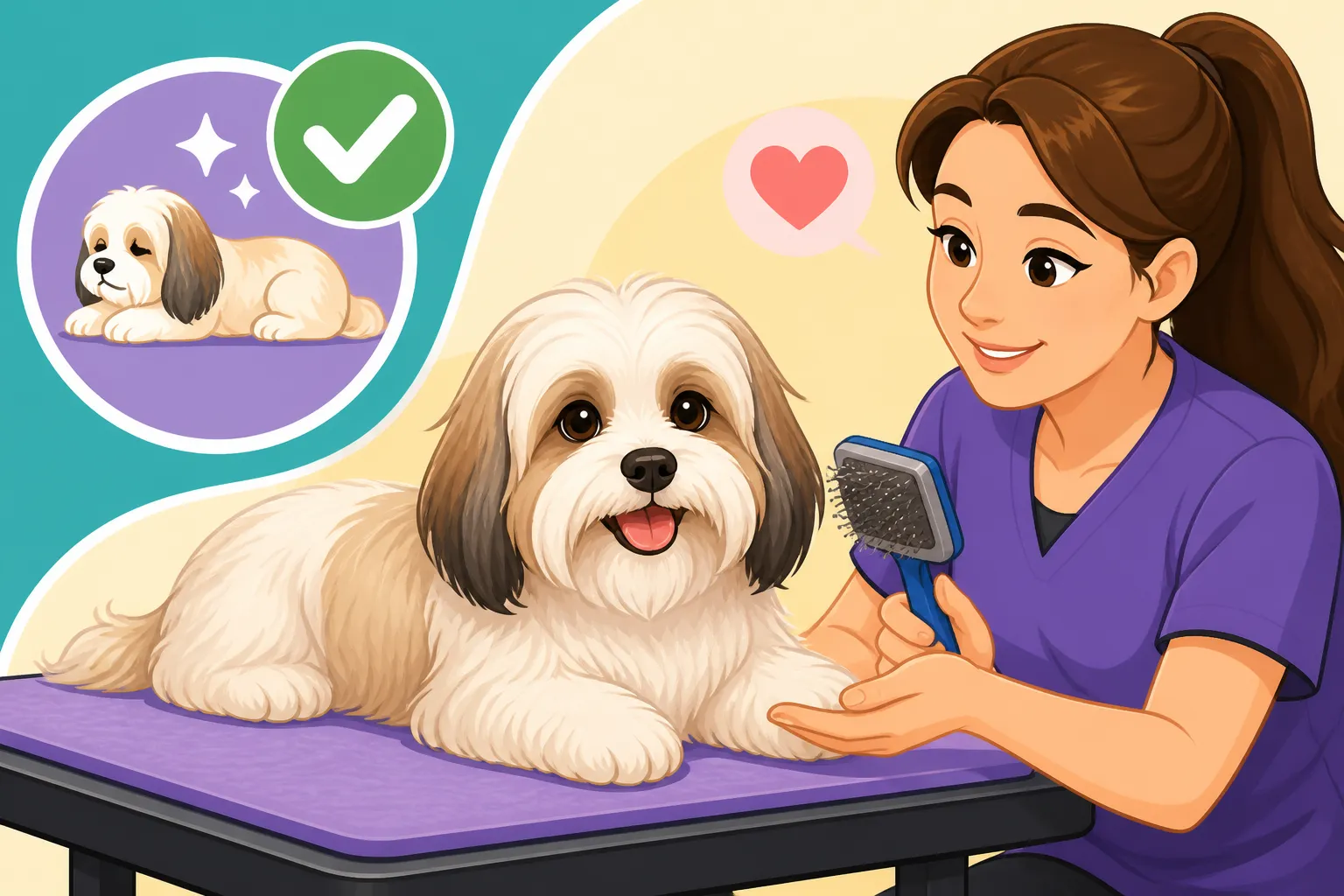
Once your Havanese has a strong down-stay on the floor, transfer this skill to your grooming surface (e.g., a grooming table with a non-slip mat). Start with very short stays, rewarding heavily. The novelty of the surface might initially be distracting, so be extra patient and positive. Once they are comfortable staying in a down position on the table, you can begin to introduce light grooming actions. For example, while they are in a down-stay, gently run a soft brush over their back for a second, then immediately release them from the stay and reward them. Slowly increase the duration and intensity of the grooming action, always keeping it positive and rewarding.
The key is to reinforce that staying still, especially in a down position, leads to good things. If they break the stay, calmly reset them without scolding and try again. Don't progress too quickly. If they are struggling with a down-stay, revisit the basics on the floor before moving back to the table. This systematic approach helps them understand that staying still is not just an expectation, but a behavior that earns them praise and treats, building a positive association with the grooming table itself.
Acclimating to Specific Grooming Tasks (Paws, Face, Ears)
Each grooming task requires its own specific desensitization and training, as different areas of the body have varying sensitivities.
Paws: Many Havanese dislike having their paws handled. Start by gently touching one paw, immediately treating and releasing. Progress to holding the paw for a few seconds, then touching the nail trimmers or grinder to one nail (without actually trimming), followed by a treat. When you do trim, only take off the tiniest tip of one nail, then stop, praise, and give a high-value reward. Build up to doing one nail per session, then gradually more. If using a grinder, turn it on away from your dog, let them hear the sound, then touch it to a nail for a split second, rewarding. Be extra careful not to quick them, as a single bad experience can set back paw handling training significantly. For more info on this, you might look into Whether a Havanese Needs Its Feet Trimmed.
Face: Trimming around the eyes and muzzle can be challenging due to the sensitivity and proximity to their vision. Use blunt-nosed scissors and practice in a well-lit area. Start by gently touching the scissors to their face (closed), then reward. Progress to holding a small section of hair between your fingers and making a snip sound with the scissors (away from their face), then reward. Slowly work towards trimming a tiny bit of hair, always rewarding calm behavior. Hold their chin gently but firmly, tilting their head slightly to expose the area. Many Havanese will try to lick your fingers or turn away, so patience is key. Keeping the area clean and free of tear stains can make this easier, as discussed in Teaching a Havanese to Have Its Face Trimmed.
Ears: Havanese have floppy ears that can trap moisture and debris, making ear cleaning and hair plucking important. Begin by gently lifting and looking inside their ear, rewarding them. Progress to gently massaging the base of their ear, then wiping the visible parts with a dog-specific ear wipe. If your vet advises plucking ear hair, do it sparingly and gently, pulling only a few hairs at a time, always rewarding immediately. Many dogs find ear handling uncomfortable, so take it slow and make it a highly positive experience with plenty of treats and praise.
Managing Wiggling and Resistance
It's natural for a Havanese to wiggle, especially when they're not fully comfortable with grooming. For minor wiggles or shifts, sometimes ignoring them and continuing calmly with the task, then rewarding the moment they settle, can be effective. This teaches them that wiggling doesn't get them out of it, but stillness does. However, if the wiggling becomes frantic, or if your dog is showing clear signs of stress (heavy panting, lip licking, whale eye, trying to bite), stop immediately. Pushing through severe resistance can erode trust and create a stronger negative association.
When your Havanese resists, try breaking the task down into even smaller, more manageable steps. If they can't handle a full paw trim, can they handle one nail? If not one nail, can they handle you touching the clippers to their paw? Find the point where they can succeed, reward that, and build from there. Redirect their attention with high-value treats or a lick mat smeared with peanut butter or plain yogurt (ensure it's xylitol-free!). This can distract them and make the experience more pleasant.
Maintaining a calm, confident, and patient demeanor yourself is paramount. Your Havanese will pick up on your stress, which will only heighten their own. If you feel yourself getting frustrated, take a break. Walk away, take a few deep breaths, and come back when you're in a more positive headspace. Sometimes, a short break to play a quick game or have a cuddle can reset the mood. Always end grooming sessions on a positive note, even if it's just a single successful touch, followed by a treat and praise. This positive ending reinforces that grooming isn't so bad after all.
Advanced Techniques and Problem Solving
Even with the best foundation, some Havanese may still present challenges during grooming. It's important to have a repertoire of advanced techniques and know when to seek professional help to ensure both your dog's comfort and safety.
Incorporating Relaxation Cues and Counter-Conditioning
Teaching your Havanese a specific "relax" cue can be incredibly helpful for grooming. Start by finding times when your dog is naturally calm and relaxed, perhaps lying on their bed. Gently stroke them and say "Relax," then offer a treat. Repeat this many times in various calm scenarios. Eventually, you can try using the "relax" cue at the beginning of a grooming session. The idea is for them to associate the word with feeling calm and receiving a reward, which can help them settle into the grooming experience.
Counter-conditioning is a powerful tool for changing negative emotional responses to grooming. If your Havanese dislikes a particular grooming action, pair that action with something they absolutely love. For example, if they hate the sound of the clippers, every time you turn the clippers on (even across the room), immediately give them a super high-value treat like a piece of cheese or boiled chicken. The goal is to change their emotional response from "clippers = scary" to "clippers = yummy treats!" Start far away and gradually bring the clippers closer as their comfort grows. This process fundamentally changes their perception of the stimulus.
You can also use calming aids. Pheromone sprays or diffusers, like Adaptil, can help create a more relaxed environment. Some owners find calming music or white noise helps soothe their Havanese during grooming. For dogs with significant anxiety, your veterinarian might suggest natural supplements like L-theanine or Zylkene. These aren't sedatives but can help take the edge off anxiety, making your Havanese more receptive to training.
What to Do When Mats Become a Major Issue
Despite best efforts, sometimes mats happen, especially during the coat change from puppy to adult, as discussed in Why a Havanese Mats at Eight Months and Not Before. When mats become severe, the grooming challenge intensifies dramatically. It's crucial to understand that attempting to brush out dense, painful mats can be excruciating for your Havanese and can quickly destroy any trust you've built. A matted coat pulls on the skin, restricts movement, and can even cause skin infections. In these cases, humane dematting often means a trip to the groomer for a full shave-down.
If you encounter small, isolated mats that you feel confident you can handle without causing pain, use a mat splitter or carefully work a fine-toothed comb through them, starting from the outside edge of the mat and working your way in. Always hold the skin at the base of the mat to prevent pulling. However, be realistic about what you can achieve without hurting your dog. For extensive matting, the kind that feels like felt or concrete, a professional groomer is the safest and most humane option. They have specialized tools and experience, but even they will often advise a shave-down rather than painful dematting. Whether a Matted Havanese Must Be Shaved directly addresses this difficult decision.
Remember, a clean slate (a shaved coat) is often the kindest solution for a severely matted Havanese. While it might be disheartening to lose that beautiful long coat, their comfort and well-being should always come first. Use the opportunity of a short coat to restart your positive grooming training, focusing on daily brushing and preventing future mats. This allows the new coat to grow in healthy and tangle-free, and your Havanese to associate grooming with comfort rather than pain.
Seeking Professional Help for Severe Resistance
If your Havanese exhibits severe resistance, aggression, or extreme anxiety during grooming despite consistent positive training, it's time to seek professional help. A professional groomer who specializes in fearful or difficult dogs can be an invaluable resource. They often have techniques, tools, and a calm, confident demeanor that can sometimes get through to a dog when an owner can't. They can also provide hands-on demonstrations of proper handling and tool use.
For extreme cases of anxiety or fear-based aggression, consult your veterinarian. They can rule out any underlying pain issues that might be contributing to the resistance. If no medical cause is found, they might refer you to a veterinary behaviorist or a certified professional dog trainer who specializes in behavior modification. These experts can help you develop a tailored behavior plan, potentially incorporating desensitization and counter-conditioning techniques to address deep-seated fears.
In some situations, especially for essential grooming tasks like nail trims or sanitary shaves that cause immense distress, your vet might discuss the option of mild sedation. This is typically a last resort, used when the dog's welfare (e.g., severe matting causing skin issues, overgrown nails causing pain) outweighs the risks of sedation. It's not a training solution, but a management tool to ensure necessary care can be provided humanely. Always consult with your veterinarian to determine if sedation is an appropriate and safe option for your individual Havanese.
Maintaining a Calm Grooming Experience Long-Term
Consistency is the golden rule for Havanese grooming, extending far beyond puppyhood. It's about integrating grooming into their daily life in a way that remains positive and reinforces your bond. Think of it as an ongoing conversation, not a one-time lecture.
Regularity and Consistency are Key
For a Havanese, "set it and forget it" grooming simply doesn't work. Their beautiful, non-shedding coats are prone to matting, and even a couple of missed days can lead to tangles, especially during coat changes or if they've been playing outdoors. Establishing a consistent schedule of daily brushing, even for just a few minutes, is non-negotiable for keeping their coat healthy and pain-free. This doesn't just apply to long coats; even a Havanese in a Whether a Shorter Clip Cuts a Havanese's Bill needs regular brushing to prevent matting and maintain skin health.
In addition to daily brushing, schedule regular professional grooming appointments, typically every 4-8 weeks, depending on coat length and lifestyle. These appointments handle baths, drying, clipping, and thorough checking of ears, eyes, and nails – tasks that can be difficult to do perfectly at home. Consistent professional care not only keeps your Havanese looking their best but also reinforces the idea that grooming is a routine part of life, not a dreaded, infrequent event. For detailed advice on how often to brush, How Often a Havanese Must Be Brushed provides excellent insights.
Regularity also means being consistent in your approach. Use the same positive reinforcement techniques, the same calm voice, and the same tools. Dogs thrive on predictability. If grooming is always a calm, rewarding experience, your Havanese will approach it with less apprehension. Inconsistent routines or a sudden change in approach can create confusion and reintroduce resistance, making it feel like you're starting from scratch.
Making Grooming a Positive Bonding Time
Shift your mindset about grooming from a chore to an opportunity for bonding and connection. Many Havanese adore spending time with their humans, and if grooming is presented as another form of affectionate attention, they are much more likely to cooperate. Talk softly to your Havanese, praise them frequently, and give gentle strokes and massages throughout the grooming session. Make it feel like a shared, pleasant activity rather than a necessary evil.
Use grooming sessions to deepen your understanding of your Havanese. Pay attention to their body language, notice any new lumps or bumps, check for skin irritations, or feel for changes in their coat texture. This attentive handling not only helps catch potential health issues early but also communicates to your Havanese that you are observant and caring, further building trust. For many Havanese, the one-on-one attention during grooming can be quite enjoyable, especially if it's accompanied by their favorite treats.
Always end on a high note. Even if a session was challenging, find one small positive thing your Havanese did – perhaps they held still for one extra second, or allowed you to brush a difficult spot without protest. Reward that moment generously with treats, praise, and a short play session or cuddle. This positive ending ensures that the last memory of grooming is a good one, setting the stage for more cooperation in the future. The aim is for your Havanese to leave the grooming table feeling loved and rewarded, not relieved that it's finally over.
Adapting as Your Havanese Ages
As your Havanese transitions into their senior years, their grooming needs and tolerance may change. What was once an easy routine might become more challenging due to age-related issues. The Age a Havanese Counts as Senior can vary, but generally, around 8-10 years, you'll start noticing changes. Arthritis, decreased mobility, vision or hearing loss, and increased sensitivity can all impact their ability or willingness to stand still for grooming.
Be extra gentle and patient with an older Havanese. Provide a soft, non-slip mat on your grooming table, and consider doing grooming sessions on the floor if getting on and off the table is difficult for them. Use softer brushes, take more frequent breaks, and allow them to sit or lie down more often. Pay close attention to their comfort level; if they show signs of pain or discomfort, stop and consult your veterinarian. They might benefit from pain medication or joint supplements that can make standing and being handled more comfortable. For comprehensive guidance on grooming an older dog, Grooming an Old Havanese That Cannot Stand Long offers invaluable advice.
Vision and hearing loss can make an older Havanese more easily startled. Approach them gently, letting them know you're there before you touch them. Keep the grooming environment quiet and calm. Their skin may also become thinner and more delicate, so use extreme caution with clippers and scissors. Adjusting your routine to accommodate their changing needs ensures that grooming remains a positive experience throughout their golden years, supporting their overall health and quality of life.
Grooming Tools Comparison Table
| Tool Category | Specific Tool | Primary Use | Key Benefit for Havanese |
|---|---|---|---|
| Brushes & Combs | Slicker Brush | Removing mats, brushing through thick coat, deshedding | Essential for preventing and removing tangles down to the skin. |
| Pin Brush | Finishing coat, general daily brushing (tangle-free), fluffing | Gentle for daily maintenance and comfortable for the dog. | |
| Metal Grooming Comb | Detangling, checking for hidden mats, fine detail work | Reaches through the full coat to ensure no mats are missed. | |
| Face Comb | Cleaning around eyes, muzzle, small sensitive areas | Safely manages delicate facial hair without irritation. | |
| Clippers & Trimmers | Electric Clippers | Full body trims, sanitary trims, paw pads | Efficiently removes hair; quiet models reduce anxiety. |
| Blunt-Nosed Scissors | Trimming around eyes, paw pads, delicate areas | Safety feature prevents accidental nicks. | |
| Straight Shears | Shaping body coat, blending lines | Provides a clean, professional finish. | |
| Nail Trimmers (Scissor/Guillotine) | Clipping nails | Quick and efficient for nail maintenance. | |
| Nail Grinder (Dremel) | Filing down nails | Less intimidating for many dogs, reduces risk of quicking. | |
| Other Equipment | Grooming Table | Elevating dog for comfortable and controlled grooming | Improves posture for handler, provides stable, defined workspace. |
| Grooming Loop/Restraint | Gently keeps dog on table, prevents jumping | Safety tool; never for force or punishment. | |
| Force Dryer | Fast, efficient coat drying, helps de-mat | Reduces drying time, prevents matting, improves coat condition. | |
| Styptic Powder | Stops bleeding from quicked nails | Essential for immediate first aid during nail trims. |
Grooming your Havanese doesn't have to be a battle. By understanding their unique temperament, investing in the right tools, and approaching grooming with patience, consistency, and plenty of positive reinforcement, you can transform it into a positive, bonding experience. Remember, every little step of cooperation, every moment of stillness, deserves to be celebrated. With time and dedication, you'll both look forward to those regular grooming sessions, ensuring your Havanese remains happy, healthy, and beautifully coiffed.
Disclaimer
This article is for general informational purposes only and does not constitute professional advice. Laws, prices and regulations vary by location and change over time. Consult a qualified professional for guidance on your specific situation.