Whether a Havanese Is Fragile Around Children
Bringing a furry friend into a home with children often comes with a common worry: will our beloved small dog be safe and sound with the boundless energy of little ones? It’s a completely natural concern to wonder if a delightful Havanese, with their charming, seemingly delicate stature, is truly robust enough to thrive in a busy family environment, especially when curious hands and unpredictable movements are part of daily life. This guide will dive deep into the Havanese's physical characteristics and wonderful temperament to help you understand if this breed is the right fit for your family and, most importantly, how to ensure a harmonious, safe relationship for everyone.
Understanding the Havanese Physicality: More Robust Than They Appear
While Havanese are undeniably a toy breed, often tipping the scales at around 7 to 13 pounds, their physical build is surprisingly sturdy for their size. They aren't as delicate as some other tiny breeds, but they still require careful handling due to their compact bone structure and relatively small size. The concern about a Havanese being "fragile" often stems from their small stature, but their active, playful nature actually gives them a decent degree of agility and resilience.
Their Size and Bone Structure
When we talk about a Havanese, we're typically looking at a dog that stands about 8.5 to 11.5 inches tall at the shoulder. This puts them firmly in the "lap dog" category, which is part of their charm. However, unlike some toy breeds with extremely fine bones that might be prone to breaks from minor impacts, the Havanese, descended from hardy ancestors, possesses a moderately robust bone structure for its size. They are active, agile dogs, capable of quick turns and energetic play, which speaks to a certain physical hardiness.
Despite this, it's crucial to remember that any small dog can be injured by accidental roughhousing, falls from heights, or being stepped on. A Havanese puppy, especially, is incredibly vulnerable. Their bones are still developing, and even a seemingly innocent tumble from a couch or an accidental fall while being carried can lead to serious injuries. As they grow into adults, their skeletal system becomes stronger, but vigilance remains key. It’s less about inherent fragility of the breed, and more about the common sense care any small creature needs.
Agility and Activity Levels
Havanese are not just pretty faces; they are surprisingly agile and love to move. Many Havanese excel in dog sports like agility, showing off their quick reflexes and nimble footwork. This inherent athleticism means they are less likely to be slow-moving or clumsy, which can actually be a protective factor in a busy household. They can often dodge unexpected movements or playfully escape a clumsy child's reach with surprising speed.
This doesn't mean they're invulnerable, of course. A Havanese with a long, flowing coat might occasionally trip over their own hair if it's not well-maintained or tied back, especially around the eyes. Their bouncy energy, while wonderful for play, can also lead to them accidentally getting underfoot if not watched. Teaching both the dog and the children how to move safely around each other is paramount. For example, ensuring that a Havanese always has a clear path when entering or leaving a room can prevent accidental bumps and tumbles. How Much Exercise a Havanese Needs is a great article to understand their activity levels.
Havanese Temperament Around Children: A Nurturing Nature
Beyond their physical makeup, a Havanese's temperament is arguably the most critical factor in determining how well they'll integrate into a family with children. Thankfully, this breed is renowned for its friendly, outgoing, and affectionate nature, often thriving on companionship and interaction. They were historically bred as companion dogs, specifically to entertain and charm, making them generally well-suited to family life.
Their Patience and Playfulness
One of the Havanese's most endearing qualities is their cheerful disposition and innate desire to be part of the family action. They are typically very patient and tolerant, qualities that are invaluable when living with children. They love to play, making them wonderful companions for kids who understand how to interact respectfully. A Havanese will often happily engage in games of fetch, gentle tug-of-war, or follow children around the house, acting as a furry shadow. Their playful antics and "circus dog" history mean they often enjoy performing little tricks and being the center of attention, which children adore. The Circus Dog Brain Inside a Havanese offers more insight into this playful nature.
However, patience has its limits for any dog. A Havanese, like any breed, can become overwhelmed, startled, or uncomfortable if playtime becomes too rough, too loud, or if they feel cornered. It's not fair to expect any dog, no matter how good-natured, to endlessly tolerate inappropriate handling. Consistent supervision of interactions between children and dogs is absolutely non-negotiable, ensuring both are safe and happy.
Sensitivity and Stress Signals
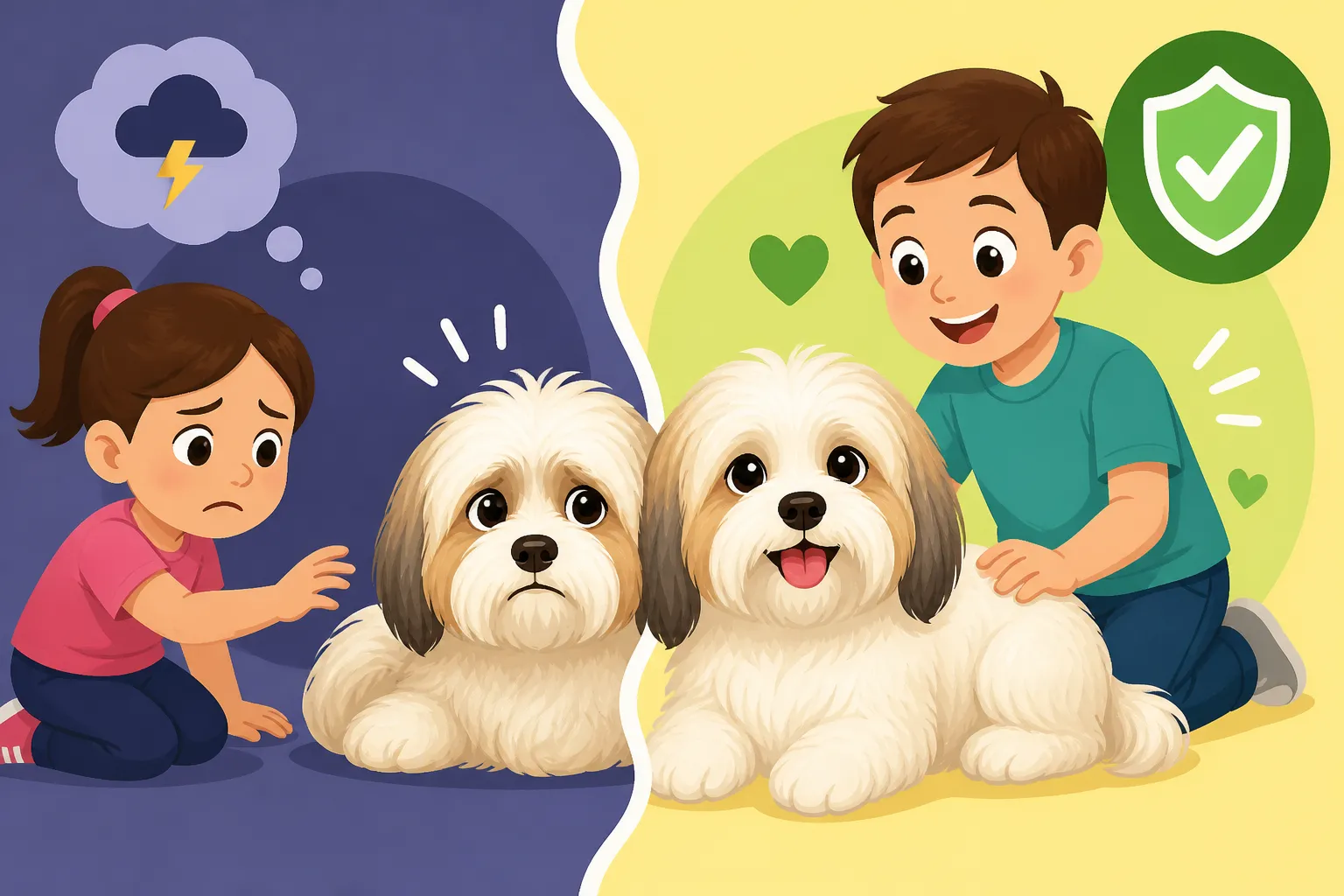
Despite their robust spirit, Havanese are quite sensitive dogs. They are attuned to the moods and energy of their human family members. This sensitivity means they can pick up on stress or tension, and they may react negatively to sudden loud noises, aggressive movements, or perceived threats. A child's excited shriek or sudden dash might be interpreted as startling or even frightening if the dog isn't properly socialized or if the interaction is unmanaged.
It’s vital for both adults and children to learn how to read a Havanese's body language. Subtle cues like yawning, lip-licking, turning their head away, or a tense posture can signal that the dog is feeling uncomfortable or stressed. If these early warning signs are ignored, a dog might escalate to a growl or even a snap, not out of malice, but out of fear or an attempt to communicate their discomfort. Teaching children to respect these signals and to give the dog space is essential for preventing incidents and fostering mutual respect. Understanding these nuances is part of ensuring A Havanese in a House With Children thrives.
Educating Children on Safe Interaction: Setting Boundaries
The cornerstone of a successful relationship between a Havanese and children lies in clear, consistent education and supervision. It’s not just about training the dog; it’s equally, if not more, about teaching children how to interact safely and respectfully with their canine companion. This process starts long before the dog even arrives home and continues throughout their lives together.
Gentle Petting and Handling Rules
Children, especially very young ones, often don't understand their own strength or how to gently interact with animals. It's our responsibility as adults to teach them. Start by demonstrating gentle petting – using an open hand, stroking softly along the back or chest, avoiding tugging on ears or tails, and refraining from poking or grabbing. Explain that a dog's face, ears, and tail are sensitive areas, just like a child's own. Encourage children to "be a tree" – stand still and let the dog approach them, rather than rushing towards the dog.
One effective strategy is to practice with a stuffed animal first, mimicking gentle interactions. Always supervise initial interactions closely, gently redirecting any inappropriate actions immediately. Praise both the child and the dog for positive, calm interactions. A firm but gentle "no" or "easy" can be used to stop rough handling, followed by showing the child the correct way. It’s also crucial to teach children to never bother the Havanese when it's eating, sleeping, or in its crate, which should be considered its safe den.
Respecting Personal Space and Quiet Time
Every dog needs a safe retreat where they can go to relax undisturbed, and a Havanese is no exception. This might be a cozy crate, a specific dog bed, or a quiet corner of a room. Teach children that when the Havanese goes to its "safe space," it means they need quiet time and should not be followed, disturbed, or bothered. This is a non-negotiable rule. Using a dog gate, readily available from retailers like Amazon, can physically separate the dog's space from high-traffic child play areas when needed.
Establish clear rules about volume and activity levels around the dog. Children need to understand that loud screams, sudden running, or boisterous games can frighten or overwhelm a small dog. Encourage calm voices and movements around the Havanese, especially when the dog is resting. This mutual respect for boundaries fosters trust and security for the dog, making it less likely to react defensively. Whether a Havanese Suits a Family With Young Children delves deeper into these dynamics.
Preparing Your Havanese for Life with Kids: Socialization and Training
Bringing a Havanese into a home with children requires proactive socialization and training to ensure they are well-adjusted and comfortable with the sights, sounds, and unpredictable nature of kids. A well-socialized and trained Havanese is a confident Havanese, much less likely to be "fragile" in temperament.
Early Socialization to Children's Presence
If you're getting a puppy, early socialization is critical. Expose your Havanese puppy to a variety of safe, well-behaved children of different ages from a young age. This helps them learn that children are part of their world and not something to fear. This exposure should always be positive, supervised, and controlled. Avoid overwhelming the puppy with too many children at once or allowing rough play. Treats and praise should accompany every positive interaction with a child.
Even if you're adopting an adult Havanese, gradual and positive introductions to children are essential. Start with short, calm interactions, always with an escape route for the dog. Over time, as the dog shows comfort, you can gradually increase the duration and type of interaction. A good online training program, such as that offered by BAXTER & Bella, can provide structured guidance on socialization and foundational obedience, which are invaluable for a dog living with children. They offer resources that help integrate a puppy into a family dynamic, including those with kids.
Training for Basic Obedience and Impulse Control
Basic obedience commands like "sit," "stay," "come," and "leave it" are not just polite manners; they are safety tools. A reliable "come" can prevent a dangerous situation if a child is being too boisterous, allowing you to call your Havanese to safety. "Leave it" is invaluable for preventing them from picking up dropped food or toys that might pose a choking hazard or lead to resource guarding. Teaching a Havanese to go to their mat or bed on command can also provide a valuable "time out" space when activity levels in the house get too high.
Beyond commands, focus on impulse control. Teaching your Havanese to wait patiently for a toy or treat, rather than snatching it, can translate to calmer interactions with children. These skills make the Havanese a more predictable and well-behaved family member, reducing the risk of accidental nips or fearful reactions. For more on training, you might find Training a Havanese Tricks It Will Perform All Day useful for understanding their learning capabilities.
Common Mishaps and How to Prevent Them: Proactive Strategies
Even with the best intentions and training, living with dogs and children means understanding and mitigating potential mishaps. Being proactive in managing the environment and teaching appropriate behaviors can prevent most issues before they arise.
Accidental Falls and Getting Stepped On
Because of their small size, Havanese are susceptible to accidental injury, particularly falls and being stepped on. A small Havanese puppy can easily be tripped over or dropped by a child who isn't careful. To prevent falls, teach children to always sit on the floor when interacting with the Havanese, especially when holding them. Never allow children to pick up or carry the Havanese without direct adult supervision, and even then, teach them how to support the dog properly with both hands.
To minimize the risk of being stepped on, ensure your Havanese has clear paths when moving around the house. Avoid letting them trail directly behind children's feet, particularly when children are running or playing boisterously. Placing bells on a Havanese's collar can also provide an audible warning of their presence, particularly helpful in busy environments. For preventing joint issues later in life, articles like Whether a Havanese Should Use Steps to the Couch or Keeping a Havanese Off Furniture It Should Not Jump From are good reads.
Managing Reactions to Unpredictable Children
Children can be loud, fast, and unpredictable – qualities that can be startling for any dog. A sudden scream, a dropped toy, or an unexpected dash can cause a Havanese to jump, yelp, or even snap out of fear. The key is to manage these situations rather than expecting the dog to simply "deal with it."
Create calm-down zones for your Havanese, like a crate with a blanket over it in a quiet room, where they can retreat when the children's energy levels are high. Use positive reinforcement to reward calm behavior around children. If a child is consistently too rough or loud, it may be necessary to separate them and teach the child alternative, quieter ways to interact. Never punish a Havanese for growling; a growl is a warning, and punishing it only teaches the dog not to warn, which can lead to a bite without warning. Instead, address the underlying cause of the growl by removing the dog from the situation.
Making the Decision: Is a Havanese Right for Your Family?
Deciding whether a Havanese is the right fit for your family with children involves weighing their inherent traits against your family's lifestyle and commitment to training and supervision. While they are a generally robust and good-natured breed, their small size and sensitivity mean that certain considerations are paramount.
Assessing Your Family's Lifestyle
Consider the age and temperament of your children. A Havanese can thrive with respectful, older children who understand how to interact gently. With toddlers or very young children, the risk of accidental injury to the dog is higher, and the need for constant, vigilant supervision is absolute. If your children are prone to roughhousing, loud play, or simply lack the maturity to be consistently gentle, a Havanese might not be the ideal choice without significant, ongoing intervention.
Also, think about your family's schedule and energy levels. Havanese are highly social dogs who thrive on companionship. They do not do well being left alone for long periods and can develop separation anxiety. If your family is frequently out or has a very chaotic schedule, this breed might struggle. They truly want to be included in daily life and will follow you Why a Havanese Follows You Into Every Room. A family that values calm, interactive companionship, and is committed to including their dog in family activities, will find a Havanese to be a wonderful addition.
Commitment to Supervision and Training
The most crucial factor is your commitment as parents to actively supervise all interactions between your Havanese and your children. This isn't a "set it and forget it" situation. It means teaching children boundaries, teaching the dog appropriate behavior, and always being present to intervene if necessary. Investing time in training, both for the dog and for the children, is vital.
This breed can certainly be a fantastic family pet, often forming deep bonds with children, but their success hinges on responsible pet ownership. If you're willing to dedicate the time and effort to consistent positive reinforcement training, early and ongoing socialization, and diligent supervision, a Havanese can be a joyful, loving, and surprisingly resilient companion for children, dispelling any notions of them being overly "fragile." For deeper thought, you might read Whether a Havanese Is Safe With Toddlers.
Here's a quick overview of how Havanese traits align with family life with children:
| Trait | Havanese Characteristic | Impact on Children's Interactions |
|---|---|---|
| Size | Small (7-13 lbs, 8.5-11.5 inches) | Requires gentle handling; susceptible to accidental falls/being stepped on. |
| Bone Structure | Moderately sturdy for a toy breed | Less fragile than some tiny breeds, but still needs care. |
| Agility | High; quick and nimble | Can often avoid clumsy movements; enjoys active play. |
| Temperament | Affectionate, cheerful, patient, social, sensitive | Generally good-natured with children; thrives on companionship. |
| Playfulness | High; loves games and performing tricks | Excellent playmate for respectful children. |
| Energy Level | Moderate; enjoys walks and indoor play | Good for families that offer consistent, gentle engagement. |
| Training Aptitude | High; intelligent and eager to please | Responsive to positive reinforcement; benefits greatly from obedience. |
| Social Needs | High; prone to separation anxiety | Best for families where they are included and not left alone often. |
Remember, a "fragile" Havanese is often a reflection of inappropriate handling and a lack of understanding of canine communication, rather than an inherent flaw in the breed itself. With the right approach, your Havanese can be a cherished, robust member of your family for many years to come.
Disclaimer
This article is for general informational purposes only and does not constitute professional advice. Laws, prices and regulations vary by location and change over time. Consult a qualified professional for guidance on your specific situation.