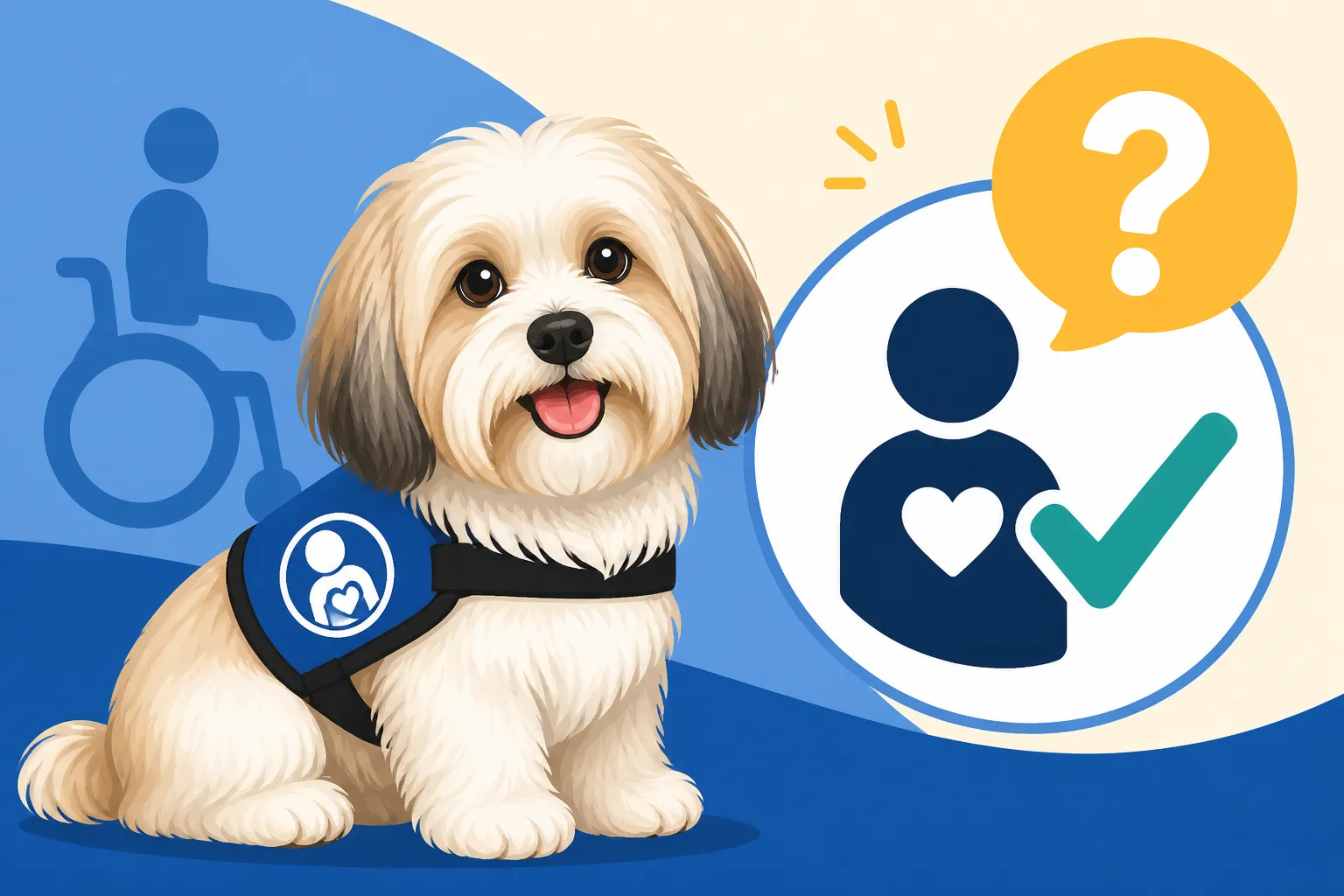
Whether a Havanese Can Be a Service Dog
The idea of your beloved Havanese being more than just a cherished pet, but a true working partner, is incredibly appealing for many. People often wonder if their small, fluffy companion has what it takes to perform life-changing tasks, especially given their intelligence and devotion. It's a valid question, and this guide will delve deep into the realities, possibilities, and challenges of whether a Havanese can genuinely thrive as a service dog.
Understanding the True Role of a Service Dog
Before we can even begin to assess if our charming Havanese is up to the task, it’s absolutely essential to clarify what a "service dog" truly is. There's a lot of confusion out there, often mixing up service dogs with emotional support animals (ESAs) or even therapy dogs. This misunderstanding can lead to disappointment or, worse, put a dog in a situation it's not equipped to handle, and a handler in a legally vulnerable position.
What Defines a Service Dog Legally
In the United States, the Americans with Disabilities Act (ADA) provides a very specific definition. A service animal is a dog that has been individually trained to do work or perform tasks for an individual with a disability. The task must be directly related to the person's disability. It's not about comfort or companionship, no matter how much we adore our dogs; it's about measurable, trained work. This could be anything from guiding a visually impaired person to alerting a deaf person to sounds, or even detecting an oncoming seizure. The key here is "individually trained work or task." This isn't something a dog instinctively does; it's a learned behavior, often through hundreds of hours of dedicated training. The dog isn't just there for comfort; it's actively mitigating a disability.
Distinguishing Service Dogs from ESAs and Therapy Dogs
This is where the waters often get muddy for well-meaning pet owners. An Emotional Support Animal (ESA) provides comfort simply by its presence. There's no specific task training involved. While ESAs can be incredibly beneficial for mental well-being, they do not have the same public access rights as service dogs. You can't take an ESA into non-pet-friendly public spaces, like restaurants or grocery stores, unless the establishment explicitly permits it. They are primarily recognized for housing and air travel (though airline policies have changed).
Therapy dogs, on the other hand, are highly trained dogs who work with their handlers to provide comfort and affection to many people in settings like hospitals, nursing homes, or schools. They are fantastic at bringing smiles and reducing stress, but they are still pets with special training, not service animals for a specific individual's disability. Their public access is limited to invited visits. Knowing this distinction is vital, because while a Havanese makes an absolutely stellar ESA or therapy dog, the bar for being a service dog is much, much higher.
Strengths of a Havanese for Service Work
Despite their small stature, Havanese possess several characteristics that can make them surprisingly well-suited for certain types of service work. Don't let their fluffy appearance fool you; these little dogs are often packed with brains and a desire to please.
Intelligence and Eagerness to Please
Havanese are known for their intelligence and quick learning abilities. They truly thrive on interaction and mental stimulation, often picking up new commands and tricks with remarkable speed. Their ancestors were performers, and that "circus dog brain" is still very much intact, making them highly trainable. In fact, you might find that The Circus Dog Brain Inside a Havanese makes them uniquely eager for structured learning. They love having a job to do and excel when given clear expectations and positive reinforcement. This eagerness to please is a cornerstone of successful service dog training, as the dog needs to be motivated to perform tasks reliably, even in distracting environments. They often respond well to clicker training and food rewards, making them a joy to teach.
Portability and Non-Intimidating Presence
Their small size, typically between 7 to 13 pounds, is a huge advantage for a service dog in many scenarios. A Havanese can easily be carried, fits comfortably under an airline seat, and navigates crowded spaces without drawing undue attention or causing obstruction. For individuals who need their service dog with them at all times, including on public transport or in tight quarters, a larger breed can present logistical challenges. A Havanese, with its compact frame, is largely unnoticeable to many people, reducing potential interference or fear from the public, which can be a significant benefit for a handler needing to move discreetly through various environments. Their friendly, approachable demeanor also means they are less likely to be perceived as threatening, which is important for public acceptance.
Temperament and Strong Bond with Their Handler
Havanese are renowned for their loving, devoted, and sensitive nature. They form incredibly strong bonds with their human companions, often described as "Velcro dogs" who love to be right by your side. This intense loyalty means they are highly attuned to their handler's emotional and physical states, which is invaluable for alert or response tasks. You'll often find that Why a Havanese Follows You Into Every Room isn't just a quirk, but a deep desire to be connected, a trait that translates beautifully into service work. Their gentle disposition also makes them ideal for tasks requiring a calm presence, and their inherent desire to comfort and connect can be channeled into focused, supportive work. They're typically not prone to aggression, which is a non-negotiable trait for any public access animal.
Challenges a Havanese Might Face as a Service Dog
While Havanese have many wonderful qualities, it’s equally important to be realistic about their limitations when considering them for service work. Not every disability or task is suited to a small breed.
Size Limitations for Physical Tasks
This is perhaps the most significant challenge. Due to their small size and delicate build, Havanese are simply not physically capable of performing tasks that require bracing, mobility support, or heavy retrieval. They cannot pull a wheelchair, help a person balance, or pick up a dropped cane. If an individual's disability requires significant physical assistance, a Havanese would not be an appropriate choice. Their bones are small, and putting undue stress on their joints could lead to injury for the dog, especially considering common breed predispositions like The Kneecaps a Havanese Slips or potential for Legg Calve Perthes and the Limping Havanese Puppy. It's crucial that the dog's welfare and safety are always paramount.
Grooming and Maintenance Requirements
The beautiful, flowing coat of a Havanese, which can grow to the floor, is stunning but incredibly high-maintenance. Regular, thorough grooming is not optional; it's a daily necessity to prevent matting and skin issues. The Silky Double Coat a Havanese Grows to the Floor requires diligent brushing and often professional trims every few weeks. For a service dog handler, who might have limited mobility, dexterity, or energy due to their disability, maintaining such a demanding coat can be an insurmountable hurdle. A matted, uncomfortable dog cannot perform its duties effectively and ethically. While a "puppy cut" can simplify grooming significantly, it still requires consistent care, bathing, and drying. This is a practical consideration that must be weighed carefully against the handler's ability to provide constant care for their dog's coat.
Potential for Alert Barking
Havanese are often very alert and can be prone to barking, especially at new sounds or when someone comes to the door. While this trait can be advantageous for specific alert tasks, like notifying a hearing-impaired person of a smoke alarm, it needs to be very carefully managed and directed in a public access service dog. Excessive or undirected barking in public can be disruptive, annoy others, and even lead to questions about the dog's training and legitimacy as a service animal. The Barking a Havanese Does at Every Sound can be a challenge to mitigate, requiring extensive training to teach a "quiet" cue and to differentiate between appropriate alert barking and nuisance barking. A service dog needs to be unobtrusive and calm in all public settings, and managing a naturally vocal breed requires consistent work.
Suitable Service Tasks for a Havanese
Despite their limitations for heavy physical work, Havanese excel at specific, intricate tasks that leverage their intelligence, attentiveness, and strong bond with their handler. When considering a Havanese for service work, focus on tasks where their size is an asset rather than a hindrance.
Medical Alert and Response
Havanese can be incredibly effective at tasks that involve detecting subtle changes in their handler's body chemistry or behavior, or responding to specific medical events. They can be trained to:
- Diabetic Alert: Alert their handler to dangerous drops or spikes in blood sugar levels by detecting scent changes in their breath or sweat. Their keen sense of smell, combined with their close proximity to their handler, makes them excellent for this.
- Seizure Alert/Response: Some Havanese can be trained to recognize the subtle pre-seizure cues in their handler and alert them, allowing the person to get to a safe place. Others can be trained to stay with their handler during a seizure, fetching medication or pressing an alert button afterwards. This task is often innate but can be refined with training.
- Medication Reminders: Trained to nudge or bring a medication bag at specific times. Their intelligence and eagerness to perform routines make them good candidates for this type of task.
Psychiatric Service Tasks
For individuals with psychiatric disabilities, a Havanese can perform tasks that help manage symptoms and provide a sense of stability. These tasks are distinct from the comfort provided by an ESA and are specifically trained.
- Interrupting Destructive Behaviors: A Havanese can be trained to nudge or paw at their handler to interrupt repetitive or self-harming behaviors, breaking a cycle of anxiety or distress.
- Deep Pressure Therapy (Limited): While they can't provide the same weight as a larger dog, a Havanese lying on a specific part of the body can offer a calming presence and mild deep pressure input during anxiety attacks or panic episodes. It's more about the focused weight and presence than brute force.
- Guiding During Disorientation: For individuals experiencing dissociative episodes or anxiety, a Havanese can be trained to guide them to an exit, a safe spot, or even find a specific person. Their natural tendency to stick close to their handler, as explored in Why a Havanese Follows You Into Every Room, can be leveraged here.
Hearing Assistance
For individuals who are deaf or hard of hearing, a Havanese can be a small but mighty "pair of ears," alerting them to crucial sounds they might otherwise miss.
- Sound Alerts: Trained to alert their handler to specific sounds like a smoke alarm, doorbell, telephone ringing, or even an alarm clock. The dog will typically go to the source of the sound, then return to their handler and alert them (e.g., by nudging or pawing), and then lead them back to the sound's origin. This provides independence and safety.
Retrieval of Small Items
Their dexterity and willingness to retrieve can be trained for practical, everyday tasks.
- Retrieving Dropped Items: A Havanese can be trained to pick up dropped keys, a remote control, a phone, or medication bottles, which can be invaluable for someone with mobility limitations or chronic pain that makes bending difficult. The items need to be lightweight and small enough for their mouth, but this is a task where their intelligence truly shines.
Training Your Havanese for Service Work
If you're considering your Havanese for service dog work, understanding the commitment and methodology behind the training is crucial. This isn't just about teaching basic obedience; it's about instilling unwavering reliability under all circumstances.
Early Socialization and Foundation Training
The journey begins long before specific task training. A service dog must be impeccably behaved in public, calm, and unfazed by novel sights, sounds, and smells. This requires extensive, positive socialization from a very young age. Puppy classes are a great start, exposing them to other dogs, people, and various environments in a controlled setting. Continuing this exposure throughout their adolescence is critical. They need to learn to ignore distractions, remain focused on their handler, and maintain a neutral demeanor. Early house training is also paramount, and learning to go potty on command in various locations is a must. For those looking for structured guidance, platforms like BAXTER & Bella offer comprehensive online puppy programs that can lay a strong foundation for good behavior and early socialization, even if they don't specifically focus on service dog tasks.
Professional Guidance and Task-Specific Training
While a Havanese can learn basic obedience from an owner, true service dog training almost always requires professional guidance. Service dog trainers have specialized knowledge in behavior modification, task training, and understanding public access laws. They can help you identify appropriate tasks for your Havanese's size and temperament, and then guide you through the intricate steps of training those tasks to a reliable, professional standard. This often involves hundreds, if not thousands, of hours of training. Attempting to self-train a service dog without expert supervision can lead to an inadequately trained dog, which risks public access issues and can ultimately be unsafe for the handler. If you're serious about this path, finding a certified service dog trainer or program is non-negotiable. Remember, Whether a Havanese Needs a Professional Trainer is usually a resounding yes for this level of specialized work.
Maintaining Standards and Ongoing Public Behavior
Training a service dog isn't a "one and done" deal. It's a lifelong commitment. A service dog's skills must be regularly practiced and reinforced to maintain proficiency. This includes task work, public access manners, and general obedience. Even after initial certification, regular refresher training sessions with a professional are often recommended. A service dog needs to be a calm, confident, and unobtrusive presence everywhere it goes. This means no barking at strangers, no sniffing merchandise, no jumping on people, and always remaining under the handler's control. Things like non-slip mats for home practice or specific types of harnesses for public work can be easily found on Amazon, which can aid in maintaining consistency in training and behavior. The welfare of the dog is also paramount, and ensuring it has a balanced life with appropriate exercise, play, and downtime, beyond its working duties, is essential for its physical and mental health. Consider What a Havanese Needs Beyond a Walk to keep them mentally engaged and happy.
Here's a quick overview comparing the potential of a Havanese in service work:
| Feature | Havanese Strength | Havanese Limitation |
|---|---|---|
| Size & Portability | Excellent for travel, easy to maneuver in tight spaces, non-intimidating. | Cannot perform tasks requiring bracing, heavy retrieval, or significant physical support. |
| Intelligence | Highly trainable, quick to learn commands and complex tasks, enjoys mental stimulation. | Needs consistent, positive training to prevent boredom or stubbornness. |
| Temperament | Devoted, attuned to handler, eager to please, gentle nature. | Can be prone to separation anxiety if left alone too often, which can impact reliability. |
| Coat Maintenance | Beautiful, non-shedding coat (hypoallergenic for some). | Requires extensive daily grooming, which can be challenging for handlers with limited dexterity. |
| Vocal Tendencies | Good for alert tasks (e.g., sound alerts, medical alerts). | Prone to alert barking, which needs careful training to manage in public. |
| Ideal Tasks | Medical alerts (diabetes, seizure), psychiatric tasks (interrupting behaviors), hearing assistance, retrieving small items. | Mobility support, guiding visually impaired, heavy lifting, personal protection. |
It's a journey that requires immense dedication, resources, and a deep understanding of what both the Havanese breed and service dog work truly entail. For many, the profound bond they already share with their Havanese can be a powerful starting point, but it's the rigorous training and suitability for specific tasks that ultimately define a service dog.
Disclaimer
This article is for general informational purposes only and does not constitute professional advice. Laws, prices and regulations vary by location and change over time. Consult a qualified professional for guidance on your specific situation.