Whether a Havanese Coat Protects It From Sun
It’s a common misconception among Havanese owners, and honestly, a very understandable one: that magnificent, flowing Havanese coat must be a natural shield against everything, right? You might picture your little cloud of fluff lounging in a sunny spot, completely oblivious to the sun's harsh rays. But the truth is, while that glorious double coat does offer some degree of protection, it's far from a foolproof barrier against the sun, especially when it comes to preventing sunburn and the long-term damage UV rays can inflict. This guide is here to shed some light on the nuances of your Havanese's sun protection and equip you with the knowledge to keep them safe all year round.
The Havanese Coat: More Than Just a Pretty Face, But Not a Full-Body Sunblock
That exquisite Havanese coat is truly one of their most defining features. It's soft, often grows quite long, and is just begging to be admired. But when we talk about sun protection, it's crucial to understand what this coat can and cannot do. Thinking of it as a magical force field is a recipe for trouble.
Understanding the Havanese Double Coat
Your Havanese sports a beautiful double coat, which means it has two distinct layers. The outer coat is long, soft, and often wavy or curly, flowing gracefully. Beneath that, there's a softer, lighter undercoat. This double layer is primarily designed to regulate body temperature, keeping them warm in cooler weather and actually helping to insulate them from heat in warmer climates by trapping a layer of air. You can learn more about The Silky Double Coat a Havanese Grows to the Floor in another one of our articles.
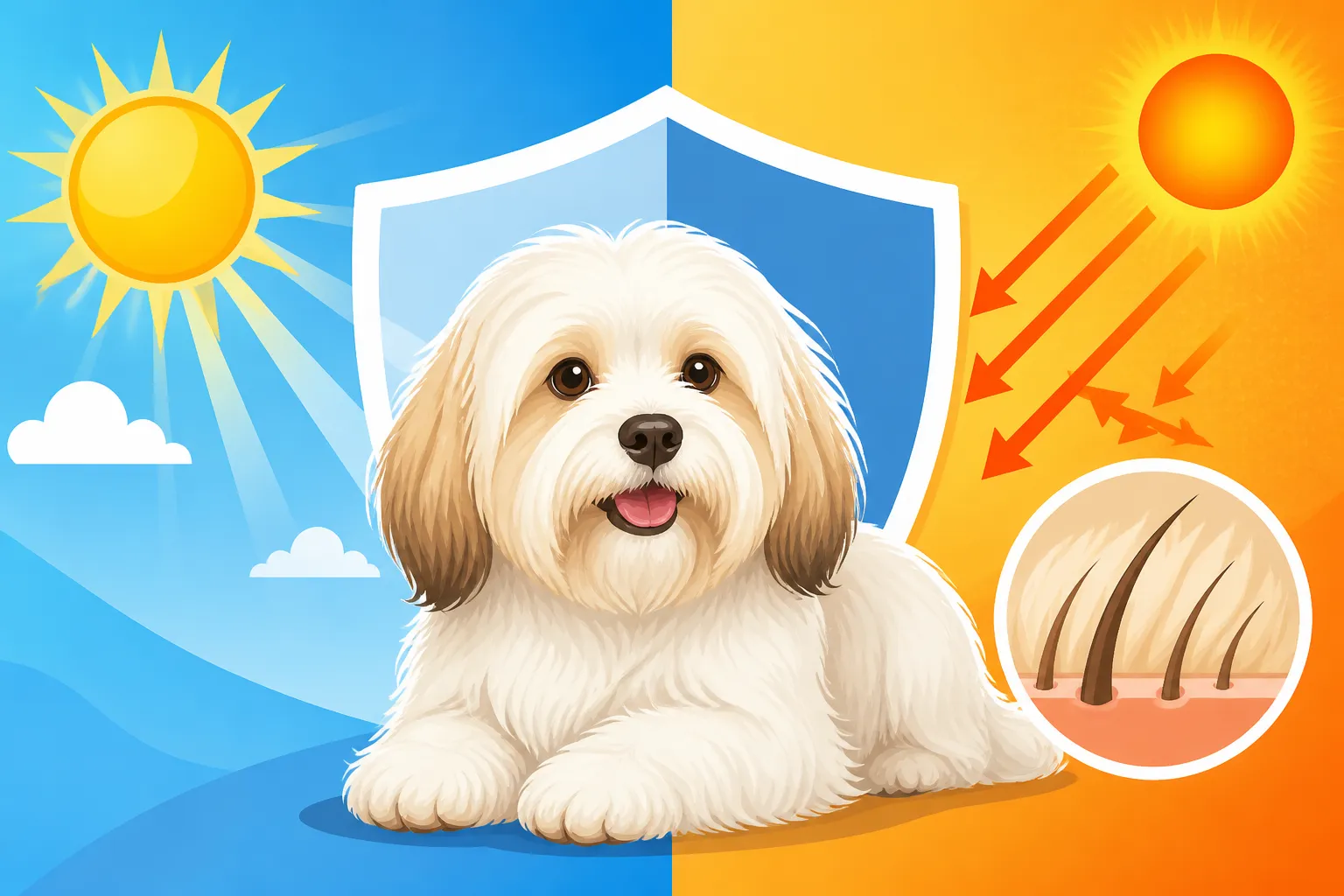
When the coat is kept long, clean, and unmatted, its density does offer a degree of physical barrier against direct sunlight. Imagine it like a natural parasol, creating a slight shade over the skin. The individual hairs, especially if they are densely packed and long, can deflect some of the UV radiation before it reaches the skin underneath. This is why many owners of long-coated breeds choose to keep their dogs in a longer clip, sometimes believing it offers complete protection.
When the Natural Coat Offers Protection
A healthy, well-maintained, long Havanese coat can indeed provide some protection. When your Havanese is strolling casually in and out of shady spots, or perhaps lying down for a short nap in dappled sunlight, a dense, full coat will certainly offer more defense than bare skin. The longer hairs act like tiny blinds, scattering some of the incoming UV light. This is particularly true for Havanese with darker pigmentation, whose skin naturally produces more melanin, offering a little extra defense compared to their lighter-skinned counterparts.
However, it's vital to recognize that "some protection" doesn't mean "total immunity." Even with a full coat, prolonged exposure to intense sunlight, especially during peak UV hours, can still lead to problems. The sun's rays can penetrate through the coat, especially if the dog is moving, if the fur is thin in certain areas, or if the coat is wet.
Limitations of the Natural Coat
Despite its beauty and insulating properties, the Havanese coat has significant limitations as a sun shield. For starters, not all areas of your Havanese's body are equally covered. Think about their nose, the tips of their ears, their delicate eyelids, and their belly and inner thighs. These areas often have very thin fur, or none at all, making them extremely vulnerable to direct sun exposure. When your Havanese rolls over for a belly rub in the grass, that soft, often pink skin is completely exposed to the sun.
Furthermore, many Havanese owners opt for a shorter "puppy cut" or similar clip to manage their dog's grooming needs, which can be considerable. While a shorter clip might be easier to maintain, it drastically reduces the natural barrier the long coat provides. We'll delve into that more later, but for now, understand that a shorter coat means less physical protection. Even with a long coat, if it becomes matted, it can pull and create thinner spots, exposing skin where it otherwise wouldn't be. Regular brushing, as discussed in How Often a Havanese Must Be Brushed, helps prevent this.
Finally, the color of your Havanese's skin under their coat plays a role. Havanese with lighter, pinker skin are more susceptible to sunburn than those with darker, more pigmented skin, regardless of their fur color. The fur itself might block some light, but the underlying skin's vulnerability remains a critical factor.
Recognizing the Risks of Sun Exposure for Your Beloved Havanese
Understanding that the coat isn't a perfect shield leads us to the crucial part: knowing the actual dangers the sun poses. It's not just about a temporary discomfort; repeated sun exposure can have serious health implications for your Havanese, just as it can for humans.
The Dangers of Sunburn in Dogs
Sunburn in dogs manifests much like it does in humans. You might notice redness, tenderness, or a warm feeling to the touch on exposed skin. In more severe cases, blisters can form, and the skin may eventually peel. Imagine how uncomfortable a bad sunburn is for you – your Havanese feels that pain too, but can't tell you directly. They might become restless, scratch at the affected areas, or even seem generally lethargic.
Beyond the immediate discomfort, sunburn carries long-term risks, most notably an increased risk of skin cancer. Dogs can develop various types of skin cancers, including squamous cell carcinoma, melanoma, and hemangiosarcoma, all of which can be exacerbated by excessive UV radiation. These can appear as unusual lumps, bumps, or sores that don't heal, particularly on areas that are frequently exposed to the sun. Catching these early is vital for successful treatment.
Heatstroke vs. Sunburn: Knowing the Difference
It's important to distinguish between sunburn and heatstroke, though both are significant summer concerns. Sunburn is damage to the skin from UV radiation, causing local inflammation and pain. Heatstroke, on the other hand, is a systemic medical emergency caused by the body's inability to regulate its core temperature. While direct sun exposure can contribute to both, they are distinct conditions.
A Havanese, with their thick coat, is naturally more prone to overheating than some other breeds. This means that while you're worrying about sunburn, you also need to be acutely aware of the signs of heatstroke. Symptoms of heatstroke include excessive panting, drooling, lethargy, staggering, vomiting, and a rapid heart rate. You can read more about Whether a Havanese Overheats in Summer and the Signs a Havanese Is Too Hot in our other articles. Protecting your Havanese from the sun often goes hand-in-hand with keeping them cool and preventing heatstroke.
Vulnerable Areas to Watch Out For
As mentioned, some parts of your Havanese are simply more exposed and therefore more vulnerable to sun damage. These are the "hot spots" you need to prioritize for protection:
- Nose Bridge: Especially if your Havanese has a pink or lighter-colored nose.
- Ear Tips: Often thin-skinned with sparse fur.
- Around the Eyes: Delicate skin that can easily burn or become irritated.
- Belly and Groin: When lying down, especially on their back, this area is highly exposed. The skin here is very thin and often lightly pigmented.
- Inner Thighs and Armpits: Similarly thin-skinned and vulnerable during certain postures or play.
- Any Area with Thinning Hair or Scars: These spots lack the natural protection of a full coat.
- Clipped Areas: Perhaps the most critical, as a closely clipped coat offers almost no protection. We'll discuss this further below.
Being mindful of these areas will help you direct your sun protection efforts effectively.
Practical Strategies for Havanese Sun Protection
Now that we understand the risks, let's talk about what you can actually do to safeguard your Havanese from the sun. It's all about proactive measures and making smart choices.
Smart Scheduling and Shade Seeking
This is perhaps the simplest yet most effective strategy. Just like with humans, the sun's UV rays are strongest between 10 AM and 4 PM. During these hours, it's best to limit your Havanese's outdoor exposure. Plan walks for early mornings or late evenings when the sun is less intense.
When your Havanese is outside, always ensure there's ample shade available. Whether it's a large tree in your yard, an umbrella on the patio, or a shaded bench at the park, make sure your dog has an easy escape from direct sunlight. Never leave your Havanese tied out in an unshaded area, even for a short time. Even indoors, if your Havanese loves to nap in a sunbeam by the window, be aware that glass doesn't block all UV rays, so prolonged exposure can still be a concern.
Canine Sunscreen: A Crucial Tool
Yes, dog sunscreen is a thing, and it can be a lifesaver for those vulnerable areas. But, and this is a big but, you absolutely must use a product specifically formulated for dogs. Human sunscreens often contain ingredients like zinc oxide or para-aminobenzoic acid (PABA), which are toxic if ingested by dogs. And let's be realistic, your Havanese is likely to lick whatever you put on their skin.
Look for pet-safe sunscreens at reputable pet supply stores or online retailers like Chewy or Amazon. These products are typically free of harmful chemicals and are often designed to be lick-safe. Apply sunscreen liberally to your Havanese's nose, ear tips, belly, and any other thinly furred or exposed areas about 15-20 minutes before going outside. Reapply frequently, especially if your Havanese has been swimming or is particularly active. It's a small step that can make a huge difference in preventing burns.
Protective Apparel
For some Havanese, particularly those with very light pigmentation, a history of skin issues, or those who are frequently clipped, protective apparel can be a fantastic option. UV protective shirts or vests designed for dogs are available, which can cover their back and torso, areas that still get a lot of sun exposure even with a full coat. Brands like Ruffwear and Hurtta offer quality options you can find on Amazon or other pet retailers.
You might even consider a dog hat or visor for their face, especially if their nose or around their eyes is very sensitive. While some dogs tolerate these better than others, for the right Havanese, it can add an extra layer of defense. Of course, always ensure any apparel is comfortable, non-restrictive, and doesn't cause overheating.
Hydration and Cooling
While not directly related to sun protection in terms of blocking UV rays, proper hydration and cooling are critical for overall summer safety. Ensure your Havanese always has access to fresh, cool water, both indoors and out. If you're out for a walk, carry a portable water bottle and bowl.
Consider cooling mats or damp towels for them to lie on after coming in from the sun. A small, shallow wading pool can also be a fun way for some Havanese to cool off their paws and belly. Remember, even if they aren't sunburned, too much time in the sun without adequate hydration can quickly lead to overheating.
Special Considerations for Different Havanese Coats and Conditions
Not all Havanese coats are created equal, and certain factors can significantly alter their vulnerability to sun damage. It’s important to tailor your protection strategy to your individual dog's needs.
The Clipped Havanese: A Sunburn Waiting to Happen
This is perhaps the most critical point for many Havanese owners. While a long, flowing coat offers some protection, a Havanese that has been clipped short, for instance with a popular "puppy cut" or a very short summer trim, loses almost all of its natural defense against the sun. The skin underneath is suddenly exposed to direct UV radiation without any hair barrier. This makes them incredibly susceptible to sunburn.
If you opt for a shorter clip – and many do because it's so much easier to manage than a full show coat – you must be extra vigilant about sun protection. This includes diligent application of dog-safe sunscreen to all exposed skin, considering UV protective clothing, and strictly limiting time in direct sunlight, especially during peak hours. Don't assume that because they're short-haired, they'll be cooler and thus safer in the sun; they might be cooler, but their skin is at a much higher risk of burning. Our article Whether a Clipped Havanese Sunburns goes into more detail on this specific risk. The cost of a puppy cut, as seen in What a Puppy Cut Costs on a Havanese, is certainly part of the grooming budget, but don't let it lead to compromised sun safety. If you're wondering Whether a Havanese Should Be Clipped for Summer, consider these sun risks.
Light-Colored and White Havanese: Increased Sensitivity
Havanese come in a stunning array of colors, from solid black to pure white, and many beautiful shades in between. Regardless of their fur color, the pigmentation of their underlying skin can vary. Havanese with very light fur, particularly those that are predominantly white or have significant white markings, often have pinker skin underneath. This lighter skin contains less melanin, the natural pigment that helps protect against UV radiation.
Therefore, light-colored or white Havanese are generally more sensitive to the sun and more prone to sunburn. You'll need to be extra diligent with sunscreen and shade for these dogs. Their delicate pink noses and ear tips are especially vulnerable. Even if their fur is long, always err on the side of caution with these more sensitive individuals.
Maintaining Coat Health for Natural Protection
A healthy coat is a better coat, and a better coat provides better natural protection. While it won't replace sunscreen, a well-nourished, unmatted coat will offer the best natural defense your Havanese can muster.
- Nutrition: A balanced diet rich in essential fatty acids (like Omega-3s) contributes to healthy skin and a lustrous coat. Some owners choose to supplement their Havanese's diet with fish oil for this purpose, as discussed in Whether a Havanese Needs Fish Oil for Its Coat. High-quality dog foods, whether kibble from Chewy or fresh food options like Ollie, can support coat health from the inside out.
- Grooming: Regular brushing prevents mats, which can thin out the coat in patches and expose skin. Keeping the coat clean and free of debris also helps it lie properly and offer maximum coverage. While we are talking about external sun protection, remember that things like Keeping a Havanese's Face Clean and Dry also contribute to their overall health and comfort, particularly around sensitive facial areas.
Ultimately, your Havanese's coat is a marvel, but it's not a set-it-and-forget-it sun shield. A combination of awareness, smart scheduling, and appropriate protective measures will ensure your furry companion can enjoy the sunshine safely, without suffering the painful and potentially dangerous consequences of too much sun.
| Body Part | Vulnerability to Sun Exposure | Recommended Protection Methods |
|---|---|---|
| Nose Bridge | Often exposed, light-pigmented, thin skin | Dog-safe sunscreen, avoid peak sun hours |
| Ear Tips | Thin fur, delicate skin prone to burning | Dog-safe sunscreen, seek shade, limit exposure |
| Around Eyes | Very sensitive skin, can lead to irritation | Dog-safe sunscreen (apply carefully), protective hats/visors |
| Belly & Groin | Minimal fur, pink skin, exposed when lying down | Dog-safe sunscreen, UV protective clothing (e.g., shirts), shade |
| Inner Thighs/Armpits | Thin skin, can be exposed during play | Dog-safe sunscreen, manage play in shaded areas |
| Clipped Areas | Direct exposure due to shortened/removed fur | Dog-safe sunscreen, UV protective clothing (essential), strictly limit sun exposure |
| Light-Pigmented Skin | Less melanin, higher risk of burn and cancer | Dog-safe sunscreen, maximum shade, protective clothing, careful monitoring |
| Long, Matted Coat | Can create thin spots, poor insulation | Regular grooming to prevent mats, ensure coat lies properly |
Disclaimer
This article is for general informational purposes only and does not constitute professional advice. Laws, prices and regulations vary by location and change over time. Consult a qualified professional for guidance on your specific situation.