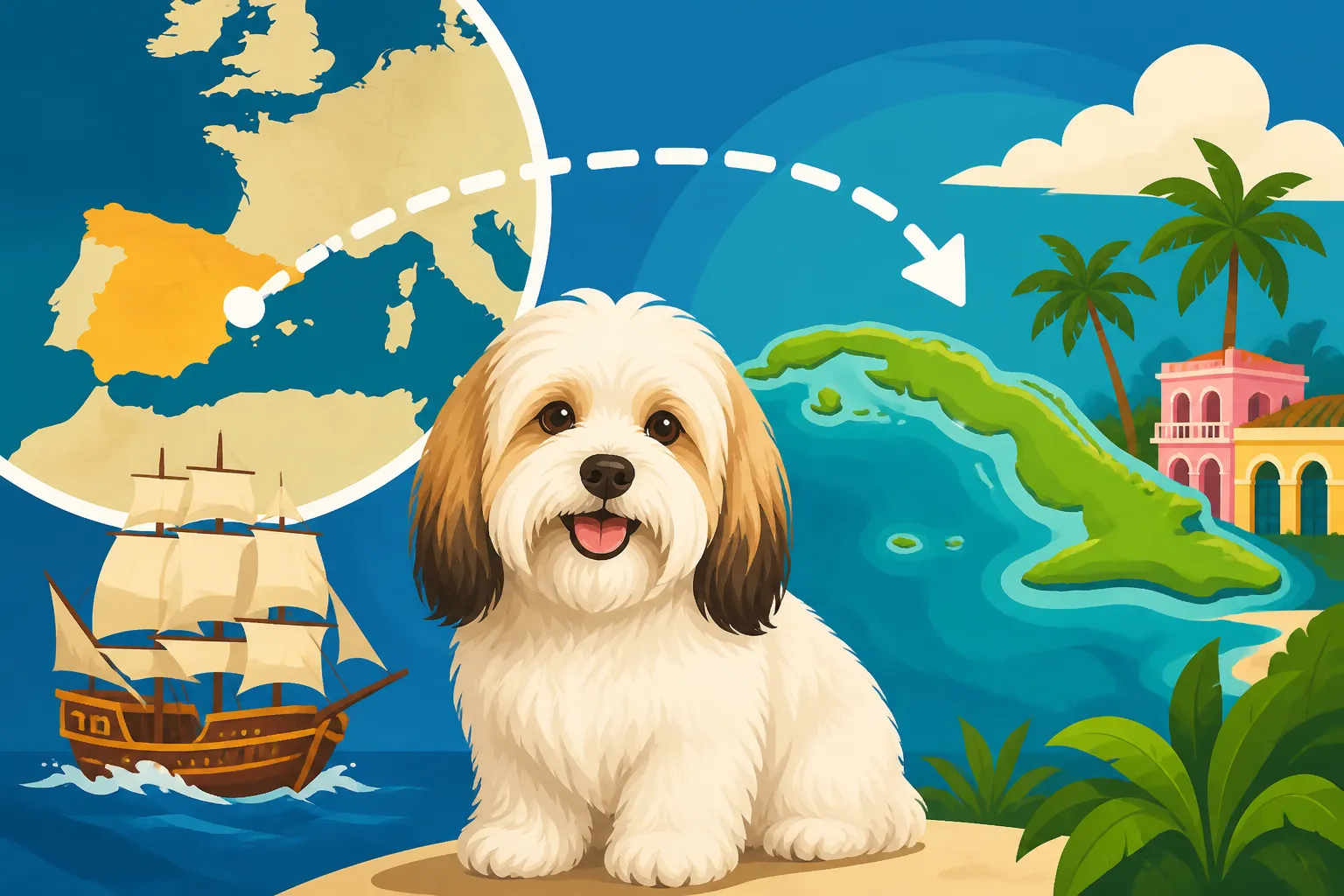
Where the Bichon Type Dogs Reached Cuba From
It's easy to look at a fluffy Havanese, snuggled on a couch, and wonder about their journey to become the charming companions we adore today. Many people hear "Bichon type" and immediately think of a simple, direct lineage, but the story of how these delightful dogs arrived in Cuba, ultimately giving rise to our beloved Havanese, is a fascinating tale woven through centuries of trade, exploration, and adaptation. This guide will take you on that historical voyage, revealing the rich heritage behind Cuba's only native dog breed.
The Ancient Pedigree: Tracing Bichon-Type Dogs to the Mediterranean
To understand where the Havanese truly came from, we have to cast our minds back far before Spanish galleons set sail for the New World. The roots of all Bichon-type dogs, including the Havanese, are deeply embedded in the ancient Mediterranean basin. These small, white, often curly-coated dogs were cherished companions long before breed clubs and pedigrees existed.
Humble Beginnings in the Mediterranean Basin
Imagine bustling ancient port cities across the Mediterranean Sea – places like Malta, Tenerife, and the coastal towns of Italy and Spain. For centuries, small, charming, and often entirely white dogs were common sights. These weren't formally recognized breeds as we know them today, but rather a type of dog known for their appealing size, friendly disposition, and minimal shedding, making them ideal companions for both nobility and working-class families alike. They were often used as ratters on ships, but primarily, they were lapdogs, symbols of status, and sources of comfort. The climate of the Mediterranean, often warm and sunny, suited these relatively small dogs, which could thrive both indoors and outdoors in milder weather.
They were known by various regional names, sometimes simply "little white dogs" or "sleeve dogs" because noblewomen would carry them in their expansive sleeves. It's a testament to their enduring appeal that these traits – small size, white coat, and companionability – have been selectively bred for thousands of years. Think of a tiny, fluffy dog accompanying a Roman matron or a Venetian merchant, easing the long hours of their days. These dogs were truly part of the social fabric, acting as loyal shadows to their human families.
The Appeal of Small White Companion Dogs
There's something universally appealing about a small, cheerful dog, and these early Bichon types fit the bill perfectly. Their size made them manageable in crowded cities and on ships, and their bright white coats, though requiring care, symbolized purity and luxury in many cultures. They weren't bred for hunting or herding; their primary role was companionship, a role they excelled at with their intelligent and affectionate natures. This deep bond with humans meant they were often brought along on travels, acting as comforting presences during long and often perilous journeys.
Beyond their charming demeanor, their perceived hypoallergenic qualities – though no dog is truly allergen-free – meant they were often tolerated by people who struggled with other breeds. This trait likely contributed to their widespread popularity, making them desirable gifts and trade items across different social strata. Even without formal breed standards, people knew what they liked: a small, sturdy, loving dog that was relatively clean and easy to keep in a domestic setting. This inherent value ensured their survival and spread across vast distances.
Early Expansion Across European Shores
From their Mediterranean heartland, these Bichon-type dogs slowly but surely spread across Europe. Italian sailors and merchants, connecting various ports, were instrumental in this dissemination. They took their little companions with them to coastal France, where the Bichon Frise eventually blossomed, and to the Canary Islands, giving rise to the Bichon Tenerife. These were not singular, isolated events, but a continuous flow of maritime traffic, with dogs being exchanged, gifted, and traded alongside other goods.
Each region saw subtle adaptations and preferences emerge. In France, they became the darlings of the aristocracy, refined and pampered. In the Canary Islands, they maintained a more rugged, robust form, suitable for island life. The common thread, however, was their role as beloved companions. Which Century Bichon Type Dogs Reached Cuba is a question that requires tracing these initial expansions and the subsequent push into the New World. This slow, organic spread of a "type" rather than a rigid "breed" allowed for diverse expressions of the same fundamental characteristics, all while retaining that quintessential Bichon charm.
The Age of Exploration: Spanish Traders and Transatlantic Voyages
The discovery of the Americas by Christopher Columbus in 1492 opened up a whole new world of trade routes and colonization. It was during this fervent period of exploration that many European traditions, goods, and indeed, animals, made their way across the Atlantic. Among these were the ancestors of the Havanese, carried by Spanish traders and colonists.
Spain's Role in Spreading European Breeds
Spain, as a dominant maritime power during the Age of Exploration, played an undeniable role in connecting the Old World with the New. Their ships, laden with provisions, tools, and settlers, embarked on arduous voyages to establish colonies and trade networks. It’s entirely natural that the Spanish, like other Europeans, would bring their domestic animals with them. Dogs were not just pets; they served practical purposes too, from hunting to guarding, and of course, offering companionship during lonely journeys.
These Spanish traders and settlers, having been exposed to the diverse Bichon-type dogs of the Mediterranean, particularly those from the Canary Islands like the Tenerife, would have cherished their small, resilient companions. Imagine the comfort a familiar furry face would bring during months at sea, far from home. Whether Spanish Traders Brought the First Havanese Ancestors is not just likely, but almost a certainty, given the culture of the time and the established popularity of these dogs in Spanish society. They were more than cargo; they were emotional anchors.
Life at Sea: Dogs as Companions and Pest Control
Life aboard a 16th or 17th-century sailing ship was harsh, cramped, and often unsanitary. Fresh food was scarce, and vermin like rats and mice were rampant. In such an environment, a small, agile dog wasn't just a pet; it was a practical asset. They could help control rodent populations, protecting precious food stores and preventing the spread of disease. This secondary role would have made them even more valuable on long voyages.
But perhaps most importantly, these dogs offered immeasurable comfort. Sailors and passengers, enduring weeks or months of isolation and discomfort, would have found solace in the wagging tail and affectionate nuzzle of a loyal canine companion. They offered a piece of home, a distraction from the endless horizons and the dangers of the sea. These were hardy little dogs, capable of adapting to challenging conditions, which only increased their chances of surviving the journey and thriving in the new lands they reached. If you've ever stocked up on essentials for a trip, perhaps from a reliable place like Chewy, you can appreciate the thought that went into preparing for these epic voyages, even if it was just a few scraps for a dog.
The Route to the New World: From Europe to the Caribbean
The trade winds and currents dictated the routes taken by ships sailing from Europe to the Americas. The Canary Islands, lying off the coast of West Africa, were often a crucial stopover point for Spanish ships before they caught the easterly trade winds that would propel them across the Atlantic to the Caribbean. This is why the Bichon Tenerife, a robust local variant of the Mediterranean Bichon, is so often cited as a direct ancestor of the Havanese.
From the Canary Islands, the journey would continue to the rich, fertile islands of the Caribbean, with Cuba being a prime destination due to its strategic location and burgeoning economy. The dogs that arrived on these ships weren't necessarily intended to "found" a new breed; they were simply travelers, arriving alongside their human families and all their belongings. Yet, it was in this new, isolated environment that the seeds of a truly unique breed would be sown. The journey was long and demanding, and only the most resilient dogs, along with their equally resilient human companions, made it to the sun-drenched shores of Cuba.
Cuba's Unique Environment: The Emergence of the Blanquito de la Habana
Once these small European companion dogs arrived in Cuba, they entered a new chapter of their history. The island's specific conditions, combined with a period of relative isolation, allowed them to develop into a distinct type, known as the Blanquito de la Habana, or "Little White Dog of Havana." This was the immediate ancestor of the Havanese we cherish today.
Arrival in the "Pearl of the Antilles"
Cuba, often called the "Pearl of the Antilles," was a thriving Spanish colony, a hub for trade and a vibrant society. Spanish aristocratic families, wealthy merchants, and colonial administrators settled on the island, bringing with them not only their customs and culture but also their beloved companion dogs. These dogs quickly found their niche within Cuban society, especially among the affluent who valued small, charming pets that could thrive in the tropical climate.
The warm, humid climate of Cuba, while different from the Mediterranean, still favored smaller dogs who didn't require heavy coats for warmth. The indoor-outdoor lifestyle, with breezy haciendas and walled gardens, provided a comfortable existence. These dogs were pampered, played with, and became integral members of the household, much like their ancestors had been in Europe. Their arrival marked the beginning of a unique evolutionary path, separating them from their European cousins.
Isolation and Natural Selection on the Island
Perhaps the most critical factor in the development of the Blanquito de la Habana was the relative isolation of Cuba from significant external genetic influences for centuries. While trade brought initial dogs, the subsequent lack of regular infusions of new dog breeds meant that the existing population began to breed among themselves. This natural isolation acted as a selective pressure, allowing certain traits to become more pronounced and uniform within the Cuban dog population.
Over generations, the dogs adapted to their Cuban environment. Traits that were beneficial for living in a warm climate, such as a lighter, silkier coat, might have been favored, even if unconsciously. Their playful, adaptable temperaments, so well-suited to being family companions, also flourished. This period of natural selection, combined with the preferences of their human owners, sculpted the original Bichon types into something uniquely Cuban. It’s this period that truly gave birth to The Blanquito de la Habana the Havanese Came From.
The Distinct Characteristics of the Early Cuban Dogs
The Blanquito de la Habana was, as its name suggests, predominantly white. These dogs were known for their soft, flowing coats, which, despite the heat, provided protection from the sun's rays. They were small, sturdy, and lively, perfectly suited for the leisurely pace of colonial life. They were intelligent and trainable, earning them a reputation as clever performers and loyal lapdogs. Imagine these charming dogs frolicking in the courtyards of grand Havana homes, entertaining families with their antics.
What the Blanquito de la Habana Looked Like can be pictured as a slightly more rustic version of the modern Havanese, perhaps with a less refined coat or a broader range of sizes, but undeniably possessing the core Bichon charm. They were the original "Havana Silk Dogs" long before that name became a point of contention in breed history. These dogs were cherished, passed down through families, and became a symbol of Cuban domestic life, adapting beautifully to their island home.
From Blanquito to Havanese: The Evolution of a National Breed
The Blanquito de la Habana was the foundation, but the modern Havanese, with its rich tapestry of colors and distinctive coat texture, tells a story of further evolution and influence. While the initial isolation was key, later European contacts, particularly with France, introduced new genetic material that subtly reshaped the Cuban companion dog.
Influences and Crossbreeding in Cuba
As Cuba's international trade continued to flourish, particularly with European powers beyond Spain, new influences arrived on the island. The French, for instance, established trade routes and cultural ties, and it's highly probable that they brought their own beloved companion dogs with them. Among these, the French Poodle, a dog known for its intelligence and varied coat types, played a significant role. This intermingling of the established Blanquito population with other European breeds, especially the Poodle, introduced genetic diversity and new coat textures and colors.
This wasn't necessarily a deliberate "crossbreeding program" as we understand it today, but rather the natural consequence of dogs from different backgrounds living and reproducing in the same environment. Owners might have simply admired the qualities of a new arrival and allowed their Blanquito to breed with it, seeking to enhance certain traits or simply expand their lines. How Poodles Changed the Blanquito is a crucial aspect of this evolution, contributing to the development of the Havanese's renowned coat.
Developing the Signature Havanese Coat and Temperament
The Poodle influence, in particular, is believed to have contributed to the Havanese's diverse color palette and the unique texture of its double coat. While the Blanquito was primarily white, the Havanese today boasts an incredible array of colors and patterns – from black to sable, chocolate to brindle, and various parti-colors. This rich genetic inheritance of color is a direct result of these later influences. Whether Poodle Crossing Gave the Havanese Its Colors is a strong historical hypothesis, supported by the genetic diversity seen in the breed today.
Beyond color, the Havanese's signature silky double coat, which can grow quite long and is remarkably soft, is also a product of this evolution. It's a coat that provides both insulation from the heat and protection from the elements, all while being surprisingly light and airy. The temperament also became more defined: intelligent, outgoing, highly affectionate, and eager to please – traits that made them perfect circus dogs and beloved family members. The Havanese Is the Only Breed Cuba Ever Produced proudly carries this unique blend of European ancestry and Cuban adaptation.
Preserving the Breed's Unique Identity
Throughout these changes, the fundamental identity of the Cuban companion dog remained. It was always a small, sturdy, highly sociable dog, cherished for its delightful personality. Wealthy Cuban families continued to refine and cherish these dogs, ensuring their survival and distinctiveness. Whether the Havanese Was a Dog of the Cuban Aristocracy is certainly true, as they were often found in the homes of the elite, becoming symbols of refined taste and leisure.
The Cuban Revolution in 1959 tragically disrupted this continuity, causing many families to flee and leaving the breed on the brink of extinction. However, due to the efforts of a few dedicated individuals who managed to bring some dogs to America, the breed was saved and rebuilt, carrying forward the unique genetic and historical legacy forged on the island. This resilience speaks volumes about the breed's enduring appeal and the determination of those who recognized its irreplaceable value.
Why the Havanese Stands Apart in the Bichon Family
While the Havanese shares a common ancestry with other Bichon-type dogs like the Bichon Frise, Maltese, and Coton de Tulear, its unique journey in Cuba has endowed it with distinct characteristics that set it apart. Understanding these differences helps appreciate the Havanese not just as another small fluffy dog, but as a truly unique creation.
Distinctive Physical and Temperamental Traits
One of the most striking differences lies in the Havanese's coat. Unlike the often dense, curly, and purely white coat of a Bichon Frise, the Havanese typically boasts a long, silky, often wavy double coat that comes in an incredible array of colors and patterns. This coat is designed to protect them from the Cuban sun and manage heat, rather than purely for insulation. This is why you often see a Havanese with a full, flowing coat that barely sheds, yet feels light to the touch. Grooming such a coat requires specific tools and techniques, which you can easily find on platforms like Chewy, specializing in specialized pet care.
Temperamentally, while all Bichon types are affectionate, the Havanese is often described as a shadow dog, exceptionally devoted to its family and prone to following them from room to room. They are highly intelligent and often possess a remarkable ability to learn tricks, reflecting their historical ties to performance and entertainment. What a Havanese Actually Weighs is also generally a bit more than some of its smaller Bichon cousins, giving it a sturdier feel. They are playful and energetic indoors, but also content to cuddle, making them wonderfully adaptable companions.
| Feature | Havanese | Bichon Frise | Maltese |
|---|---|---|---|
| Origin | Cuba | France/Belgium (Mediterranean ancestors) | Malta (Mediterranean ancestors) |
| Coat Type | Long, silky, wavy double coat | Double coat, soft and curly | Long, silky, single coat |
| Coat Color | All colors and patterns | Primarily white | Pure white |
| Size/Weight | Generally 7-13 lbs | Generally 12-18 lbs | Generally under 7 lbs |
| Temperament | Very adaptable, outgoing, "shadow" dog, clever | Cheerful, playful, mischievous | Gentle, fearless, devoted, often quiet |
| Unique Traits | Springy gait, plume tail, often performs tricks | Fluffy, powder-puff appearance, bouncy gait | Elegant, aristocratic bearing, minimal shedding |
| Historical Role | Companion, performer, Cuban national dog | Companion, circus dog | Aristocratic companion, lapdog |
A Legacy Shaped by Cuban Culture
The Havanese's journey from European seaports to the heart of Cuban society imbued it with a unique cultural significance. Unlike its European counterparts that often symbolized aristocracy or specific national identities, the Havanese became deeply intertwined with Cuban family life. It evolved as a robust, resilient companion, capable of thriving in a vibrant, often boisterous household. This close relationship with Cuban families shaped its easygoing, adaptable nature and its strong desire to be part of every family activity.
Even the name itself, Havanese, speaks to its indelible connection to Havana, the capital of Cuba. It's a living piece of Cuban history, a testament to the island's unique blend of European heritage and Caribbean spirit. This rich cultural background gives the Havanese a depth and story that goes beyond mere genetics, making it a breed cherished by those who appreciate its historical significance.
The Enduring Charm of Cuba's National Dog
The Havanese today is a testament to survival, adaptation, and the enduring bond between humans and dogs. From its humble origins as a generalized Bichon type in the Mediterranean, through its pivotal development as the Blanquito de la Habana, and its subsequent evolution with various influences, it has emerged as a distinct and beloved breed. How the Havanese Nearly Died Out After 1959 is a stark reminder of how precious this heritage is.
When you look at a Havanese, whether they're fetching a toy bought from Chewy, or simply curled up at your feet, you're not just seeing a pet; you're seeing a living piece of history, a dog whose ancestors sailed the seas, adapted to a tropical island, and charmed their way into the hearts of an entire nation. This unique journey is what makes the Havanese truly special, a vibrant and affectionate companion with a story as rich and colorful as its coat. The Havanese Against the Bichon and the Maltese shows that while they share roots, their individual paths have created truly distinct, wonderful breeds.
Disclaimer
This article is for general informational purposes only and does not constitute professional advice. Laws, prices and regulations vary by location and change over time. Consult a qualified professional for guidance on your specific situation.