Teaching a Havanese Tricks It Will Perform All Day
It’s a truly wonderful thing, isn't it, how our Havanese companions often seem to be little bundles of pure joy and boundless energy? But sometimes that energy can feel a little… unfocused, leading to endless rounds of zoomies that eventually crash into a nap. If you've ever wished you could channel that inherent spark into something truly impressive, something that both delights you and provides mental enrichment for your clever little friend, then you're in the right place. This guide is all about unleashing your Havanese's inner performer, showing you how to teach them a delightful array of tricks that they'll be proud to show off, keeping them engaged and entertained all day long.
Why Havanese Excel at Tricks: More Than Just a Pretty Face
Let’s be honest, Havanese are adorable. Their expressive eyes and silky coats make them irresistible cuddle bugs. But beneath that charming exterior lies a sharp mind and a strong desire to connect with their humans. This combination makes them exceptionally well-suited for trick training, far beyond what many people expect from a small companion breed. They don't just learn tricks; they seem to relish performing them.
The Havanese Brain: Smart and Eager
One of the greatest assets a Havanese brings to trick training is their intelligence. They are quick thinkers, capable of understanding complex commands and stringing together behaviors. You might find that your Havanese picks up new cues with surprising speed, often anticipating what you want before you even finish the verbal cue. This isn't just a fluke; it's a testament to their inherent cognitive abilities. They thrive on mental stimulation, and learning new tricks provides an excellent outlet for their cleverness. A bored Havanese might find less desirable ways to occupy their brilliant mind, like excessive barking or redecorating your couch cushions. Giving them a structured, fun activity like trick training helps keep their minds sharp and their behavior on the up and up.
Beyond their raw intelligence, Havanese possess a wonderful eagerness to please. They genuinely enjoy being part of your activities and receiving your praise and attention. This trait makes them highly motivated students. When they figure out what you're asking, and they see your delighted reaction, it creates a positive feedback loop that encourages them to try even harder. They love being the center of attention, especially when that attention comes with treats and enthusiastic encouragement. This combination of smarts and eagerness means that with the right approach, your Havanese can learn an impressive repertoire of tricks that will entertain everyone. Why the Havanese Learns Tricks Faster Than Most Toys delves deeper into just how naturally these little dogs take to learning.
Historical Roots: Circus and Companion Dog
It's no secret that the Havanese has a fascinating history, often linked to the Cuban aristocracy and, indeed, to performing. These dogs were bred not just for companionship but also for their entertaining qualities. They were known to be agile and intelligent, making them popular performers in traveling circuses and for aristocratic families who enjoyed their playful antics. This historical background isn't just a fun fact; it's deeply ingrained in their DNA. The natural predisposition for showmanship and quick learning is a legacy from their ancestors.
Think about it: a dog that could charm an entire room of people with its cleverness wasn't just cute; it was a valuable companion. This historical imperative to perform means that many Havanese instinctively enjoy the process of learning and showing off new skills. They truly thrive when they have a "job" to do, and for many, that job is making their humans smile with a well-executed trick. Understanding this lineage can help you appreciate your Havanese's enthusiasm for training and lean into their natural talents, rather than fighting against them.
The Drive to Please: Your Havanese's Motivation
The Havanese is, at its heart, a companion dog. They live to be with their people, and a huge part of that connection comes from interaction and positive reinforcement. When you're teaching a trick, your Havanese isn't just working for a treat; they're working for your approval, your laughter, and that special bond that deepens with every shared success. This powerful drive to please is an invaluable tool in trick training.
They love feeling like they're contributing, like they're understood, and like they're making you happy. This makes them highly sensitive to your moods and reactions, which can be leveraged beautifully in training. A simple "Good dog!" delivered with genuine warmth can be just as motivating as the tastiest treat. This isn't to say treats aren't important—they absolutely are, especially in the initial stages. But always remember that the ultimate reward for a Havanese is the joyful connection they share with you. What a Havanese Will Work For explores the best motivators for these charming little dogs.
Getting Started with Trick Training: Setting the Stage for Success
Embarking on the journey of trick training with your Havanese is an exciting endeavor. To make it a positive and productive experience for both of you, it's crucial to lay down a solid foundation. This isn't just about what tricks you'll teach, but how you approach the learning process, ensuring that it remains fun, engaging, and stress-free.
Essential Tools and Supplies
You don't need a professional training studio to teach your Havanese some amazing tricks, but a few key items can certainly make the process smoother and more effective. First and foremost, you'll need high-value treats. These aren't just any old kibble; think tiny pieces of cooked chicken, cheese, or specialized training treats that your Havanese absolutely adores. They should be small enough to be swallowed quickly, so as not to interrupt the flow of the training session. Having a variety helps keep things exciting and prevents your pup from getting bored with the same reward.
A clicker is another incredibly useful tool. Whether Clicker Training Suits a Havanese explains why it's so effective. It acts as a precise marker for the exact moment your Havanese performs the desired behavior, instantly communicating "Yes, that's what I wanted!" followed immediately by a treat. While not strictly necessary, it can significantly speed up the learning process by removing ambiguity. Lastly, a quiet, distraction-free space is essential, especially when you're introducing a new trick. As your Havanese becomes more proficient, you can gradually introduce more challenging environments, but start simple. Consider a small, contained area in your home where your pup feels comfortable and focused. Many owners find a dedicated "training pouch" that clips to their belt helpful for easy access to treats, keeping their hands free for gestures and clicker use. You can find excellent clickers and training pouches on platforms like Amazon, making it easy to gather your essentials.
Keeping Sessions Short and Sweet
One of the biggest mistakes new trainers make, especially with intelligent breeds like the Havanese, is trying to cram too much into one session. While your Havanese is smart and eager, their attention span is still limited, especially when learning something new. Think of them like enthusiastic kindergartners – they're excited to learn, but they'll tune out if the lesson goes on too long. Aim for short, frequent training sessions, typically 5-10 minutes each, a couple of times a day.
These brief bursts of activity keep your Havanese engaged and excited for the next session. Ending on a high note, when they've successfully performed a trick and are still eager for more, is far better than pushing them until they're tired, frustrated, or bored. When training is associated with positive, short bursts of fun, your Havanese will look forward to it, seeing it as playtime with you rather than a chore. This approach also helps prevent mental fatigue and ensures that the information sticks. How Long a Havanese Will Train For confirms that quality over quantity is key for these clever canines.
Positive Reinforcement: The Havanese Way
The Havanese responds beautifully to positive reinforcement. This means rewarding desired behaviors and ignoring or redirecting unwanted ones. Harsh corrections or punishment are not only ineffective but can also damage the trust and bond you share with your sensitive Havanese. Remember, their primary motivation is often to please you, so making training a joyful experience is paramount.
When your Havanese performs a trick, even just an approximation of it, immediately mark the behavior (with a clicker or a verbal "Yes!") and follow with a treat and verbal praise. Over time, you can fade the treats and rely more on praise and affection, but initially, the food reward is a powerful motivator. Keep your voice light and encouraging, and use lots of enthusiasm. If your Havanese isn't getting it, break the trick down into smaller, simpler steps, or try a different approach. For instance, rather than trying to teach "spin" all at once, you might reward them for just turning their head, then a quarter turn, then a half turn, and so on. Patience, consistency, and a generous spirit of positive reinforcement will be your best allies. Online training programs, such as those offered by BAXTER & Bella, often emphasize positive reinforcement techniques that are perfect for Havanese.
Foundation Tricks: Building Blocks for Success
Once you have your training essentials in place and a good understanding of positive reinforcement, it’s time to dive into some basic tricks. These aren't just fun; they're crucial for building your Havanese's confidence, teaching them how to learn, and establishing a clear communication system between you. Master these, and the more complex tricks will come much more easily.
Sit, Stay, and Down: More Than Just Obedience
While often considered basic obedience commands, "Sit," "Stay," and "Down" are truly the cornerstone of trick training. They teach your Havanese self-control, focus, and body awareness, all of which are essential for more elaborate maneuvers. "Sit" is usually the easiest to teach. Hold a treat above your Havanese's nose and slowly move it back over their head. As their nose follows the treat, their rear end will naturally lower into a sit. As soon as their bottom touches the ground, mark (click!) and reward. Repeat this often, adding the verbal cue "Sit" just as their rear is descending.
"Down" follows a similar principle. Once your Havanese is in a sit, hold a treat in front of their nose and slowly lower it to the floor, then slide it away from them along the floor. Many Havanese will naturally lie down to follow the treat. As soon as their elbows hit the floor, mark and reward. "Stay" is a bit more challenging as it requires impulse control. Start by asking for a "Sit," then say "Stay" and take one small step back. If your Havanese remains, step back to them, mark, and reward. Gradually increase distance and duration. Remember, patience is key here, and always reward for holding the position, not for breaking it. These behaviors are so important that they form the basis of nearly every other trick.
Paw and High Five: Engaging Their Paws
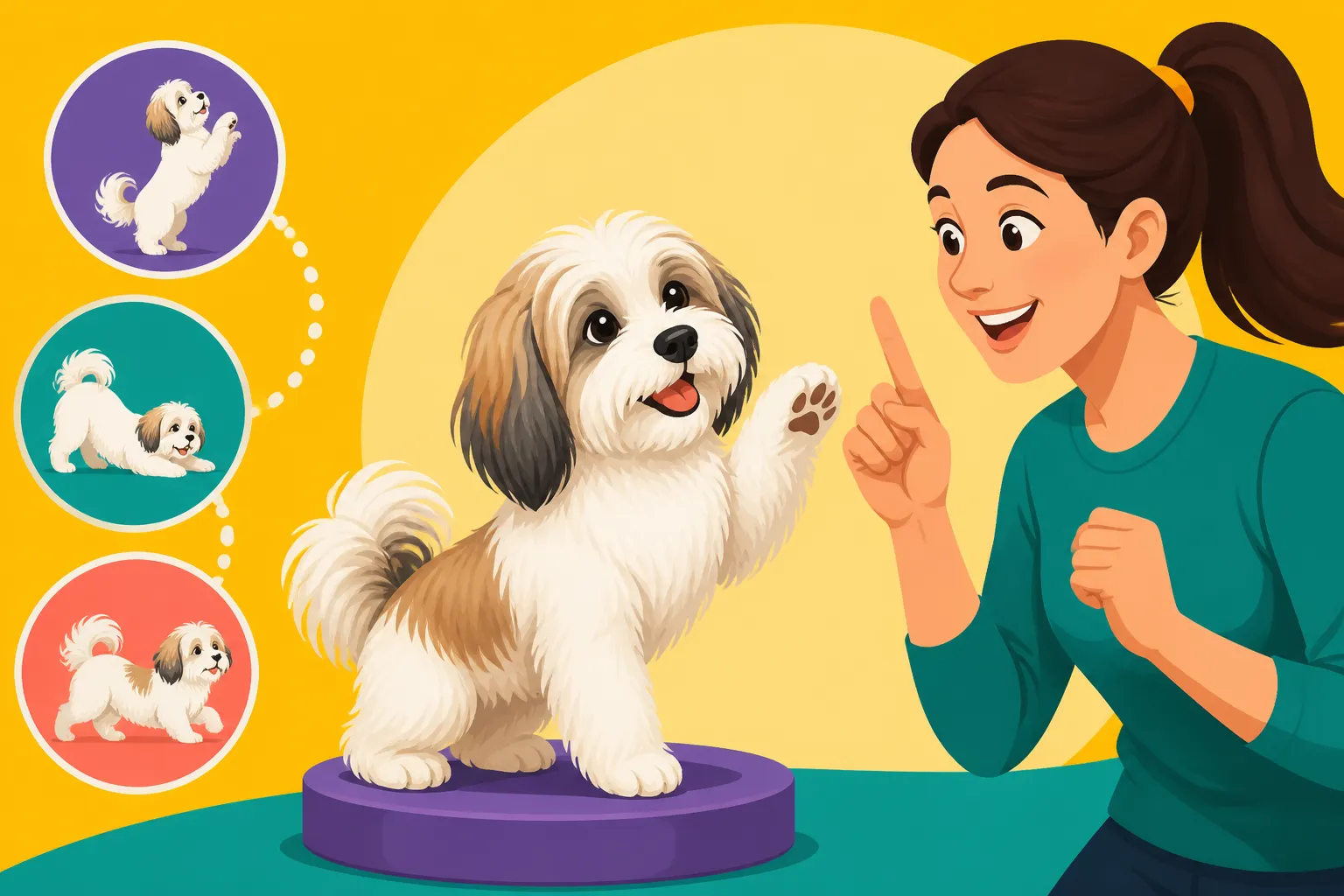
These are crowd-pleasers and surprisingly easy to teach, building on your Havanese's natural curiosity and desire to interact. For "Paw," start with your Havanese in a sit. Hold a treat in a closed fist just out of reach. Most Havanese will try various things to get the treat, including pawing at your hand. The instant their paw touches your hand, open your hand, mark, and reward. Repeat this, adding the verbal cue "Paw" as their paw makes contact. Once they reliably offer their paw, you can extend your hand slightly to elicit the behavior.
To progress to "High Five," simply move your hand higher up. Once your Havanese understands "Paw," elevate your hand a little, still giving the "High Five" cue. As they reach up to tap your hand, mark and reward. This trick really brings out their playful nature and gets them using their front paws in a controlled way, which can be useful for other tricks like "wave" or "cover your eyes." It’s also a wonderful way to introduce a fun, interactive greeting.
Spin and Twirl: Fun Body Awareness
"Spin" and "Twirl" are fantastic for developing your Havanese's body awareness and can be linked to their natural inclination for lively movement. To teach "Spin," start with your Havanese standing in front of you. Hold a treat close to their nose and slowly move it in a circular motion, guiding their head around their body. Their body will naturally follow their head. As they complete a full circle, mark and reward. Repeat this, adding the verbal cue "Spin."
For "Twirl," you simply teach them to spin in the opposite direction, using a different verbal cue and hand motion. It's important to keep the movements fluid and to ensure your Havanese isn't getting dizzy or confused. Start with small circles and gradually expand them. These tricks are not only cute but also build confidence in their physical capabilities. They require coordination and attention to your subtle cues, making them excellent mental exercises. Remember, if your Havanese struggles, break the circle into halves or quarters and reward for each segment.
Intermediate Tricks: Adding Flair to Their Repertoire
Once your Havanese has mastered the foundational tricks, they'll be ready to tackle more complex and impressive feats. Intermediate tricks build upon the earlier lessons of body awareness, focus, and impulse control, allowing your clever Havanese to truly shine. These tricks often require a few more steps and a bit more patience but are incredibly rewarding to teach and watch.
Play Dead/Bang: A Classic Crowd-Pleaser
This trick is a real show-stopper, and surprisingly, it’s not as hard as it looks. It combines a "down" with a roll-over motion. Start with your Havanese in a "Down" position. Then, take a high-value treat and lure their nose towards their shoulder, drawing a line down their side until they roll onto their side. As soon as they are fully on their side, mark and reward. Repeat this several times, gradually introducing your "Bang" or "Play Dead" verbal cue and a hand signal (like pointing your finger like a gun or making a flat hand motion).
The key is to encourage them to stay on their side for a few seconds before releasing them with an "Okay!" or "Get Up!" and a final reward. Some Havanese might resist rolling completely onto their side at first; just reward for any movement in that direction and gradually shape the behavior. How Fast a Havanese Learns a New Trick will tell you that a Havanese can pick this up quickly. It's an excellent way to practice impulse control and maintaining a position, making it a fantastic mental workout disguised as fun.
Weave Through Legs: Advanced Movement
This trick looks incredibly intricate but is built on a simple luring technique. It’s fantastic for improving coordination and working closely with your Havanese. Begin by standing with your feet slightly apart. Hold a treat in one hand and lure your Havanese through your legs from front to back, emerging on the other side. As they pass through, switch the treat to your other hand, shift your weight, and lure them through your legs again in the opposite direction.
The rhythm is key: lure, step, lure, step. As your Havanese gets the hang of following the treat, start adding your verbal cue, such as "Weave!" or "Through!" You can also introduce a hand signal, like making a figure-eight motion with your hand. The goal is a fluid, continuous motion where they weave back and forth between your legs. It requires good communication and builds a strong bond as you move together as a team. This trick is a great example of how breaking down a complex action into smaller, understandable steps makes it achievable.
Fetch and Retrieve: Bringing Back the Goods
While some dogs are natural retrievers, others need a bit more encouragement. Teaching your Havanese to "Fetch" isn't just a trick; it's a fantastic way to engage them in play and burn off some energy. Start with a toy your Havanese loves. Toss it a very short distance, perhaps just a foot or two away. The moment your Havanese shows any interest in it, praise them. If they pick it up, great! Praise them enthusiastically.
The next step is getting them to bring it back to you. As they pick up the toy, kneel down and call them excitedly, offering a high-value treat. When they come close, offer the treat with one hand and take the toy with the other. Immediately mark and reward. This teaches them that bringing the toy to you results in an even better reward. Gradually increase the distance of the throw. If your Havanese tends to play "keep away," try trading the toy for an even better treat. Consistency is key here. Whether a Havanese Learns to Fetch reveals how much fun they can have with this skill. This trick also works wonderfully with puzzle toys, which you can find readily on Amazon, adding another layer of mental stimulation.
Advanced Tricks: Pushing Their Limits (and Yours!)
Once your Havanese is a pro at intermediate tricks, it's time to tackle some truly impressive feats. These advanced tricks often require more concentration, precision, and a deeper understanding of your cues. They're incredibly rewarding to teach and showcase the true depth of your Havanese's intelligence and your bond.
Leg Weave and Figure Eights: Mastering Coordination
Building on the basic "weave through legs," the "leg weave" elevates it by adding seamless transitions and often, speed. For this, your Havanese learns to weave not just between your stationary legs, but as you walk. Start by practicing the stationary weave until it's perfectly fluid. Then, take a small step forward with one leg, and as your Havanese passes through, take a step with the other, keeping the weaving motion continuous. The rhythm of your steps and the lure of the treat should guide them.
"Figure Eights" takes this concept and applies it to objects or even other people. You can use two cones, or even your own legs and another person's. The Havanese learns to navigate around these obstacles in a figure-eight pattern. This requires excellent spatial awareness and focus. To teach it, lure them around the first object, then immediately turn and lure them around the second. Always reward for completing the full "eight." These tricks demonstrate incredible coordination and trust, making them perfect for showing off your Havanese's agility and your teamwork.
Say Your Prayers/Bow: Impressive Posture Tricks
These tricks involve specific body postures that look incredibly cute and are a joy to teach. For "Say Your Prayers," you'll need a low stool or a cushion. Lure your Havanese to place their front paws on the stool while their back legs remain on the floor. Once they are in this position, use a treat to lure their head downwards, almost touching their front paws, so they appear to be bowing or praying. Mark and reward the moment they achieve this posture.
The "Bow" trick is similar but can be done without a prop. Lure your Havanese into a "Play Bow" position, where their front end is down, and their rear end is up. Many Havanese naturally do this as an invitation to play, so you might already have a head start! The key is to capture and reward this specific posture with a verbal cue like "Bow" or "Curtsy." You can do this by holding a treat to their nose and slowly sweeping it down towards the floor between their front paws. The moment their chest dips and their rear stays up, mark and reward. These tricks highlight their flexibility and controlled movement.
Ring the Bell for Potty: Practical Tricks
Not all advanced tricks are just for show; some offer incredibly practical benefits. Teaching your Havanese to "Ring the Bell for Potty" is one such trick that can save you from countless accidents and improve communication. Hang a set of bells on your door handle, just low enough for your Havanese to comfortably nose or paw them. The first step is to teach them to touch the bells. Put a treat in your hand and touch the bells with your hand. The moment your Havanese shows curiosity and noses or paws the bells, mark and reward.
Once they reliably touch the bells, start associating it with going outside. Every time you take your Havanese out to potty, guide their paw or nose to touch the bells, say "Potty, bells!" or "Outside, bells!" and then immediately open the door and take them out. After they've done their business, praise them lavishly. Consistency is crucial here. They will quickly learn that ringing the bells is their ticket to going outside, reducing unnecessary barking at the door and giving you a clear signal. This practical trick empowers them and helps you avoid unwanted indoor surprises.
Troubleshooting Common Trick Training Challenges
Even with the smartest Havanese and the best intentions, you're bound to hit a few bumps in the road. It’s completely normal for a trick not to click immediately or for your pup to have an off day. The key to successful training isn't avoiding challenges, but knowing how to navigate them with patience and understanding.
The Stubborn Havanese: When They "Don't Want To"
Ah, the "Havanese stubborn streak!" It's a real thing, isn't it? Sometimes, your usually eager-to-please pup will suddenly act like they've never heard of a treat or a trick in their life. They might sit there, look at you with those innocent eyes, and just… not do it. This isn't usually true stubbornness in a negative sense; it's often a sign of confusion, fatigue, or simply that the reward isn't high enough for the effort required.
If your Havanese seems "stubborn," first, revisit the basics. Are they tired? Have you been training too long? Is the environment too distracting? Try breaking the trick down into even smaller, more manageable steps. Perhaps the jump from "paw" to "high five" was too big, and you need to reward for simply lifting their paw higher. Increase the value of your treats – pull out that tiny piece of real chicken! Sometimes, simply taking a break and coming back to it later with fresh eyes (and tastier treats) can work wonders. Remember, they aren't trying to annoy you; they're just communicating that something isn't quite right from their perspective. Whether a Havanese Is Ever Stubborn sheds more light on this endearing trait.
Distractions and Focus Issues
One moment your Havanese is perfectly focused, the next a leaf blows past the window, or the mailman walks by, and all your training efforts fly out the window. Distractions are the nemesis of trick training, especially in the early stages. Havanese are naturally curious and alert, which means their attention can be easily diverted by interesting sights, sounds, or smells.
To combat this, always start training in a quiet, low-distraction environment, like a closed room in your home. Once your Havanese is consistently performing a trick in this controlled setting, gradually introduce mild distractions. Start small: a quiet TV in the background, a family member sitting nearby, or training in a different part of the house. Slowly build up to more challenging environments, like your backyard or a quiet park. If your Havanese loses focus, calmly redirect their attention back to you by getting their name or offering a treat at eye level. Don't scold them for being distracted; simply make yourself more interesting than the distraction.
Losing Interest: Keeping the Fun Alive
Even the most dedicated Havanese can lose interest if training becomes monotonous or too challenging. If you notice your pup's enthusiasm waning, it's a clear sign to shake things up. Are you always doing the same tricks in the same order? Are your sessions too long? Is the reward still motivating? Whether a Havanese Gets Bored of Drilling suggests varying your approach.
Introduce a new trick, even if it's a super simple one, to reignite their curiosity. Revisit an old favorite trick that they ace every time to build their confidence and end the session on a positive note. Incorporate toys into your rewards, not just treats. Make it a game! Chase them around briefly after a successful trick, or engage in a quick tug-of-war. The goal is to keep training feeling like playtime, not a chore. If you find yourself getting frustrated, your Havanese will sense it, so take a break yourself. A positive, playful attitude from you is contagious and will keep your Havanese eager to learn for years to come.
Maintaining and Showcasing Their Skills: Enjoying the Fruits of Your Labor
You’ve put in the time, your Havanese has put in the effort, and now you have a repertoire of amazing tricks! But the journey doesn't end there. To keep those skills sharp and your Havanese happy and engaged, it's important to integrate tricks into your daily life and explore opportunities to share their talents.
Regular Practice: Use It or Lose It
Just like any skill, if you don't use it, you lose it. Regular practice is essential to keep your Havanese's tricks polished and responsive. This doesn't mean formal, intense training sessions every day. Instead, think of it as weaving practice into your daily routine. Ask your Havanese for a "Sit" before they get their meal, a "Paw" when you greet them, or a "Spin" for an extra treat.
A couple of short, fun refreshers a few times a week are often enough to keep the muscle memory and mental associations strong. Vary the order of the tricks, and try asking for them in different locations. This helps generalize the behavior, so your Havanese performs the trick reliably, no matter where you are or what distractions might be present. Remember, consistency over intensity is the key. Whether a Havanese Remembers Tricks Months Later delves into how their memory works for learned behaviors.
Incorporating Tricks into Daily Life
The true joy of teaching tricks isn't just about the "performance"; it's about the enhanced communication and interaction you gain with your Havanese in everyday situations. Using tricks as part of your routine provides mental stimulation and reinforces good behavior. For example, instead of just pushing your Havanese off the couch, ask for a "Down" before they get on or a "Back Up" if they're too close to the edge.
If your Havanese is constantly getting underfoot in the kitchen, teach them a "Go to your mat" or "Stay" command for when you're cooking. Tricks like "Fetch" can turn into a daily game to retrieve their toys. "Spin" and "Twirl" can be a fun way to get them to move out of your path playfully. When tricks become integrated into natural interactions, they become more than just commands; they become a language that deepens your bond and makes living together even more harmonious.
Sharing Their Talents: Beyond Your Living Room
Your Havanese's tricks aren't just for your private enjoyment! Sharing their talents can be incredibly rewarding for both of you. Think about opportunities to let your Havanese shine. A simple "Paw" or "High Five" to a friendly neighbor or a "Play Dead" for admiring family members can bring smiles and positive attention, reinforcing your Havanese's confidence. Whether a Havanese Shows Off for an Audience suggests they truly thrive on this!
If your Havanese truly enjoys performing, consider exploring official avenues. Many dog clubs offer "Trick Dog" titles through organizations. These are fun, low-pressure ways to test your Havanese's skills and earn official recognition. You might also consider exploring opportunities to visit nursing homes or participate in local community events as a therapy dog, bringing joy to others with their charming personality and impressive tricks. Programs like BAXTER & Bella often have resources and communities that encourage dogs to share their talents, providing a great support system. The possibilities are endless, and your Havanese will love being the star of the show!
Trick Difficulty Guide for Your Havanese
To help you plan your Havanese's trick training journey, here's a general guide categorizing tricks by difficulty. Remember, every Havanese is an individual, and some might find certain "harder" tricks easier, and vice-versa!
| Difficulty Level | Example Tricks | What it Teaches Your Havanese | Key Skills Required |
|---|---|---|---|
| Beginner | Sit, Down, Stay, Paw, Touch, Look, Kiss | Basic obedience, focus, hand targeting, impulse control | Eagerness to please, treat motivation |
| Intermediate | Spin, Twirl, High Five, Fetch, Roll Over, Play Dead | Body awareness, coordination, multi-step actions, object interaction | Confidence in movement, focus with mild distractions |
| Advanced | Weave Through Legs, Bow, Say Your Prayers, Ring the Bell, Back Up, Get It, Tug | Precision, complex sequencing, spatial awareness, practical application | Sustained focus, advanced luring, generalization |
| Expert | Leg Weave (while walking), Figure Eights, Carry, Bring Leash, Put Toys Away | Fluid motion, advanced problem-solving, independent action | High motivation, strong bond, environmental proofing |
Disclaimer
This article is for general informational purposes only and does not constitute professional advice. Laws, prices and regulations vary by location and change over time. Consult a qualified professional for guidance on your specific situation.