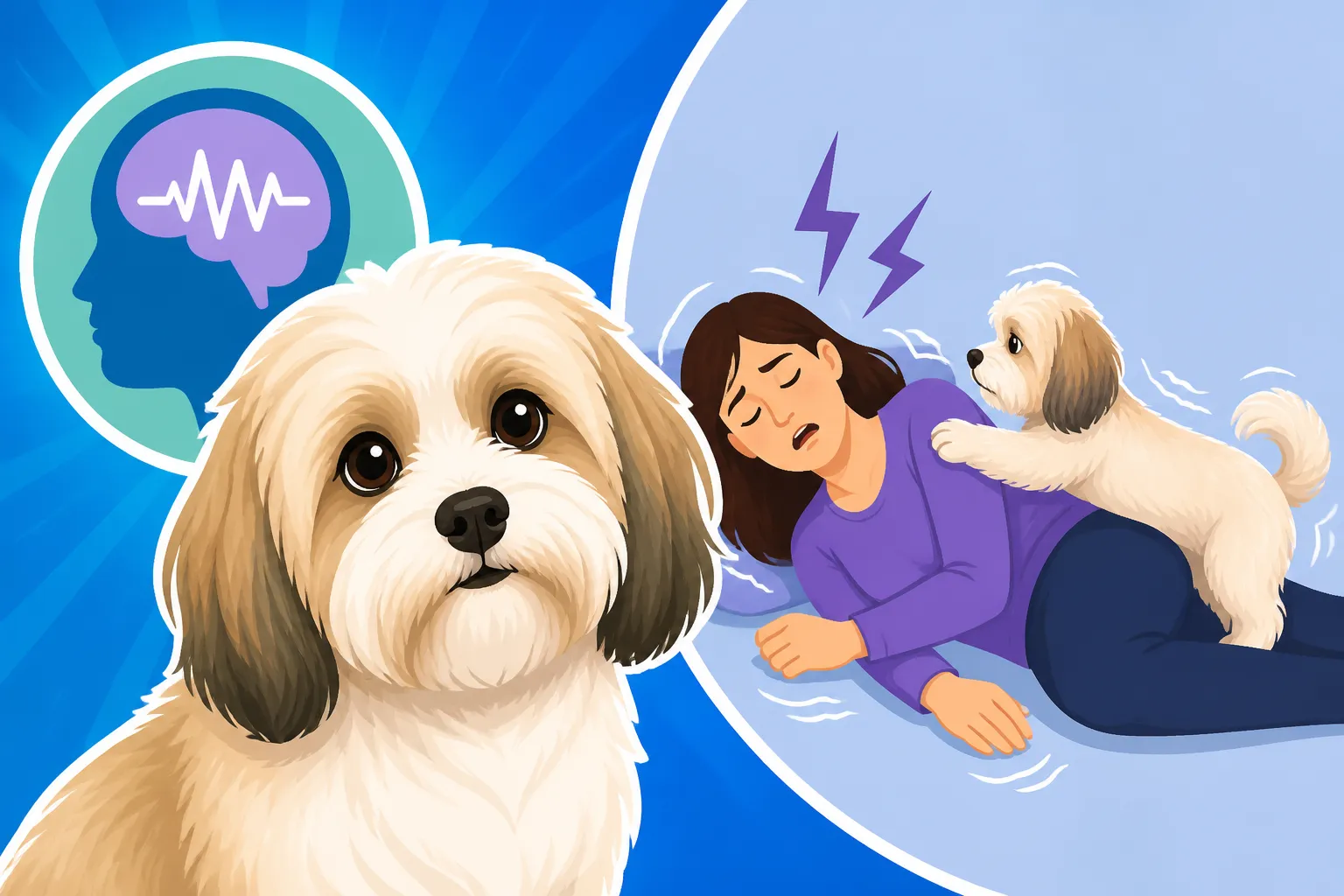
Whether a Havanese Detects Seizures
It's completely natural to wonder about the hidden capabilities of our beloved Havanese, especially when facing a challenging health condition like seizures. Many people hope their furry companion might offer a unique form of support, a kind of sixth sense that could provide early warning or crucial assistance. This guide will explore whether your Havanese can genuinely detect seizures and, more realistically, how they can be trained to respond in a way that truly helps.
Understanding the Difference: Seizure Alerting vs. Seizure Response
Before we dive into what your Havanese might be able to do, it's vital to clarify the distinction between two very different concepts: seizure alerting and seizure response. These terms are often used interchangeably, but they refer to completely different types of canine behavior, and understanding the difference is key to setting realistic expectations for your companion.
What is "Seizure Alerting" in Dogs?
True seizure alerting is when a dog recognizes subtle, pre-seizure changes in a person's body or behavior before a seizure actually begins, and then actively warns them. This might manifest as the dog barking, nudging, pacing, or even trying to herd their person to a safe spot. It's an extraordinary, almost miraculous ability that researchers still don't fully understand. It's believed that these dogs might be picking up on minute changes in scent, subtle shifts in body language, or even electro-chemical alterations in the person's brain that precede a seizure.
The fascinating thing about these rare "alerting" dogs is that their ability often appears spontaneously, without any formal training. They just do it. Imagine your sweet Havanese suddenly becoming insistent, pawing at you or staring intently, moments before you feel the first twinge of an aura. This isn't something that can be reliably taught; it's an innate, unexplainable connection and sensitivity. Many stories circulate among seizure sufferers about dogs who exhibit this behavior, but scientifically, it remains a phenomenon that defies easy explanation or prediction. It's often likened to a dog "knowing" when you're sad, but on a much more profound, life-saving level.
What is "Seizure Response" in Dogs?
Seizure response, on the other hand, is a much more common and trainable behavior, and it's where most Havanese can genuinely shine. A seizure response dog doesn't predict a seizure; instead, they are trained to perform specific tasks during or immediately after a seizure to keep their person safe and help with recovery. This is a practical, task-oriented role that leverages a dog's natural intelligence, loyalty, and desire to please.
For instance, your Havanese could be trained to lie down next to you during a seizure to cushion your head, or to stay by your side until you recover. They could learn to bark to summon help if you're alone, or even press a specially designed alert button. This kind of training is rigorous and requires dedication, but it's built on observable behaviors and clear cues, making it a far more achievable goal than hoping for spontaneous alerting. Think of it as your Havanese becoming your personal, devoted first responder, ready to act when you need them most, rather than a crystal ball.
Can a Havanese Naturally Detect Seizures?
When it comes to the highly intuitive nature of our Havanese, many of us hope for that magical ability to "just know" when something is wrong. Havanese are incredibly sensitive and attuned to their owners, which makes the idea of them detecting seizures seem plausible.
The Anecdotal Evidence and Unexplained Abilities
You've probably heard stories – perhaps from friends, online forums, or even personal experience – of dogs who seem to sense an impending seizure. These anecdotes are powerful and often incredibly moving. People describe their Havanese becoming unusually clingy, staring intently, pawing, or exhibiting other distressed behaviors minutes or even hours before a seizure event. For the person experiencing seizures, these unprompted warnings can be life-changing, allowing them to get to a safe place, take medication, or alert a family member.
While these stories are compelling, it's important to remember they are anecdotal. The scientific community has not yet definitively identified how these dogs might be predicting seizures, nor can they reliably breed or train for this specific ability. It's often attributed to a unique, individual bond and an inexplicable sensitivity on the part of that particular dog. Your Havanese might indeed have such an innate gift, but there's no way to guarantee it or to actively train for it to appear. It's a wonderful bonus if it happens, but not something you should count on.
Factors That Might Contribute to a Havanese's Sensitivity
Havanese are known for their profound connection with their human families. Their breed characteristics actually lend themselves well to being highly observant and empathetic. They were historically companion dogs, bred to be constantly by their owner's side, soaking up every nuance of human emotion and behavior. This makes them inherently sensitive creatures.
Consider their keen sense of smell, which is thousands of times more powerful than ours. Some theories suggest that biochemical changes in the human body leading up to a seizure might produce a subtle scent that dogs can detect. Additionally, their acute hearing might pick up on minute physiological changes, like an altered heart rate or breathing pattern, that we'd never notice. Their constant presence means they are masters at reading body language, picking up on the most subtle shifts in posture, gaze, or energy. This combination of sensory prowess and a deeply empathetic nature means your Havanese is already wired to be highly aware of your state, even if they can't explicitly "alert" to a seizure on command. This profound bond is one of the many reasons we adore them, and why they often seem to anticipate our needs. Why a Havanese Follows You Into Every Room is a testament to this close bond.
The Reality of Training for Seizure Alerting
Here's the honest truth about training a dog for true seizure alerting: it's virtually impossible to do systematically. You can't train a dog to react to something that hasn't happened yet, or to a stimulus that is undetectable to humans. If a dog does develop the ability to alert, it's typically an instinctual behavior that emerges on its own. It's like trying to teach a dog to predict the weather – some might seem to do it, but you can't create that skill through training.
However, you can foster an environment that encourages your Havanese's natural observational skills and strengthens your bond. A well-trained, confident Havanese is more likely to be attentive and responsive to your needs. Basic obedience and advanced training can lay the groundwork for any type of service work. Resources like BAXTER & Bella offer comprehensive online puppy and dog training programs that focus on positive reinforcement and building a strong partnership. While they won't promise seizure alerting, they can help you develop a Havanese that is highly focused, responsive, and a joy to have by your side, which are all excellent qualities for a dog that might one day spontaneously offer aid. The more attuned your Havanese is to you generally, the better equipped they'll be to notice any changes in your state.
Training a Havanese as a Seizure Response Dog
While true seizure alerting is often a natural gift, training a Havanese to be a seizure response dog is an incredibly valuable and achievable goal. This involves teaching specific tasks that can provide real assistance and comfort during and after a seizure. Your Havanese's intelligence and desire to please make them excellent candidates for this important work.
Recognizing the Need for a Seizure Response Dog
Deciding if a seizure response dog is right for you involves considering your specific needs and the nature of your seizures. If your seizures often leave you disoriented, injured, or in a vulnerable state, a response dog can offer a vital layer of safety and support. Perhaps you live alone and worry about what would happen if you had a seizure without anyone knowing. Or maybe you have children at home and need assistance ensuring their safety during an episode. A Havanese, with their compact size and unwavering devotion, can be an ideal companion in these situations. They are small enough to be easily managed, yet robust enough to perform tasks like providing deep pressure or retrieving items. Whether a Havanese Makes a Therapy Dog and Whether a Havanese Can Be a Service Dog further explore the wonderful ways these dogs can provide support and assistance.
Specific Tasks a Havanese Can Be Trained For
The beauty of training a seizure response Havanese is that you can tailor their tasks to your individual needs. Here are some examples of what your clever Havanese can learn:
- Deep Pressure Therapy/Comfort: During or after a seizure, your Havanese can be trained to lie across your chest or lap. The gentle weight and warmth can be incredibly calming, helping to reduce anxiety and aid recovery. Their soft, silky fur is also wonderfully comforting to stroke.
- Barking for Help: If you have a seizure when alone or in a different room, your Havanese can be taught to bark repeatedly or go find another family member to alert them that something is wrong. This can be critical for summoning assistance.
- Retrieving Medication or a Phone: Imagine your Havanese bringing you a pre-filled medication dispenser or even your mobile phone after you've recovered consciousness but are still disoriented. This can be a game-changer for independent living. They can also fetch a blanket or a pillow to help you get more comfortable.
- Activating an Alert Device: There are specialized buttons available (often found on platforms like Amazon) that dogs can be trained to press with their paw or nose, sending an alert to a caregiver or emergency services. This is a brilliant way to empower your Havanese to get you help.
- Blocking/Cushioning: Your Havanese can be trained to position themselves to prevent you from hitting your head on hard surfaces during a fall, or to simply stay by your side to offer a protective presence. While they are small, their presence alone can be reassuring.
The Training Process and Professional Guidance
Training a seizure response dog, especially one that needs to perform critical tasks, is a serious undertaking. It goes far beyond basic obedience. While your Havanese has The Circus Dog Brain Inside a Havanese and is highly intelligent, you'll likely need professional guidance. This is not something to attempt solely from online videos. A qualified service dog trainer will work with you and your Havanese to:
- Assess Suitability: Ensure your Havanese has the right temperament – calm, confident, non-reactive, and eager to work. Not every dog is suited for service work, regardless of breed.
- Build Foundational Skills: Reinforce impeccable obedience, including stays, recalls, and focus commands, even in distracting environments. This is where programs like BAXTER & Bella can be incredibly helpful for building a strong foundation before moving to specialized tasks.
- Task-Specific Training: Systematically teach each desired response behavior. This will involve breaking down complex tasks into small, manageable steps, using positive reinforcement. For example, teaching your Havanese to retrieve a phone might start with touching the phone, then picking it up, then bringing it a short distance, and so on.
- Proofing and Generalization: Practice these tasks in various environments and under different conditions to ensure your Havanese can perform reliably when it truly matters.
- Public Access Training (if applicable): If your Havanese will be a public access service dog, they will need extensive training to behave appropriately in all public settings, adhering to strict guidelines.
It's a significant commitment, but the bond and the support you gain from a well-trained seizure response Havanese can be immeasurable.
Supporting a Havanese Owner with Seizures (and Their Havanese)
Living with seizures presents unique challenges, not just for the individual but for their entire household, including their beloved Havanese. Creating a supportive environment involves practical adjustments, careful monitoring, and utilizing available resources to ensure safety and well-being for everyone. Your Havanese, whether a natural alerter or a trained responder, is a key part of this support system.
Creating a Safe Environment
One of the most important steps is to make your home as safe as possible for when a seizure occurs. This benefits both you and your attentive Havanese, who will be by your side. Here are some considerations:
- Clear Pathways: Keep floors clear of clutter, especially in high-traffic areas. This reduces the risk of injury during a seizure and makes it easier for your Havanese to navigate to you.
- Furniture Arrangement: Position furniture to minimize sharp edges or hard surfaces you might fall against. Consider padding sharp corners if falls are a common issue.
- Secure Rugs: Slippery rugs can be a hazard. Ensure all rugs are non-slip or consider removing them from key areas. This also helps your Havanese maintain traction, especially if they are trying to assist you. Whether Slippery Floors Hurt a Havanese delves into the importance of good footing for your Havanese's joints and overall safety.
- Emergency Contact Information: Have clearly visible emergency contacts and medical information readily available for anyone who might be assisting you or your Havanese in an emergency.
- Stair Safety: If stairs are an issue, consider gates or steps to make movement safer for both you and your Havanese, especially if they follow you everywhere. Whether Stairs Damage a Havanese's Knees offers more insight into how stairs can impact your dog's joint health.
Monitoring and Recording Seizure Activity
Maintaining a detailed record of your seizures is crucial for your medical team, and it can also provide insights into your Havanese's behavior. If your Havanese does show signs of alerting, noting their specific actions alongside the seizure details can help you identify patterns.
Create a seizure log that includes:
- Date and time of seizure
- Duration
- Type of seizure (if known)
- Any triggers you noticed
- Any behaviors your Havanese exhibited before the seizure (e.g., pawing, staring, whining, unusual clinginess)
- Any behaviors your Havanese exhibited during or after the seizure (e.g., lying with you, barking, nudging)
- Medications taken and their timing
This detailed information can be invaluable for your doctor to adjust treatments and for you to better understand your Havanese's role. It helps transform anecdotal observations into potentially useful data.
Essential Gear and Resources
Beyond training, certain items can significantly enhance safety and support for someone with seizures and their Havanese. Many of these can be easily found and purchased.
- Wearable Medical Alert Devices: These can automatically detect falls or seizures and alert emergency contacts. While not canine-specific, they work in conjunction with your Havanese's presence.
- Specialized Dog Vests: If your Havanese is a trained service dog, they will need a vest clearly identifying them. You can find these on platforms like Amazon, along with patches that indicate their role (e.g., "Service Dog," "Seizure Response Dog").
- Dog-Activated Alert Buttons: As mentioned, these can be trained for your Havanese to press. Look for durable, easily activated buttons that can withstand a paw or nose push. Online marketplaces are good places to start your search for these.
- Comfort Items for Your Havanese: Your Havanese works hard to be your companion and potentially your helper. Ensure they have a comfortable, safe space of their own, like a soft bed or crate, for rest. Beds That Suit an Arthritic Havanese offers advice on selecting comfortable bedding, which is important for any working dog.
- High-Quality Training Treats: Reinforcement is key for any training. Keep a stash of your Havanese's favorite treats handy for rewarding desired behaviors, whether it's an impromptu cuddle or a specific response task.
- Online Support Groups: Connecting with other individuals who have seizure alert or response dogs can provide immense emotional support and practical advice. Many groups exist on social media platforms, offering a community of shared experiences.
By combining the natural intuition and loving companionship of your Havanese with thoughtful preparation and targeted training, you can create a safer, more supported life for both of you.
| Feature | Seizure Alerting | Seizure Response |
|---|---|---|
| Timing | Before a seizure (minutes to hours) | During or immediately after a seizure |
| Nature | Spontaneous, often innate; not reliably trainable | Trainable, task-oriented behaviors |
| Primary Goal | Warn person to take precautions | Provide aid, comfort, and safety |
| Scientific Basis | Largely anecdotal; mechanisms not fully understood | Based on observable behaviors; well-established training methods |
| Typical Dog Type | Any dog, but most often highly bonded, observant individuals | Any dog with appropriate temperament and trainability |
| Havanese Potential | Possible due to sensitivity, but not guaranteed | High potential with professional training |
Disclaimer
This article is for general informational purposes only and does not constitute professional advice. Laws, prices and regulations vary by location and change over time. Consult a qualified professional for guidance on your specific situation.