Progressive Retinal Atrophy in a Havanese
One of the most heartbreaking things a Havanese parent can face is the fear of their beloved companion losing their eyesight. It’s a terrifying prospect to think of your playful, curious Havanese navigating the world without their keen vision. This comprehensive guide is here to shed light on Progressive Retinal Atrophy (PRA) in Havanese, offering you a deep understanding of this inherited eye condition, how to spot its signs, and most importantly, how to help your furry family member live a full, happy life if they are affected.
Understanding Progressive Retinal Atrophy in Havanese
Finding out your Havanese might have an eye condition can be incredibly stressful. Progressive Retinal Atrophy (PRA) is one of those terms that sends shivers down a dog owner's spine, conjuring images of a life drastically changed. But let's take a deep breath together and break down exactly what PRA is and how it specifically impacts our charming Havanese. It’s not a single disease, but rather a catch-all term for a group of inherited disorders that ultimately lead to blindness.
What is Progressive Retinal Atrophy?
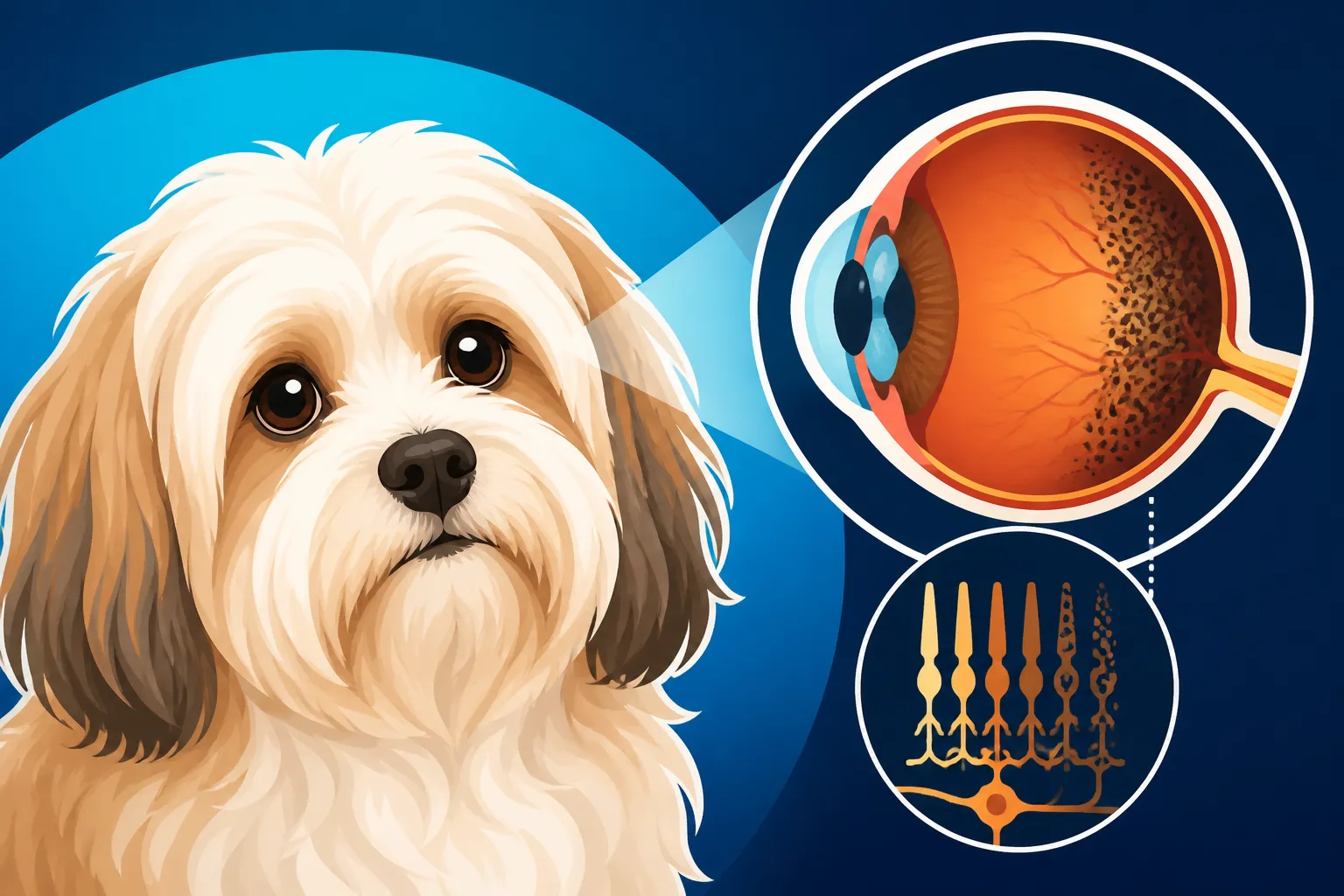
At its core, Progressive Retinal Atrophy is a degenerative disease that slowly but surely destroys the cells in the retina, the light-sensitive tissue at the back of your Havanese’s eye. Think of the retina as the film in an old camera; it captures the images that the brain then processes into sight. It’s absolutely critical for vision, and within it are millions of specialized cells called photoreceptors. These photoreceptors come in two main types: rods, which are responsible for vision in dim light and detecting movement, and cones, which handle bright light vision and color perception.
In a Havanese affected by PRA, these precious photoreceptor cells begin to deteriorate. In some forms of PRA, the cells might develop abnormally from a young age (dysplasia) and then degenerate, while in others, they might develop normally but then start to break down over time (degeneration). The sad reality is that once these cells are gone, they cannot be replaced, leading to irreversible vision loss. This process is progressive, meaning it gets worse over time, gradually stealing your Havanese's sight.
The Genetics Behind Havanese PRA
The cruel truth about PRA in Havanese, and many other breeds, is that it's an inherited condition. This means it's passed down from parent dogs to their puppies through specific genes. In most forms of PRA, including those commonly found in Havanese, the inheritance pattern is autosomal recessive. This might sound like a mouthful, but what it essentially means is that a puppy must inherit two copies of the faulty gene – one from each parent – to actually develop the disease and become "affected."
A Havanese that inherits only one copy of the faulty gene from one parent is considered a "carrier." These carriers don't show any signs of PRA themselves because their single healthy gene is enough to produce the necessary proteins for normal retinal function. However, if two carriers are bred together, there's a 25% chance with each puppy born that it will inherit two copies of the faulty gene and become affected. There's also a 50% chance they'll be carriers like their parents, and a 25% chance they'll be completely clear. This is why genetic testing is absolutely non-negotiable for responsible Havanese breeders. Understanding The Eye Diseases a Havanese Inherits is crucial for both breeders and prospective owners. Without knowing the genetic status of breeding dogs, breeders can unknowingly perpetuate these devastating diseases within the breed.
Different Forms of PRA and Their Impact
While "Progressive Retinal Atrophy" is a broad term, it encompasses several distinct genetic mutations that lead to similar outcomes. The specific form of PRA can dictate the age of onset and the rate of progression in your Havanese. Some forms manifest as "early-onset," where the photoreceptor cells fail to develop properly (dysplasia), and signs of vision impairment can be noticed in puppies as young as a few months old. On the other end of the spectrum, "late-onset" PRA involves photoreceptor cells that develop normally but then begin to degenerate later in life, sometimes not showing signs until a Havanese is middle-aged or even a senior.
Regardless of the specific genetic variant, the typical progression begins with a loss of night vision, often referred to as "night blindness." This happens because the rod cells, which are crucial for seeing in low light, are usually affected first. As the disease advances, the cone cells also begin to degenerate, leading to a complete loss of daytime vision and ultimately, total blindness. The good news amidst this challenging diagnosis is that PRA itself is not a painful condition for your Havanese. The discomfort comes more from the disorientation and anxiety that can accompany vision loss, not from the physical disease in the eye itself.
Recognizing the Signs of PRA in Your Havanese
As a Havanese owner, you're deeply attuned to your dog's quirks and habits. Any change, no matter how subtle, can raise a red flag. When it comes to vision loss from Progressive Retinal Atrophy, the signs can often creep up slowly, making them easy to dismiss at first. But knowing what to look for can make all the difference in getting an early diagnosis and helping your Havanese adjust.
Early Indicators of Vision Loss
One of the very first and most telling signs that your Havanese might be experiencing the early stages of PRA is a noticeable difficulty seeing in dim light or at night. They might start bumping into furniture in a dimly lit hallway, hesitate to go outside for their last potty break after sundown, or become surprisingly clumsy when moving from a well-lit room into a darker one. This "night blindness" is a classic hallmark of PRA because the rod cells, responsible for low-light vision, are typically the first to degrade. You might also notice that their pupils appear unusually dilated, even in moderately bright lighting. This is their eyes' attempt to gather as much light as possible to compensate for the failing photoreceptors, giving their eyes a distinct, often "shiny" or overly reflective quality as the tapetum lucidum (a reflective layer behind the retina) becomes more visible.
Beyond these physical signs, pay close attention to subtle behavioral shifts. Your once confident Havanese might suddenly seem more hesitant or clingy, especially in new or dimly lit environments. They might stick closer to your legs, be reluctant to explore, or seem disoriented in familiar surroundings once the sun sets. These aren't just quirks; they can be early calls for help from a dog grappling with a changing world.
Progression to Daytime Blindness
As PRA progresses, the deterioration doesn't stop at night vision. Eventually, the cone cells, which handle bright light and detailed vision, also begin to fail. This leads to a gradual loss of daytime vision. Your Havanese might start bumping into objects even in good lighting, whether it's the corner of a coffee table they've navigated a thousand times or a doorway they usually breeze through. They might seem generally more cautious, moving slower and relying heavily on their whiskers and nose to sense their surroundings.
You'll observe an increased reliance on their other senses. They might start sniffing the ground more intently during walks, listening more carefully to your voice, or responding more strongly to familiar scents and sounds. Their entire demeanor might change; some Havanese become more anxious or withdrawn, while others might become more easily startled if approached unexpectedly. It’s important to remember that these changes aren't because your Havanese is being difficult; they are genuinely struggling to see. Witnessing this can be incredibly difficult for owners, and it's a good reminder that older Havanese, like people, can experience vision decline. You can learn more about how to support them if they do, even if it's from conditions other than PRA, by reading about Whether an Old Havanese Goes Blind.
Differentiating PRA from Other Eye Conditions
When you notice changes in your Havanese's eyes or behavior, it’s natural to jump to conclusions, but it's vital to remember that not all vision loss is PRA. There are several other eye conditions that can affect Havanese and cause similar symptoms, making a definitive diagnosis by a professional absolutely essential. For instance, cataracts, which are very common, cause a cloudy or opaque appearance in the lens of the eye. While they can lead to blindness, it's a different mechanism than PRA. Unlike PRA, where the retina itself degenerates, cataracts involve the lens becoming opaque, blocking light from reaching the retina. You can learn more about Hereditary Cataracts in a Havanese.
Another serious condition is glaucoma, which is characterized by increased pressure within the eye. Glaucoma is usually very painful, causing redness, squinting, and often a visibly enlarged or bulging eye. This is distinctly different from PRA, which, as mentioned, is not painful. Dry eye, or keratoconjunctivitis sicca, can also cause discomfort and impaired vision due to insufficient tear production, leading to red, irritated eyes. Given the range of possibilities, from simple infections to complex genetic conditions, a proper diagnosis requires the expertise of a veterinary ophthalmologist who can differentiate between these conditions and provide an accurate assessment.
Diagnosing Progressive Retinal Atrophy
The moment you suspect something might be wrong with your Havanese's vision, your heart sinks. Getting a diagnosis, especially for a condition as serious as Progressive Retinal Atrophy, can feel overwhelming. However, understanding the diagnostic process is the first step toward effective management and ensuring your Havanese gets the best possible care. It’s not just about identifying the problem, but about understanding its specific nature.
The Role of a Veterinary Ophthalmologist
When it comes to eye health, your regular veterinarian is a wonderful general practitioner, but for complex conditions like PRA, a board-certified veterinary ophthalmologist is truly your best ally. These specialists have undergone extensive additional training specifically focused on diseases and conditions of the animal eye, equipping them with specialized knowledge and diagnostic tools that go beyond a typical vet's office. Their expertise is crucial because early signs of PRA can be subtle, and differentiating it from other eye problems requires a keen eye and specialized equipment.
The diagnostic process typically begins with a thorough and comprehensive eye exam. This isn't just a quick peek; it involves a series of detailed assessments. The ophthalmologist will use an ophthalmoscope to carefully examine the retina, looking for characteristic changes like retinal thinning or changes in blood vessel patterns, which are indicative of PRA. They might also use a slit lamp biomicroscope to examine other parts of the eye, such as the lens and cornea, to rule out other conditions. For a definitive diagnosis of PRA, especially in its early stages before visible retinal changes are pronounced, an electroretinography (ERG) test is often performed. This specialized test measures the electrical activity of the retinal cells in response to light, directly assessing how well the photoreceptors are functioning. A reduced or absent electrical response on an ERG is the gold standard for confirming PRA.
Genetic Testing and Breeder Responsibility
For Havanese owners, genetic testing isn't just a fancy word; it's a critical tool for both diagnosis and, more importantly, prevention. Because PRA in Havanese is an inherited disease, specific DNA tests are available to identify the gene mutations responsible. These tests can determine if a dog is "clear" (meaning they don't carry the gene), a "carrier" (meaning they carry one copy of the gene but won't develop the disease), or "affected" (meaning they have two copies and will develop PRA). This is where responsible Havanese breeders truly shine, as they routinely utilize these DNA panels on all their breeding stock.
A breeder who is committed to the long-term health of the Havanese breed will test both parent dogs before any mating takes place. By knowing the genetic status of their dogs, they can make informed decisions to avoid breeding two carriers together, thereby preventing the birth of puppies that will eventually go blind from PRA. You should always ask a breeder about the health tests performed on the parents, not just for PRA but for all common Havanese ailments, including The Health Tests Both Havanese Parents Should Have. These tests are a testament to their dedication and help ensure that you bring home the healthiest possible puppy.
Interpreting Test Results and Planning Ahead
Receiving a PRA diagnosis for your Havanese can be a profoundly emotional experience, and understanding the test results is key to moving forward. If your Havanese tests "affected," it means they have two copies of the problematic gene and will, unfortunately, experience progressive vision loss, eventually leading to blindness. The ophthalmologist will be able to discuss the expected timeline based on the specific type of PRA identified. While there is currently no cure for PRA – no pill, no surgery that can restore the damaged retinal cells – an early diagnosis is still incredibly valuable.
Knowing what to expect allows you to proactively plan and make necessary adjustments to your Havanese's environment and routine. It gives you time to prepare for the changes, rather than being caught off guard. This foresight can significantly reduce your dog’s stress and anxiety as their vision declines. It also opens up conversations with your vet about managing any secondary issues that might arise as your Havanese adjusts to blindness. While PRA is a challenging diagnosis, remember that your Havanese relies on your strength and adaptability to guide them through this new chapter of their life.
Living with a Havanese with PRA
The diagnosis of Progressive Retinal Atrophy can feel like a devastating blow, but it's crucial to remember that a blind Havanese can still lead a wonderfully rich and fulfilling life. These resilient little dogs are incredibly adaptable, and with your help, they can learn to navigate their world using their other heightened senses. Your role shifts from preventing vision loss to actively supporting and enhancing their quality of life.
Adapting Your Home Environment
One of the most immediate and impactful things you can do for a Havanese with PRA is to create a safe and predictable home environment. The cardinal rule is consistency: once you arrange furniture, try your best to keep it in the same place. Your Havanese will create a "mental map" of your home, and moving things around can be incredibly disorienting and frustrating, leading to bumps and bruises. Consider using scents or textures to mark important areas. A different-smelling mat near their food and water bowls, or a textured rug at the top and bottom of stairs, can serve as helpful cues. Good, consistent lighting throughout the home, even during the day, can also help them make the most of any residual vision they may have.
Safety is paramount. Install baby gates at the top and bottom of stairs to prevent falls, especially as their vision declines further. Be mindful of sharp corners or low-lying objects that could cause injury. Some owners even pad sharp furniture edges. Creating a designated "safe zone" with their bed, toys, and water can provide a comforting retreat. Establishing consistent routines for feeding, potty breaks, and playtime will also help them feel secure and confident. Remember, your Havanese thrives on predictability, and even more so when their primary sense of navigation is compromised.
Maintaining Quality of Life and Emotional Well-being
Just because your Havanese is losing their sight doesn't mean they lose their joy or personality. Maintaining their quality of life and emotional well-being is paramount. Continue with familiar walks, but always keep them on a leash for their safety. Explore quiet, familiar routes where they can safely sniff and listen to the sounds of the world around them. Engage their other senses with enthusiasm: use strongly scented toys for playtime, call their name frequently, and offer lots of comforting touch and verbal praise. Squeaky toys, crinkle toys, and even puzzle toys filled with treats can still provide immense mental stimulation.
Consistent verbal commands become incredibly important. Use clear, distinct words for "stop," "wait," "step up," "step down," and "careful." Reward them generously for responding. Your Havanese will become even more attuned to your voice and touch, so be patient, gentle, and reassuring. They might become more anxious or startle more easily, so approach them calmly and speak to them before touching. Many Havanese, with their naturally cheerful and resilient dispositions, adapt remarkably well to blindness and continue to enjoy life to the fullest with the right support from their loving families. Don't underestimate your Havanese's ability to adjust; they are often far more adaptable than we give them credit for.
Support and Resources for Owners
Navigating life with a blind Havanese can be challenging, but you don't have to do it alone. There's a strong community of owners who have faced similar situations. Connecting with online forums, social media groups, or local support groups dedicated to blind or visually impaired dogs can provide invaluable practical advice, emotional support, and a sense of camaraderie. Hearing from others who understand your struggles and triumphs can be incredibly uplifting.
Your veterinary team, particularly your veterinary ophthalmologist, will also continue to be a vital resource. They can offer guidance on managing any secondary issues, advise on adaptations, and monitor your Havanese's overall health. It’s also worth considering pet insurance, such as Healthy Paws, which can help cover the costs of diagnostics, specialist consultations, and ongoing care for conditions like PRA, making it easier to provide the best possible care without financial strain. Look into policies carefully to understand what is covered, especially for inherited conditions. Understanding Insuring a Havanese Against Knees and Heart can offer more insight into how pet insurance works for various health issues. Always remember that patience, empathy, and a positive attitude from you will be your Havanese's guiding light.
The Importance of Responsible Breeding and Prevention
While living with a Havanese affected by PRA highlights the incredible resilience of these dogs, the ultimate goal for any responsible Havanese lover is prevention. Because Progressive Retinal Atrophy is an inherited condition, the most effective way to combat it is through ethical breeding practices. This isn't just about avoiding a heartbreaking diagnosis for a single puppy; it's about safeguarding the future health of the entire Havanese breed.
Screening Protocols for Havanese Breeders
Responsible Havanese breeders are committed to improving and maintaining the health of their lines. For eye conditions like PRA, this means strictly adhering to established screening protocols. The American College of Veterinary Ophthalmologists (ACVO) offers comprehensive eye examinations performed by certified veterinary ophthalmologists. These examinations are recommended annually for breeding dogs and involve a thorough inspection of the entire eye structure. The results are then submitted to organizations like the Orthopedic Foundation for Animals (OFA), which maintains a public database of health clearances. Dogs that pass these eye exams receive an OFA Eye Certification, providing a clear record of their ocular health.
Beyond general eye exams, breeders should also conduct specific DNA tests for PRA, as discussed earlier. A clear ACVO exam confirms that the dog's eyes appear healthy at the time of examination, but it doesn't reveal their genetic predisposition to inherited diseases like PRA. A DNA test, however, can identify if a dog is a carrier of the PRA gene, even if their eyes currently appear perfectly normal. Both types of screening are crucial. An ACVO exam helps catch any existing eye issues, while genetic testing helps prevent future ones. This dual approach ensures that breeding dogs are not only healthy themselves but also don't unknowingly pass on debilitating genetic conditions. Ensuring Whether a Havanese Needs a Yearly Eye Exam is just one piece of the puzzle.
Choosing a Healthy Havanese Puppy
For prospective Havanese owners, choosing a puppy from a responsible breeder who diligently follows these screening protocols is paramount. Don't be shy about asking direct questions about the health clearances of both parent dogs. A reputable breeder will be transparent and proud to share documentation, often in the form of OFA certifications or genetic testing results from reputable labs like Embark or Optimal Selection. They should be able to show you that both parents are "clear" of the known PRA gene mutation for Havanese, or at the very least, that one parent is clear and the other is a carrier (to ensure no affected puppies are produced). A breeder who can confidently show Whether a Havanese Breeder Should Show CHIC Numbers demonstrates a high level of responsibility.
Be wary of breeders who offer vague answers, claim their dogs are "vet checked" (which is not the same as specialist clearances), or state that genetic testing isn't necessary because they've never had an issue. The reality is that a dog can be a carrier of a recessive gene for generations without showing symptoms, only for the disease to surface when two carriers are accidentally bred. While no breeder can guarantee a puppy will never develop any health issue, those who perform thorough health testing significantly reduce the risk of inherited conditions like PRA. Investing in a puppy from such a breeder is an investment in the long-term health and well-being of your new family member, and ultimately, contributes to a healthier future for the entire Havanese breed.
The Future of PRA Research and Havanese Health
The fight against Progressive Retinal Atrophy in Havanese is an ongoing journey, and there's a strong, collaborative effort from researchers, veterinary professionals, breed clubs, and dedicated owners to find better solutions. Advances in veterinary genetics are continually identifying new gene markers for various forms of PRA across different breeds. This research not only refines existing DNA tests, making them more accurate and comprehensive, but also opens doors to understanding the disease at a deeper level.
While a cure for PRA remains elusive, ongoing research is exploring potential therapies, including gene therapy, to slow down or even halt the degeneration of retinal cells. These are complex and experimental fields, but they offer a beacon of hope for future generations of Havanese. The commitment of organizations like the American Kennel Club (AKC) Canine Health Foundation and breed-specific clubs to fund research initiatives is invaluable. As Havanese owners, we can contribute by supporting these efforts, engaging with responsible breeders, and advocating for widespread health testing. Through continued diligence and scientific advancement, we can work towards a future where PRA becomes a rarity, ensuring that the Havanese remains the healthy, vibrant companion we know and love. After all, the Havanese is generally known as Why the Havanese Is a Healthy Toy Breed Anyway, and upholding that reputation requires continuous effort.
| Feature | Progressive Retinal Atrophy (PRA) | Cataracts | Glaucoma | Dry Eye (KCS) |
|---|---|---|---|---|
| Primary Issue | Degeneration of retinal photoreceptors | Opacity/cloudiness of the eye's lens | Increased pressure within the eyeball | Insufficient tear production |
| Cause | Inherited genetic condition | Inherited, age, diabetes, trauma | Inherited, injury, secondary conditions | Inherited, immune-mediated, infections |
| Symptoms | Night blindness first, then day blindness, dilated pupils, shiny tapetum | Cloudy eye, progressive vision loss | Pain, redness, squinting, enlarged eye, vision loss | Red, irritated eyes, discharge, pain, vision changes |
| Pain Level | None | None (unless secondary issues arise) | Severe | Moderate to severe |
| Progression | Gradual, irreversible blindness | Gradual, can lead to blindness | Rapid, acute, can lead to irreversible blindness | Chronic, can lead to corneal damage and vision loss |
| Diagnosis | ERG (Electroretinography), ophthalmoscopy, genetic test | Ophthalmoscopy, slit lamp exam | Tonometry (eye pressure measurement) | Schirmer Tear Test (STT) |
| Treatment | No cure; supportive care for adaptation | Surgery to remove/replace lens (if suitable) | Emergency medications, surgery | Artificial tears, cyclosporine eye drops |
Disclaimer
The information provided in this article is intended for general knowledge and informational purposes only, and does not constitute medical advice. Always consult with a qualified veterinary professional or a board-certified veterinary ophthalmologist for any health concerns or before making any decisions related to your Havanese's medical care.