Whether a Camera Helps a Havanese Owner
It's a common dilemma for Havanese owners: you love your furry companion fiercely, but life calls, and sometimes you just have to leave them home alone. The nagging question always remains: what are they really doing while you're out? Are they napping peacefully, playing with their toys, or are they pacing, barking, or perhaps even getting into mischief? This guide will delve into how installing a camera can be an incredibly useful tool for understanding your Havanese's behavior when you're not there, offering peace of mind and practical insights.
Unveiling the Mystery of Alone Time for Your Havanese
One of the biggest anxieties for any devoted Havanese parent is the unknown. We close the door, and for hours, we just hope our little one is okay. Did they manage to hold it until the dog walker arrived? Are they tearing up the couch cushions in a fit of boredom or stress? Without being a fly on the wall, it's impossible to truly know, and that lack of information can be incredibly stressful for us. This is where a pet camera steps in, acting as your personal, silent observer.
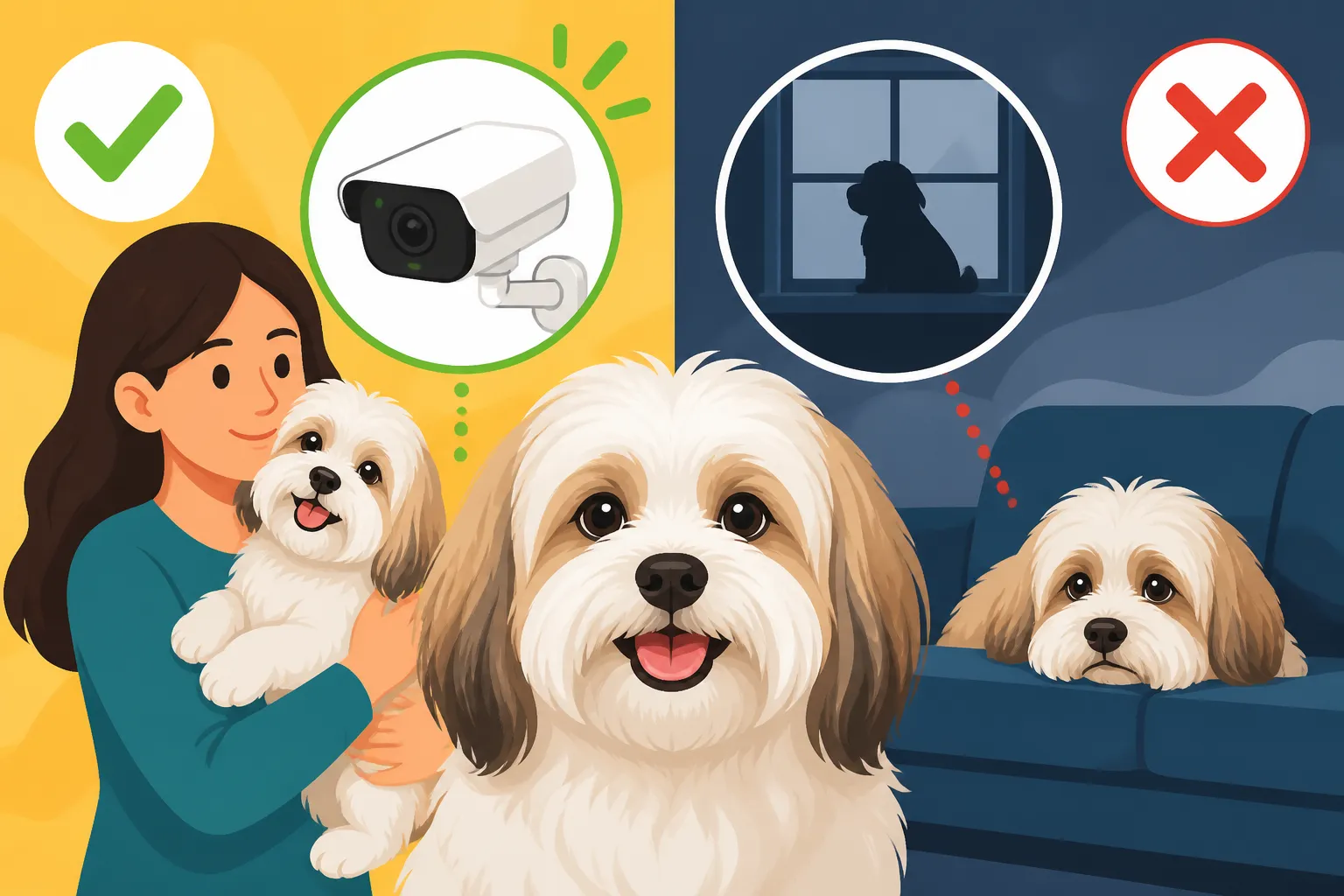
Imagine being able to pull out your phone during your lunch break and instantly see your Havanese snoozing soundly on their favorite bed, or perhaps curiously watching squirrels from the window. This simple act of observation can immediately melt away hours of worry. Beyond just providing reassurance, a camera offers objective evidence of your Havanese's routine and habits while unsupervised. You might discover they spend most of their time napping, or perhaps they have a specific window of activity where they like to play with a particular toy. This data is invaluable because it replaces assumptions with facts, allowing you to tailor their environment and routine more effectively. It helps distinguish between what you imagine might be happening and what actually is.
For instance, many owners worry about constant barking. You might come home to a tired, hoarse pup and assume they've been barking for hours. A camera might reveal that they only bark for five minutes when the mail carrier comes, then settle back down. Or, conversely, it might show you a persistent, low-level whine you never knew about. This objective view eliminates guesswork, allowing you to react appropriately rather than to perceived problems. It’s like having a little window into their secret life, giving you a deeper connection and understanding of your Havanese, even when you're physically apart. It’s about building a better, more informed relationship with your companion.
Diagnosing and Addressing Separation Anxiety
Havanese, with their deeply affectionate and companion-oriented nature, are particularly prone to developing separation anxiety. This isn't just a matter of missing you; it's a genuine state of distress that can manifest in various ways, and it's heartbreaking to imagine your cherished Havanese experiencing such fear. Knowing if your Havanese has Signs a Havanese Has Separation Anxiety can be crucial for their well-being. A camera becomes an indispensable diagnostic tool, allowing you to observe their behavior when you're absent and identify if their distress goes beyond a normal degree of missing you.
The symptoms of separation anxiety often only appear when you're not home, making them incredibly difficult to diagnose without direct observation. A camera can help you pinpoint these tell-tale signs: excessive barking, howling, or whining that lasts for long periods after you leave, or sometimes just intermittently. You might see destructive chewing, targeting items like doorframes, furniture, or your personal belongings – this isn't naughtiness, but often a coping mechanism for anxiety. Pacing, drooling, or frantic attempts to escape from crates or rooms are also strong indicators. Perhaps your Havanese, usually perfectly housetrained, has accidents indoors only when you're gone. These are all behaviors that are typically hidden from your view but become starkly visible through camera footage.
It's vital to differentiate between a Havanese who is just a little bored or grumbly about you leaving, and one who is genuinely in a state of panic. A camera helps you see the nuances. A bored Havanese might take a nap, chew on a designated toy for a bit, look out the window occasionally, and then settle. An anxious Havanese, however, might exhibit constant pacing, frantic panting even when it's not hot, persistent vocalization that escalates in intensity, or attempts to dig or chew their way through barriers. These subtle differences become clear when you have the footage to review. If you're wondering Whether a Havanese Cries When You Leave, a camera will give you a definitive answer.
Once you have identified these patterns, the camera footage becomes an incredibly powerful tool for intervention. You can share clips with a professional dog trainer or a veterinary behaviorist, providing them with concrete examples of your Havanese's behavior. This objective evidence allows them to make a more accurate diagnosis and to tailor effective training interventions. For example, if you see your Havanese only becomes anxious 30 minutes after you leave, a trainer might suggest specific desensitization exercises targeting that timeframe. You can experiment with strategies like leaving the radio on, as explored in Whether Leaving the Radio On Helps a Havanese, or providing engaging puzzle toys, as discussed in Whether a Havanese Enjoys Puzzle Toys, and then use the camera to monitor their effectiveness. Many smart cameras are available on platforms like Amazon, offering a wide range of features from two-way audio to treat dispensers, which can be part of your comprehensive strategy to help your Havanese feel more secure when alone.
Monitoring General Well-being and Safety
Beyond the critical task of diagnosing and managing separation anxiety, a pet camera serves a broader purpose: it acts as a general monitor for your Havanese’s overall well-being and safety throughout the day. This is about more than just problem behavior; it’s about ensuring their comfort, observing their daily habits, and intervening if unexpected situations arise.
Imagine you're at work and a sudden storm rolls in. You might worry if your Havanese is startled by the thunder, or if they've found a secure place to shelter. A quick check of the camera can reassure you, or conversely, alert you if they are showing signs of extreme fear, allowing you to potentially call a neighbor or make arrangements. Similarly, a camera can be invaluable for safety checks. Are they getting into things they shouldn't, perhaps trying to chew on electrical cords or getting into the trash? You can intervene using the two-way audio feature on some cameras, or at least identify areas that need to be made more "Havanese-proof" before your next departure. If you have other pets, the camera can also show you how they interact when you're not there, ensuring everyone is getting along peacefully.
Furthermore, a camera can offer crucial early detection for potential health issues. Subtle changes in a Havanese's behavior, which might otherwise go unnoticed for hours, can be caught on camera. For instance, if your Havanese suddenly starts limping, is excessively scratching, or appears unusually lethargic, you might spot it through the live feed. This early observation can prompt you to call your vet sooner, potentially leading to a quicker diagnosis and treatment. For example, if you're concerned about Lumps Worth Checking on a Havanese, observing their general behavior for signs of discomfort could be helpful. This proactive approach to health monitoring is particularly valuable for breeds like the Havanese, who can be quite stoic even when not feeling their best.
For those who rely on pet sitters or dog walkers, a camera offers an additional layer of accountability and reassurance. You can observe their interactions with your Havanese, ensuring they are following your instructions and providing the loving care you expect. This isn't about distrust, but about peace of mind, knowing that your Havanese is receiving consistent, high-quality attention. For specific training approaches, watching how your Havanese responds to different cues can be invaluable, especially if you're working through an online program like BAXTER & Bella. Their programs often emphasize positive reinforcement, and a camera can help you see if your Havanese is truly engaging with the enrichment and training activities you've set up, or if you need to adjust your approach.
Choosing the Right Camera for Your Havanese
Deciding to invest in a pet camera is a great first step, but then you're faced with a dizzying array of options. It's not a one-size-fits-all situation, and what works best for one Havanese owner might not be ideal for another. Thinking about your specific needs, your Havanese's temperament, and your budget will help you narrow down the choices.
There are several types of cameras, ranging from basic monitors that simply provide a live video feed to sophisticated smart cameras with a host of interactive features. Basic models might be perfect if you just want to peek in and see if your Havanese is okay. More advanced options can offer two-way audio, allowing you to speak to your Havanese and hear them respond. Some even include treat dispensers, motion and sound alerts, or recording capabilities.
When choosing, consider these key features:
- Video Quality: High-definition (HD) video is generally preferred. It allows for clearer images, making it easier to spot subtle behaviors or potential issues. You'll want to be able to clearly see if your Havanese is chewing on something inappropriate or if their body language indicates stress.
- Night Vision: Unless your Havanese is never left alone in dimly lit conditions, night vision is essential. It ensures you can monitor them effectively regardless of the time of day or ambient light.
- Two-Way Audio: This feature can be a double-edged sword. For some Havanese, hearing your voice can be incredibly comforting, helping to soothe their anxiety. For others, it might heighten their awareness of your absence and actually increase distress. Experiment cautiously to see how your individual Havanese reacts. Being able to hear them, however, is almost always beneficial.
- Motion and Sound Alerts: These are incredibly helpful. Instead of constantly checking the feed, you can receive notifications on your phone when your Havanese barks, moves significantly, or if there's an unusual noise. This allows you to focus on your day but still be immediately aware of any potential issues.
- Recording Capabilities: The ability to record and store footage is critical, especially if you're trying to diagnose behavioral issues like separation anxiety or destructive chewing. You can review clips later, identify patterns, and share them with trainers or vets. Some cameras offer cloud storage, while others use local storage with a memory card.
- Ease of Setup and App Interface: You want a camera that is straightforward to set up and comes with an intuitive, user-friendly app. You don't want to spend hours troubleshooting when your primary goal is peace of mind.
- Treat Dispenser: Some high-end models offer the ability to remotely dispense treats. This can be a fun way to interact with your Havanese or offer a small distraction, though it shouldn't replace genuine attention or training.
Consider also where you plan to place the camera for the best view. One camera might suffice for a small apartment, but a larger home might benefit from multiple cameras positioned in key areas where your Havanese spends most of their time. For example, you might want one in the living room and one in their designated sleeping area, especially if Whether a Havanese Should Sleep in the Bedroom is a routine you follow. Always think about privacy; ensure only trusted individuals have access to your camera's feed. While there's a spectrum of costs, from basic monitoring devices to feature-rich interactive pet cameras, many highly-rated options are readily available on Amazon that fit various budgets and needs.
| Feature | Basic Camera | Mid-Range Camera | Advanced Pet Camera |
|---|---|---|---|
| Video Quality | SD/720p | 1080p HD | 1080p HD, sometimes 2K |
| Night Vision | Yes, basic | Yes, clear | Enhanced, wide range |
| Two-Way Audio | No or basic (listen only) | Yes | Yes, often high-quality |
| Motion/Sound Alerts | Basic (e.g., loud bark) | Customizable | Highly customizable, activity zones |
| Recording/Storage | Manual capture, limited cloud | Short clips, some cloud/local | Continuous/event, extensive cloud/local |
| Treat Dispenser | No | No | Yes |
| Remote Pan/Tilt | No | Sometimes | Often included |
| Price | Entry-level | Moderate | Higher-end |
| Use Case | Simple check-ins | General monitoring, basic problem-solving | Detailed observation, interaction, anxiety support |
Practical Tips for Using Your Havanese Camera Effectively
Once you've chosen your camera and set it up, the real work begins. A camera isn't a magic bullet that instantly solves all behavioral issues, but it's an incredibly powerful tool when used thoughtfully and consistently. To get the most out of your investment, here are some practical tips for effective camera use with your Havanese.
Firstly, introduce the camera gradually. Don't just set it up and leave. Let your Havanese sniff it, get used to its presence, and perhaps even associate it with positive experiences like treats. If it makes any sounds or movements, introduce those gently while you are present. This helps prevent your Havanese from forming negative associations with the device itself.
Secondly, resist the urge to constantly watch the feed. While it’s tempting, obsessively checking can lead to more anxiety for you. Instead, set aside specific times to review recordings or check in, especially if you have motion or sound alerts set up. Look for patterns in behavior. Does your Havanese only bark for the first 15 minutes after you leave? Does their destructive chewing reliably start an hour into your absence? Identifying these patterns is key to understanding the root cause and tailoring interventions. A critical question you might be trying to answer is How Many Hours a Havanese Can Be Left Alone, and camera footage will give you a very clear picture of how well they cope with different durations.
Remember, the camera is a diagnostic and monitoring tool, not a substitute for training or engagement. Combine the insights you gain from the camera with other strategies. If you see signs of boredom, ensure your Havanese is getting How Much Exercise a Havanese Needs before you leave, and provide engaging chew toys or puzzle feeders. If anxiety is evident, work with a professional trainer on desensitization and counter-conditioning techniques. The camera footage will help you measure the effectiveness of these efforts. For example, if you're following tips from What a Havanese Needs Every Day regarding mental stimulation, you can observe if those activities are successfully keeping boredom at bay.
You might encounter some common issues. Connectivity problems can arise, especially if your Wi-Fi signal is weak in the area where the camera is placed. Test it thoroughly before relying on it. Storage can also be an issue; make sure you have enough space for recordings if that's a feature you need. False alarms from motion detection (a curtain blowing, a shadow moving) can be frustrating, so experiment with sensitivity settings.
Finally, while a camera provides invaluable insights, it's important not to over-rely on it. Your physical presence, love, and interaction are paramount for your Havanese's well-being. The camera should enhance your understanding and ability to care for them, not replace your direct engagement. It's a wonderful tool to help your Havanese thrive even when you're away, helping you provide the best possible environment and address issues like Whether a Havanese Tolerates Being Alone with informed action.
Disclaimer
This article is for general informational purposes only and does not constitute professional advice. Laws, prices and regulations vary by location and change over time. Consult a qualified professional for guidance on your specific situation.