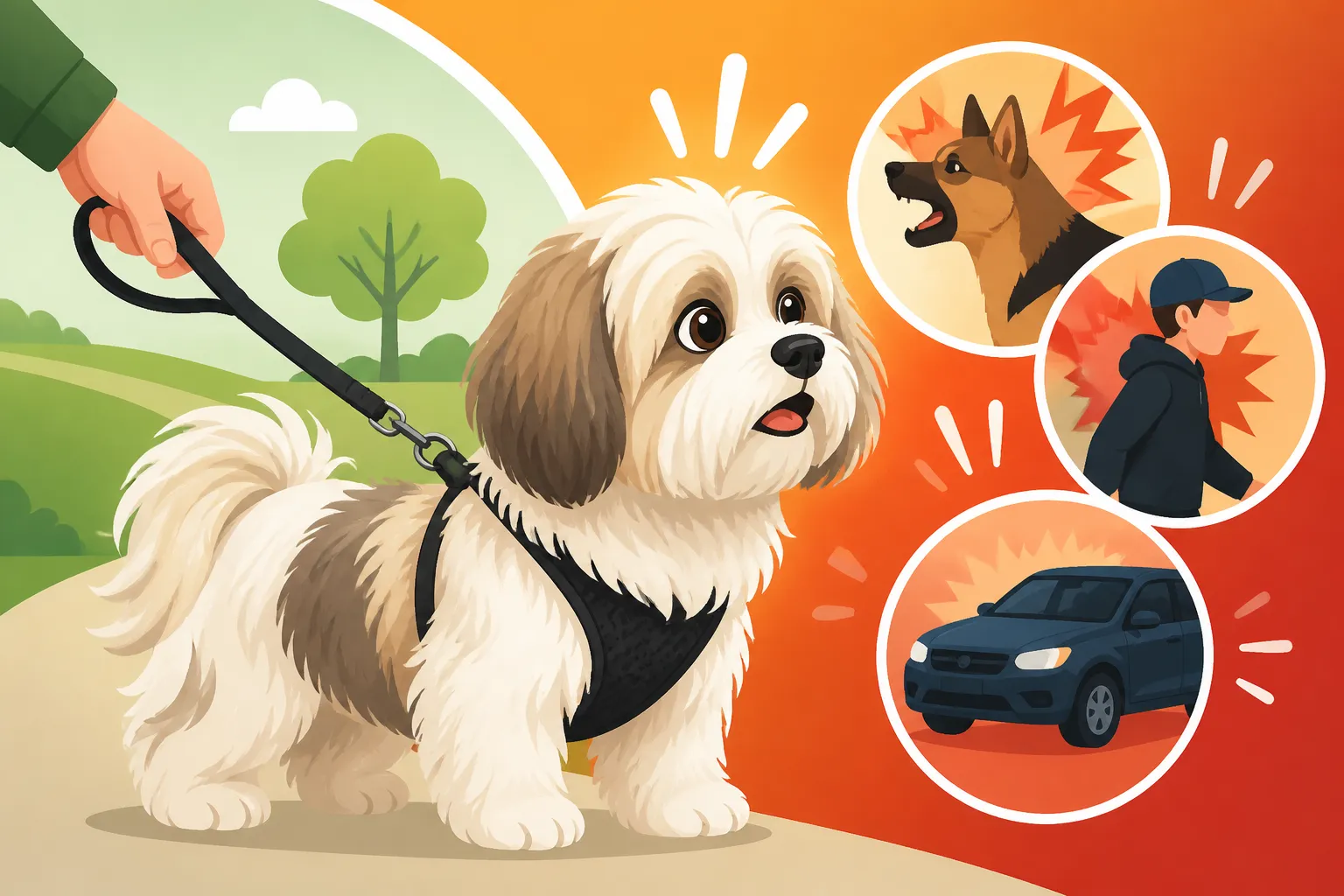
Whether a Havanese Is Reactive on the Leash
There's nothing quite like the dream of a peaceful stroll with your adorable Havanese, enjoying the sunshine and friendly greetings. Then reality hits, and your sweet, fluffy companion transforms into a barking, lunging, pulling mess at the sight of another dog, person, or even a leaf blowing in the wind. This sudden shift can be incredibly frustrating, embarrassing, and honestly, heartbreaking for dedicated Havanese owners. This comprehensive guide will delve into why your Havanese might be reactive on the leash, how to identify their specific triggers, and most importantly, what practical, empathetic steps you can take to reclaim enjoyable walks for both of you.
Understanding Why Your Havanese Might Be Reactive on Leash
It’s easy to feel like you're doing something wrong when your usually charming Havanese starts acting out on walks. But leash reactivity isn't necessarily a reflection of poor training or a "bad" dog. It's a complex behavior often rooted in fear, frustration, anxiety, or even over-excitement, and it's particularly common in small breeds like our Havanese.
The Instinctive Roots of Havanese Reactivity
Despite their pampered appearance, Havanese are still dogs with instincts and a rich history. They were originally bred as companion animals, known for their intelligence and playful nature. However, this close bond with humans can sometimes lead to an over-reliance on their people, making them feel vulnerable or overly protective when faced with perceived threats on a leash. Think about it: they're small, close to the ground, and can feel easily overwhelmed by larger dogs or fast-moving objects.
Furthermore, some Havanese have an inherent sensitivity to their environment, which can manifest as alarm barking or heightened vigilance. Their delightful personalities, often described as "circus dogs" for their eagerness to please and quick learning, can also mean they pick up on subtle cues from their surroundings and from you, their human, which might inadvertently contribute to their reactive responses. A little bit of stress or uncertainty from your end can easily be mirrored by their sensitive nature.
How Our Management Style Can Impact Reactivity
It's a tough truth to swallow, but sometimes our well-meaning actions can inadvertently contribute to a Havanese's leash reactivity. Because they're so small and cute, we might be quicker to pick them up when another dog approaches, or we might allow them to greet every dog they see, especially as puppies. While seemingly harmless, these actions can teach a Havanese that other dogs are either something to be feared (and thus avoided by being picked up) or something to be rushed towards aggressively.
Another common scenario is limited socialization. While you might take your Havanese to puppy classes and dog parks, truly positive and controlled exposure to a variety of sights, sounds, people, and dogs is crucial. If a Havanese puppy has a few negative experiences, or simply isn't exposed enough to the wider world during critical developmental stages, they can develop anxieties that manifest as reactivity on the leash later on. It's a delicate balance, and we're often navigating it without realizing the long-term impact of those early interactions. The First Year With a Havanese Puppy is a critical time for shaping these behaviors.
Recognizing the Signs and Identifying Your Havanese's Triggers
The first step to helping your reactive Havanese is to become a detective. You need to keenly observe not just when they react, but how they react, and what exactly sets them off. This isn't always as simple as it sounds because reactivity can vary in intensity and presentation.
Decoding Your Havanese's Body Language
Before the full-blown barking and lunging, your Havanese will almost always give you subtle clues about their discomfort or rising excitement. Learning to read these early warning signs is vital for intervening before they escalate. Look for:
- Stiffening: Their body might become rigid, their tail might go up or tuck low, rather than its usual happy curl over the back.
- Staring: They fixate on the trigger, often with wide eyes, sometimes panting or drooling slightly. This isn't just curiosity; it's intense focus.
- Lip Licking/Yawning: These are often stress signals, especially if they occur out of context (e.g., not after eating or waking up).
- Ears Pinned Back or Swiveling wildly: Can indicate fear or high alert.
- Low Growl: A warning sign that they are uncomfortable and trying to tell the perceived threat to keep its distance.
- Whining or Whimpering: Sometimes a sign of frustration, especially if they desperately want to greet another dog but are held back by the leash.
These are just a few examples, and every dog is different. Keeping a journal or even taking short video clips (from a safe distance) can help you analyze their reactions more objectively. The more you observe, the better you'll become at anticipating their reactions and understanding their underlying emotions. You might be surprised to see how much nuance there is in The Barking a Havanese Does at Every Sound.
Pinpointing Specific Triggers and Thresholds
Once you're attuned to your Havanese's body language, start meticulously noting down what causes these reactions. Triggers are highly individual. For some Havanese, it’s all other dogs, regardless of size or breed. For others, it might just be large, boisterous dogs, or dogs that stare directly at them. It could be:
- Other dogs: The most common trigger. Pay attention to specific types, sizes, or gaits.
- People: Especially children, runners, cyclists, or people with hats or umbrellas.
- Vehicles: Skateboards, bicycles, strollers, or even cars.
- Noises: Loud trucks, construction sounds, or even specific environmental sounds.
- Location: Certain parks, busy streets, or even just leaving your block.
Equally important is identifying their "threshold." This is the distance at which your Havanese can notice a trigger without reacting negatively. Inside this threshold, they react. Outside of it, they might notice, but remain calm. Your goal in initial training is to stay below their threshold, so they can learn new, positive associations without being overwhelmed. If you're consistently walking within your Havanese's trigger zone, you're constantly reinforcing the reactive behavior, which makes it harder to overcome. Observing how How Early Deafness Shows in a Havanese can change their reactivity patterns might offer insights into how sensory input affects behavior.
Consider creating a simple table to track observations:
| Date | Time | Location | Trigger Observed | Havanese Reaction (pre-reaction) | Havanese Reaction (full) | Distance to Trigger | Notes |
|---|---|---|---|---|---|---|---|
| Aug 15 | 9:00 AM | Park entrance | Large Golden Retriever (off-leash) | Stiffened, low tail, stared | Barking, lunging, pulling hard | ~20 ft | Caught off guard, owner didn't see it coming |
| Aug 16 | 5:30 PM | Main Street | Jogger with stroller | Ears perked, quick glance, stiffened body | A few barks, minor lunge, quickly redirected with treat | ~15 ft | Managed to get a treat in, slightly better |
| Aug 17 | 10:15 AM | Quiet side street | Poodle on leash (calm) | Noticed, loose body, sniffed ground | None | ~30 ft | Calm walk, good distance, positive experience |
This kind of detailed tracking can reveal patterns and help you plan your walks more effectively, focusing on success rather than constant struggle.
Gentle, Effective Strategies to Help Your Reactive Havanese
Once you understand why your Havanese is reactive and what triggers them, it’s time to implement proactive strategies. Remember, this is a journey of patience, consistency, and positive reinforcement. There are no quick fixes, but steady progress is absolutely achievable.
Management: Avoiding Practice for Undesired Behaviors
Before you can train, you must manage. The goal of management is to prevent your Havanese from practicing the reactive behavior, because every time they bark and lunge, the behavior becomes more ingrained. This means:
- Avoid Triggers: Initially, choose different walking routes, go out at quieter times, or actively cross the street when you see a trigger approaching. If you know certain areas are hot spots, simply avoid them for a while. It might feel like you're giving in, but you're actually setting your Havanese up for success.
- Create Distance: If you can't avoid a trigger entirely, create as much distance as possible. The further away you are, the more likely your Havanese will stay below their threshold and be able to learn.
- Use Appropriate Gear: A comfortable, well-fitting harness is often better than a collar for a reactive dog, as it distributes pressure more evenly and prevents choking or neck injury if they lunge. Tools like front-clip harnesses can give you better steering control. Explore options on sites like Amazon to find one that suits your Havanese's small size and coat. A standard flat collar can cause discomfort and make reactivity worse. Whether a Havanese Should Wear a Harness is a topic many owners explore.
For example, if you know your Havanese loses their mind over other dogs at the local park, choose to walk in a quieter residential area or explore a different park with more open space for now. If busy sidewalks are overwhelming, try a schoolyard after hours, or a large, fenced area when no one else is around. The less your Havanese practices reacting, the easier it will be to replace that behavior with something calmer and more appropriate.
Training: Building Positive Associations and New Responses
This is where the real work, and the real magic, happens. The goal is to change your Havanese's emotional response to their triggers from negative (fear, frustration) to positive (happiness, neutrality). This is typically done through a combination of desensitization and counter-conditioning.
Desensitization and Counter-Conditioning: "Look at That!"
This method involves gradually exposing your Havanese to their triggers at a distance where they remain calm (below threshold), and then associating that trigger with something wonderful, like high-value treats.
- Spot the Trigger: As soon as you see a trigger (e.g., another dog) before your Havanese reacts, say "Look at that!" in a cheerful voice.
- Treat Time: Immediately give your Havanese a stream of their absolute favorite, high-value treats (think cooked chicken, cheese, or hot dogs) until the trigger is out of sight.
- No Treat: Once the trigger is gone, the treats stop. This teaches them: "Trigger appears = yummy treats! Trigger disappears = treats gone."
Over time, your Havanese will start to associate the sight of the trigger with good things happening. Their emotional response shifts. Instead of feeling anxious or aggressive, they might look at the trigger and then immediately turn to you, expecting a treat. This is called a "conditioned emotional response." Be consistent. If you only have cheap kibble, that won't be motivating enough. You need the good stuff!
Engage and Redirect: U-Turns and Pattern Games
Sometimes, a trigger appears too quickly, or you simply need a way to disengage and move away.
- The Emergency U-Turn: If you see a trigger approaching and know your Havanese is about to go over threshold, simply turn around and walk in the opposite direction, creating distance. Use a happy, upbeat tone, and reward them for turning with you. Make it a fun game, not a frantic escape.
- Treat Scatters: When a trigger is in sight but your Havanese is still under threshold, try scattering a handful of treats on the ground in front of them. This encourages sniffing (a calming behavior) and redirects their focus away from the trigger and onto something positive. This works best if you have a reliable harness that allows you to guide them easily without pulling on their neck.
- "Find It": Another great redirection tool. Toss a treat just slightly away from the direction of the trigger and enthusiastically say "Find it!" This can break their focus and get them to use their nose, which is a wonderful calming and engaging activity.
Consistency is key for these strategies. Just like with Teaching a Havanese Tricks It Will Perform All Day, patience and clear communication are paramount.
Supporting Your Havanese's Overall Well-being
Beyond direct training, a holistic approach to your Havanese's well-being can significantly impact their reactivity.
- Adequate Exercise and Mental Stimulation: A tired Havanese is often a calmer Havanese. Ensure they get enough physical exercise for their size, but also plenty of mental stimulation. Puzzle toys, training sessions, or even scent work can fulfill their intelligent minds. How Much Exercise a Havanese Needs might surprise you.
- A Consistent Routine: Dogs thrive on routine. Predictable mealtimes, walk times, and play sessions can reduce anxiety and make them feel more secure.
- Nutrition: A balanced diet supports overall health, including brain function. High-quality food can make a difference in their energy levels and ability to cope with stress.
- Your Own Demeanor: Dogs are masters at reading our emotions. If you're tense and anxious on walks, your Havanese will pick up on it and likely become more reactive themselves. Try to remain calm, confident, and positive, even when things are challenging. Your calm energy can be incredibly reassuring to your dog.
When to Seek Expert Guidance for Leash Reactivity
While many owners can make significant progress with management and positive reinforcement techniques, some Havanese require a little extra help. Knowing when to call in the professionals is crucial for both your sanity and your dog's long-term well-being.
Recognizing When You Need More Than DIY Solutions
You might feel like you've tried everything. You've watched countless videos, read articles, and invested in every training treat imaginable. But if your Havanese's reactivity is:
- Getting Worse: Despite your consistent efforts, the reactions are becoming more frequent, more intense, or happening at greater distances.
- Causing Safety Concerns: You're genuinely worried your Havanese might bite someone or another dog, or you're getting injured by their lunging.
- Impacting Your Quality of Life: You dread walks, avoid going out, or feel isolated because of your dog's behavior.
- Resistant to Basic Training: Your Havanese is simply too overwhelmed to take treats or focus on you when a trigger is present, even at a far distance.
- Accompanied by Other Anxieties: If your Havanese shows other signs of anxiety, like destructive chewing when left alone, excessive vocalization, or house soiling, it might indicate a deeper underlying issue that requires expert assessment. The Havanese That Cannot Be Left Alone could be a related concern.
These are all strong indicators that it's time to seek professional help. Don't view it as a failure; view it as a responsible step towards giving your Havanese the best possible chance at a happy, confident life. Many experienced owners reach out for help with Whether a Havanese Needs a Professional Trainer.
Types of Professionals Who Can Help
Choosing the right professional is important. Look for individuals who use modern, positive reinforcement, fear-free methods. Avoid anyone who suggests aversive tools (like choke chains, prong collars, or e-collars) or punishment-based techniques, as these can exacerbate fear and aggression in a reactive dog.
- Certified Professional Dog Trainer (CPDT-KA or KPA-CTP): These trainers have studied dog behavior and training and are certified by reputable organizations. They can provide hands-on guidance, help you fine-tune your techniques, and observe nuances you might be missing. They often work one-on-one in private sessions, which is ideal for reactivity.
- Certified Behavior Consultant Canine (CBCC-KA): These professionals have a deeper understanding of behavior modification and can handle more complex cases.
- Veterinary Behaviorist (Dip ACVB): This is a veterinarian who has specialized in animal behavior, much like a psychiatrist for humans. They can diagnose behavioral disorders and, if necessary, prescribe medication to help manage severe anxiety or fear, making it possible for training to be more effective. This is often the best route for highly anxious or aggressive dogs.
Many online resources can also provide excellent foundational knowledge and support. Programs like BAXTER & Bella offer comprehensive online puppy training programs that cover critical socialization and basic manners, which can lay a strong foundation to prevent or manage reactivity. While not a substitute for one-on-one help with severe cases, they can be a great starting point. Search on Amazon for highly-rated books and guides on leash reactivity, often written by certified trainers, to expand your knowledge base.
Working with a professional provides you with tailored strategies, ongoing support, and the peace of mind that you're doing everything you can to help your beloved Havanese navigate the world with more confidence and less stress. It's a significant investment, but the reward of peaceful walks with your happy Havanese is truly priceless.
Disclaimer
This article is for general informational purposes only and does not constitute professional advice. Laws, prices and regulations vary by location and change over time. Consult a qualified professional for guidance on your specific situation.