Whether a Havanese Gets Glaucoma
It’s truly a frightening moment when you look into your beloved Havanese’s eyes and notice something isn't quite right. That precious gaze, usually full of life and mischief, might seem cloudy, red, or your little friend might be squinting or pawing at their face. This guide is here to shed light on a serious eye condition, glaucoma, and help you understand if your Havanese can get it, what to look for, and how to navigate treatment if this challenge ever arises.
Understanding Glaucoma in Havanese: Is It a Real Risk?
When we think about our Havanese, we often envision their beautiful, flowing coats and sparkling, intelligent eyes. But those eyes, like ours, are susceptible to a range of health issues. Glaucoma is one of those conditions that can strike fear into any pet parent’s heart because it often leads to pain and, heartbreakingly, irreversible blindness if not managed quickly and effectively.
What Exactly is Glaucoma and Why Does It Matter for Havanese?
At its core, glaucoma is a disease characterized by increased pressure within the eye, known as intraocular pressure (IOP). Imagine your Havanese’s eye as a tiny, intricate balloon. Inside this balloon, there's a constant production and drainage of a fluid called aqueous humor. When this fluid can't drain properly, it builds up, causing the pressure inside the eye to rise. This elevated pressure then starts to damage the optic nerve, which is the vital cable sending visual information from the eye to the brain. Once the optic nerve is damaged, vision loss begins, and unfortunately, it cannot be reversed. For a playful and curious breed like the Havanese, losing their sight can dramatically impact their quality of life.
There are two main categories of glaucoma: primary and secondary. Primary glaucoma is inherited, meaning it’s a genetic predisposition, and both eyes are typically affected, though not always at the same time. Secondary glaucoma, on the other hand, develops as a result of another underlying eye condition or injury. Both types are serious, and recognizing the signs early is absolutely critical for saving your Havanese’s vision and relieving pain.
The Havanese Predisposition to Eye Conditions
Havanese, while generally a robust and healthy toy breed, are not immune to certain inherited health concerns, and eye conditions are definitely on that list. While they may not have a uniquely high genetic predisposition to primary glaucoma compared to some other breeds like Beagles, Cocker Spaniels, or Basset Hounds, they are a small breed, and all breeds, including Havanese, can develop glaucoma. The key is that their small size doesn't necessarily protect them from the mechanical or genetic factors that lead to increased intraocular pressure.
It's crucial for Havanese breeders to conduct comprehensive health screenings, which often include eye certifications from a veterinary ophthalmologist through organizations like the Orthopedic Foundation for Animals (OFA) Eye Certification Registry (CAER) program. This is designed to identify heritable eye conditions. If you're looking for a puppy, always ask about the parents' eye clearances. Even with the best breeding practices, things can sometimes go awry, which is why understanding the risks and symptoms is so important for every Havanese owner. Just as we worry about conditions like Hereditary Cataracts in a Havanese or Progressive Retinal Atrophy in a Havanese, glaucoma requires our vigilance.
Primary vs. Secondary Glaucoma in Our Little Companions
Let's delve a bit deeper into the distinctions, as understanding the "why" can sometimes influence the treatment approach for your Havanese.
Primary Glaucoma: This form is inherited and occurs due to structural abnormalities in the eye's drainage angle, usually without any other visible eye disease. It’s essentially a design flaw that your Havanese was born with, even if the symptoms don't show up until later in life. In many cases, breeds prone to primary glaucoma have an abnormality called goniodysgenesis, which means the drainage angle is malformed. While specific studies focusing solely on primary glaucoma prevalence in Havanese are limited, being aware that it can occur in any breed, particularly smaller ones, is important. If one eye is diagnosed with primary glaucoma, the other eye is highly likely to develop it too, often within months to a couple of years, because they share the same genetic predisposition.
Secondary Glaucoma: This is the more common type of glaucoma seen in dogs, including Havanese. It arises as a complication of another eye problem. Think of it as a domino effect. For example, severe inflammation inside the eye (uveitis), a dislocated lens (often seen in breeds prone to primary lens luxation, though less common in Havanese specifically), advanced cataracts that cause inflammation (which could be a concern if your Havanese develops The Age Cataracts Appear in a Havanese), or even tumors within the eye can all block the drainage angle, leading to a build-up of pressure. Trauma to the eye, like an injury from a sharp object or even just bumping their head, can also trigger secondary glaucoma. This is why if your Havanese has any other eye issues, it’s vital to manage them diligently, as they could potentially pave the way for glaucoma.
| Feature | Primary Glaucoma | Secondary Glaucoma |
|---|---|---|
| Cause | Inherited, structural abnormality in drainage angle | Result of another eye disease, injury, or tumor |
| Affected Eyes | Typically affects both eyes (though not simultaneously) | Usually affects one eye, but underlying cause can affect both |
| Onset | Can be sudden or gradual, often later in life | Can be sudden or gradual, tied to the onset of the primary condition |
| Genetic Link | Strong genetic component | No direct genetic link to glaucoma itself, but primary cause might be genetic |
| Prevention | Difficult due to genetic nature; screening is key | Managing underlying eye conditions is crucial |
Recognizing the Subtle (and Not-So-Subtle) Signs of Glaucoma
One of the hardest parts about glaucoma is that our dogs can't tell us they're in pain or that their vision is blurring. As Havanese owners, we become adept at reading their subtle cues, and this is never more important than when it comes to eye health. Early detection can make all the difference in preserving their sight.
Early Warning Signs Every Havanese Owner Should Know
Being vigilant about your Havanese's eyes is key. Look for changes, even seemingly minor ones, as they can be crucial indicators.
- Squinting or Holding the Eye Shut: This is a classic sign of pain. If your Havanese is consistently squinting one eye or holding it partially or fully closed, take it seriously. It's their way of saying, "Ouch!"
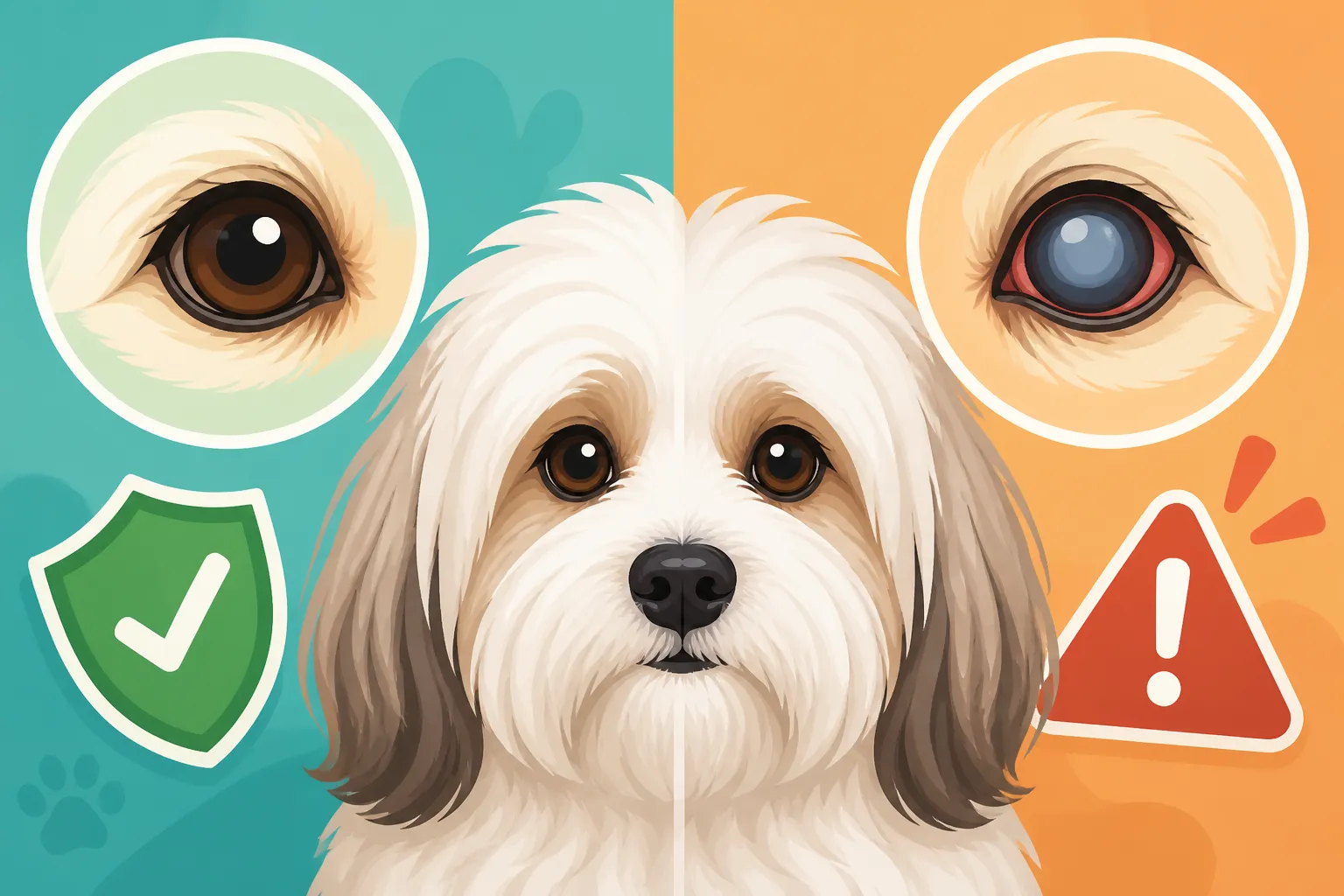
- Redness of the Eye: Not just a little pinkness from irritation, but a noticeable redness in the white part of the eye (sclera) and around the eyelids. This indicates inflammation or congestion of blood vessels due to increased pressure.
- Excessive Tearing or Discharge: While Havanese can be prone to Whether a Havanese Gets Tear Staining, a sudden increase in watery discharge or a thick, mucus-like discharge can signal a problem. It’s the eye's attempt to flush out irritation or pain.
- Cloudiness or Bluish Haze in the Cornea: The cornea (the clear front surface of the eye) can start to look hazy or have a bluish tint. This happens when the high pressure causes fluid to build up within the cornea itself, a condition called corneal edema. It’s distinct from the cloudiness you might see with cataracts, which are inside the lens.
- Dilated Pupil (Unresponsive to Light): In the affected eye, the pupil might appear larger than normal and may not constrict when exposed to light, unlike the healthy eye. This is because the optic nerve damage can affect the pupil's function.
- Behavioral Changes: Your Havanese might paw at their eye, rub their face on furniture or the carpet, or become withdrawn and less playful. They might be more irritable when touched near their head. If they’re losing vision, they might start bumping into things, especially in dimly lit areas or unfamiliar environments. This could be confusing to differentiate from other aging-related issues, so paying attention to when these behaviors started is vital. A normally outgoing Havanese suddenly seeming hesitant or anxious could be a sign of discomfort or impaired vision.
When to Seek Urgent Veterinary Care
Glaucoma is an emergency. Seriously, it's not something you can "wait and see" with. If you notice any combination of the signs mentioned above, especially sudden onset of pain, redness, or cloudiness, you need to call your vet immediately. The golden window for saving vision in an acute glaucoma attack can be as short as 24-48 hours. Every minute counts.
Imagine you wake up and your Havanese, normally eager for breakfast, is hiding under the bed, one eye clamped shut, and when they do open it, it looks red and cloudy. This isn't just a minor irritation. This is a veterinary emergency. Don't delay. If it's after hours, head to your nearest emergency veterinary clinic. Losing vision in one or both eyes is a devastating consequence that we want to avoid at all costs for our furry family members.
How Veterinarians Diagnose Glaucoma in Havanese
When you bring your Havanese in with suspected glaucoma, the vet will perform a thorough eye examination. They aren't just guessing; they have specific tools and tests to confirm the diagnosis.
- Tonometry: This is the primary diagnostic tool. The veterinarian uses a special instrument called a tonometer to measure the intraocular pressure (IOP) of the eye. It's a quick, painless procedure that usually involves a topical anesthetic eye drop to numb the surface of the eye. Normal IOP in dogs typically ranges from 10-25 mmHg. Anything significantly higher, especially with clinical signs, points directly to glaucoma.
- Ophthalmoscopy: Your vet will use an ophthalmoscope to examine the internal structures of the eye, particularly the retina and optic nerve. They'll be looking for signs of damage to the optic nerve head, which indicates how advanced the glaucoma is.
- Gonioscopy: This is a more specialized test performed by a veterinary ophthalmologist. It involves placing a special contact lens on the eye to visualize the drainage angle (iridocorneal angle). This helps differentiate between primary and secondary glaucoma and can identify specific abnormalities in the drainage system. Knowing the type of glaucoma can help predict the course of the disease and guide treatment.
- Other Tests: Depending on the suspected cause of secondary glaucoma, your vet might recommend additional tests like blood work, an ultrasound of the eye, or imaging if a tumor or other internal issue is suspected.
Early diagnosis is paramount for these conditions. This is why regular check-ups, including eye examinations, are so important for detecting issues like glaucoma or even The Eye Diseases a Havanese Inherits before they become emergencies.
Managing Glaucoma and Supporting Your Havanese's Vision
Receiving a glaucoma diagnosis for your Havanese can feel overwhelming, but it's not a death sentence. While vision loss due to glaucoma is irreversible, effective management can often preserve remaining vision and, crucially, alleviate pain. It's a commitment, but one well worth it for our beloved companions. Pet insurance providers like Healthy Paws often cover chronic conditions like glaucoma, which can be a huge relief given the ongoing costs of medication and vet visits.
Medical Treatments and Lifestyle Adjustments
The immediate goal of glaucoma treatment is to rapidly reduce the intraocular pressure to a safe level, stopping further damage to the optic nerve.
- Eye Drops: These are the cornerstone of glaucoma treatment. Your vet will likely prescribe a combination of drops. Some drops work by decreasing the production of aqueous humor (e.g., beta-blockers like timolol, carbonic anhydrase inhibitors like dorzolamide), while others increase its outflow (e.g., prostaglandin analogues like latanoprost). These often need to be administered multiple times a day, sometimes every 6-8 hours, which requires dedication. It’s a bit of a dance, learning how to give eye drops to a wiggling Havanese, but it quickly becomes second nature.
- Oral Medications: In some cases, oral carbonic anhydrase inhibitors (like methazolamide) might be used, especially in the initial stages or for managing pressure in the second eye in cases of primary glaucoma.
- Pain Management: Glaucoma is painful. Your vet will likely prescribe pain relievers to keep your Havanese comfortable, especially during acute flare-ups. This might include NSAIDs or other analgesic medications.
- Lifestyle Adjustments: While medical treatment is paramount, you can make life easier for your Havanese. Try to keep their routine consistent. Avoid sudden changes in lighting, and ensure their environment is safe and predictable, especially if their vision is compromised. Keep furniture in the same places, and block off stairs or areas where they might fall. Creating a "sensory trail" of different textures on the floor can also help a visually impaired dog navigate. Remember that even an old Havanese with vision issues can still enjoy life if their environment is adapted, as discussed in Caring for a Havanese Past Twelve.
Surgical Options and When They Are Considered
When medical management isn't enough to control the pressure or if vision is already lost and the eye is painfully blind, surgical interventions become a consideration.
- Laser Surgery (Cyclophotocoagulation): This procedure uses a laser to destroy some of the cells that produce aqueous humor, thereby reducing the fluid production and lowering intraocular pressure. It's often performed by a veterinary ophthalmologist and can be very effective in early to moderate cases where vision is still present. It’s not always a permanent fix, and dogs often still require ongoing eye drops after surgery.
- Gonioimplantation (Drainage Implants): For some cases, particularly in primary glaucoma, a tiny shunt or implant can be placed in the eye to create an alternative drainage pathway for the aqueous humor, helping to relieve pressure.
- Enucleation (Eye Removal): This is the last resort, typically performed when an eye is completely blind, consistently painful, and unresponsive to all other treatments. While it sounds drastic, removing a chronically painful eye can dramatically improve a Havanese's quality of life. Dogs adapt surprisingly well to having one eye, and the pain relief is often immediate and profound.
- Intravitreal Gentamicin Injection: In some cases of irreversibly blind, painful eyes, an injection can be given to destroy the fluid-producing cells, eliminating the need for enucleation while still relieving pain.
The decision for surgery is a serious one and will be made in close consultation with your veterinarian and potentially a veterinary ophthalmologist. Consider discussing pet insurance options like Healthy Paws early on, as these specialized procedures can be costly, and good coverage can ease the financial burden.
Living with a Havanese with Glaucoma: Long-Term Care and Support
A glaucoma diagnosis means a lifelong commitment to management. It's a marathon, not a sprint, and your Havanese will depend on your consistent care and support.
- Regular Veterinary Check-ups: Expect frequent visits, especially initially, to monitor eye pressure and adjust medications. Even after stabilization, regular checks are crucial to ensure the pressure remains controlled and to catch any progression in the other eye.
- Adapting the Home Environment: If your Havanese loses vision, they'll rely heavily on their other senses. Keep food and water bowls, beds, and toys in consistent locations. Use scents to mark important areas. A ramp instead of stairs to the couch or bed can prevent falls, as discussed in Whether a Havanese Should Use Steps to the Couch.
- Maintaining a Routine: Predictability helps visually impaired dogs feel secure. Stick to regular feeding, potty, and playtimes.
- Emotional Support: Losing sight can be disorienting and frustrating for a dog. Offer plenty of verbal praise, gentle touch, and reassurance. Continue engaging them with toys that make noise or have strong scents. Remember, a Havanese loves to be with their people; your presence is their greatest comfort.
- Communication with Your Vet: Don't hesitate to call your vet with any concerns, even if they seem minor. Changes in eye appearance, increased pain, or behavioral shifts warrant prompt attention.
This journey demands patience and dedication, but your Havanese will continue to bring immense joy into your life. The average Havanese lives The Fourteen to Sixteen Years a Havanese Lives, and with proper care, they can still enjoy many happy years, even with vision challenges.
Proactive Steps: Can We Prevent Glaucoma in Havanese?
While we can't completely prevent all forms of glaucoma, especially the inherited kind, there are certainly proactive measures we can take as responsible Havanese owners to minimize risk, promote overall eye health, and catch potential problems at their earliest, most treatable stages.
The Importance of Regular Eye Exams
This cannot be stressed enough. Regular veterinary check-ups are your first line of defense against a host of health issues, including eye conditions like glaucoma.
- Frequency: Your Havanese should have a general veterinary check-up at least once a year. During this visit, a thorough eye examination should always be part of the routine. For Havanese, considering their genetic background, it's wise to discuss with your vet if specific ophthalmic exams are recommended.
- What to Expect: During an eye exam, your vet will look for general health, clarity of the cornea and lens, and pupil responsiveness. They might check tear production and perform a basic tonometry screening if they have the equipment and there's any suspicion. Many breed clubs and responsible breeders recommend a yearly eye exam by a board-certified veterinary ophthalmologist. This specialized exam goes beyond what a general vet might do and involves dilating the pupils to look for subtle changes that could indicate early stages of disease. This dedicated screening is exactly why we recommend you understand Whether a Havanese Needs a Yearly Eye Exam as part of your routine.
- Baseline Data: Regular checks establish a baseline for your Havanese's normal eye pressure and appearance. This makes it much easier for your vet to identify subtle changes quickly if a problem develops.
Responsible Breeding Practices
For primary glaucoma, prevention starts long before your Havanese puppy comes home. It rests squarely on the shoulders of responsible breeders.
- Health Clearances: Reputable Havanese breeders will conduct comprehensive health screenings on their breeding dogs, which includes eye certifications from a veterinary ophthalmologist. These certifications ensure that the parent dogs are free of observable hereditary eye diseases, including structural abnormalities that could predispose to glaucoma. Always ask to see these health clearances for both parents.
- Understanding Pedigrees: A good breeder will also understand the pedigrees of their dogs, looking for any history of glaucoma or other eye diseases in the lineage. While specific genetic tests for all forms of primary glaucoma aren't available for every breed, knowledge of family history is invaluable.
- Transparency: A responsible breeder will be open and honest about any health concerns in their lines and will prioritize the health and welfare of their puppies above all else. They wouldn't breed a dog with a known predisposition to severe eye conditions. When researching breeders, look for those involved with the Havanese Club of America or other recognized breed clubs, as these organizations often promote ethical breeding standards and health testing.
General Eye Health Maintenance for Your Havanese
Beyond professional exams and responsible breeding, daily care and attention play a significant role in your Havanese's overall eye health.
- Keep Their Face Clean: The long hair around a Havanese’s eyes and muzzle can collect debris, tear stains, and moisture, potentially leading to irritation or infection, which in turn could lead to secondary eye problems. Regularly and gently wiping around their eyes with a damp cloth is a good practice. Understanding Whether a Havanese's Eye Corners Need Daily Wiping can save a lot of trouble.
- Hair Management: Keep the hair trimmed around their eyes to prevent it from poking or irritating the cornea. This is often done by a professional groomer, but you can carefully trim stray hairs between grooms if you're comfortable. A topknot or small bands can also keep longer hair out of their eyes.
- Protect from Injury: Be mindful of situations where your Havanese could injure their eyes. Supervise play with other dogs, avoid walking through dense brush where twigs could poke an eye, and ensure toys are safe and don't have sharp edges.
- Nutrition: A balanced, high-quality diet supports overall health, including eye health. While no specific diet prevents glaucoma, good nutrition supports a healthy immune system and cellular function throughout the body.
- Promptly Address Other Eye Issues: If your Havanese gets conjunctivitis, an ulcer, or any other eye infection or injury, seek veterinary attention right away. Treating these primary issues quickly can prevent them from escalating and potentially leading to secondary glaucoma.
By being proactive, observant, and working closely with your veterinarian, you can give your precious Havanese the best possible chance at a lifetime of clear vision and comfort. Investing in pet insurance, like a plan from Healthy Paws, can also provide peace of mind, knowing that you’re financially prepared for potential health challenges, including the ongoing care required for conditions like glaucoma. This comprehensive approach to What a Havanese Needs Every Day includes vigilance over their most expressive feature—their eyes.
Disclaimer
The information provided in this article is for general informational purposes only and is not intended as a substitute for professional veterinary advice. Always consult with a qualified veterinarian or veterinary ophthalmologist for any health concerns or before making any decisions related to your Havanese's health or treatment.