Whether a Havanese Lives With a Rabbit
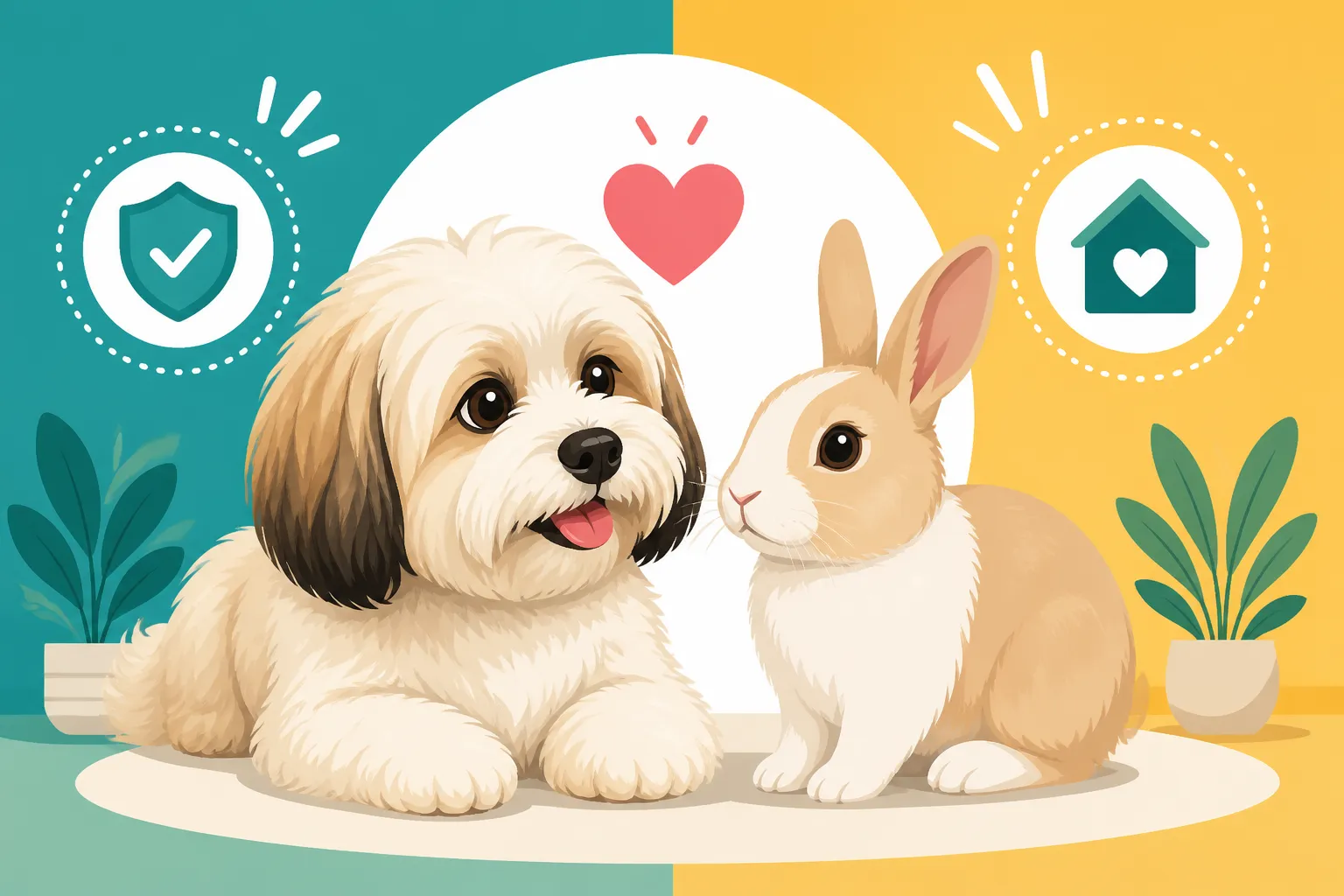
It's a beautiful dream, isn't it? Imagining your fluffy Havanese snuggling up with a gentle rabbit, a picture of domestic bliss. But the reality of housing a charming, often boisterous Havanese with a delicate, prey-animal like a rabbit is far more complex than a charming photograph. This guide is here to walk you through the very real challenges, potential risks, and the immense dedication required to even attempt to create a safe home for both species.
Understanding the Havanese and Their Instincts
When we bring a Havanese into our lives, we often fall in love with their affectionate, playful, and often comical personalities. They're bred to be companions, to be part of the family, and to bring joy with their antics. However, beneath that soft, flowing coat and those soulful eyes, there's still a dog, complete with instincts that have been honed over millennia.
The Havanese Temperament: Companion First
Havanese are generally known for their outgoing, friendly dispositions. They thrive on human companionship and are often described as "Velcro dogs" because of how closely they stick to their people. They're intelligent, eager to please, and typically get along well with other household pets, especially other dogs and cats, when properly introduced. Their gentle nature is one of their most endearing qualities, making them wonderful family members. You'll find them quick to learn new tricks and devoted to their routines, often following you from room to room just to be near. Why a Havanese Follows You Into Every Room explores this deeply. This strong bond and desire to be part of the pack can sometimes be misinterpreted when it comes to smaller, non-canine animals.
Instinctual Drives: Is Prey Drive Present?
Despite their cuddly appearance, Havanese are still dogs, and dogs descend from predatory ancestors. This means that, to varying degrees, they possess a prey drive. This isn't about malice or aggression; it's a hardwired instinct to chase, capture, and even kill smaller, fast-moving animals. For some Havanese, this drive might manifest as a playful chase of a squirrel in the yard, while for others, it could be a more intense focus on a small, scurrying creature indoors. Rabbits, by their very nature, are prey animals. Their quick movements, soft fur, and small size can inadvertently trigger this ancient instinct in a dog, even a sweet-natured Havanese. It's crucial not to underestimate this, as even a "playful" pounce from a Havanese can result in serious injury or death for a fragile rabbit.
The Individual Havanese: Not a Monolith
It's tempting to generalize about breeds, but every Havanese is an individual. Some may have a virtually non-existent prey drive, perhaps due to genetics, early socialization, or simply individual personality. Others might show a strong inclination to chase and "worry" small animals. Factors like how they were raised, their experiences with other pets, and their overall energy levels can all play a role. A Havanese that has never encountered a small animal might react differently than one that grew up with a cat, or one that constantly chases birds in the backyard. This individuality means that while general breed traits offer a guideline, you can't assume your Havanese will be the exception without careful, diligent observation and management. Some Havanese are naturally more laid-back, while others have boundless energy that needs an outlet. How Much Exercise a Havanese Needs can influence their overall calmness around other pets.
The Inherent Challenges of Interspecies Living
Bringing a Havanese and a rabbit into the same living space isn't just about managing their personalities; it's about navigating the fundamental differences in their species, their communication styles, and their basic survival instincts. This isn't a simple "can they share a couch?" question; it's about life and death for the rabbit, and significant stress for both.
Rabbit Vulnerability: Even Gentle Play Can Harm
Rabbits are incredibly fragile creatures. Their bones are delicate, and their internal organs can be easily damaged by impact or squeezing. What a Havanese might consider a playful nip, a curious paw, or a gentle pounce could easily result in severe internal injuries, broken bones, or even cardiac arrest due to fear for a rabbit. A Havanese's mouth, even without aggression, is designed to grip and can exert surprising pressure. Think about how a Havanese chews on a favorite toy; that same action, directed at a living, breathing rabbit, is lethal. The sheer difference in size and strength, even between a Havanese and a large rabbit, means the rabbit is always at a disadvantage. This isn't about blaming the Havanese; it's about acknowledging a biological reality.
Reciprocal Risks: When the Rabbit Fights Back
While the primary concern is usually the rabbit's safety, it's also important to consider that a scared rabbit can defend itself. Rabbits have powerful hind legs with sharp claws, capable of delivering deep scratches. Their teeth can also bite, and while unlikely to cause severe injury to a Havanese, a deep scratch to an eye or a bite to the nose could lead to an infection or require veterinary attention. A cornered rabbit, acting purely out of fear, might lash out in self-preservation, causing pain and possibly fear in the Havanese, which could then escalate the situation.
The Mental Toll: Stress for Both Animals
Beyond physical harm, constant stress can severely impact the health and well-being of both your Havanese and your rabbit. A rabbit living in perpetual fear of a predator (even a "friendly" one) will experience chronic stress, which can lead to a weakened immune system, digestive issues, behavioral problems, and a significantly shortened lifespan. Rabbits are masters at hiding illness, so you might not even realize the toll it's taking until it's too late. Similarly, if your Havanese is constantly being corrected for focusing on the rabbit, or is frustrated by not being allowed to interact with it, it can lead to anxiety, obsessive behaviors, or a diminished quality of life for your dog. Maintaining a household where one animal is a constant source of stress for the other is not fair to either pet.
Crafting a Safe and Harmonious Environment
If you are absolutely committed to having both a Havanese and a rabbit in your home, it requires an unwavering dedication to safety, meticulous management, and realistic expectations. It's a journey that demands constant vigilance and proactive measures.
Establishing Non-Negotiable Separate Spaces
This is the golden rule, the absolute foundation of any successful interspecies household: never, ever leave your Havanese and your rabbit unsupervised together. Ideally, they should have entirely separate living areas, so distinct that they cannot even see or smell each other constantly. This means a secure, escape-proof enclosure for your rabbit within a room that your Havanese cannot access. Think strong, tall pet gates you can find on Amazon to block off rooms, or a dedicated "rabbit room" that is always kept closed.
Your rabbit's enclosure needs to be a fortress. A simple wire cage with an open top won't do. It should be robust, with a secure top, and ideally constructed from heavy-gauge wire or solid material that a Havanese cannot chew through or tip over. The rabbit should have plenty of space, hidey houses, and enrichment toys within its safe zone, completely removed from any potential stressor. This initial separation is not just for physical safety but also to allow both animals to acclimate to each other's presence in the house without direct threat.
Strategic Introduction and Supervised Encounters
Even with separate spaces, the goal for many owners is some level of peaceful coexistence. This might be possible, but it must be approached with extreme caution and under strict supervision. Start with scent swapping: exchange blankets or toys from each animal's living area so they can get used to each other's smell without visual contact.
Once they are calm with scent, you can try highly controlled visual introductions. This means the rabbit is safely secured in its enclosure, and your Havanese is on a leash, in a calm state, and engaged with you. Keep these sessions short and positive. Reward your Havanese for calm behavior, looking at you, or ignoring the rabbit. Never allow any lunging, barking, or obsessive staring. If the Havanese becomes too fixated or excited, end the session immediately. Some Havanese, despite their intelligence, can be a little stubborn, so consistency is key. Whether a Havanese Is Ever Stubborn outlines why you need to be patient.
The ideal outcome is not necessarily direct interaction, but mutual tolerance. The Havanese learns that the rabbit is part of the household but is "off-limits," and the rabbit learns that the Havanese is not an immediate threat when supervised.
Intensive Training for Your Havanese
Your Havanese needs to be a master of impulse control and obedience. This isn't just about basic commands; it's about commands that can literally save a life.
- "Leave It": This is paramount. Your Havanese must understand and obey "leave it" instantly, whether it's directed at a dropped treat or a scurrying rabbit.
- Recall: A rock-solid recall is vital. If your Havanese is off-leash in an area where the rabbit might be, you need to be able to call them away immediately.
- "Stay" or "Place": Teaching your Havanese to go to a designated spot and stay there, even when distractions are present, will be invaluable during controlled interactions or when you need the rabbit to have free time.
Consistent positive reinforcement training is essential. You might find online training platforms like those offered by BAXTER & Bella incredibly helpful, as they often provide structured lessons on impulse control and managing distractions. Remember, a Havanese is often eager to please and intelligent, so they can learn quickly with the right motivation. What a Havanese Will Work For can guide your training rewards.
Rabbit-Centric Safety Measures
Beyond training your dog, you need to ensure the rabbit's environment is as safe as possible.
- Secure Enclosures: As mentioned, the rabbit's hutch or living space must be impenetrable.
- High Perches: If the rabbit has free-roam time in a Havanese-accessible area (only under direct, vigilant supervision), ensure there are high places they can easily jump to for escape, like sturdy cat trees or shelves.
- Safe Zones: Always provide a secure hidey hole within their space where they can retreat and feel completely safe from perceived threats.
- Supervision: This cannot be stressed enough. Any time the Havanese and rabbit are in the same room, even if the rabbit is in its enclosure, you must be actively present and ready to intervene. This means no leaving them alone, even for a moment, to answer the door, use the bathroom, or check your phone.
Desensitization and Counter-Conditioning
These are training techniques aimed at changing your Havanese's emotional response to the rabbit.
- Desensitization: Gradually expose your Havanese to the sight, sound, and smell of the rabbit in a controlled way, at a distance where they remain calm. Slowly decrease the distance over many, many weeks or months, ensuring the Havanese never reacts with excitement or aggression.
- Counter-Conditioning: Pair the presence of the rabbit (at a safe distance where the Havanese is calm) with something highly positive for your Havanese, like high-value treats or a favorite toy. The goal is for your Havanese to associate the rabbit with good things, rather than prey drive. This requires immense patience and consistency. Whether a Havanese Enjoys Puzzle Toys and other enrichment can aid in keeping their mind engaged positively.
| Factor | Indicator of Potential Success | Indicator of High Risk |
|---|---|---|
| Havanese Temperament | Calm, ignores small animals, low observable prey drive, highly trainable, good impulse control | High prey drive, easily excited by movement, difficult to train for "leave it" |
| Rabbit Temperament | Bold, calm, used to other animals, not easily startled | Skittish, fearful, prone to freezing or panicking |
| Living Space | Dedicated, separate, secure, escape-proof habitats for each animal | Limited space, shared free-roam areas, insecure enclosures |
| Owner Commitment | Willingness to enforce strict rules, constant supervision, consistent training, patience | Belief they will "sort it out," inconsistent rules, lax supervision |
| Training | Havanese has excellent recall, "leave it," "stay," and impulse control | Basic obedience only, Havanese struggles with impulse control |
Knowing When to Adjust Expectations
Sometimes, despite your best efforts, the ideal of a harmonious Havanese and rabbit household just isn't achievable. Recognizing this and making tough decisions is part of being a responsible pet owner.
Recognizing Warning Signs and Stress Signals
It's vital to be able to read the body language of both animals. For your Havanese, warning signs include:
- Fixated Staring: Intense, unblinking focus on the rabbit.
- Stiff Body Posture: Tense muscles, low tail wag (or no wag), head lowered.
- Piloerection: Hair standing up on their back or neck.
- Whining or Barking: Especially if directed aggressively at the rabbit.
- Lunging or Pawing at Enclosure: Attempting to get to the rabbit.
For the rabbit, signs of stress include:
- Freezing or Hiding: Constant attempts to stay out of sight or becoming immobile when the dog is near.
- Thumping: Warning signal using their hind legs.
- Changes in Appetite or Droppings: Stress can lead to gastrointestinal issues.
- Over-grooming or Under-grooming: Neglecting or excessively grooming their fur.
- Aggression: Biting, lunging, or scratching at the enclosure when the Havanese is near.
If you consistently see these signs, it's a clear indication that the current living arrangement is causing significant distress and is unsafe.
Prioritizing Peace and Safety Above All
Ultimately, your primary responsibility is the safety and well-being of both your pets. If you find that the constant management, vigilance, and stress are overwhelming, or if either animal is clearly suffering, then you need to reassess. It might mean that the Havanese and rabbit can simply never be in the same room, even with supervision. It might mean they live in completely separate parts of the house, enjoying their own spaces without interaction. Or, in rare and extreme cases, it might mean making the heartbreaking decision to rehome one of the animals to a more suitable environment where they can truly thrive. This is a difficult decision, but it's a testament to your love for your pets that you would prioritize their peace and safety above your own desires. Sometimes, the most loving thing you can do is acknowledge that certain pairings just don't work, and that's perfectly okay.
Bringing a Havanese and a rabbit into the same home can be a heartwarming aspiration, but it's one that comes with profound responsibilities and inherent risks. While it's not impossible to manage, it demands an extraordinary level of commitment to separate living spaces, rigorous training, constant supervision, and a deep understanding of both species' needs and instincts. Prioritizing the safety and well-being of both your beloved Havanese and your delicate rabbit must always be the guiding principle, even if it means adjusting your initial dreams of a mixed-species friendship.
Disclaimer
This article is for general informational purposes only and does not constitute professional advice. Laws, prices and regulations vary by location and change over time. Consult a qualified professional for guidance on your specific situation.